

VB-Talk Insights | Liu Wenjing, Chairwoman of Blue Sail Medical: Global Strategy and Vision in the New Era
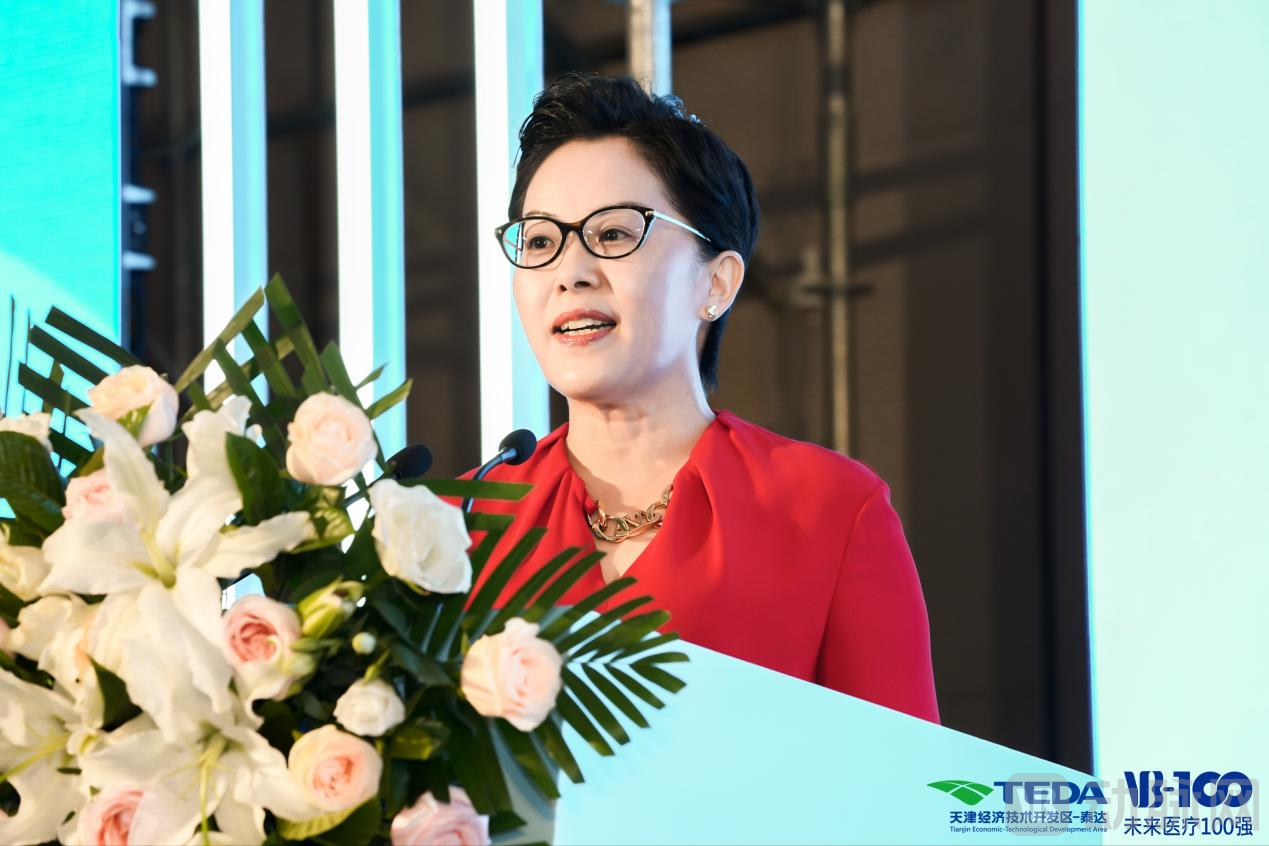
On June 30, 2023, at the 2023 China Medical Device Globalization Summit held in Tianjin, Liu Wenjing, Chairman of Blue Sail Medical, delivered a keynote speech titled “Aligning with the Trends of the Times: Blue Sail Medical’s Global Strategic Layout and Reflections.”
Guided by its globalization strategy, Blue Sail Medical has continuously deepened its global footprint and evolved into a multinational medical device platform enterprise with China as its core and a worldwide reach. At the event, Liu Wenjing outlined the three stages of the company’s global strategic layout: the development journey through Globalization 1.0, 2.0, and 3.0. The period from 2013 to 2022 marked Globalization 2.0, a phase characterized by comprehensive internationalization across markets, manufacturing, R&D, clinical operations, and talent acquisition. As 2023 ushers in the company’s third decade (2023–2032), Blue Sail Medical will leverage its established advantages to build the “Blue Sail Medical” brand into one with significant international influence.
[The following text is compiled from the on-site presentation, with some content omitted.]
Blue Sail Medical: A Multinational Medical Device Platform Enterprise Centered in China and Oriented Toward the Global Market
Blue Sail Medical is a publicly listed medical device company, primarily operating across four business segments: cardiovascular and cerebrovascular health, health protection, medical care, and minimally invasive surgery. After 20 years of deep cultivation and two phases of international expansion, the company has achieved a platform-based industrial layout integrating high-, medium-, and low-value products, evolving into a multinational medical device platform enterprise with China at its core and a global outreach. It boasts globally distributed manufacturing bases, R&D innovation centers, and business hubs, including production and R&D facilities in Germany and Singapore as a key bridgehead for its international strategy. The company has essentially realized a global footprint in production, R&D, and marketing, alongside an internationally diversified talent pool. 2023 marks the beginning of the company’s third decade, with its Global Science and Technology Innovation Headquarters under construction in Shanghai poised to spearhead the new phase of Globalization 3.0.
Blue Sail Medical's Global Strategy and Layout: Global Expansion 1.0, 2.0, and 3.0
Blue Sail Medical has been continuously advancing its global strategy, with over 70 subsidiaries and branches across more than 20 countries and regions worldwide.
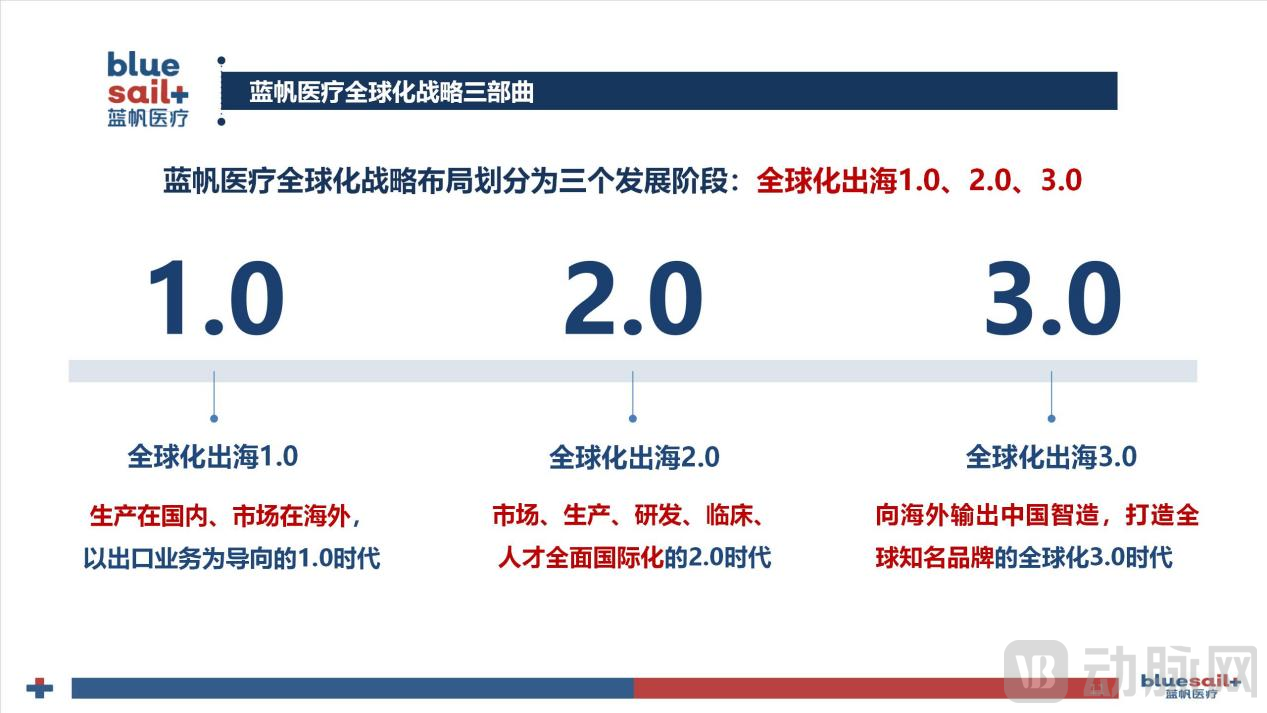
The Era of Global Expansion 1.0: 2003–2012
In the 1.0 phase, it is well known that exports were one of the “three carriages” driving our past development. China experienced a period of rapid growth after joining the WTO in 2001. Fortunately, the company was founded in 2003 and leveraged the momentum of China’s WTO accession to achieve rapid revenue growth from 2003 to 2010, realizing its goal of global sales. In less than seven years, Blue Sail Medical became the first listed company in the industry, and in under ten years, it emerged as the industry leader in PVC medical gloves, capturing 22% of the global market and serving more than 100 countries and regions worldwide. From export revenues of USD 960,000 in 2003 to USD 200 million in 2012, the compound annual growth rate reached 81%. To date, the company’s annual production and sales volume has reached 50 billion units, ranking it among the top five global manufacturers of medical gloves.
The Era of Globalization 2.0: 2013–2022
The "Going Global 2.0" phase marks the second decade of the company’s development, during which a transformation and upgrading strategy was formulated. By pursuing international expansion and cross-border mergers and acquisitions, the company shifted its focus from low-value medical consumables, such as medical gloves, to high-value consumables. Viewed through a global lens, aligned with international standards, and leveraging local advantages, this move also capitalized on a major trend: China’s Belt and Road Initiative (BRI). Proposed in 2013, the BRI resonated with the company’s transformation and upgrading strategy. The company selected Singapore as a key strategic hub within the BRI framework, considering it an attainable yet ambitious target at the time. During this period, the company acquired a leading enterprise in the coronary stent sector for USD 1 billion in 2018, laying the foundation for its transformation and upgrading.
What Are the Characteristics of Globalization 2.0? For Chinese enterprises, acquiring world-class technologies and successfully integrating, localizing, and further developing them entails geometrically increased difficulty and lower success rates compared to the Globalization 1.0 era. This article shares Blue Sail Medical’s practices in Globalization 2.0, using the strategic layout of its Cardiovascular and Cerebrovascular Business Division as a case study.
On one hand, the company spent RMB 6 billion in 2018 to acquire Biosensors International Group, Ltd. (Singapore), which at the time had only nine coronary stent products. Over the past five years, it has evolved into an enterprise with a comprehensive portfolio covering cardiovascular and cerebrovascular diseases. Leveraging the platform of Biosensors International, the company further acquired NVT AG (Switzerland, primarily operating in Germany) in 2019, a company specializing in high-tech heart valve solutions. On the other hand, relying on its medical technology platforms in Singapore and Germany, the company has made substantial R&D investments. After establishing these medical platforms, it has attracted numerous partners from the global ecosystem seeking investment or distribution rights. Achieving this milestone requires a global perspective and adherence to international standards, as it follows an innovation-driven growth logic.
Blue Sail Medical’s Globalization 3.0 (Starting in 2023): Jointly Building the “Belt and Road,” Embarking on a New Journey After a Decade
Starting in 2023, as the Belt and Road Initiative drives the deepening of economic globalization, the company will align with this national strategy and respond to international market demands by entering a new phase of development: exporting Chinese intelligent manufacturing overseas and building globally renowned brands. In keeping with the course of history, the company will evolve, iterate, and advance toward Globalization 3.0.
Globalization Strategies for Chinese Healthcare Enterprises
The globalization of Chinese medical enterprises is both necessary and important, requiring the effective utilization of the valuable endowments provided by the nation and the current era. Although expanding overseas presents challenges, it is an inevitable path for medical device companies. The restructuring of the industry ecosystem is driving Chinese medical device enterprises to place greater emphasis on internationalized innovation and R&D. Therefore, Chinese companies should seize the historical opportunities accompanying the rise of major powers, prioritizing the exploration of overseas markets where China holds significant influence, such as Belt and Road Initiative (BRI) countries. Furthermore, leveraging multi-tiered capital markets for financing to conduct cross-border mergers and acquisitions can not only facilitate the rapid introduction of advanced technologies but also achieve efficient integration of transnational distribution channels. Another crucial lesson is that true internationalization equates to localization. It does not mean dispatching personnel from China to Germany or Singapore; rather, it involves genuinely employing local talent to achieve deep integration into the local market.
If Globalization 1.0 was about “selling,” with Chinese products sold globally, and Globalization 2.0 was about “buying,” acquiring technology and innovation from around the world, then Globalization 3.0 is defined by “Chinese enterprises systematically building international capabilities.” In this phase, Chinese companies export Chinese solutions to the global market, aligning with the national strategy of China’s peaceful rise and sharing the wisdom of Chinese enterprises with the world.
Historical trends always outweigh individual effort: seize the momentum, clarify the path, and refine the methods.