

Hongfeng Technology Files for IPO with RMB 300 Million Fund and Out-of-Hospital Commercial Scenarios to Empower Specialized Disease Management Startups

HONGFENG KEJI
Medical Field Enterprise Link Service Provider
From in-hospital to out-of-hospital settings, and from “established” disease management programs for diabetes and hypertension to more comprehensive specialty care encompassing gynecological conditions such as breast diseases and polycystic ovary syndrome (PCOS), specialty disease management services have become an indispensable topic in China’s healthcare sector.
As clinical scenarios expand and the spectrum of managed conditions broadens, a steady stream of Chinese companies specializing in medical devices or services for single- or multi-disease management has emerged. Meanwhile, advancements and maturation of related technologies are reshaping disease management approaches—the rise of wearable devices and digital therapeutics is infusing specialized disease management services with greater technological sophistication.
Unfortunately, although disease-specific management has become a hotbed for healthcare entrepreneurship in China, it faces numerous obstacles. For instance, in hospital settings, health insurance cost containment measures have become more stringent since the onset of the COVID-19 pandemic.
On November 26, 2021, the National Healthcare Security Administration released the “Three-Year Action Plan for DRG/DIP Payment Reform,” which proposed that from 2022 to 2024, the tasks of DRG/DIP payment reform should be fully completed to promote high-quality development of medical insurance. The increasingly stringent cost containment measures in medical insurance undoubtedly impose stricter requirements on the implementation of disease-specific management services within hospitals, necessitating the establishment of a highly refined disease-specific management system. However, it is evident that achieving tangible results in this area requires long-term commitment and construction.
On this basis, public hospitals already bear a heavy burden of diagnosis and treatment tasks, leaving them with little capacity to address post-diagnosis disease management and long-term care services. Some have even stated bluntly: “For large general hospitals, the number of single-disease categories often reaches thousands or even tens of thousands, with annual discharges numbering in the hundreds of thousands. Each case involves anywhere from a few to dozens of medical service items, resulting in an even more massive volume of data on the consumption of various medical resources. This is a major reason why specialized disease operational management within hospitals is currently difficult to promote on a large scale.”
In other words, for specialized disease management services that are difficult to accommodate within hospital settings, out-of-hospital settings will become the main force.
However, for providers of disease-specific management services and products, “out-of-hospital settings” is a broad concept. Upon closer examination, whether to adopt a B2B, B2C, or B2B2C model has become the primary business consideration for entrepreneurs. Furthermore, deciding which B to target and how to reach C consumers appears to be an inevitable challenge for founders.
Against this backdrop, a “scenario” with inherent traffic has come into the view of innovative enterprises specializing in disease-specific management services. Collaborating with such a scenario appears to offer the benefit of achieving twice the result with half the effort. Unfortunately, however, this high-traffic “scenario” may exhibit weak willingness to cooperate due to trust issues, or it may lack the capacity to do so despite good intentions. Therefore, an intermediary role seems necessary between this “scenario” and disease-specific management service providers, helping the latter earn trust and win the “cooperative commitment” of the “scenario,” while also assisting the “scenario” in building its “cooperative capability.”
This “scenario” with its inherent traffic is the chain pharmacy.
From the perspective of Tan Weifeng, founder of HONGFENG KEJI, chain pharmacies are a gold mine.
From a development perspective, the growth of chain pharmacies has been bolstered by favorable policies. Specifically, in recent years, policies have ranged from promoting the separation of prescribing and dispensing and encouraging the outflow of prescriptions, to supporting designated retail pharmacies’ participation in centralized volume-based procurement and improving the “dual-channel” mechanism. It has been clarified that patients purchasing medicines included in the National Reimbursement Drug List negotiations at eligible pharmacies can enjoy the same medical insurance reimbursement model as in hospitals. Furthermore, in February this year, the National Healthcare Security Administration issued guidelines actively supporting designated retail pharmacies in providing outpatient pooling services and refining regulations related to fund payment, settlement, and supervision. These measures have further accelerated the outflow of prescriptions, providing significant policy-driven momentum for the development of chain pharmacies.
Meanwhile, the state has explicitly proposed promoting the chain-based development of the pharmaceutical distribution industry. In October 2021, the Ministry of Commerce issued the Guiding Opinions on Promoting High-Quality Development of the Pharmaceutical Distribution Industry During the 14th Five-Year Plan Period, which clearly states that by 2025, China will cultivate and establish 5–10 specialized and diversified pharmaceutical retail chain enterprises with annual revenues exceeding RMB 50 billion each, and the pharmaceutical retail chain rate should approach 70%.
At the same time, for pharmacies, relying solely on drug sales is no longer a viable strategy.
In 2021, the industry’s average same-store sales growth rate was only 7.38%, representing a decline of approximately 50% compared with 13.81% in 2020. (Source: CITIC Securities, “Tracking Report on the Chain Pharmacy Subsector of the Pharmaceutical Industry: Policy and Industrial Resonance Drive Sustained Improvement in Out-of-Hospital Retail Prosperity”)
Meanwhile, the industry’s overall net profit margin remains stable at a relatively low level. In 2021, the average gross profit margin was 28.9%, while the net profit margin stood at only 4.5%. Furthermore, based on the distribution of net profit margins, more than half of pharmacy chains reported net profit margins between 1% and 5%. (Source: Donghai Securities’ “In-Depth Report on the Chain Pharmacy Industry: Accelerating Chain Expansion, Diversification, and Outflow of Prescription Drugs”)
Against this backdrop, the industry has begun to seek transformation. Among the various initiatives, expanding from merely selling medications to “selling” medical services has emerged as a mainstream trend. Listed pharmacy chains in the secondary market are actively exploring the establishment of chronic disease management mechanisms; for instance, Dashenlin has formed a chronic disease management team, leveraging its self-developed digital tools and disease knowledge graphs to build management systems for more than 20 types of chronic conditions. Meanwhile, independent pharmacies have gradually introduced services related to chronic disease management, such as free blood glucose and blood pressure monitoring, sparking a wave of chronic disease management across the pharmacy sector.
However, regrettably, as exploration remains in its early stages, chronic disease management services currently offered by pharmacies often suffer from issues such as “testing without management” and an extremely limited range of covered conditions. Consequently, patients (residents) perceive little tangible benefit from these initiatives, and some may even doubt the professional competence of pharmacies (for example, when blood pressure readings differ from their self-measured results).
In other words, pharmacies have not had a smooth journey in exploring chronic disease management. This also means that, in pursuit of more efficient and rapid development, pharmacies at this stage need to leverage the support of third-party professional expertise, whether for system construction or for enhancing medical capabilities.
For specialized disease management service providers, chain pharmacies hold two critical resources that are otherwise inaccessible to them: member resources and supply chain resources. This is precisely why Tan Weifeng refers to them as a “gold mine.” The member base accumulated by chain pharmacies can serve as a “traffic gateway” for internet hospitals and specialized disease service enterprises, while their supply chain capabilities—surpassing even those of public hospitals—can provide more robust pharmaceutical care support to internet hospitals.
In other words, chain pharmacies require support from internet hospitals and third-party specialized disease management service providers to bolster their medical service offerings and strengthen the infrastructure of their second growth curve. Conversely, internet hospitals and third-party specialized disease management enterprises rely on chain pharmacies to provide patient referrals, service delivery scenarios, and pharmaceutical care support. Thus, both parties have a solid foundation for collaboration.
However, this is only true in theory. In practice, a “gap” still exists between the two parties in their collaboration. Intermediaries such as HONGFENG KEJI serve to bridge this “gap.”
“In fact, some chain pharmacies remain apprehensive about collaborating with third-party disease-specific service companies,” said Tan Weifeng. “They worry that once they fully disclose their own resources, these may be appropriated by their partners, leading to a loss of their proprietary assets.”
Therefore, HONGFENG KEJI has chosen to jointly establish a specialized disease service technology incubator with the Jinniu District of Chengdu. Both parties will participate in collaborations among chain pharmacies, third-party specialized disease service companies, internet hospitals, and wearable device manufacturers through investment and incubation.
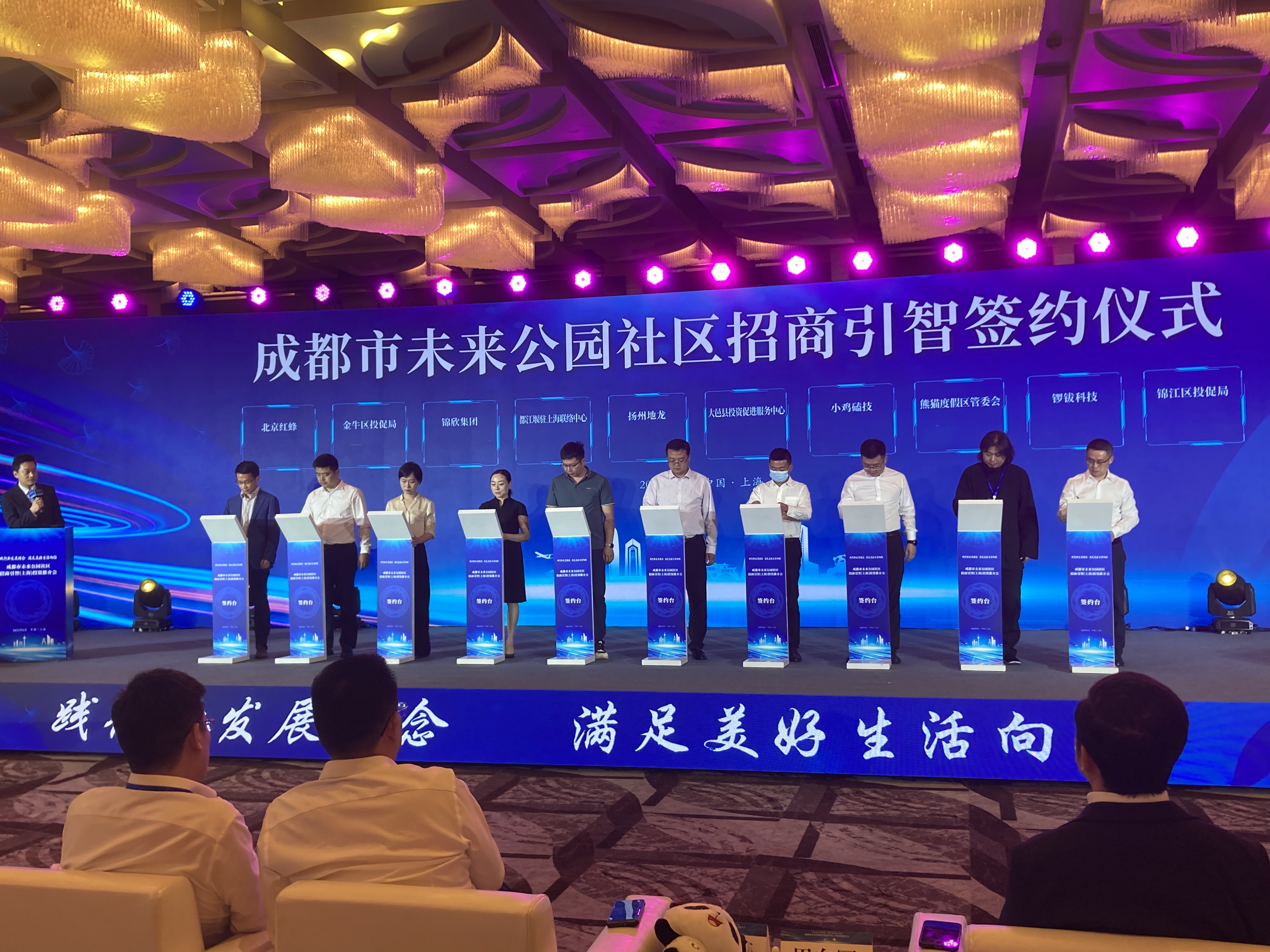
For chain pharmacies, this serves as one of the sources of investment capital from HONGFENG KEJI, which means that their ties with the aforementioned third-party enterprises are becoming closer, and they can also exert a certain degree of control over the development of these third parties. For the third-party enterprises, due to factors such as an unclear business model and limited market awareness of specialized disease services, most companies in the specialized disease service sector are still in the early stages of development; in other words, they have significant financing needs.
However, HONGFENG KEJI’s “investment incubation” is clearly not as simple as providing financial support. As mentioned earlier, while some chain pharmacies remain hesitant about collaborating with third-party enterprises at this stage, others are open to such partnerships. Nevertheless, despite their openness, these chain pharmacies find themselves “willing but unable” to act.
Member resources and supply chain advantages are the “trump cards” that chain pharmacies leverage when seeking external partnerships. In recent years, various chain pharmacy companies have indeed invested capital and effort into building their own membership systems and digitalized supply chain systems. However, the results achieved can be described in Tan Weifeng’s own words as—“very rudimentary and very weak.”
In this regard, HONGFENG KEJI will, on the one hand, empower chain pharmacies to improve their digital membership systems and help them achieve conversion of private-domain traffic; on the other hand, it will assist chain pharmacies in building digital supply chains. Furthermore, HONGFENG KEJI will help chain pharmacies complete corresponding hardware upgrades, laying the foundation for cooperation with third-party enterprises. This represents HONGFENG KEJI’s empowerment of chain pharmacy development at both the hardware and digital levels.
Furthermore, human resources constitute one of the key factors in delivering high-quality specialized disease management services. This is also a primary reason why chain pharmacies are unable to independently provide such high-quality services, due to their limited talent reserves and operational capacity. Therefore, the third dimension of HONGFENG KEJI’s empowerment for chain pharmacies’ specialized disease management services lies in professional talent enablement.
“For chain pharmacies at the current stage, selling medications remains their core strength, and the skills and knowledge possessed by their staff are primarily focused on medication use. Therefore, it is unrealistic to rely on pharmacy staff to deliver professional disease-specific services. As a result, pharmacies hope that third-party companies will dispatch personnel to provide on-site services. Unfortunately, due to constraints such as talent shortages and development strategies, third-party companies can only deploy staff to a limited number of pharmacies to support disease-specific services.”
To address this pain point, HONGFENG KEJI plans to assemble a team that will provide on-site support for specialized disease management services at chain pharmacies, while also assisting third-party enterprises in driving online and offline sales within the pharmacy setting. This, in Tan Weifeng’s view, represents “a more significant form of empowerment.”
Overall, HONGFENG KEJI can connect chain pharmacies with high-quality specialized disease management service providers, internet hospitals, and wearable device manufacturers, while building comprehensive collaborative infrastructure for them (such as membership systems and digital supply chain systems), thereby establishing the foundation for integration with third-party enterprises. For third-party enterprises, HONGFENG KEJI provides well-developed product application scenarios and traffic entry points, enabling these companies to “move in ready” and share in mutual growth.
Currently, HONGFENG KEJI holds RMB 80 million in funding, resources from one of China’s top 20 chain pharmacy networks, and a chain pharmacy ERP supply chain system connected to nearly one-third of the country’s pharmacies. It has successfully incubated 13 enterprises, covering services for ECG monitoring, heart health maintenance, Alzheimer’s disease management, stroke rehabilitation, and the management of conditions such as thyroid disorders, hyperuricemia, liver diseases, and diabetes. In the second half of this year, HONGFENG KEJI plans to partner with at least 30 companies specializing in disease-specific services and complete a financing round of RMB 300 million.
Regarding the selection of these 30 companies specializing in disease-specific services, Tan Weifeng stated candidly that scale is not the primary criterion. Instead, greater emphasis is placed on two types of enterprises: one type comprises IT companies that have cultivated the in-hospital informatics market for many years, accumulated data on single or multiple specific diseases, and can directly apply such data to the informatics-based management of patients both inside and outside hospitals; the other type consists of companies that directly face consumers (C-end), possess a certain level of technological sophistication, and offer integrated device-plus-service solutions directly to consumers. In the future, HONGFENG KEJI will prioritize seeking collaboration opportunities with these two categories of enterprises.
——“Then, why did they choose to partner with HONGFENG KEJI?”
——“There is no need to elaborate on capital and pharmacy resources. What we offer these third-party enterprises are robust partners with comprehensive supporting facilities. Such collaborations are not only worry-free but also labor-saving. As for chain pharmacies, once our model is proven successful, I can hardly imagine any reason why they would refuse to partner with us.”