

Edison Ecosystem Enters 2.0 Era: GE Healthcare China Builds a Boundaryless Innovation Ecosystem

GE Hangwei
Medical Device R&D and Manufacturer
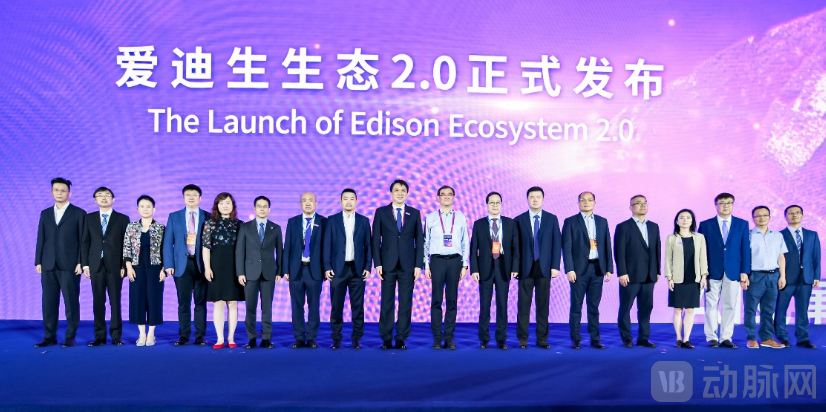
At the 2023 World Artificial Intelligence Conference, GE Hangwei unveiled Edison Ecosystem 2.0, further expanding its digital healthcare ecosystem and enhancing the depth and breadth of AI applications in the medical field.
On one hand, the new ecosystem has expanded the physical scope of AI-assisted screening, extending GE Healthcare’s service offerings from enhanced imaging and standardized ultrasound operations to smart operating room applications. On the other hand, GE Healthcare’s partnership model has evolved from single-point collaborations to joint research and co-creation, further accelerating the development of digital healthcare through ecosystem synergy.
Insights into evolving clinical needs are the primary driving force behind GE Healthcare’s continuous innovation. In recent years, with accelerating population aging and the increasing segmentation and diversification of health demands, healthcare institutions have seen a growing need for digital solutions. Meanwhile, China has gradually integrated the development of Digital China and the adoption of digital applications into its 14th Five-Year Plan, accelerating the advancement of digital healthcare centered on “universal public welfare.” This initiative aims to build a patient-centered healthcare system, facilitate the qualitative transformation and upgrading of the traditional medical industry from quantitative expansion, and realize more precise and intelligent digital healthcare service models. GE Healthcare has consistently kept pace with clinical needs, collaborating to promote and implement digital healthcare solutions.
Zhang Yihao, Global Vice President of GE HealthCare and President and CEO of GE HealthCare China, stated at the conference: “The previously released research report by GE HealthCare, titled ‘Envisioning a New Future of Health 2023,’ revealed six major future development trends in the healthcare industry, including predictive and preventive care, precision medicine, and intelligent connectivity technologies. It also highlighted severe challenges currently facing healthcare systems, such as excessive fatigue among healthcare professionals, lack of technical interoperability within healthcare systems, insufficient learning of new technologies and capabilities, and inadequate accessibility to medical services. However, challenges also present opportunities; innovative artificial intelligence technologies will become a key driver in addressing healthcare challenges and improving the quality of medical services.”
Furthermore, compared with other countries surveyed, we are encouraged to see that Chinese doctors and patients have a higher level of trust in artificial intelligence (AI), and the empowerment of AI technology across various healthcare scenarios in China represents an effective practice. GE Hangwei will seize this opportunity to accelerate boundary-less innovation through the integration of digital and physical technologies, co-creating borderless healthcare with more humanized and flexible medical services to care for every critical moment in the lives of people in China.
Certainly, realizing GE Healthcare’s grand vision cannot be achieved overnight. The Edison Ecosystem 2.0 showcased at the World Artificial Intelligence Conference, along with the new collaborative model of joint research and co-creation, represents GE Healthcare’s key strategic moves to address challenges. Through these two innovations, we may gain insight into the underlying logic behind GE Healthcare’s layout in the medical and health sector.
Compared with the previous generation, the differentiation of Edison Ecosystem 2.0 is mainly reflected in two aspects: application scale and scenario coverage.
When the Edison Ecosystem 1.0 was launched, AI in medical imaging was still in its early stages, with relatively few products having obtained Class III registration certificates from the NMPA. However, growing from 10 partners at that time to 36 today, the Edison Ecosystem has continued to expand and refine its product portfolio, now establishing itself as a key driver of AI development in medical imaging within China.
Such “ecological philosophy” has become the new business philosophy for the Industrial Internet and even the future era of the Internet of Everything—after all, in the new digital age, it is nearly impossible for any enterprise to secure a competitive advantage solely through its own efforts.
It is worth noting that the expansion of the partner network not only enables GE HealthCare to further extend AI-assisted screening to more anatomical regions. As AI applications for CT, MR, and ultrasound join the ecosystem, AI capabilities can expand from assisted diagnosis to smart operating room applications based on medical imaging. By leveraging digital technologies, advanced analytics, and artificial intelligence at every possible delivery touchpoint, the healthcare industry can address current challenges such as clinician burnout and lack of technical interoperability within healthcare systems. This approach facilitates the integration of efficient healthcare systems, empowers hospitals with integrated diagnostic and therapeutic capabilities, and ultimately provides the public with more convenient and effective medical services.
Furthermore, GE Healthcare is continuously promoting the synergistic development of hardware and software, facilitating the transition of AI innovations from the “laboratory” to real-world “applications.” At this year’s World Artificial Intelligence Conference, GE Healthcare showcased a range of innovative medical devices, digital health products, and solutions.
Among the highlights, GE HealthCare and its ecosystem partners unveiled their latest collaborative achievement—the first dynamic real-time intelligent analysis system for breast ultrasound—at the exhibition. Powered by dynamic AI ultrasound technology, this product increases screening and reporting speed by 15%, improves detection comprehensiveness by 3%–5%, and enhances accuracy by 8% compared to traditional breast screening methods. Furthermore, the dynamic real-time intelligent ultrasound AI analysis system features comprehensive multi-plane analysis, automatic storage of lesions and analysis results, and one-click generation of guideline-compliant structured ultrasound reports. These capabilities make ultrasound examination more accessible, convenient, and precise for the early diagnosis and screening of breast diseases, while also helping to standardize sonographers’ operational practices and reduce missed or misdiagnoses caused by insufficient experience.
According to GE Hangwei, the company plans to integrate this system into its portfolio of whole-body ultrasound products in the future. This initiative aims to effectively enhance the efficiency and diagnostic capabilities of primary healthcare services, improve access to high-quality medical resources, and safeguard breast health for women in China.
Innovation in collaboration models is also a key driver for GE Healthcare to promote the development of digital healthcare in China. Compared with traditional supply models, GE Healthcare’s joint research and co-creation with partners enable collaborators to move beyond breakthroughs on isolated issues, instead addressing industry-level challenges in digital healthcare through collaborative innovation.
For patients, the new model of collaboration can meet their demand for more convenient, accessible, and higher-quality medical services by empowering a wider range of diagnostic and treatment scenarios and promoting the integrated development of diagnosis and treatment.
For its partners, GE Healthcare can drive the development of a cohort of “specialized, refined, distinctive, and innovative” small and medium-sized enterprises (SMEs), support their growth, accelerate the implementation of digital healthcare solutions, foster a thriving medical innovation ecosystem, and better serve the Chinese population.
It can be said that the expansion of the Edison ecosystem is the best embodiment of GE Healthcare’s newly upgraded China strategy: “Full Localization, Borderless Innovation, and Win-Win Cooperation.”
When asked how to select partners, Sun Xuguang, Chief Technology Officer of GE Hangwei, stated: “First, we must share a common vision, with a shared commitment and aspiration to serve the healthcare industry. As highlighted in the research report ‘Innovating for a New Future of Health,’ we have a common goal: to create more human-centered and flexible healthcare services, focus on addressing the needs of clinicians and patients, and jointly foster boundless medical care.”
Secondly, we need to leverage complementary strengths. If the advantages of emerging digital technology companies are more focused on computing power and technology, GE Healthcare’s strength lies in its deep understanding of healthcare. Our future collaboration will bring computer science into healthcare, driven by clinical needs, to ensure practical product implementation and truly achieve the “integration of digital and physical realms.”
“In this process, we will leverage GE Healthcare’s core competencies—such as our deep understanding of medical equipment, rigorous quality control, stringent technical quality standards, and comprehensive insights into physicians and clinical practice—to help physicians select optimal partners. By conveying clinicians’ pain points to these partners, we foster cross-industry co-creation, ultimately driving better product improvements.”