

Cardiomox MCG Receives First Commercial Sale with Over 20,000 Clinical Cases and AI-Powered Diagnosis—No Magnetic Shielding Room Required
In China, there are 330 million patients with cardiovascular disease (CVD), and 2 out of every 5 deaths are caused by cardiovascular diseases.
These are data from the Report on Cardiovascular Health and Diseases in China 2022 (hereinafter referred to as “Report 2022”), released by the National Center for Cardiovascular Diseases at the end of June. The report’s data also show that,The incidence and mortality rates of cardiovascular disease in China continue to rise, and the inflection point for a decline in the cardiovascular disease burden has not yet emerged.
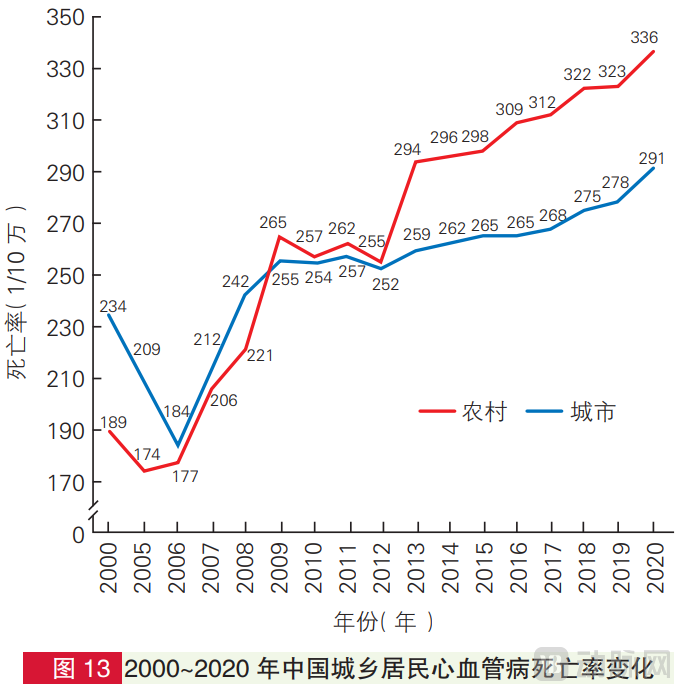
Changes in Cardiovascular Disease Mortality Among Urban and Rural Residents in China, 2000–2020
Image source: "Report on Cardiovascular Health and Diseases in China 2022"
However, cardiovascular diseases often have a long “latent period” from initiation to clinical onset. For instance, a hallmark of coronary heart disease is the sudden occurrence of acute myocardial infarction or even sudden cardiac death.The Report 2022 also points out that China’s CVD prevention and control should adhere to the principles of “prevention first and primary care first.”
How can these 330 million patients take proactive preventive measures to reduce the incidence and mortality of cardiovascular disease (CVD)? In addition to improving dietary structure and adopting healthy lifestyle habits, routine diagnosis and screening are also powerful tools.
However, modalities such as electrocardiography (ECG) and echocardiography are unable to detect early-stage coronary heart disease and other acute conditions. Although techniques like fractional flow reserve (FFR), computed tomography angiography (CTA), coronary angiography (CAG), and single-photon emission computed tomography (SPECT) are widely used in clinical practice, their application is limited by high costs, radiation exposure, and invasiveness, making them not entirely suitable for routine diagnosis and screening of outpatient populations.
So, how can we achieve “prevention-first and primary-care-based” strategies to monitor CVD during the “latent period” using safer, more effective, and precise methods?
With the continuous advancement of medical technology, novel diagnostic techniques are continually emerging; magnetocardiography (MCG) is one such solution.
As a functional cardiac imaging modality that analyzes the human heart’s magnetic field, magnetocardiography (MCG) requires neither skin-adhered electrodes nor drug injections. It enables non-invasive measurements while the patient remains clothed; patients need only remove metallic items and attach electrode clips to their wrists and ankles, allowing sensors positioned above the chest to automatically record magnetic fields across the cardiac cycle for rapid imaging.
The greatest challenge of this technology lies in accurately detecting weak magnetocardiographic signals amidst the Earth's magnetic field, which is millions of times stronger, and processing them with precision and speed.
To address the aforementioned industry pain points, SU ZHOU CARDIOMOX MEDICAL INSTRUMENT LTD. (hereinafter referred to as “Cardiomox Medical”) has enhanced instrument detection sensitivity and software processing precision through R&D innovation in both hardware and software technologies. This breakthrough overcomes interference from the Earth’s strong magnetic field, enabling magnetocardiography systems to detect cardiac magnetic signals in ordinary environments.
Specifically, the innovative advantages of CardiomoX Medical can be primarily categorized into the following four aspects:
First, by employing a superconducting quantum interference device (SQUID), the detection accuracy can reach 10-14-10-15T。
Although magnetic fields exist in all spaces and within all matter, the magnetic field generated by the human heart is extremely weak. Particularly during the ST segment, which is sensitive to myocardial ischemia, the magnetic signal in this segment is approximately 10-13T, one millionth of the Earth's magnetic field. Therefore, the magnetic sensor for magnetocardiographic detection is the core component of a magnetocardiograph and also key to the device's detection performance.
Second, exclusive patented noise-shielding technology enables magnetocardiographic signal measurement without the need for a magnetically shielded room.
Magnetocardiography systems utilizing Superconducting Quantum Interference Devices (SQUIDs) typically require measurements to be conducted within a Magnetic Shielded Room (MSR) to eliminate interference from the Earth’s magnetic field. However, the high cost and substantial footprint of MSR facilities—often spanning tens of square meters—pose significant barriers to adoption for hospitals with limited space or older campuses that cannot undergo structural renovations.
To address this pain point, CardiomoX integrates a second-order gradiometer, advanced computer algorithms, and its proprietary noise-shielding patent technology into the magnetocardiography (MCG) system. This enables the device to extract cardiac magnetic signals from the strong geomagnetic environment without requiring a shielded room, operating instead in an independent room of just 10–20 square meters. This advancement not only improves detection accuracy but also facilitates the broader adoption and clinical implementation of MCG technology.
Third, a composite analysis method based on the time and frequency domains is employed to enhance the information content and usability of magnetocardiographic signals.
Hardware advantages enable the acquisition of cardiac magnetic fields by devices; however, during this process, the equipment inevitably records other magnetic field signals from various sources and of different magnitudes present in the environment. Since signal quality directly impacts the validity of subsequent clinical analysis, the greatest challenge for algorithms lies in the complete and efficient extraction of these signals from background noise.
Compared with the cycle superposition technology and power-line frequency filters used in traditional equipment, Cardiomox Medical adopts a composite analysis method based on time and frequency domains, combined with modern digital signal processing theories. This approach significantly improves the signal-to-noise ratio while conducting theoretical analysis and simulation verification of easily overlooked signal characteristics, thereby further enhancing the information content and usability of magnetocardiographic signals.
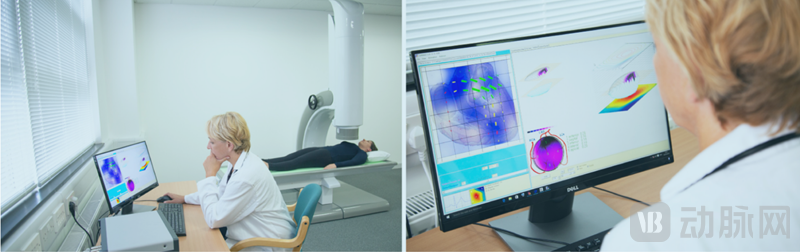
Cardiomox Magnetocardiography System
Photo provided by the interviewee
Fourth, AI diagnostic software covers six major application scenarios, assisting physicians in making rapid diagnoses.
Built on an AI-based entropy optimization algorithm, this diagnostic software processes and analyzes acquired cardiac magnetic signals, automatically differentiating between mild and severe cases without the need for manual interpretation. The software not only provides preliminary results suitable for clinical diagnosis but also enhances the speed, accuracy, and reliability required for commercialization.
Furthermore, Cardiomox Medical's AI diagnostic software can maintain a database of subject information and enable queries of real-time magnetocardiographic signal acquisition, data processing, imaging analysis, parameter analysis, diagnostic reports, as well as historical records and results.
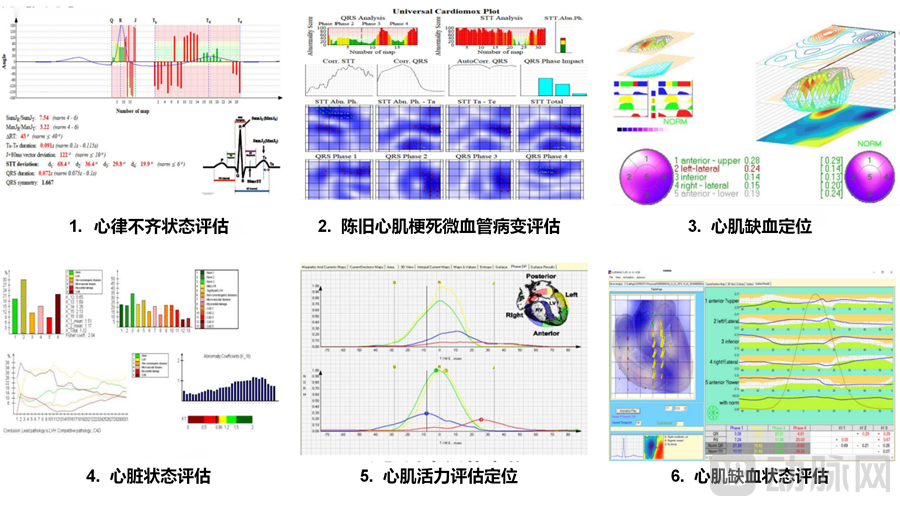
Application Scenarios of AI Diagnostic Software
Photo provided by the interviewee
To date, Cardiomox Medical has obtained registration certificates for two magnetocardiography (MCG) systems: the Cardiomox MCG Type 9 and the Cardiomox MCG Type 12. The company is also concurrently developing next-generation MCG systems featuring a more compact form factor and more intelligent diagnostic software.
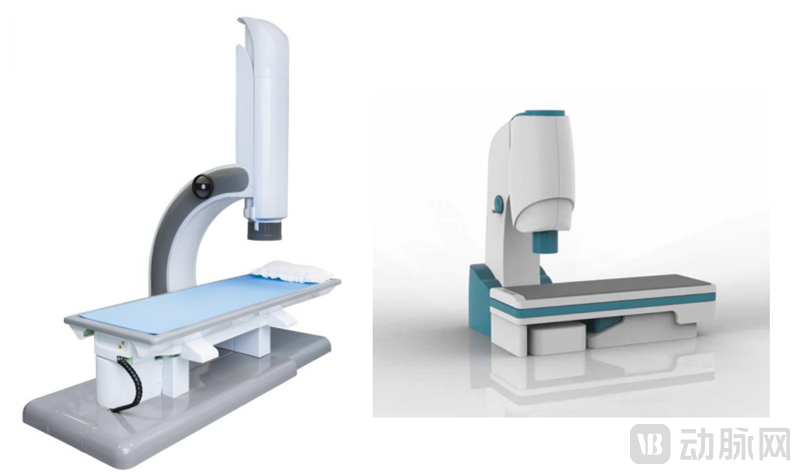
Registered Magnetocardiographs (Left: MCG 9, Right: MCG 12)
Photo provided by the interviewee
As a national high-tech enterprise planned and facilitated by Oxford University Innovation (OUI) in 2016, Suzhou Cardiomox Medical is one of the first batch of high-tech projects incubated by the University of Oxford in China.
The company’s magnetocardiography technology originates from the Institute of Cybernetics of the National Academy of Sciences of Ukraine, and is renowned for its application in magnetic detection systems designed to counter ultra-quiet nuclear submarines.
Xu Lin, General Manager of Suzhou Cardiomox Medical Instrument Ltd., stated in an interview with VCBeat that, in addition to its advanced technological foundation, the company boasts a high-caliber team specializing in the R&D, management, and industrialization of high-end medical devices at an internationally competitive level. The core members of this team have over 30 years of experience in the development and research of magnetocardiography (MCG) systems and belong to one of the world’s earliest research groups dedicated to MCG instrument development.
Among them, Feng Xie, Chairman and Founder of Cardiomox Medical, holds a Master’s degree in Engineering Science from the University of Oxford. With nearly a decade of experience in management and market development, he is a serial entrepreneur in the medical device industry with a proven track record of success. He possesses extensive expertise in team building, the introduction and assimilation of advanced technologies, and the establishment of production lines.
After years of dedicated efforts by our team in the field of magnetocardiography, the company now holds more than 20 intellectual property rights both domestically and internationally. In November 2020, it obtained the first registration certificate for a nine-channel magnetocardiograph in China, and completed the first sale of the device to Guangzhou Eighth People's Hospital within one month after receiving the certificate.
As one of the latest and most advanced technologies in the field of non-invasive cardiac examination, magnetocardiography (MCG) systems can provide diagnostic support for multiple application scenarios in cardiology departments of public hospitals, health checkup institutions, chest pain centers, and other healthcare facilities.
First, magnetocardiography (MCG) devices can be used in hospital cardiology departments for the early identification of coronary artery disease, as well as the diagnosis and differential diagnosis of cardiomyopathy. They are also employed in health examination centers to monitor individuals at high risk for heart disease and assess cardiac health status. Additionally, these devices facilitate rapid triage of acute cardiovascular conditions and the exclusion of non-cardiac causes in patients presenting with chest pain at Chest Pain Centers.
As a highly sensitive, non-invasive, and convenient diagnostic tool, magnetocardiography (MCG) systems can also be utilized in specialized scenarios. These include routine cardiac assessments for specific populations such as astronauts, athletes, and long-haul drivers, as well as monitoring therapeutic efficacy for pharmaceutical and medical device companies. Applications encompass pre- and post-procedural monitoring for cardiac interventions and pharmacological treatments, along with evaluating the effectiveness of drug therapies for coronary artery disease.
Although application scenarios are diverse, as an innovative device with lower adoption rates than electrocardiography (ECG), how can magnetocardiography (MCG) systems be effectively implemented in clinical practice to efficiently assist physicians in diagnosis and improve the accuracy of AI-assisted diagnostics? This is a critical challenge that companies must address during device promotion and commercialization.
As an enterprise incubated by the University of Oxford, CardiomoX Medical has established collaborative platforms with numerous domestic and international universities since its inception, including the University of Oxford, the University of Manchester, and North University of China, to drive continuous technological innovation and fundamental scientific research in the field of cardiac electrophysiology.
VCBeat learned in an interview that, to better align with clinical needs and accelerate the promotion of medical devices,Based on the collection and organization of clinical data from patients both domestically and internationally, the company has accumulated over 20,000 cases from China and abroad, and has simultaneously established a standardized case atlas as well as magnetocardiographic atlases for 13 typical types of heart disease.
Currently, China has established a special project under the 14th Five-Year Plan for magnetocardiography (MCG) devices, aimed at developing a unified diagnostic guideline applicable to all MCG products. The guideline is expected to be officially released in 2024. In addition to national-level strategic guidance, several provinces and municipalities have already implemented fee standards for single MCG tests.
With strong support from the national and local governments at all levels, magnetocardiography (MCG) systems will be promoted and implemented at an accelerated pace. By enabling early intervention, these systems aim to alleviate the suffering associated with later-stage treatments and reduce the economic burden on patients, thereby benefiting a broad population of individuals with heart disease.
Early detection and early treatment have become key to reducing the incidence of cardiovascular and cerebrovascular diseases. CardiomoX Medical’s magnetocardiography (MCG) system demonstrates strong application prospects in early screening, diagnostic assessment, and long-term monitoring of cardiovascular diseases. In the future, the company will continue to expand its innovative industrial portfolio, dedicated to advancing research and commercialization in the fields of magnetocardiography, magnetoencephalography, and fetal heart rate monitoring within the medical sector.