

From 3 Hours to 20 Minutes: Magnetic Bead-Based Method Pioneers Early Screening for PPGL
Here is a case:
A patient with a six-year history of hypertension was hospitalized for surgical treatment. Prior to the operation, the patient experienced a sudden hypertensive crisis, with blood pressure exceeding 200 mmHg. Based on CT imaging and plasma catecholamine testing, the patient was suspected of having a pheochromocytoma/paraganglioma (PPGL). Thanks to timely detection, the tumor was surgically resected, and the patient’s blood pressure returned to normal.
Based on current clinical data, most pheochromocytomas are non-metastatic and can be cured with surgical resection alone. However, if not detected in a timely manner,It may cause severe damage to the cardiovascular, cerebrovascular, and renal vasculature, and even lead to patient death.Furthermore, if metastatic pheochromocytoma is not detected at an early stage, there is a risk of cancer cell metastasis, which can subsequently threaten the patient's life.
Professor Ding Min, School of Laboratory Medicine, Chongqing Medical UniversityHaving researched pheochromocytoma for over a decade, she is well aware of the diagnostic challenges associated with this condition on a global scale. Relevant clinical cases have further strengthened Professor Ding’s resolve to investigate diagnostic methods for pheochromocytoma. Drawing on her team’s extensive experience in clinical research, they have specialized inMagnetic Bead-Based Enrichment of Random Urine Metanephrines for the Diagnosis of PheochromocytomaInitial results are now becoming apparent.
Cancers with an Extremely High Rate of Missed Diagnosis
“Expert Guidelines on Pheochromocytoma (2020 Edition)” states that pheochromocytoma is a rare neuroendocrine tumor causing endocrine hypertension, and there is currently no precise data on its incidence or prevalence in China. Foreign reports indicate an incidence rate of 2–8 cases per million people per year.The detection rate at autopsy was 0.05%–0.1%.
In other words, a considerable number of patients never had their exact cause of death identified. Professor Ding speculated that this may be related toMany hospitals do not offer diagnostic tests related to pheochromocytoma.: “Taking Chongqing as an example, only a handful of hospitals currently offer diagnostic testing for pheochromocytoma. If this is the case in a municipality directly under the central government, the situation is bound to be even more severe in other remote areas or cities with underdeveloped medical infrastructure.”
Professor Ding’s team found that, in addition to cognitive biases, the primary reason for the limited adoption of diagnostic tests for pheochromocytoma is the constraints on testing conditions.
Currently, the mainstream detection method involves analyzing patients'Plasma Sample After 30 Minutes of Resting SupineOr24-Hour Urine SampleSolid-phase extraction is performed, followed by chromatographic or mass spectrometric methods to measure MN levels; however, both approaches are limited by poor patient compliance with sample collection.
Prior to blood sample collection, patients are required to rest in a supine position for at least 30 minutes. However, within China’s clinical healthcare setting, this requirement often exacerbates “healthcare-seeking stress.” Furthermore, it is difficult for pediatric patients to remain still for extended periods. Additionally, factors such as the use of certain medications within five days prior to sample collection, consumption of bananas or strong tea, and even emotional fluctuations can interfere with test results, leading to false positives. In home settings, ensuring the accurate collection of 24-hour urine samples is challenging, and inaccurate urine specimens may compromise test results.
The research team found that urinary metanephrines (MNs) have higher diagnostic specificity compared to plasma MNs, and they were the first to propose diagnosing pheochromocytoma and paraganglioma (PPGL) by detecting MNs in random urine samples, with the collection of random urine"Convenient, non-invasive, and other advantages, with good patient compliance."。
Furthermore, CT is also a method of detection. However, due to the occult nature of tumors, pheochromocytomas detected by CT have generally progressed to the middle or late stages, leading to an increased risk of complications.
In light of various clinical pain points, Professor Ding believes that there is an urgent market need for a testing method capable of accurately and rapidly achieving early screening for pheochromocytoma. After years of experimentation, she led her team in developing several detection methods and found that enriching metanephrines (MNs) from random urine samples using magnetic bead-based methods yielded the best results for PPGL screening.
Magnetic Bead Method Makes Point-of-Care Testing a Reality
Magnetic beads are nano- to micro-sized materials with superparamagnetic properties. Like magnets, they can rapidly move and aggregate in response to a magnetic field, and quickly disperse once the field is removed. The magnetic beads used here measure only a fraction of a micron in size.
Magnetic beads are precisely the key to Professor Ding’s development of this project.
Since 2020, Professor Ding has led his team in the independent synthesis of magnetic beads, achieving a breakthrough within two years. Professor Ding stated, “These magnetic beads exhibit high specificity for the detection of catecholamines, such as normetanephrine (NMN) and metanephrine (MN), in random urine samples used for the diagnosis of pheochromocytoma.” The magnetic bead method requires only20 Minutesenables the extraction of target analytes for subsequent testing, whereas the currently mainstream sample pretreatment method—solid-phase extraction—requires3 Hours。
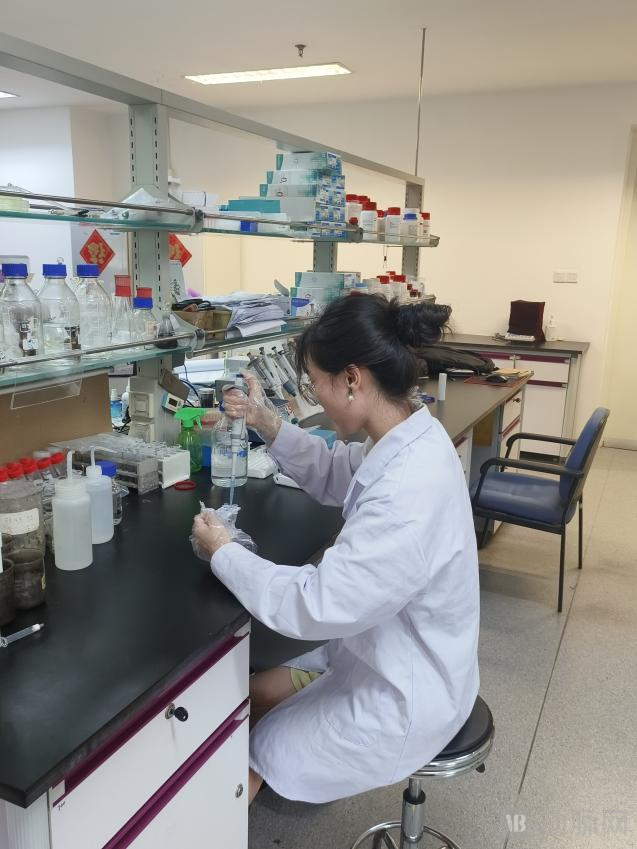
▲ Professor Ding Min’s team extracted catecholamines using the magnetic bead method
Professor Ding’s team has completed hundreds of clinical trials, and the results indicate that the diagnostic sensitivity of the magnetic bead-based enrichment method for detecting metanephrines (MNs) in random urine samples is slightly higher than that of the plasma MNs assay, andDiagnostic specificity is superior to that of plasma metanephrines (MNs) testing, with a lower false-positive rate.
The performance of the synthesized functionalized magnetic beads has raised Professor Ding’s expectations for the “magnetic bead detection method”:“We have mastered the fundamental principles of magnetic bead synthesis. In the future, this technology can be applied to a broader range of disease areas based on specific diagnostic markers for different diseases.”
From Early Screening to “Stratification”: Magnetic Bead Testing Holds Greater Potential
Currently, the magnetic bead-based enrichment method for detecting metanephrines (MNs) in random urine has completed small-scale trials, and Professor Ding’s team is preparing the medical device registration application for the project. From a clinical perspective, this detection method has matured; however, Professor Ding believes that there is still room for further development.
The synthetic magnetic beads developed by Professor Ding’s team can effectively extract6 TypesDetection of related substances, with the concentrations of certain substances correlating with tumor size, metastatic potential, and prognosis in pheochromocytoma. Currently, Professor Ding’s team has demonstrated that magnetic bead-based diagnosis of pheochromocytoma yields results consistent with pathological biopsy findings; however, further clinical data are required to substantiate these results.

▲ Professor Ding Min's Research Team
To achieve this goal, Professor Ding is seeking collaborations with relevant medical device manufacturers to simplify the instrumentation and better facilitate the translation of project outcomes.
At the end of the interview, Professor Ding told Chengguo Bureau: “Recently, our project team has also been actively collaborating with major hospitals to strengthen public education on pheochromocytoma. We aim not only to promote the importance of pheochromocytoma screening at the hospital level but also to enhance public awareness of this condition across society. Only when the general public recognizes and understands the disease can we truly address the issue of ‘missed diagnoses.’”