

Sheng'anjie Medical: A Rising Chinese Contender in Affordable, Intelligent, and Steerable Vascular Interventional Robotics for Primary Healthcare
On June 26, 2023, the neuro-peripheral vascular interventional access robot independently developed by Beijing SAJ Medical Technology Co., Ltd. (hereinafter referred to as “SAJ Medical”) successfully completed its first animal experiment.
This experiment was jointly conducted by multiple clinical experts, including Professor Gu Yongquan from the Department of Vascular Surgery at Xuanwu Hospital of Capital Medical University, and the SAJ MEDICAL team. It successfully achieved full-process remote stent, balloon, and filter implantation procedures, with the filter placement performed via semi-autonomous robotic operation. The experiment validated the safety, efficacy, and precision of SAJ MEDICAL’s vascular interventional robot. All experimental results met the expected objectives.
Di Liang, founder of SAJ MEDICAL, told VCBeat: “Most vascular intervention robots worldwide are designed around the rapid-exchange pathway for PCI procedures. Robots capable of performing controllable bending and semi-automated operations in peripheral and neurovascular interventions have yet to emerge. However, our robot has successfully validated these two core technologies in this animal study.”
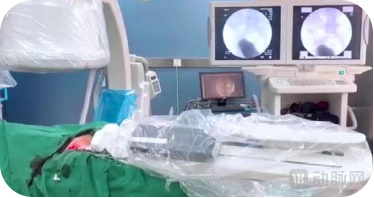
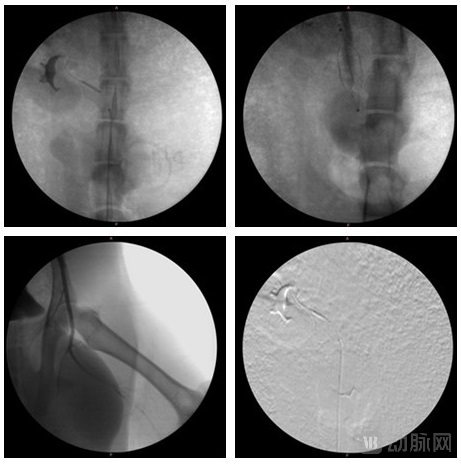
SAJ MEDICAL’s Vascular Interventional Robot Completes Animal Trials
The surgical robotics sector, once heavily favored by investment firms, is now plagued by commercialization challenges, making it a field that has attracted significant attention yet prompted deep reflection.
With medical interventional robots on the market often priced at several million yuan, grassroots healthcare—where demand remains largely unmet and untapped—can only look on with resignation. China’s mid-tier and even grassroots markets have limited purchasing power and suffer from a shortage of senior physicians; these are precisely the segments that stand to benefit most from robotic assistance. Yet, the reality is that few robots have managed to reach the general public.
Empowering physicians with practical support, delivering high-quality and affordable services, and unlocking the grassroots market with genuine demand are key to achieving the commercialization of surgical robots.
As is well known, the high price of surgical robots stems from two main factors. On one hand, most core components cannot be produced independently, leaving manufacturers dependent on external suppliers. On the other hand, most vendors primarily generate revenue through equipment sales, forcing them to pass on all R&D and facility costs to the robots themselves. This creates a negative feedback loop that has hindered the commercialization of surgical robots.
Throughout the history of global surgical robot development, robots with genuine commercial potential have essentially been those integrated with core surgical consumables, achieving commercial profitability through subsequent sales of these disposables. Only by shifting the R&D costs of medical robots onto the consumables can the widespread adoption of robotic systems be significantly enhanced.
Based on the above understanding,SAJ MEDICAL believes that primary healthcare is the optimal entry point for the commercialization of surgical robots. What primary healthcare truly and urgently needs are cost-effective surgical robots that can practically assist physicians in performing complex surgical procedures with convenience, efficiency, and safety.
SAJ MEDICAL, founded in 2019, aims to redefine vascular interventional therapy and standardize procedural practices, striving to become a pioneer in China’s intelligent interventional medical device industry.
SAJ MEDICAL focuses on application scenarios for surgical robots in primary healthcare, proposing an intelligent, steerable, and cost-effective solution for vascular interventional robots.
SAJ MEDICAL’s vascular interventional robot features an asymmetric fish-mouth, anti-collision, and anti-fouling design. It supports multi-device coordination and utilizes a quick-clamp consumable assembly cassette to reduce consumable replacement time.Medical personnel only need to perform a single replacement to complete the entire surgical procedure.Furthermore, the device is compatible with most surgical consumables available on the market. In addition, the device adoptsSemi-Automated Technology Under Supervision, featuring AI-powered real-time guidance and planning, which lowers the barrier to use for physicians, reduces human error, and expands the scope of application.
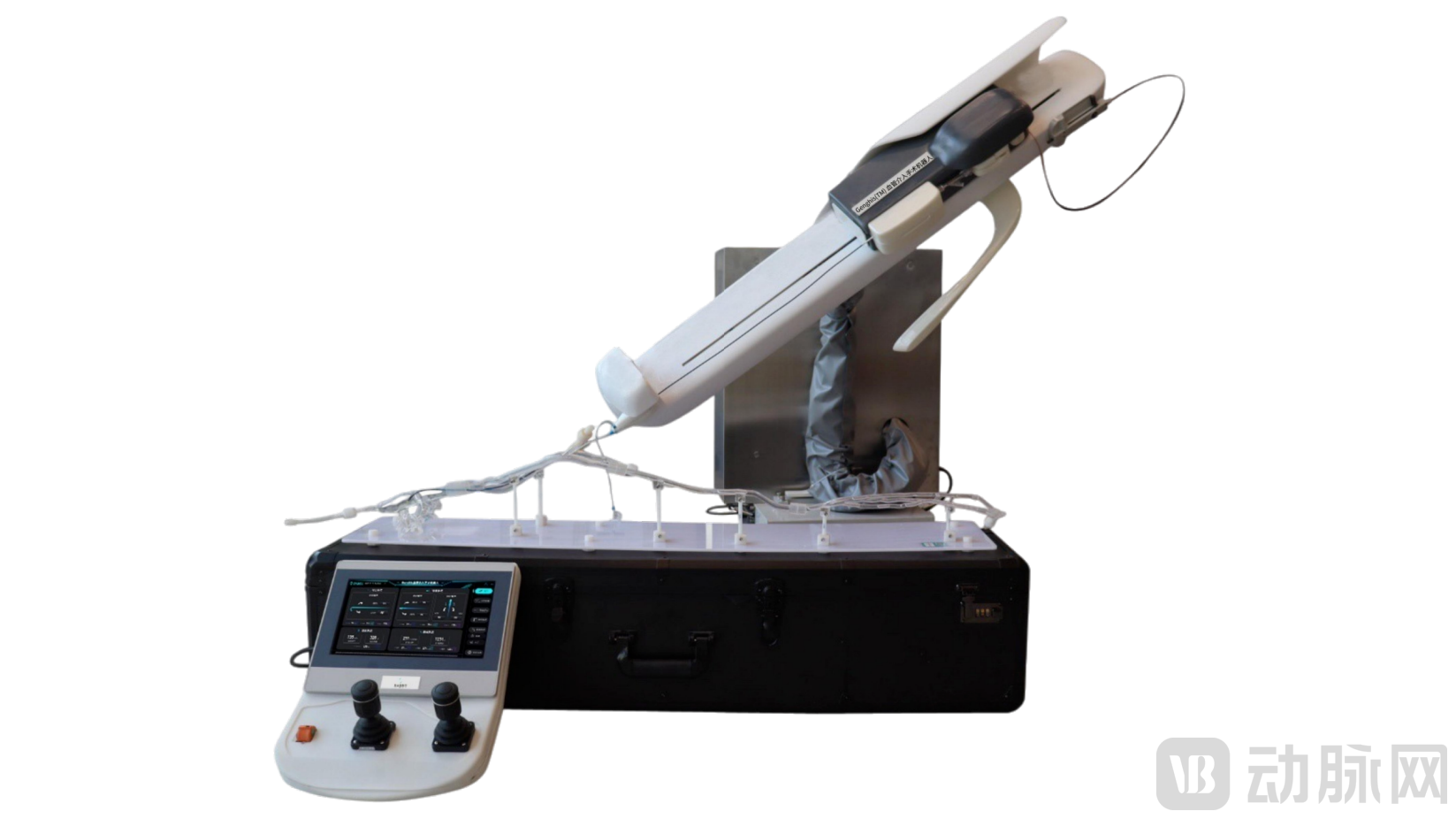
SAJ MEDICAL's Vascular Interventional Robot
Achieving the lightweight and miniaturized design of complex, high-precision surgical robots, as well as simplifying intricate surgical procedures, requires substantial technological support. Di Liang told VCBeat,Modular combination, multi-axis hybrid motion control, and multimodal real-time navigation are the highlights of SAJ MEDICAL's vascular intervention robot.
The multi-module quick-connect configuration serves as a sterile barrier, while robotics-oriented consumable design enhances machine compatibility, jointly establishing a stable and precise transmission structure. Dedicated and general consumables can be seamlessly interchanged via open modules, working in concert to form a stable assembly that ensures ease of installation, sterility, and surgical safety.
Multi-axis hybrid motion control enables an intuitive force feedback mechanism, which, combined with rapid information exchange, achieves stable and precise manipulation of the guidewire tip. Much like every subtle maneuver while driving a car, the system responds with precision.
Multimodal real-time navigation functions as an advanced guidance system, providing multi-angle, real-time direction for surgical pathways. By integrating real-time imaging with preoperative CTA/MR images and leveraging ultrasound and DSA for precise navigation, it fuses all data into a 3D visualization, offering clinicians clear, real-time insights into vascular structures and instrument status.
Di Liang told VCBeat that emergency surgeries, such as those for stroke, will become the primary arena for the application of vascular interventional robots in primary care hospitals, with price being one of the key factors limiting their adoption at this level. By streamlining and optimizing the design and structure of its original products while ensuring utmost performance and safety, SAJ MEDICAL has adopted a “device + multi-consumable” model to enhance product accessibility in primary care hospitals.
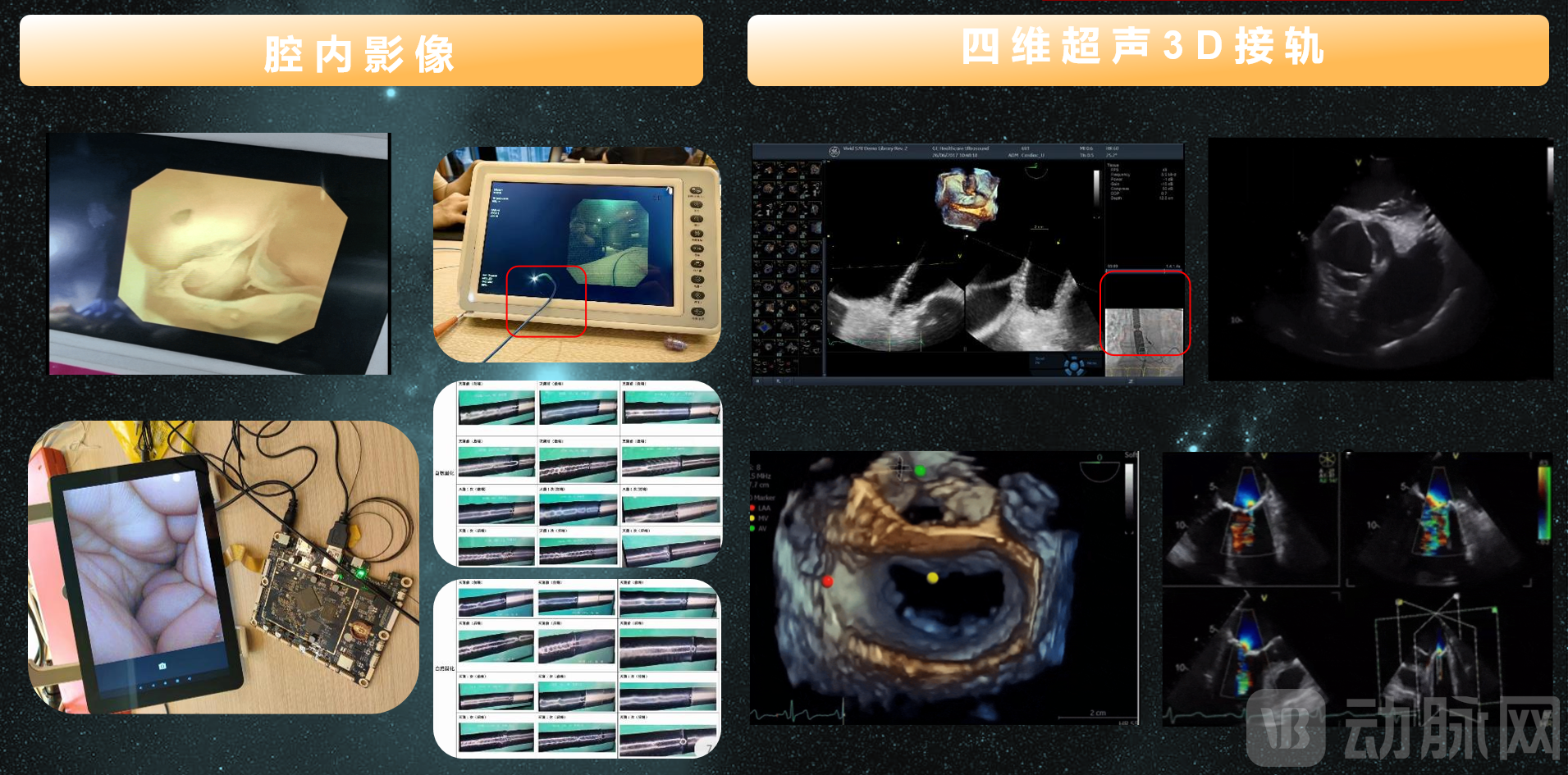
Multimodal Real-Time Navigation of the SAJ MEDICAL Vascular Intervention Robot
Consumables are also a critical component of vascular interventional robots. Currently, SAJ MEDICAL has independently developed products such as sterile kits, steerable (micro)catheters, perfusion balloon dilation catheters, and digital pressure pumps. Among these, the steerable catheter series is the flagship product in the company’s consumables portfolio.
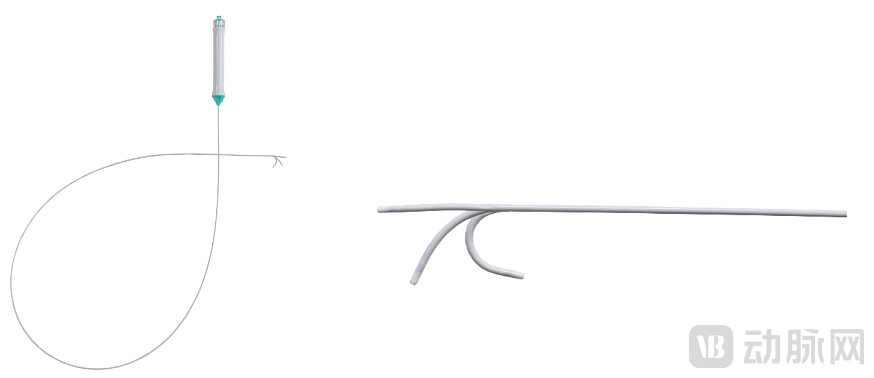
SAJ MEDICAL Steerable Catheter
Current interventional surgical catheters on the market present significant clinical pain points. According to Di Liang, during the angiography and therapeutic phases, physicians must select from dozens of catheter models and frequently exchange different catheters intraoperatively. Since each catheter requires distinct manipulation techniques, unfamiliarity with vascular anatomy or catheter specifications can substantially increase procedural difficulty. This not only demands that physicians be well-versed in the performance characteristics of various angiographic catheters and capable of making timely, precise judgments to select the appropriate device, but also requires them to master the handling techniques for each catheter type, placing exceptionally high demands on their tactile proficiency.
SAJ MEDICAL’s steerable catheters enable autonomous bidirectional steering within blood vessels and are available in sizes ranging from 4F to 12F. These versatile devices integrate the functions of angiographic catheters, guiding catheters, and steerable catheters into a single unit, allowing multiple procedures and steps to be performed with just one catheter. Physicians no longer need to navigate complex product selections; instead, they can adjust the steering angle in real time according to vascular anatomy. For most procedures, only a single catheter exchange is required to complete the entire surgery. This significantly simplifies operational steps, reduces procedural difficulty and the learning curve, and genuinely minimizes radiation exposure for physicians.
SAJ MEDICAL’s steerable catheters currently meet the operational requirements of over 90% of interventional procedures. Additionally, SAJ MEDICAL has designed a modular catheter system that allows for a 5-second disassembly and replacement with a universal module compatible with all catheters, ensuring the successful completion of the remaining 10% of procedures.
Leveraging its differentiated market positioning and distinctive technological advantages, SAJ MEDICAL has established collaborations with experts from leading institutions such as Beijing Anzhen Hospital, Xuanwu Hospital, and Beijing Tiantan Hospital. Following the completion of product design and development at these major medical centers, the company will focus on expanding its reach to more primary-care hospitals. By empowering physicians at these grassroots facilities with robotic and artificial intelligence technologies, SAJ MEDICAL aims to disseminate advanced surgical strategies and techniques pioneered by top-tier experts, thereby extending high-quality care to a broader patient population.
In terms of commercialization, the company has adopted the “razor-and-blades” model. In addition to consumable cartridges that incur recurring costs, it has deployed products such as steerable catheters, digital pressure pumps, and spinous process balloons, which can serve as cost-effective alternatives to currently used consumables. This strategy enables a business model that generates profits from both equipment and consumables while controlling the overall cost of surgical procedures. Looking ahead, SAJ MEDICAL will rapidly expand its equipment deployment in primary care hospitals and develop consumables better suited for robotic manipulation through in-house R&D and external collaborations, thereby diversifying its revenue streams.
Furthermore, prior to the advent of surgical robots, the design of consumables—such as handles and manipulation methods—was ergonomically optimized for manual human operation. With the arrival of the robotic era, SAJ MEDICAL will focus on robotically engineered improvements to consumables, tailoring them to better suit robotic operations.
Amid the recent industry buzz surrounding Siemens Healthineers’ strategic shift and the future direction of vascular interventional robots, Di Liang shared his three key insights with VCBeat.
First, Siemens Healthineers has made a major strategic shift, announcing its withdrawal from the cardiac field for vascular interventional surgical robots and refocusing on neurointerventional procedures. Di Liang believes that current vascular interventional robots, which merely replicate manual operations through a master-slave control system, have proven to be an unviable approach. The future direction for vascular interventional robotics will lie in engineering consumables for robotic compatibility, simplifying surgical workflows, and enhancing the precision of robotic manipulation of consumables. Furthermore, leveraging artificial intelligence to achieve semi-automated, automated, and intelligent surgical procedures will define the next generation of these systems.
Second, the launch of blockbuster products such as ChatGPT heralds the accelerated arrival of the AI 2.0 era. Multimodal large-model technologies are currently advancing at a rapid pace. In the future, artificial intelligence will comprehensively empower vascular interventional robots in areas such as data analysis, simulation, prediction, operational optimization, and the implementation of personalized treatment. It is believed that with the forthcoming technological breakthroughs, highly automated interventional surgical robots will become a reality.
Third, China and overseas markets are on a level playing field in the development of vascular interventional robots. Domestic physicians are on par with their international counterparts in vascular interventional techniques, and their innovations are better aligned with local clinical needs, while also benefiting from inherent advantages in data availability. In the future, Chinese-made surgical robots may achieve a qualitative leap, leading the related technological revolution.