

AstraZeneca Strikes Over $2 Billion Deal with Quell Therapeutics to Advance Treg Cell Therapies for Autoimmune Diseases

Quell Therapeutics
Engineering T Regulatory (Treg) Cell Therapy Developer
Recently, AstraZeneca announced an agreement with Quell Therapeutics (hereinafter referred to as “Quell”) to develop multiple engineered regulatory T cell (Treg) therapies. Quell will receive an upfront payment of $85 million from AstraZeneca and is eligible for additional development and commercialization milestone payments exceeding $2 billion.
The agreement stipulates the use of Quell’s proprietary Treg cell engineering module toolkit to develop autologous multi-module Treg cell candidate therapies for autoimmune diseases. These therapies have the potential to cure type 1 diabetes (T1D) and inflammatory bowel disease (IBD).
Furthermore, Quell will retain full ownership of its lead Treg cell therapy candidate, QEL-001, as well as its ongoing preclinical programs in neuroinflammation.
Regarding this collaboration, Quell CEO Iain McGill expressed his delight: “AstraZeneca will become our first major partner, a collaboration built upon our meticulously developed and designedBuilt upon pioneering multi-module Treg cell therapy, it provides excellent validation for our established technologies and capabilities.。”
“This collaboration with Quell is incredibly exciting, as the company also seeks to expand our next-generation therapeutic toolkit and explore the untapped potential of Treg cell therapies in autoimmune indications,” said Mene Pangalos, Executive Vice President of BioPharmaceuticals R&D at AstraZeneca, commenting on the partnership.
Quell, established in March 2019, is a biopharmaceutical company focused on developing Treg therapies for organ transplantation and severe immune-mediated diseases. In May 2019, it raised £35 million in Series A financing led by Syncona. Subsequently, the company completed an $84 million Series A+ round in February 2021, followed by a $156 million Series B round in November 2021.
This collaboration with Quell Therapeutics was, in fact, foreshadowed by AstraZeneca’s various prior moves.As a latecomer in the field of cell therapy, AstraZeneca has significantly accelerated its development pace in recent years,There were two related acquisitions in 2022 alone.。
In July 2022, AstraZeneca announced that it would acquire for $1.265 billionTeneoTwo, and acquired TNB-486, a bispecific molecular therapy currently in Phase I clinical trials. Behind this significant investment in TNB-486, AstraZeneca aims to accelerate the development of novel therapeutics for potential B-cell hematologic malignancies, including diffuse large B-cell lymphoma and follicular lymphoma. Building on the success of acalabrutinib, TNB-486 is poised to further enrich AstraZeneca’s hematology-oncology pipeline.
AstraZeneca has been quite persistent in expanding its hematologic oncology pipeline. In November 2022, a global biotechnology company focused on the discovery, development, and manufacturing of next-generation TCR therapies targeting neoantigens in solid tumorsNeogene Therapeuticsalso brought under AstraZeneca’s umbrella. Under the agreement, AstraZeneca will pay a $200 million upfront payment, plus $120 million in milestone payments.
Neogene’s product pipeline includes fully personalized TCR therapies, as well as therapies targeting shared neoantigens such as KRAS and TP53. Neogene aims to identify “neoantigens,” or the unique protein markers that tumors acquire upon mutation. The company samples tumor cells to uncover targetable neoantigens, then designs cell therapies capable of simultaneously recognizing several of these antigens. NT-125, Neogene’s most promising candidate, is expected to initiate its first-in-human clinical trials in patients with advanced solid tumors this year.
The shared goal of the two companies is to provide cell therapies for patients with solid tumors,Multiple acquisitions also underscore AstraZeneca’s ambitions in the cell therapy sector.
Since the introduction of liver transplantation in the 1980s, patients with end-stage liver disease have been offered a chance at survival. However, liver transplantation does not constitute a complete cure; the immune system recognizes the transplanted organ as “foreign” and mounts a rejection response. Therefore, patients require postoperative immunosuppressive therapy.
Under normal circumstances, the immune system maintains a long-term state of equilibrium. However, overly potent medications can lead to comprehensive suppression of the patient’s immune system, allowing pathogens to attack unchecked and potentially causing severe infections. Such immunosuppressive agents may even eliminate the body’s natural defense barrier against malignant tumor cells, thereby increasing the risk of cancer development in patients.
T cells are the control frontline of the immune system, with Tregs responsible for suppressing immune responses. In simple terms, Tregs can downregulate the immune system by “applying the brakes,” preventing overactivity and thereby avoiding pathological immune reactions. Quell is leveraging patented and innovative technologies to develop Treg cell therapies.
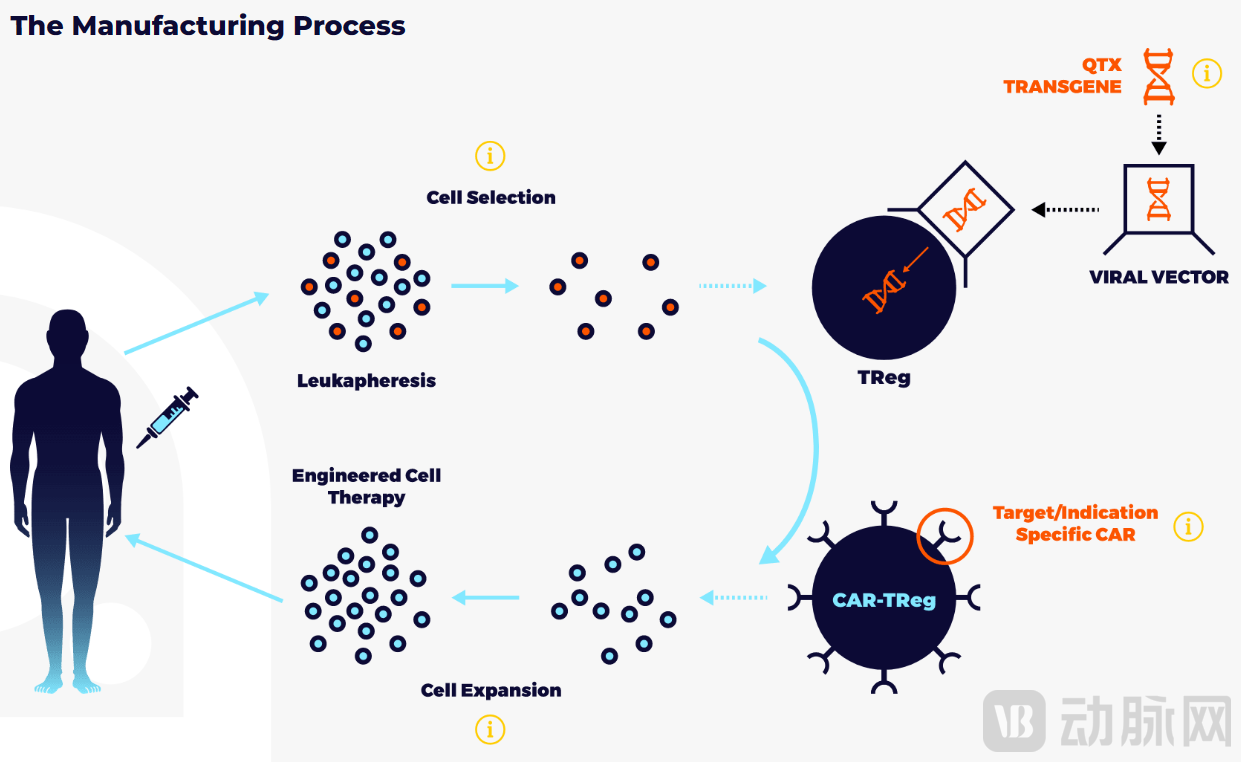 ▲ Mechanism of CAT-Treg Cell Therapy (Image source: Quell)
Quell’s strategy leverages the principles of CAR-T cells by engineering Treg cells to express chimeric antigen receptors on their surface, thereby targeting them to specific sites and locally establishing an immunosuppressive microenvironment. These ex vivo engineered Tregs can then be infused into patients, where they protect transplanted organs from host immune attack or suppress autoimmune responses and inflammation.
With the rapid advancement of CAR technology and the foreseeable application prospects of Treg cell therapy in various fields such as autoimmune diseases, organ transplantation, and tumor treatment, engineering Treg cells with CARs to generate CAR-Tregs has emerged as a promising therapeutic strategy. Targeting Tregs for the treatment of autoimmune disorders and transplant rejection has become a prominent area of research.
Currently, Treg cell therapeutic approaches primarily involve either the direct administration of traditional small-molecule drugs or biologics to patients, or the innovative adoptive cell therapy approach, which entails the direct infusion of live Treg cells—often referred to as “living drugs”—into patients. Numerous companies are conducting extensive research on Treg cell therapies across various disease areas.
Company | Cell Type | Primary Indications |
Quell Therapeutics | Foxp3+Treg | Liver Transplantation |
Sonoma Biotherapeutics | Foxp3+Treg | Kidney Transplantation Rheumatoid Arthritis (RA) |
Abata Therapeutics | Foxp3+Treg | Multiple Sclerosis (MS) |
Teralmmune | Foxp3+Treg | Hemophilia |
GentiBio | CD4+Treg | IType 1 Diabetes (T1D) |
Kyverna | Peripheral Blood T | BCells Cause Autoimmune Diseases |
Atara | Peripheral Blood T | Primary Progressive Multiple Sclerosis (PPMS) |
▲ Incomplete Statistics of Investigational Indications for Treg Cell Therapy
It is evident that Treg cell therapy is gradually gaining momentum.Sangamo has made the most rapid progress in kidney transplantation therapy, being among the first to conduct clinical trials of Treg cell therapies. Its candidate product, TX200, designed to prevent immune rejection after HLA-A2-mismatched living-donor kidney transplantation, completed dosing of the first patient in its Phase I/II clinical study in March 2022.
Currently, Quell has primarily focused on three strategic directions, including the antigen-specific Treg cell therapies QEL-001 and QEL-002 for combating immune rejection in liver transplantation.Undisclosed Direction, as well as multiple preclinical programs in neuroinflammation and autoimmune diseases.
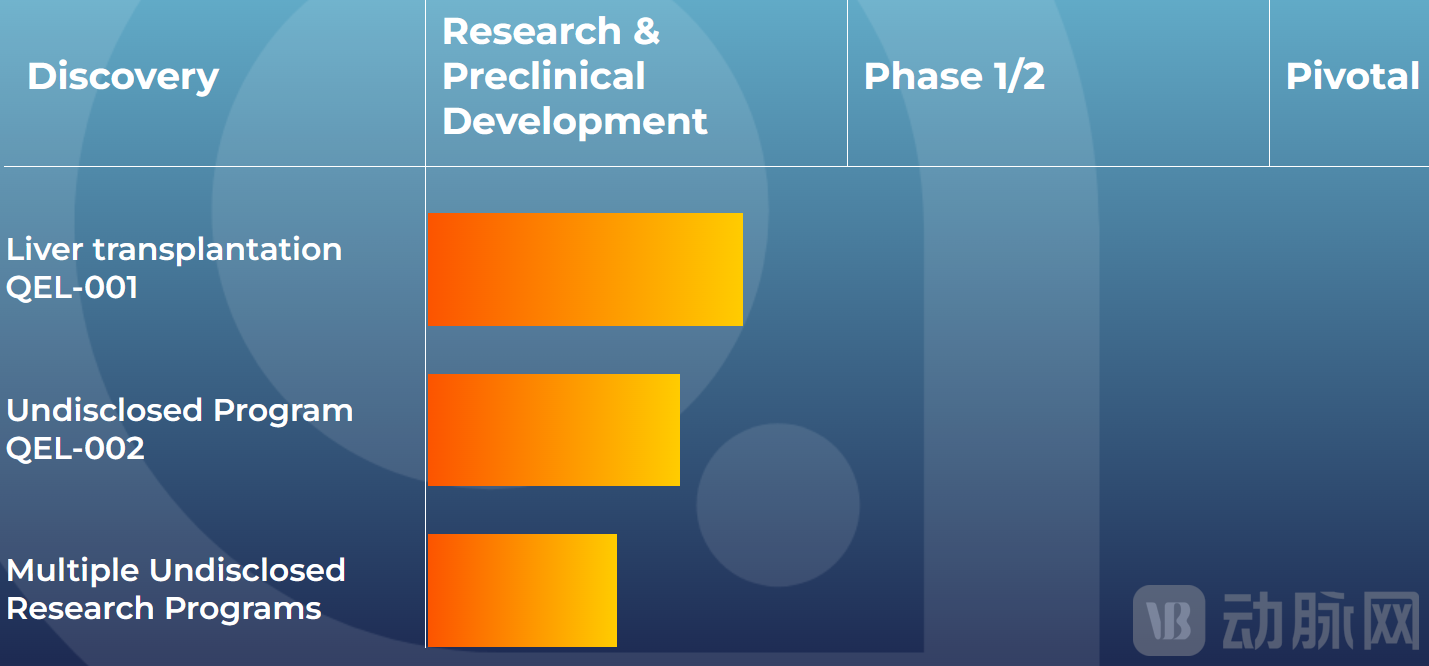
▲ Quell’s Pipeline Layout (Source: Quell)
The funds obtained from financing and partnerships will be used to advance the Phase I/II clinical trials of its potential “first-in-class” drug, QEL-001.The current effective approach to mitigating immune responses after liver transplantation remains the continuous administration of immunosuppressive drugs. This candidate therapy aims to prevent organ rejection by inducing durable immune tolerance, enabling patients to live with their transplanted livers without the need for immunosuppressive medication, ultimately achieving a complete cure through transplantation.The first-in-human trial of QEL-001 is expected to be conducted in 2023.
As a start-up biotech, Quell’s ability to secure a major collaboration with AstraZeneca is attributable to its outstanding leadership team. Quell was co-founded by Syncona Partners and six leading experts in the field of T-cell therapy, including Giovanna Lombardi, Professor of Human Transplant Immunology at King’s College London (KCL); Alberto Sanchez-Fueyo, Professor of Hepatology at the KCL Institute of Liver Studies; Hans Stauss, Professor of Tumour Immunology at University College London (UCL) and Director of the Institute of Immunity and Transplantation; Emma Morris, Professor of Clinical Cell and Gene Therapy and Inflammation; Marc Martinez-Llordella, Senior Lecturer at the KCL Institute of Liver Studies and Theme Lead for Immunology and Immunotherapy at the NIHR UCLH Biomedical Research Centre; and Elmar Jaeckel, Head of the “Immune Tolerance” Group in Gastroenterology and Co-Lead of the Liver Transplantation Programme in the Department of Gastroenterology, Hepatology and Endocrinology at Hannover Medical School.
The company is led by Executive Chairman Iain McGill, a former pharmaceutical executive with 25 years of extensive industry experience in immunology, including solid organ and cell transplantation.
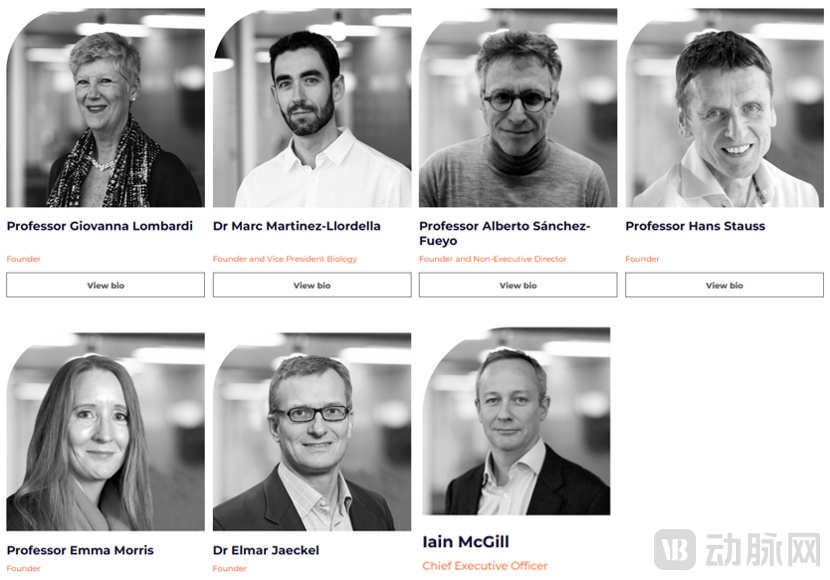
▲ Quell’s Six Founders and CEO (Image source: Quell)
Certainly, Treg cell therapy also faces several challenges, including identifying the correct antigens and ensuring that infused cells do not cause autoimmunity. It remains unclear how long the therapeutic effects of Treg cell therapy can last; some studies indicate that transplanted cells struggle to persist, making it crucial to control the stability of Treg cells.