

Frunmec Medical: Pioneering a Platform-Based Strategy with Dual-Core Technologies of Low-Temperature Plasma and Radiofrequency Ablation
The application of energy forms such as electrical, thermal, and mechanical energy in medical devices has driven surgery toward greater precision and minimally invasive techniques, while also supporting a vast market space. Among these, the markets for energy-based surgical devices and tumor ablation devices have grown particularly rapidly; the former exceeded RMB 30 billion in market size in 2021, while the latter reached RMB 3.92 billion in the same year.
In the first tier of both major markets, one name stands out: Forerunner Medical.Built upon two major technological platforms—low-temperature plasma ablation and radiofrequency ablation—it has established a comprehensive presence in the minimally invasive medical device market, with business operations spanning five key areas: sports medicine, minimally invasive spine surgery, otolaryngology, interventional oncology, and interventional pulmonology.As of now, Forerunner Medical and its subsidiaries have obtained a total of 19 NMPA registration certificates. Its products are used in over 1,200 hospitals across China and have been successfully exported to Europe, Southeast Asia, and other regions, serving more than 100,000 patients annually.
With the trend toward minimally invasive surgery, the energy-based surgical device market has garnered significant attention in recent years. Companies such as Forerunner Medical have secured multiple rounds of financing exceeding RMB 100 million, while industry giants like Mindray Medical and Lepu Medical have actively entered this sector. Energy-based surgical devices primarily consist of three product categories—plasma scalpels, ultrasonic scalpels, and high-frequency electrosurgical units—which collectively account for more than 80% of the market. Among these, plasma scalpels represent the fastest-growing segment. According to statistics from VCBeat,In 2021, the market size of plasma scalpels in China was approximately RMB 7.65 billion.。
Plasma scalpels offer multiple functions, including cutting, vaporization, shrinkage, and hemostasis, with minimal tissue damage and a high safety profile. They are currently widely used in departments such as sports medicine, otolaryngology, and spinal surgery, among which sports medicine is the fastest-growing area of application.
Plasma scalpels are essential surgical tools for arthroscopic procedures in sports medicine. Currently, the total number of arthroscopic surgeries performed in China has exceeded one million, with an annual growth rate of approximately 20%. Driven by technological advancements, enhanced clinical education, and accelerated centralized procurement, arthroscopic surgeries are expanding to more county-level hospitals, thereby fueling growth in the plasma scalpel market.
Plasma scalpels represent a high-barrier sector, involving the research, development, and production of various core components such as energy generators and transducers, as well as foundational materials including alloy materials and anti-tissue adhesion coatings. Meanwhile,The plasma knife system primarily consists of a plasma generator and electrodes. The former presents significant R&D challenges, as it must meet requirements for precise energy delivery and intelligent monitoring, involving complex algorithms. The latter entails sophisticated manufacturing processes, including laser cutting and welding, sterilization, and coating.。
Currently, some participants in the plasma market can only develop plasma electrodes and therefore must rely on host devices from other brands for treatment. However, due to considerations of operational convenience for physicians, treatment efficiency, and procurement costs for hospitals, clinical practice tends to favor complete plasma treatment systems from a single brand. Furthermore, future provincial or national volume-based procurement programs will likely prioritize brands that offer comprehensive plasma treatment systems.
Forerunner Medical, founded by Chairman Qin Jie in 2009, was a pioneer in the field of energy-based surgical devices. The company has developed multiple plasma generator systems and electrodes, which are widely used in sports medicine, minimally invasive spine surgery, and otolaryngology.In the sports medicine plasma knife market, Forerunner Medical ranks second among both domestic and international brands, and first among Chinese brands; in the spinal surgery and ENT plasma knife markets, the company ranks among the top of both domestic and international brands.
Forerunner Medical’s plasma generator is intelligent, safe, and efficient. If the plasma electrode contacts metal surgical instruments during surgery, the system will issue an alarm and cease operation to protect both the electrode and the instruments; normal operation resumes once the electrode is separated from the metal instruments. Additionally, in the event of an electrode short circuit during surgery, the generator will trigger an alarm and stop working.
Forerunner Medical offers a comprehensive range of plasma electrode specifications, suitable for a wide variety of anatomical sites. All plasma electrodes adoptBipolar Integrated Cable Design, easy to operate, prevents cross-contamination, and allEquipped with suction function, effectively aspirates air bubbles and debris generated during surgery to maintain a clear surgical field. The plasma electrode adoptsMulti-Point Working Electrode Technology, while significantly improving ablation efficiency, it markedly reduces the operating temperature and provides effective immediate hemostasis, allowing for safe and effective use in areas where tourniquets cannot be applied, such as the shoulder and knee joints.
Meanwhile, in different clinical departments,Forerunner Medical is also developing dedicated plasma electrodes to meet diverse therapeutic needs.. For instance, to meet the therapeutic needs of the shoulder joint, Forerunner Medical has introduced oval-shaped electrodes that do not adhere to tissue, enabling efficient ablation and coagulation; additionally, specialized electrodes have been designed for arthroscopic surgeries of small joints such as the wrist, ankle, and elbow.
Forerunner Medical’s core plasma surgical knife products have all received approval from the National Medical Products Administration (NMPA) and are now used in over 1,000 hospitals across China, including more than 400 tertiary hospitals. Meanwhile, the company has participated in formulating industry standards for plasma surgical equipment in China, promoting the standardized development and application of these medical devices.In 2022, the national centralized volume-based procurement for orthopedic spinal consumables was opened for bidding, including spinal endoscopic radiofrequency probes in the procurement list, and Forerunner Medical's products successfully won the bid.
China has been vigorously promoting the development of the plasma knife market, which has now achieved a high rate of domestic production. The "Guidelines for Reviewing Government Procurement of Imported Products" (2021 Edition), jointly issued by the Ministry of Finance and the Ministry of Industry and Information Technology, explicitly stipulates that 100% of high-frequency electrosurgical systems must be procured from domestic brands.
In a high-growth, increasingly competitive landscape, companies are beginning to seek out their second curve of growth. Meanwhile, driven by clinical treatment needs, comprehensive product solutions have become a key focus for corporate development.In the field of sports medicine, in addition to plasma ablation devices, Forerunner Medical also offers a series of implant products, including polyetheretherketone (PEEK) suture anchors, non-absorbable ligament fixation screws, non-absorbable suture anchors, and interference screws, continuously enhancing its comprehensive solutions for sports medicine.
Beyond plasma technology, radiofrequency ablation is also a core technology of Forerunner Medical, operated primarily through its subsidiary, Maide Medical. As one of the earliest companies in China to enter the field of radiofrequency ablation, Maide Medical has gradually evolved from a market “pioneer” into an “industry leader.”
Due to its advantages such as being minimally invasive, precise, and efficient, ablation technology has become one of the primary treatment modalities for tumors.In China, more than 300,000 tumor ablation procedures are performed annually, with thermal ablation—primarily radiofrequency ablation and microwave ablation—accounting for over 80% of the market share.Moreover, with the deepening aging of China’s population, the rising prevalence of cancer, increased awareness of health screenings, and the diversification of diagnostic techniques, the volume of tumor ablation procedures is growing rapidly at an annual rate of approximately 20%–30%.
In the field of ablation,Radiofrequency ablation is the most maturely developed segment, having been widely applied to various malignant tumors in recent years and gradually expanding to the treatment of benign nodules.Wang Qian, General Manager of Forerunner Medical, stated: “Among various ablation technologies, microwave ablation and radiofrequency ablation are complementary. Physicians can select the more appropriate ablation method based on tumor size and location. Microwave ablation is capable of treating larger tumors with high ablation efficiency, whereas radiofrequency ablation offers greater safety and precision, with strong controllability over the ablation zone, a broad range of indications, and fewer postoperative complications.”
Radiofrequency ablation (RFA) systems primarily consist of an RFA generator and radiofrequency electrodes. Companies with mass production capabilities for complete systems, such as Forerunner Medical, hold a significant competitive advantage. Meanwhile, compared to traditional surgical procedures, RFA offers lower treatment costs. Its high cost-effectiveness makes it more favored by hospitals and patients, thereby facilitating the decentralization of these procedures to lower-tier healthcare facilities.
Forerunner Medical has independently developed radiofrequency ablation generators and electrodes, establishing a broad presence in the treatment of liver and thyroid conditions. The company plans to expand its applications to include the treatment of pulmonary nodules, bone tumors, breast nodules, uterine fibroids, and hemorrhoids, aiming to “serve patients and healthcare providers with superior quality and more affordable pricing.”
Forerunner Medical offers two radiofrequency generators, the S-1500 and the S-5L. Both feature high power output and a broad power selection range, making them suitable for the treatment of tumors of varying types and sizes. They also support both power control and temperature control modes. Meanwhile,The two generators can display temperature, power, resistance, and cumulative duration in real time, facilitating effective intraoperative monitoring of the ablation process by clinicians. Equipped with an intelligent recognition and protection device, the system automatically stops energy output in case of misoperation or equipment malfunction to ensure surgical safety.。
Furthermore, the new S-1500 offers multi-functional capabilities in a single device, allowing physicians to adjust parameters in real time during procedures based on treatment conditions. It is important to emphasize that,S-5L is the first domestically produced console approved by the National Medical Products Administration (NMPA) specifically for thyroid ablation.。
Forerunner Medical’s radiofrequency electrodes include water-cooled single-needle, claw-type, and traditional monopolar/bipolar single-needle electrodes,Minimum needle diameter: 19G, significantly reducing trauma and improving procedural precision, with a sharp needle tip that facilitates easy puncture. Meanwhile,Radiofrequency electrode ablation zones are more spherical, conforming to the shape of most tumors, thereby enabling more thorough ablation.。
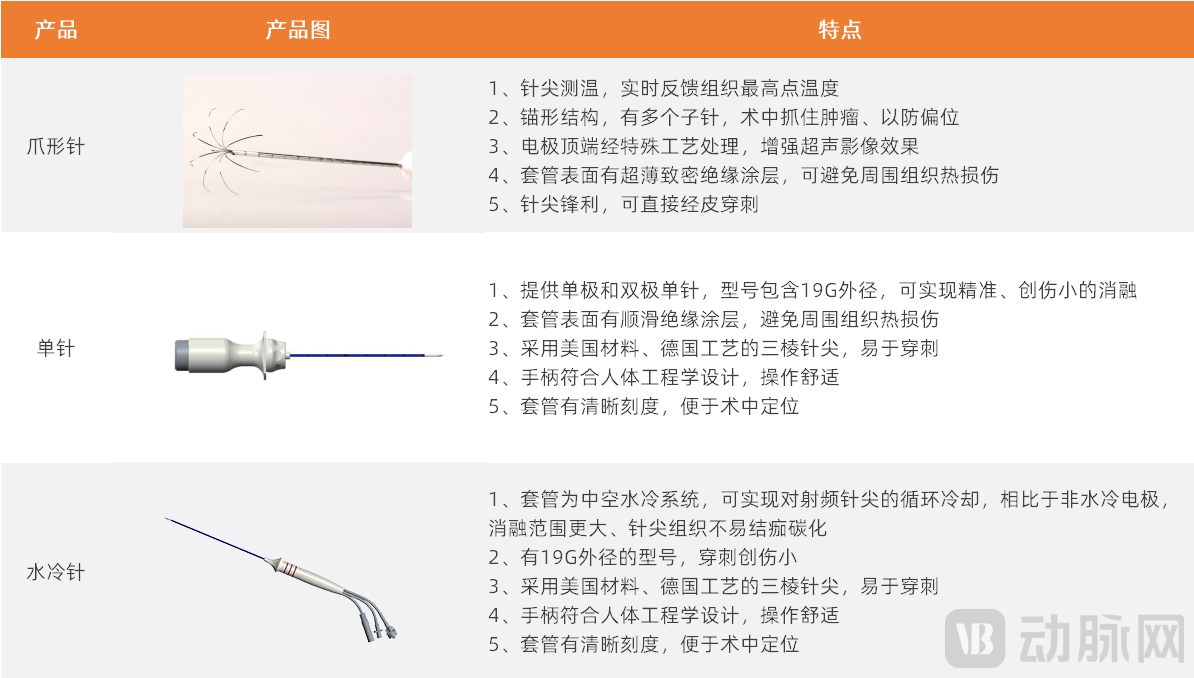
Currently,Forerunner Medical’s radiofrequency ablation generators and electrodes have obtained NMPA and CE certifications, and the company has been awarded the ISO 13485 Quality Management System certificate by Intertek SEMKO, an internationally recognized authoritative body.。The product has been adopted by more than 200 Grade A tertiary hospitals, including Zhongshan Hospital Affiliated to Fudan University, Renji Hospital, Xiangya Hospital of Central South University, Peking Union Medical College Hospital, and the Chinese PLA General Hospital (301 Hospital)., widely recognized by clinical experts.
Meanwhile, Forerunner Medical’s wholly-owned subsidiary, Mide Medical, participated in the formulation of the industry standard for *Liver Radiofrequency Ablation Therapy Devices* and actively promoted clinical education.
In recent years, clinical guidelines and fee schedules related to radiofrequency ablation have been progressively refined. For instance, in 2021, Shanghai included tumor radiofrequency ablation technology within the scope of medical insurance coverage, which will further promote the widespread adoption of radiofrequency ablation procedures.
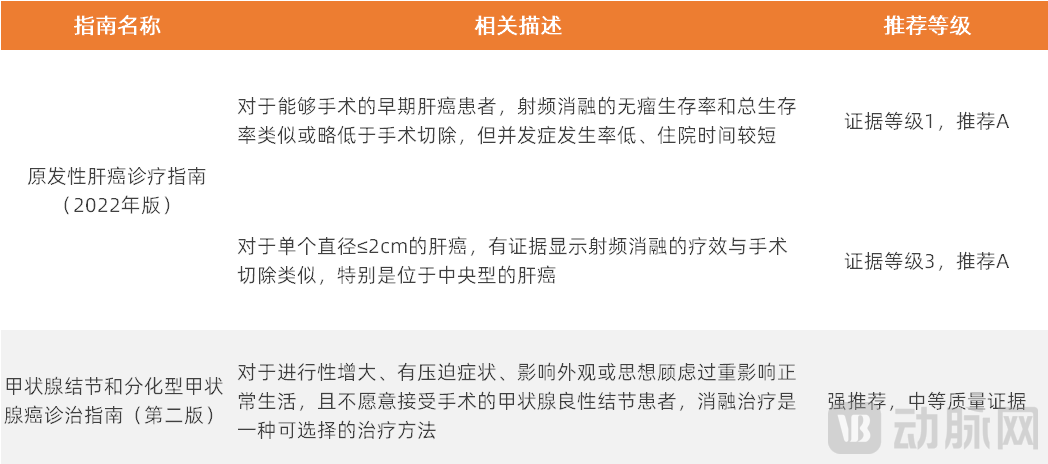
Currently, clinical concerns regarding ablation surgery primarily center on incomplete treatment and high recurrence rates; however, standardizing clinical procedures and enhancing physicians’ technical proficiency can significantly mitigate these risks. Given the dense distribution of organs and blood vessels around the human thyroid, clinical operations require a high degree of precision. Percutaneous radiofrequency ablation (RFA) for thyroid lesions is classified as a restricted technology under national regulatory management. In China, challenges such as strained medical resources and uneven levels of physician expertise have, to some extent, limited the widespread adoption of this procedure.
Forerunner Medical actively supports clinical education initiatives, such as collaborating with the National Health Commission’s Center for Capacity Building and Continuing Education to jointly organize national specialized training programs on thyroid radiofrequency ablation techniques with domestic experts, and participating in tumor ablation technology training courses hosted by the Chinese Medical Doctor Association.etc., to improve the standardization of radiofrequency ablation procedures among clinicians, ultimately benefiting more patients.
Mr. Wang Qian stated, “The National Health Commission has been continuously promoting the standardization of diagnosis and treatment for thyroid nodules and strengthening training for clinicians, with Forerunner Medical actively participating in these efforts. We believe that, driven by the collaborative efforts of multiple stakeholders, the diagnosis and treatment of thyroid nodules will become increasingly precise, safe, and efficient.”
Since its establishment in 2009, Forerunner Medical’s development strategy has gradually become clear—pursuing a platform-based approach through “in-house R&D + mergers and acquisitions.”
Lessons from others can help polish one’s own jade. Reviewing the development trajectories of international giants such as Medtronic and Boston Scientific, it is evident that a major trend involves a growth model combining in-house R&D with acquisitions, built upon core technology platforms. Companies need to establish their own core technology platforms to develop flagship products with competitive advantages, while leveraging acquisitions to enhance their product solutions and rapidly enter new fields. Meanwhile,With centralized procurement of high-value medical consumables approaching and the gradual implementation of DRG-based payment, a platform-oriented development model can reduce corporate development risks and facilitate industry resource integration.。
However, the path to platformization is fraught with challenges. From the perspective of a company’s intrinsic capabilities, it must possess robust R&D, manufacturing, and commercialization capacities to establish a comprehensive industry chain that facilitates the iterative development of its proprietary or acquired products. From the standpoint of platform-oriented strategic direction, it requires forward-looking market insights to select products with unmet clinical needs and significant growth potential. Additionally, it must effectively leverage multi-party resources, including clinical experts and partner enterprises, to deliver complete product solutions.
Forerunner Medical insists on independent research and development and in-house manufacturing,Established two core technology platforms: low-temperature plasma ablation and radiofrequency ablation, continuously expanding the market on this basis, while building a complete supply chain and production line,The Group’s total production area is approximately 3,000 square meters (excluding R&D laboratories, quality control laboratories, etc.)., enabling autonomous control over product quality and production efficiency. Leveraging its insights into the minimally invasive medical device market, the company acquired Maid Medical in 2016 to enter the tumor intervention market, and acquired Anzhen Medical in 2021 to enter the respiratory intervention sector.
From a horizontal perspective, Forerunner Medical has established a presence in multiple sectors, including sports medicine, spine, ear-nose-throat (ENT), and oncology interventional procedures, with leading products in each segment. Vertically, the company provides comprehensive solutions for specific sub-sectors; for instance, in sports medicine, it offers both plasma scalpels and implants, achieving absolute market leadership. Currently,Forerunner Medical and its subsidiaries have obtained a total of 19 NMPA registrations and 133 national patents (including those held by subsidiaries),The products have entered markets in Europe, Southeast Asia, and Australia. The company’s annual revenue growth has remained above 30%.
Furthermore, talent is the foundation of corporate development. Forerunner Medical boasts a specialized, multidisciplinary team. As a serial entrepreneur, Chairman Qin Jie brings years of experience in medical device development and corporate management, having previously served as Chairman of Kinetic Medical, a leading domestic company in minimally invasive spinal instruments. General Manager Wang Qian has worked at renowned medical device companies both in China and abroad, such as Medtronic, bringing extensive market sales experience and a global perspective. The senior R&D team and marketing and sales management personnel are largely recruited from international medical device giants such as Johnson & Johnson and Medtronic, leading the team to provide professional marketing promotion and sales services.
Leveraging its internationally oriented talent team and original technological products, Forerunner Medical has been continuously expanding into overseas markets, with early strategic focus on Europe, Southeast Asia, and other Asian regions, striving to secure a “foothold” in the global market for minimally invasive surgical instruments.