

China's First Approved Single-Port Laparoscopic Surgical Robot Unveiled at CUDA, Establishing a 'Chinese Icon' in Minimally Invasive Surgery
From July 13 to 16, the Annual Conference of the Urology Branch of the Chinese Medical Doctor Association (CUDA) (hereinafter referred to as the “CUDA Annual Conference”) was held in Taiyuan, Shanxi. Spanning two editions of the CUDA Annual Conference, the “Single-Port Laparoscopic Surgical Robot” independently developed by Shurui Robotics made its reappearance, having successfully received market approval.
At the launch event for ShuRui Robotics’ products, 17 experts and scholars—including Professor Xing Nianzeng, President of the Urology Branch of the Chinese Medical Doctor Association and from the Cancer Hospital of the Chinese Academy of Medical Sciences; Academician Zhang Xu from the Chinese PLA General Hospital and the Chinese Academy of Sciences; Professor Xu Kai, Founder and Chairman of ShuRui; and Mr. Zhao Lei, Chief Commercial Officer and Director—attended to jointly witness the inauguration ceremony for China’s first approved single-port laparoscopic surgical robot.


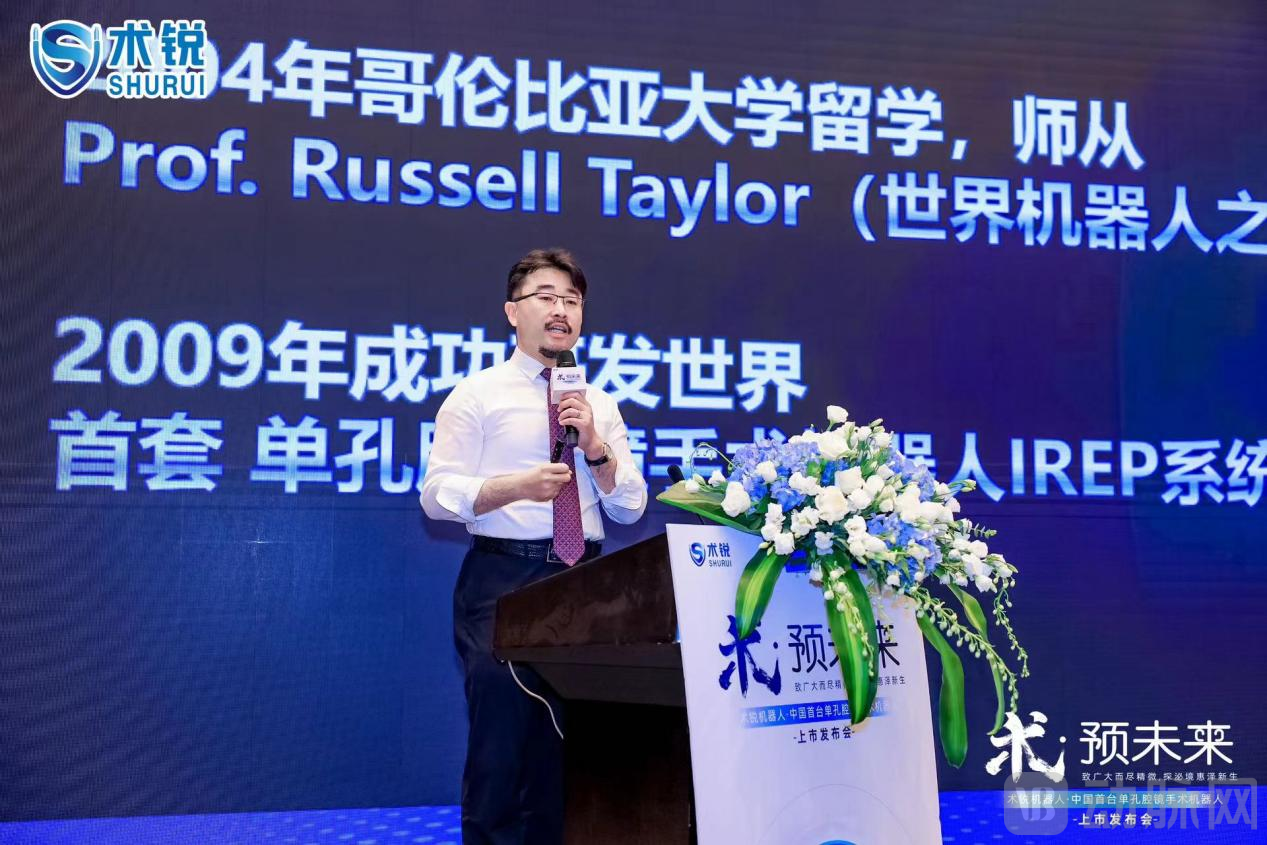

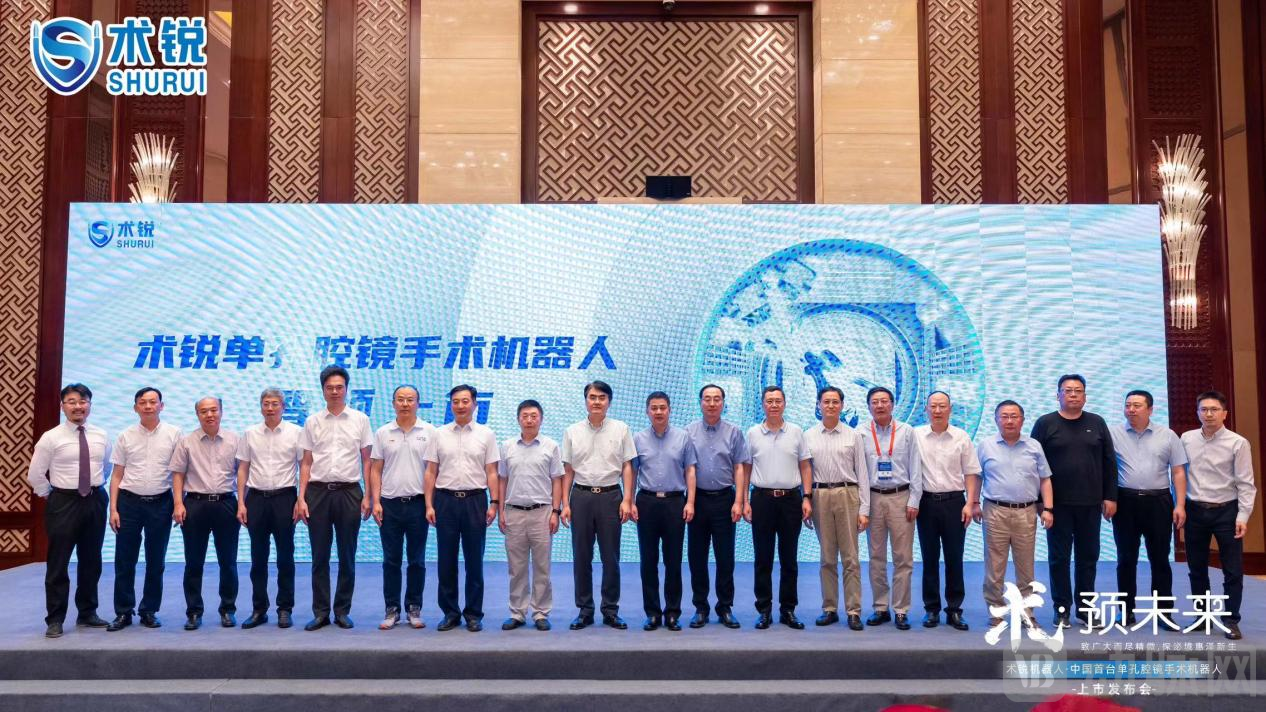
At the launch ceremony, President Xing Nianzeng stated that the successive rollout of domestically produced robots is accelerating the upgrading of “Intelligent Manufacturing in China” and Chinese technology through the integration of medicine and engineering, thereby achieving the goal of benefiting patients—a shared aspiration among medical professionals. Academician Zhang Xu remarked that Shurui Robot, as a fully independent and original domestic brand, has achieved a breakthrough from 0 to 1. He expressed confidence that the Shurui single-port surgical robot will become one of the premier choices for surgical procedures in the future. He called for concerted efforts to strengthen the integration of medicine and engineering, elevate the application of single-port laparoscopic technology in urology to a new level, and ensure that minimally invasive techniques benefit patients.
As the first endoscopic single-port surgical system in China and the second commercially available one globally, the approval of this device not only effectively fills a domestic gap but also breaks the monopoly imposed by foreign technological blockades, resolving critical “chokepoint” challenges. It has created a “Chinese calling card” for the laparoscopic surgery community, demonstrating the strength of Chinese innovation.
As the concept of minimally invasive surgery continues to gain prominence, both physicians and patients anticipate procedures with reduced trauma or even scarless outcomes. Robotic laparoendoscopic single-site (R-LESS) surgery is undoubtedly one of the approaches closest to achieving this goal, and it has been successfully implemented in the field of urology both domestically and internationally.
Globally, the da Vinci SP®The development and application of the system have elevated single-port laparoscopic technology in urology to a new level, with widespread use in various urological procedures, such as radical prostatectomy, radical cystectomy, and surgeries for renal and adrenal lesions. Among these, radical prostatectomy is the most commonly performed procedure. However, due to the Da Vinci SP®The system’s technological sophistication has not yet been introduced to the Chinese market, where true single-port robotic technology has long remained unavailable.
After nearly two decades of meticulous refinement, Shurui Robotics has successfully overcome critical technological bottlenecks. In June 2023, the Shurui single-port laparoscopic surgical robot received market approval from the National Medical Products Administration (NMPA) (Registration Certificate No.: Guo Xie Zhu Zhun 20233010833), authorizing its use in urological laparoscopic procedures and effectively filling a domestic gap.
In its approval notice for the ShuRui surgical robot, the National Medical Products Administration (NMPA) gave high praise: “The surgical instruments incorporated in this product utilize internationally pioneering, independently owned intellectual property technologies, offering technical advantages such as a wide range of motion, strong load-bearing capacity, and high reliability.” Meanwhile, ShuRui has completed its registered clinical trials in gynecology, while registered clinical trials in general surgery are currently underway. As a result, ShuRui has become the only commercially approved single-port laparoscopic surgical robot globally, aside from the da Vinci Surgical System, breaking da Vinci’s technological monopoly and enabling patients and healthcare providers in China and around the world to share access to this advanced technology.
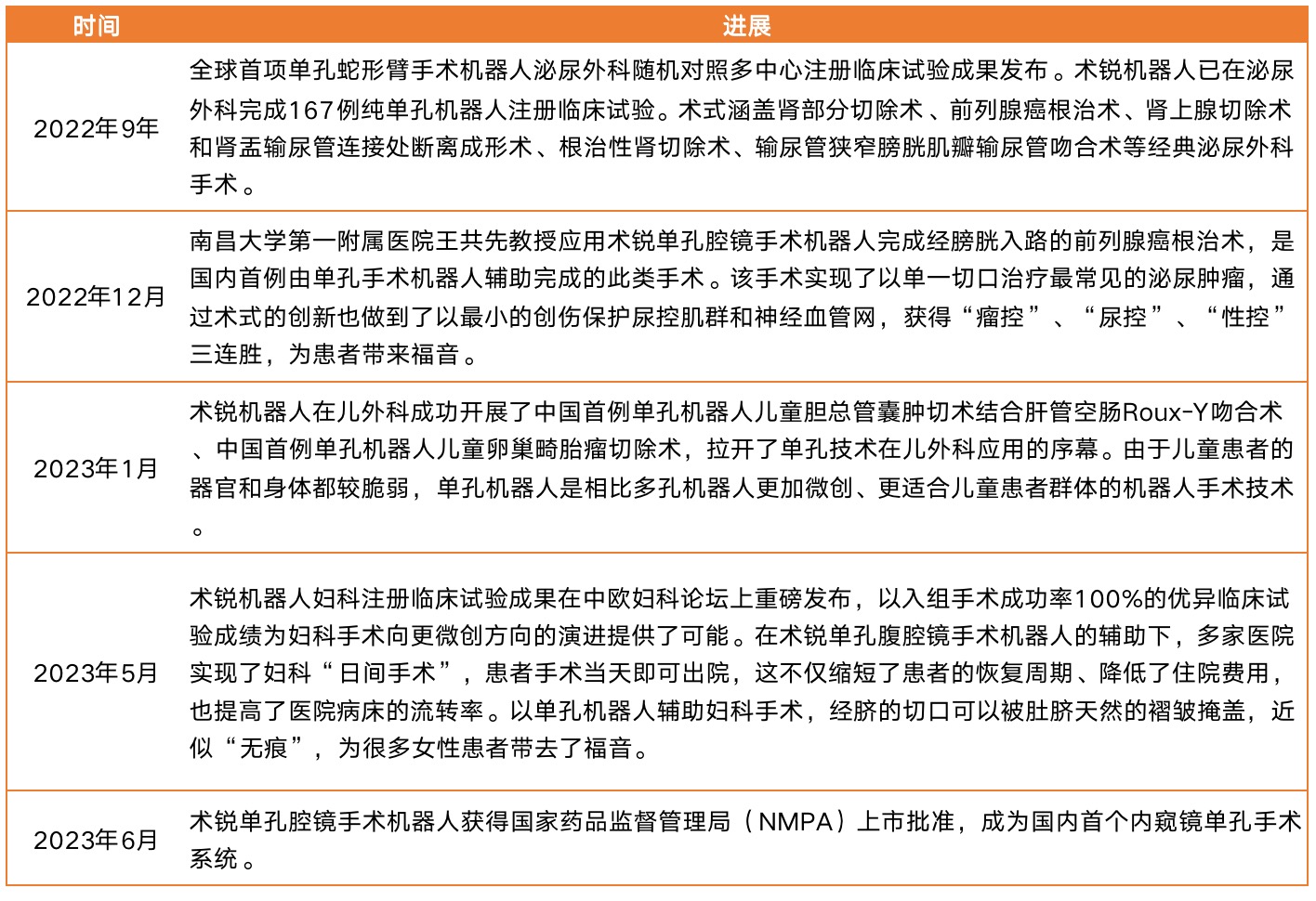
Leveraging its proprietary technological advantages and innovative performance, the ShuRui surgical robot enables precise, efficient, and safe surgical procedures through a single incision, eliminating the need for multiple ports in the patient’s abdominal wall. This approach effectively minimizes patient trauma without compromising therapeutic efficacy.
The Shurui single-port laparoscopic surgical robot not only empowers physicians to perform precise surgical procedures, reduces intraoperative fatigue, and extends their professional careers, but also facilitates high-quality development in hospitals, providing robust support for the delivery of high-quality, efficient healthcare services and the advancement of the Healthy China initiative. The Shurui single-port surgical robot offers a minimally invasive solution for urological surgeries and may effectively drive the innovation and evolution of new technologies, concepts, and therapies in urology, aligning perfectly with the theme of this conference.
During the event, the high-profile launch of Shurui Robotics captured the attention of numerous leading academics from both domestic and international medical and urological communities, who engaged in discussions and knowledge sharing centered on this technology.
As the lead institution for the multicenter clinical trials of the Shurui single-port surgical robot in urology, Shanghai Changhai Hospital has consistently remained at the forefront of surgical robot research and development as well as clinical practice. Director Wang Linhui presented the clinical trial results of the Shurui single-port surgical robot. Director Wang stated that urological procedures performed with the assistance of the Shurui single-port robot are more precise. On one hand, the highly flexible snake-like arm design unique to the Shurui surgical robot facilitates deep suturing and knot-tying. On the other hand, the “operative triangle” formed by the snake-like arms mitigates the chopstick effect inherent in traditional single-port surgery while enabling coverage of a broader surgical field. Furthermore, the robotic arms of the Shurui system can withstand a load force of up to 10 N, ensuring stability during tissue retraction and instrument manipulation. Director Wang believes that robot-assisted surgery can effectively address the challenges associated with traditional single-port laparoscopic procedures, ultimately bringing about a turning point where the difficulties of single-port surgery give way to its benefits.
Currently, Shurui Robotics has mastered the key core technologies across the entire chain of laparoscopic surgical robots and possesses independent intellectual property rights to its core technologies. It has filed over 600 intellectual property applications worldwide, establishing a comprehensive system for the protection of independent intellectual property rights, thereby achieving Chinese originality and global leadership.
Since 2015, surgical robots have received comprehensive policy support. Both “Made in China 2025” and the “Healthy China 2030” Planning Outline have elevated the localization of high-end medical equipment to a national strategic level. Moreover, China’s 14th Five-Year Plan explicitly emphasizes the need to “achieve breakthroughs in large-scale medical devices such as laparoscopic surgical robots and their key components.”
Meanwhile, the successive introduction of various market access regulations has, to a certain extent, driven the rapid development of domestically produced surgical robots across key stages, including research and development, regulatory approval, and commercialization. According to data from Frost & Sullivan, the market size of laparoscopic surgical robots in China grew from RMB 700 million in 2017 to RMB 3.24 billion in 2021, representing a compound annual growth rate (CAGR) of 46.7% during this period.
With the continuous advancement of minimally invasive surgical techniques, single-port robot-assisted surgery has emerged as a future development trend. Against this backdrop, breakthroughs in domestic innovative technologies and the successive regulatory approvals and market launches of Chinese-made surgical robots have enabled minimally invasive surgeries to not only minimize patient trauma while ensuring surgical efficacy, but also foster close clinical collaboration, promote the integration of medicine and engineering as well as scientific research innovation, and simultaneously reduce hospital procurement and operational costs.
Previously, Surgerii Robotics has collaborated with multiple hospitals, completing numerous globally pioneering and domestically first-in-class clinical applications of its single-port surgical robot across various specialties, including urology, gynecology, general surgery, and pediatric surgery. Moving forward, Surgerii Robotics will continue to promote medical-engineering integration and collaborative innovation with leading healthcare institutions in China, actively expand the application of single-port surgical techniques and clinical innovations, and establish a professional training system to cultivate mid-career and young key physicians experienced in single-port robotic surgery. Meanwhile, Surgerii Robotics is also actively expanding into overseas markets, leveraging its proprietary original technologies to create a “Chinese hallmark” in the field of endoscopic surgery.
As Professor Xu Kai stated, “We believe that the vast majority of surgical procedures will be replaced by robotic surgery in the future. Shurui Robotics aims to promote the advancement of the entire minimally invasive surgical field through technological accumulation, lead industry innovation, and usher in a new era of single-port surgery.”
Reference Article:
1. Current Status and Prospects of Robotic Single-Port Laparoscopic Surgery in Urology, Zhou Fenghai, Wang Xing
2.Lai A, Dobbs R W, Talamini S, et al. Single port robotic radical prostatectomy: a systematic review[J]. Translational Andrology and Urology, 2020, 9(2): 898-905.
3. Current Status and Trends of Artificial Intelligence in the Diagnosis of Urological Diseases, Qin Feng, Yuan Jiuhong
4. Current Status of the Application of Robotic Surgical Systems in Urology in China, Sun Yinghao
5. Da Vinci’s Localization Strategy: Approval of “National Medical Device Registration” Stirs Up the Surgical Robot Market Again