

XImaging Technologies Files for IPO: Pioneering AI-Driven Smart Laboratory Automation
As 2023 began, Dr. Liu Jiapeng, Founder and CEO of Huixiang Technology, clearly perceived a growing demand for automation among clients in the life sciences sector.
“Over the past few years, there has been a surge in demand related to drug development, biological experiments, and testing, driving rapid advancements in laboratory automation. The role of laboratory automation tools in enhancing scientists’ research efficiency and shortening the cycle for delivering research outcomes has become increasingly evident. Recognition of automated tools within the life sciences industry is also on the rise,” said Liu Jiapeng.
The current positive industry development trend serves as yet another affirmation of Liu Jiapeng’s decision five years ago to forgo a high-paying job and embark on an entrepreneurial journey. In 2018, Liu Jiapeng left Saint-Gobain, a Fortune Global 500 company based in France, to join the wave of AI startups, founding Huixiang Technology in Shanghai.
Nestled within the Wendu Technology Park in Minhang, this automation company is quietly building its strength, dedicating itself to the intelligent upgrading of laboratories one after another. “I love the name ‘Wendu’ (Warmth) Technology Park. Just as the meaning behind Huixiang’s logo suggests, we aspire to build Huixiang into a company that brings warmth to both its employees and its customers.”
Huixiang Technology is committed to integrating AI with life sciences and high-throughput experimentation, dedicated to providing comprehensive, automated, and intelligent end-to-end solutions—from molecules to cells—for biochemistry, healthcare and pharmaceuticals, and safety inspection and testing. After five years of development, Huixiang Technology has emerged as a leader in the field of laboratory automation, having accumulated hundreds of clients in life sciences and third-party testing, and achieved batch project delivery.
Liu Jiapeng holds a Ph.D. in Artificial Intelligence from Shanghai Jiao Tong University. He previously worked in automation and research analysis at Omron and the French Saint-Gobain Group. With over 15 years of experience in AI industry research, application, and management, he has led more than 50 project development initiatives and holds multiple international invention patents.
These two professional experiences gave Liu Jiapeng a profound understanding of the intrinsic connection between life sciences, AI technology, and automation. Since then, the seed of entrepreneurship in “laboratory automation” has taken root.
Dr. Liu Jiapeng, Founder and CEO of Huixiang
Laboratories are the primary battleground for technological innovation. Drug development, disease detection, and precision diagnosis and treatment all rely on the support of advanced laboratories and experimental instruments and equipment. Benefiting from a globalized international market environment, foreign countries have more resources and conditions to explore development paths for laboratory automation. For instance, pharmaceutical and medical device giants such as Agilent, Thermo Fisher Scientific, Roche, Abbott, and Beckman Coulter have established a solid foundation in laboratory automation, leveraging their decades or even centuries of accumulated experience.
However, laboratory automation in China started relatively late, and initial expansion of research capabilities relied largely on purchasing imported instruments and recruiting teams. The overall level of laboratory automation remains low, with substantial room for improvement in laboratory infrastructure, standalone automated instruments, and end-to-end operating systems. Liu Jiapeng lamented that in Chinese laboratories, 80% or even more of the instruments and experimental tools depend on imports, highlighting an urgent need to enhance independent innovation capabilities.
Based on this, Huixiang Technology aims to drive the development of the life, health, and life sciences industries by providing independently developed automated and intelligent life science tools, enabling everyone to enjoy a healthy, safe, and high-quality life.
In 2018, with the rapid advancement of artificial intelligence, automation technologies, and robotics, Liu Jiapeng believed that “the time had come.” He quickly assembled a team of master’s and doctoral graduates with multidisciplinary backgrounds in artificial intelligence and biopharmaceuticals in Shanghai, a major talent hub.
“To excel in life science applications, it is essential to build a multidisciplinary team,” said Liu Jiapeng. The laboratory setting is a highly interdisciplinary field, where talent requirements extend beyond professional expertise in life sciences, biotechnology, and medicine to include skills in data science, AI, and software and hardware engineering.
Core team members of Huixiang Technology hail from prestigious institutions such as Shanghai Jiao Tong University, ETH Zurich, and the Chinese Academy of Sciences. They possess extensive experience in investment, drug R&D, automation development, computer vision, AI algorithms, marketing, and supply chain management. The core team is divided into technical and application divisions: the technical team efficiently addresses customer needs, while the application team ensures rapid implementation and delivery. Leveraging deep expertise in biopharmaceuticals and artificial intelligence, the application and technical teams collaborate seamlessly to deliver high-quality products at scale that truly meet end-user requirements.
Leveraging this team, Huixiang Technology has established robust technical barriers by securing patents across all industry segments. It has built a proprietary patent matrix encompassing self-developed devices, automation modules, composite robots, and AI technologies, comprising 100 invention patents, 160 utility model patents, and software copyrights.
"Liu Jiapeng believes that the smart laboratory is an upgraded version of the automated laboratory, emphasizing real-time data monitoring, information integration, and analysis."Only through the integration of software and hardware can the comprehensive upgrade and construction of smart laboratories be achieved.“Huixiang Technology’s Smart Laboratory can integrate most mainstream laboratory equipment. Driven and managed by a data center, the entire laboratory facilitates an upgrade from single-process workflows to single-island, multi-island, and multi-island linked super smart laboratories, covering everything from reagent and consumable storage to final data storage.”
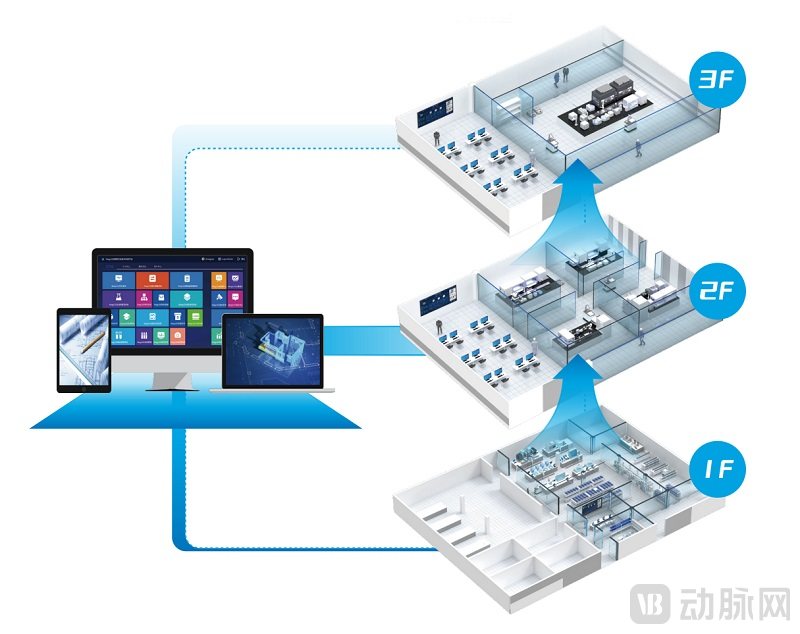
Huixiang Laboratory: Intelligent Construction and Upgrading of the Full-Process Workflow
Specifically regarding its product lines, Huixiang Technology possessesiMagicOS Intelligent Operating System Platform, Robotics Automation Technology Platform, andAIThe “Four Major Technology Platforms,” including the Big Data Smart Platform and the Applied Technology Service Platform, providing clients withFrom reagents and consumables, automated instruments and equipment, and automated assembly lines to comprehensive smart laboratory solutions, with hundreds of client cases accumulated to date, covering many industry leaders, and forming a stable ecosystem growth system with clients.
“Different life science laboratory scenarios will havePersonalizationof usage requirements, the most challenging aspect is how toPlanning,“Design modular equipment to meet customer needs; for instance, different sample types—such as powders, liquids, gels, and solids—require distinct handling methods and corresponding product solutions. This necessitates that enterprises possess both R&D capabilities and industrial experience to truly understand customers’ laboratory scenarios and requirements,” introduced Liu Jiapeng.
Huixiang Technology starts from customer goals, and based on 400+ anonymized customer data, it has extracted hundreds of standard modules for basic operations, which can coverApproximately 90% ofMainstream Designpreparation, meeting over 90% of actualCommon Laboratory Operational Procedures: Covering Laboratory Workflows from “Sample Analysis” to “Result Interpretation,” Spanning Biological, Chemical, and Diagnostic Disciplines.
In addition, Huixiang Technology is deeply committed to the independent research and development of standalone equipment. Its newly developed Microbial Colony Picking Workstation fully automates functions including petri dish transfer, lid opening, colony picking, spreading, and pipetting. With a throughput of up to 800 clones per hour and an accuracy rate exceeding 98%, its performance metrics are leading in China. The system is widely applicable in biopharmaceuticals, food, chemical, and environmental sectors. Currently, laboratories at top-tier Chinese universities, such as those in Shanghai and Wuhan, have become the first customers for this product.
High-Quality Standardization and ModularizationHardware devices are the foundation,Flexible and Stablesoftware system canParenchymaPropulsion LaboratoryStepping Toward“Smart”The Era。
iMagicOS Cloud-Based Intelligent Operating System, independently developed by Huixiang Technology based on extensive laboratory automation practices, truly achieves a closed-loop integration of wet and dry lab experiments, as well as intelligent operation across the entire laboratory workflow. The system can be utilized to construct processes in the design, build, test, and learn (DBTL) cycles of biology and chemistry-related experiments, thereby comprehensively upgrading life science workflows and transforming “BT” (Biotechnology) work into “IT” (Information Technology) operations. This system has been successfully deployed in customer deliveries across fields such as life sciences, synthetic biology, and analytical testing.
Taking a fully automated AI-driven biopharmaceutical laboratory as an example, the automation processes involved cannot be accomplished solely by a few mobile robots. The system may need to integrate thousands of data points. For instance, mobile equipment must employ AI-based visual recognition to map the layout of various analytical stages in the laboratory and identify the locations of different nodes. The operational range of automated robotic arms must account for design variations across different brands, ensuring high-precision control and accurate alignment with equipment sample injection ports. The backend data integration platform must enable end-to-end sample management, recording and supporting queries for information such as sample details, processing records, and test results. Data transmission within the laboratory system requires optimized latency control. Furthermore, for experimental operations requiring cross-space coordination, access control and elevator systems must even be incorporated into the overall planning framework.
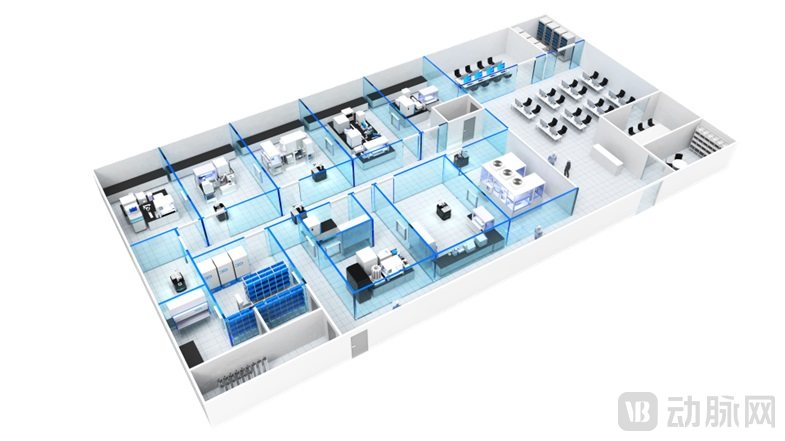
Huixiang Life Sciences End-to-End Intelligent Laboratory
Huixiang Technology has developed solutions tailored to diverse analytical scenarios in the life sciences sector, such as intelligent NGS (Next-Generation Sequencing) and automated library preparation systems, as well as intelligent hybridoma screening and detection automation systems, through modular hardware integration. Leveraging comprehensive interdisciplinary capabilities and supported by AI-driven decision-making platforms, Huixiang has further created a “dry-wet” closed-loop super smart laboratory, thereby achieving true end-to-end automation of life science laboratories.
A high-caliber team with multidisciplinary expertise, integrated hardware-software platform solutions, and robust capabilities in technology development and delivery tailored to specific business scenarios have brought Huixiang Technology into the spotlight of more investment institutions. Currently, Huixiang Technology has completed its Series A financing, with investors including ByteDance, Legend Star, Zero One Ventures, and Wutongshu Capital.
In May 2023, the “2023 Future Healthcare Top 100” list was released. As a leading enterprise in the smart laboratory sector, Huixiang Technology was honored on the “Top 100 Innovative Medical Business and Supply Chain Services” list, while its founder and CEO, Dr. Liu Jiapeng, was named “Entrepreneur of the Year.”
“Enabling everyone in the world to enjoy a healthy, safe, and high-quality life is the original aspiration behind my entrepreneurial journey,” said Liu Jiapeng with a smile. “Life sciences represent a key area for industrial upgrading in China. In this field, we face challenges from foreign competitors, as well as the need to adapt to constantly shifting market demands and rapid technological iterations. Nevertheless, we firmly believe that the application of laboratory automation technologies and artificial intelligence (AI) will serve as the critical drivers for the upgrading of China’s life sciences industry.”
Huixiang Technology will continue to uphold innovation, starting with disease and health testing and inspection, to build a comprehensive product portfolio spanning the detection of pathogenic chemicals, microorganisms, and viruses. This will empower AI-driven drug development and AI-enabled precision clinical diagnosis and treatment, leveraging technological advancements to realize the mission of “ensuring that everyone in the world enjoys a healthy, safe, and high-quality life.”