

Shanghai Biopharmaceutical Innovation & Translation Fund Invests in Haimai Medical to Advance the Future of Tissue Engineering and Regenerative Medicine

Humatrix
Developer of Tissue Engineering and Regenerative Medicine Technologies
VCBeat has learned that Humatrix, a technology platform specializing in tissue engineering and regenerative medicine, recently announced the completion of a new round of financing, exclusively invested by the Shanghai Biopharmaceutical Innovation Transformation Fund. This marks another recognition from the capital market for Humatrix this year, following its tens-of-millions-yuan financing round completed in March 2023.

Humatrix's core product pipeline consists of small-diameter (inner diameter ≤6mm) tissue-engineered blood vessels., with indications including vascular access for hemodialysis in chronic renal failure, lower extremity arterial trauma (including combat injuries), lower extremity atherosclerotic bypass grafting, and coronary artery bypass grafting. On this tissue engineering and regenerative medicine technology platform,Humatrix will develop regenerative medicine products, including bioengineered pancreas, tissue-engineered heart valves, tissue-engineered ureters, and tissue-engineered solid organs.
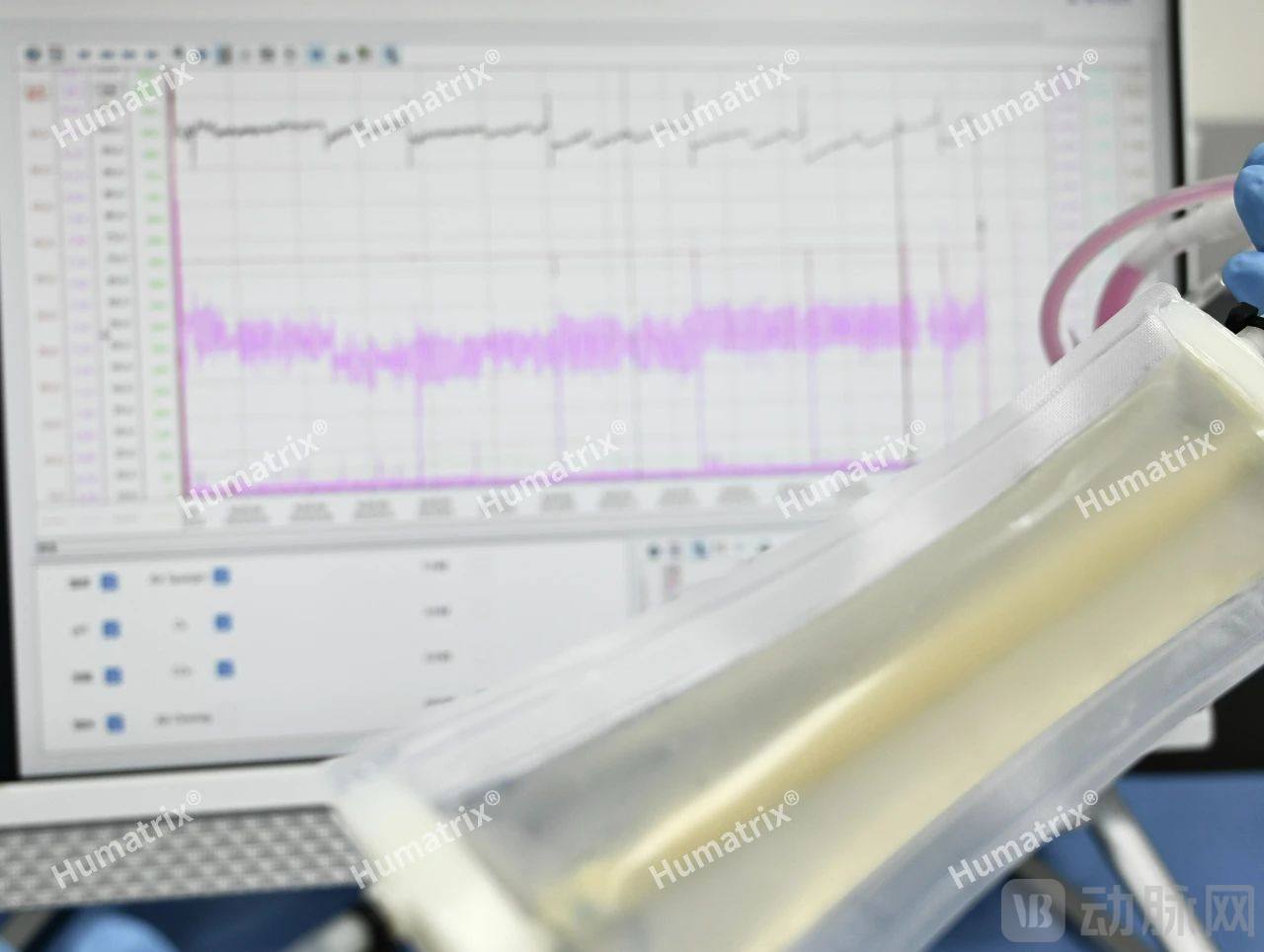
Humatrix Small-Diameter Tissue-Engineered Vascular Grafts
Currently, no domestically produced small-diameter artificial blood vessels have obtained medical device registration certificates in China, and the domestic market is monopolized by foreign companies.The mainstream global product for small-diameter synthetic vascular grafts is the ePTFE vascular graft from W. L. Gore & Associates (USA), which received FDA approval for commercial clinical use in 1975. However, this product is prone to thrombosis and infection, with a one-year patency rate of only 10–40% and an average of more than 2.5 interventions per year, severely compromising clinical outcomes and increasing healthcare costs. These shortcomings have remained unresolved. To address these challenges,Frontier technologies such as small-diameter tissue-engineered blood vessels are gradually advancing and are now on the verge of commercialization.
The barriers to standardized culture of tissue-engineered blood vessels using large-scale in vitro bioreactors are extremely high; currently, only one company in the United States has completed clinical trial enrollment worldwide.The domestic market for tissue-engineered artificial blood vessels and regenerative medicine-related products holds immense potential, representing a key strategic focus for Humatrix.Based on Professor Qiu Xuefeng, founder of Humatrix, and his years of accumulation in the field of tissue engineering technology,Humatrix has developed standardized cultured tissue-engineered blood vessels, obtained authorization for five Chinese invention patents, and applied for more than 20 registered trademarks, including “LINEMATRIX” and “AVMATRIX.”
Professor Qiu Xuefeng, Founder of Humatrix, stated“Small-diameter artificial blood vessels, particularly tissue-engineered vascular grafts, have recently attracted sustained attention from domestic capital. Tissue engineering technology emerged in the 1990s; after more than 30 years of accumulation and development, products from multiple foreign companies have entered clinical use, whereas domestic technological development has remained largely nascent. Our team has built an 18-year R&D foundation in this field through continuous dedication. We are now at a golden period for translating research “From Bench to Bedside.” However, achieving standardized product manufacturing, especially long-term in vitro culture, presents high technical barriers that require substantial capital and industrial support. We extend our gratitude to the Shanghai Biomedical Innovation Translation Fund for its recognition and support of Humatrix!”
Guo Qiushan, President of the Shanghai Biopharmaceutical Innovation and Translation Fund, stated“As of 2021, there were approximately 800,000 prevalent hemodialysis patients in China, with over 100,000 new cases added annually. A significant number of patients both domestically and internationally experience failure of autogenous arteriovenous fistulas, while central venous catheters, despite their high risk of infection, remain widely used, highlighting a scarcity of clinical alternatives. In the field of coronary artery bypass grafting (CABG), there are currently no available small-diameter synthetic vascular grafts; the procedure primarily relies on autologous arteries or veins as conduit vessels. If these grafts become occluded later on, patients can only rely on medication to sustain life. Humatrix’s off-the-shelf small-diameter synthetic vascular grafts, developed using core tissue engineering technologies, demonstrate high patency rates and low infection rates. They enable vascular wall cell regeneration and remodeling in vivo, offering performance and safety comparable to native vessels. We believe that the Humatrix team, leveraging its extensive expertise, will achieve a groundbreaking breakthrough for China in this field.”