

Top Chinese Universities Deploy 120 Medical Interdisciplinary Programs, Revealing Key Industry Trends

PHARBERS GENESIS
Innovative Drug Developer
It’s graduation season again, and the “medical school fever” has once again drawn public attention.
In 2023, Peking Union Medical College partnered with four universities—Beihang University, Beijing Institute of Technology, Beijing Normal University, and the University of Science and Technology of China—to establish the “PUMC Medical Class,” an integrated undergraduate-doctoral program. Under the “4+4” curriculum model, students complete four years of undergraduate study at their respective partner institutions before advancing to Peking Union Medical College for doctoral training, thereby cultivating interdisciplinary medical professionals.
In fact, institutions such as Peking Union Medical College, Shanghai Jiao Tong University, and Zhejiang University had previously explored “4+4” model for cultivating composite bachelor-doctorate talents, or recruiting outstanding non-medical undergraduate graduates from Double First-Class universities for four years of intensive medical education; or dividing the eight-year program into “4 years of non-medical education + 4 years of medical education” model. If previous models leaned more toward selection, the collaboration for Peking Union Medical College’s “Union Medical Class” is more oriented toward “customization.”
In recent years, some universities have implemented a dual-mentor system in graduate medical education, wherein students are jointly supervised by mentors from medical and non-medical disciplines.
These innovative educational models all point to a major trend: interdisciplinary integration, aimed at cultivating high-level composite talents and inspiring innovation.
Currently, China is undergoing a profound technological revolution and industrial transformation. With the emergence of new disciplinary branches and key technologies, interdisciplinary integration has become an inevitable trend and a prerequisite for cultivating high-level innovative and composite talents.
To further enhance support for major breakthroughs in scientific and technological innovation and significant theoretical innovations, the Academic Degrees Committee of the State Council and the Ministry of Education established a 14th disciplinary category—Interdisciplinary Studies—in 2020, placing it on par with the original 13 categories such as Literature, Science, Engineering, and Medicine.
In November 2021, the Academic Degrees Committee of the State Council formulated the “Administrative Measures for the Establishment and Management of Interdisciplinary Disciplines (Trial),” making institutional arrangements for the development of interdisciplinary disciplines. These measures clarify the definition, scope of application, establishment, and withdrawal procedures for interdisciplinary disciplines, aiming to unify academic understanding of the concept and connotation of interdisciplinary studies and enhance public recognition of such fields.
According to information released by the Ministry of Education, as of June 2022, more than 200 degree-conferring institutions across China had independently established over 700 interdisciplinary programs.
Interdisciplinary integration is also frequently occurring in the field of medicine. The rapid development of digital technologies, biotechnology, intelligent manufacturing, and new materials has deepened their integration with medicine, generating numerous high-potential innovations that hold significant value for public health initiatives and the healthcare industry.
In recent years, medical education has introduced the concept of “New Medical Sciences,” continuously optimizing disciplinary structures and establishing a range of new medicine-related majors. It is vigorously promoting deep interdisciplinary integration between medicine and other fields to accelerate the cultivation of high-level, composite medical professionals.
In 2023, the Ministry of Education and four other departments issued the “Plan for Reforming the Optimization and Adjustment of Discipline and Major Settings in Regular Higher Education,” which proposes to target the frontiers of medical science and technology development, vigorously promote deep interdisciplinary integration between medicine and disciplines such as natural sciences, engineering, and humanities, and cultivate emerging disciplinary majors such as “Medicine + X” and “X + Medicine.”
Amid the development opportunities presented by the 14th disciplinary category, “Interdisciplinary Studies,” medical interdisciplinary fields have also witnessed rapid growth. An analysis by VCBeat of the List of Self-Established Secondary Disciplines and Interdisciplinary Disciplines by Degree-Conferring Institutions (Excluding Military Units), released by the Ministry of Education in recent years, reveals a year-on-year increase in the number of universities and disciplines involving medical interdisciplinary studies. As of June 2022, 59 degree-conferring institutions had independently established 120 medical interdisciplinary disciplines.Note: Two scenarios are outlined here: one where medical disciplines are primary and intersect with other fields, and another where non-medical disciplines are primary and intersect with medical fields.
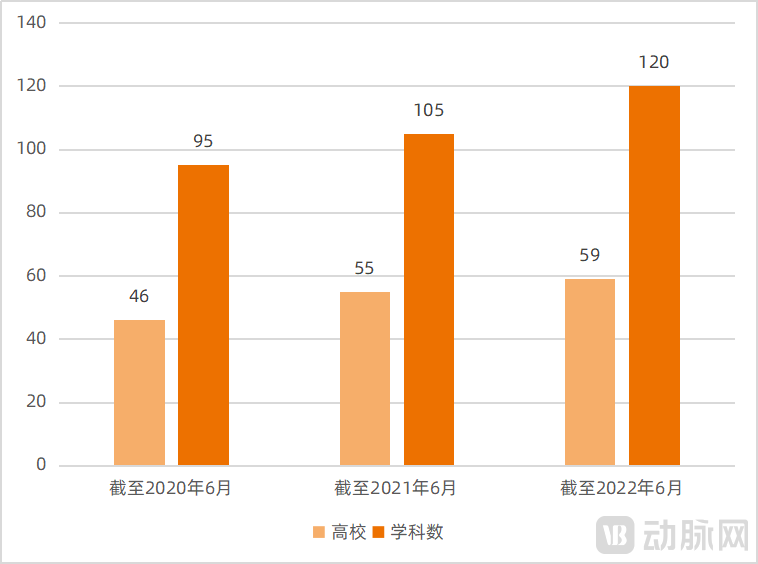
Recent Trends in Universities’ Autonomous Establishment of Interdisciplinary Programs, Source: Ministry of Education
Among the 59 universities involved in 120 interdisciplinary medical programs, 20 are medical colleges and 39 are comprehensive universities.
Medical schools are establishing interdisciplinary programs by leveraging their existing strengths to accelerate the cultivation of innovative, multi-skilled talent.Among the 20 medical schools, Peking Union Medical College, China Medical University, Nanjing Medical University, Wenzhou Medical University, and Southern Medical University have actively explored and established four or more interdisciplinary disciplines respectively.
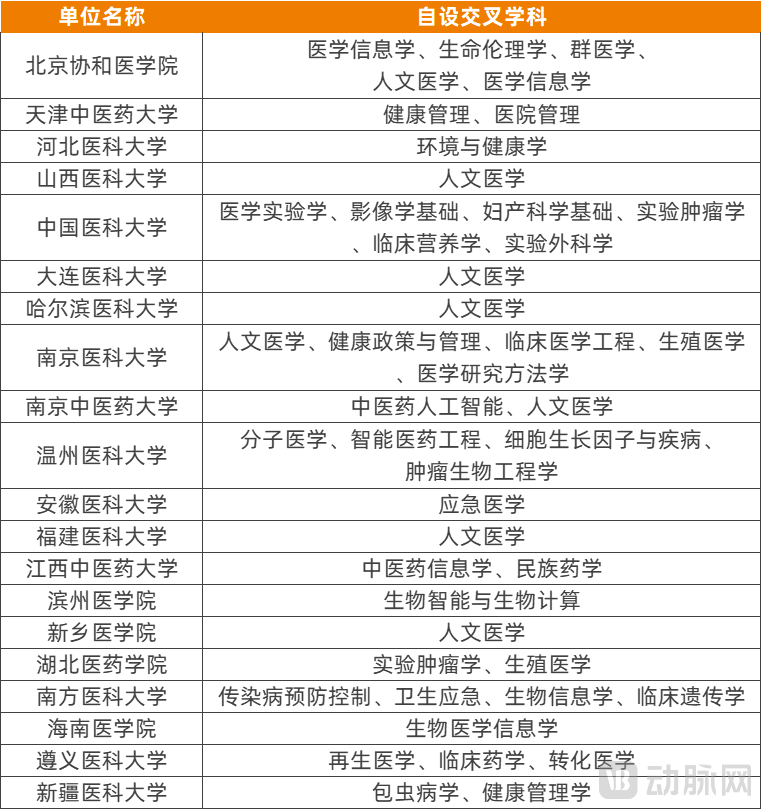
Situation of Medical Colleges and Universities Independently Establishing Interdisciplinary Programs, Source: Ministry of Education
As a premier medical institution, Peking Union Medical College Hospital’s discipline development and educational philosophy exemplify current trends in medical education. Peking Union Medical College has established interdisciplinary fields such as medical informatics, bioethics, population medicine, and medical humanities, reflecting its emphasis on medical humanism and population health.
Among them, the discipline of population medicine was established by the team led by Academician Wang Chen, President of Peking Union Medical College. It is an interdisciplinary field formed on the basis of clinical medicine, public health and preventive medicine, and basic medical sciences.
Historically, the parallel development of basic medicine, clinical medicine, preventive medicine, and public health neglected interdisciplinary integration and weakened the cultivation of holistic health awareness among medical students, serving as one of the root causes of a "disease-centered" approach. In contrast, population medicine applies multidisciplinary techniques and methods to study factors affecting population health based on the distinct health and disease characteristics of different groups. It implements prevention, diagnosis, and treatment activities for specific populations, thereby maximizing lifelong health benefits for groups or humanity as a whole and optimizing healthcare costs and resource allocation.
To promote interdisciplinary integration and accelerate the development of population medicine, Peking Union Medical College established the School of Population Medicine and Public Health in 2020.
Wenzhou Medical University has independently established four interdisciplinary fields—Molecular Medicine, Intelligent Pharmaceutical Engineering, Cell Growth Factors and Disease, and Tumor Bioengineering—building upon its existing strengths in various disciplines.
According to the doctoral program catalog of Wenzhou Medical University, Intelligent Pharmaceutical Engineering is an interdisciplinary field built upon biomedical engineering, clinical medicine, and pharmacy. In 2023, the doctoral research direction offered was Ophthalmic Drug Delivery Systems.
Among the three disciplines involved in Intelligent Pharmaceutical Engineering, Biomedical Engineering hosts the Zhejiang Provincial Engineering Technology Research Center for Smart Healthcare and the Zhejiang Provincial Engineering Technology Research Center for Clinical Functional Materials and Diagnostic/Therapeutic Devices; Clinical Medicine (Ophthalmology) houses key institutions such as the State Key Laboratory of Optometry and Vision Science and the National Clinical Research Center for Ocular Diseases; and Pharmacy is home to the National Engineering Research Center for Cell Growth Factor Drugs and Protein Formulations, as well as the Ministry of Education–Provincial/Municipal Co-sponsored Collaborative Innovation Center for Biomedicine. These constitute high-quality resources supporting interdisciplinary studies and research directions.
Among comprehensive universities, institutions such as Peking University and Tsinghua University have initiated interdisciplinary explorations of “Medicine + X” or “X + Medicine” at an early stage, integrating the robust strengths of other academic disciplines with medical education to achieve a synergy of excellence.
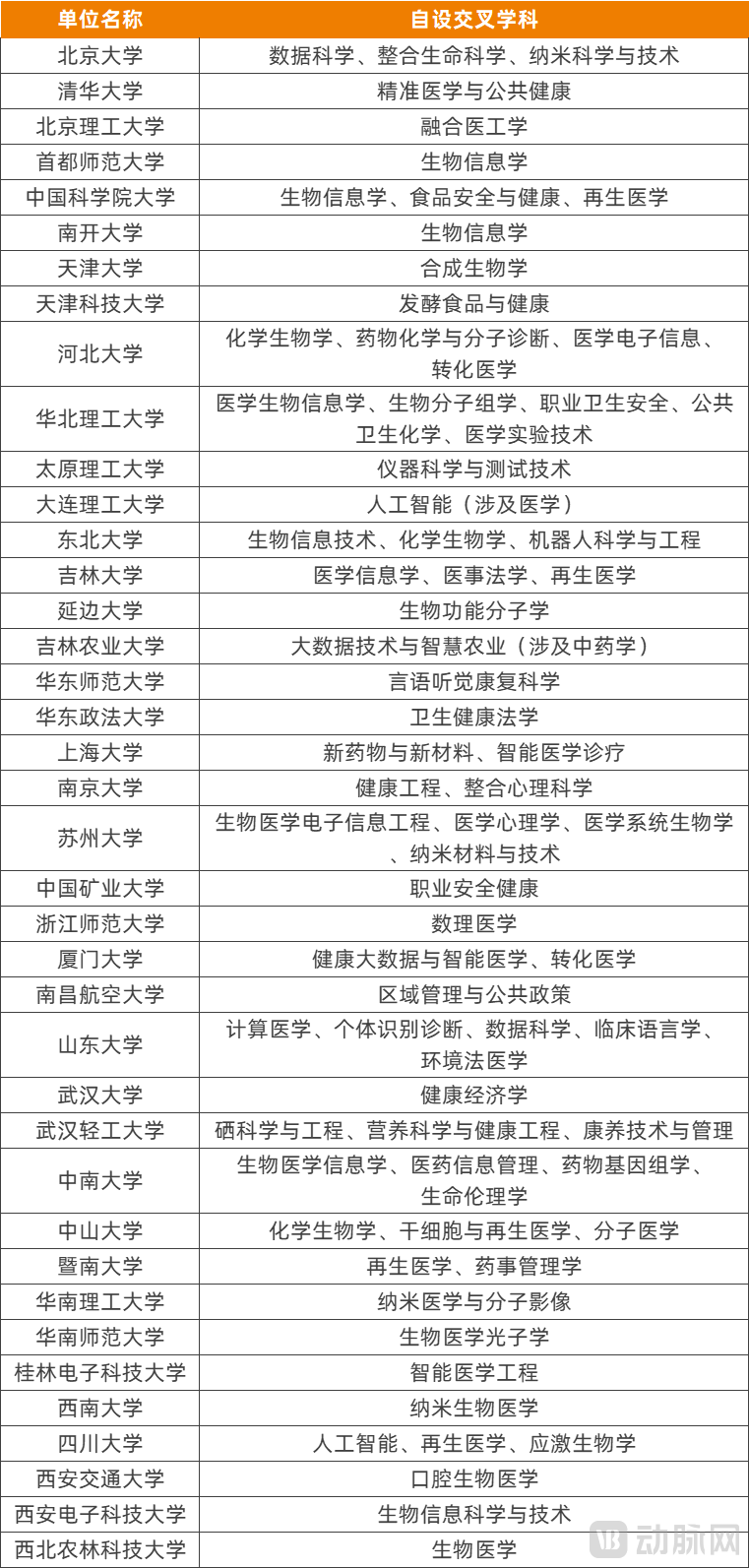
Overview of Interdisciplinary Medical Programs Independently Established by Comprehensive Universities, Source: Ministry of Education
As early as 2006, Peking University established the Institute for Advanced Interdisciplinary Studies. In the field of medicine, it includes the Interdisciplinary Center for Biomedical Research, the Joint Center for Life Sciences, the Center for Environment and Health Research, the Center for Magnetic Resonance Imaging Research, the Center for Brain Science and Brain-Inspired Intelligence, and the Center for Sleep Medicine Research, covering numerous interdisciplinary research areas spanning mathematics, physics, chemistry, biology, medicine, and engineering.
In 2021, Peking University added three interdisciplinary doctoral programs: Data Science (covering Public Health and Preventive Medicine), Integrative Life Sciences, and Nanoscience and Technology (covering Biomedical Engineering).
Furthermore, the Health Science Center of Peking University has launched a doctoral program in interdisciplinary medical innovation, exploring graduate training models based on national high-level research projects, major scientific and technological innovation platforms, key engineering projects, and disciplines with urgent talent shortages.
In addition to independently establishing the interdisciplinary field of precision medicine and public health, Tsinghua University also conducts an interdisciplinary clinical talent training program. This program is implemented by the School of Clinical Medicine in collaboration with the six centers affiliated with the Institute for Precision Medicine and their supporting engineering departments. It aims to strengthen engineering-related knowledge and skills for students with a medical background, while enhancing medical-related knowledge and skills for students with an engineering background.
Medicine-engineering interdisciplinary research has emerged as one of the most prominent fields driving technological innovation in recent years. Tsinghua University’s strengths in science and engineering serve as a significant catalyst for fostering interdisciplinary medical research achievements.
Following the establishment of medical schools, the creation of interdisciplinary medical programs has also become an important approach for comprehensive universities to enhance their overall strength.
Shanghai University began planning the development of its medical disciplines in 2015 and officially established its Medical School in 2020. To build an innovative medical school and differentiate itself among medical schools within comprehensive universities, Shanghai University Medical School focuses on four key areas: geriatrics, intelligent medical engineering, marine medicine, and biopharmaceuticals. It prioritizes the development of “New Medicine” supported by interdisciplinary integration. Currently, it has two interdisciplinary doctoral degree authorization points: Intelligent Medical Diagnosis and Treatment, and New Drugs and New Materials.
It is evident that, driven by leading universities, both medical schools and comprehensive universities are increasingly emphasizing the integration of medicine with other disciplines, even establishing interdisciplinary fields with more robust theoretical and methodological frameworks.
Interdisciplinary fields break down the boundaries of traditional disciplines based on knowledge systems, integrating and synthesizing knowledge from multiple existing disciplines. They are established with the aim of achieving breakthroughs in key core technologies, driving technological innovation, and addressing major issues in social development. The traditional disciplines involved in these interdisciplinary fields largely reflect the hotspots of technological innovation and social development.
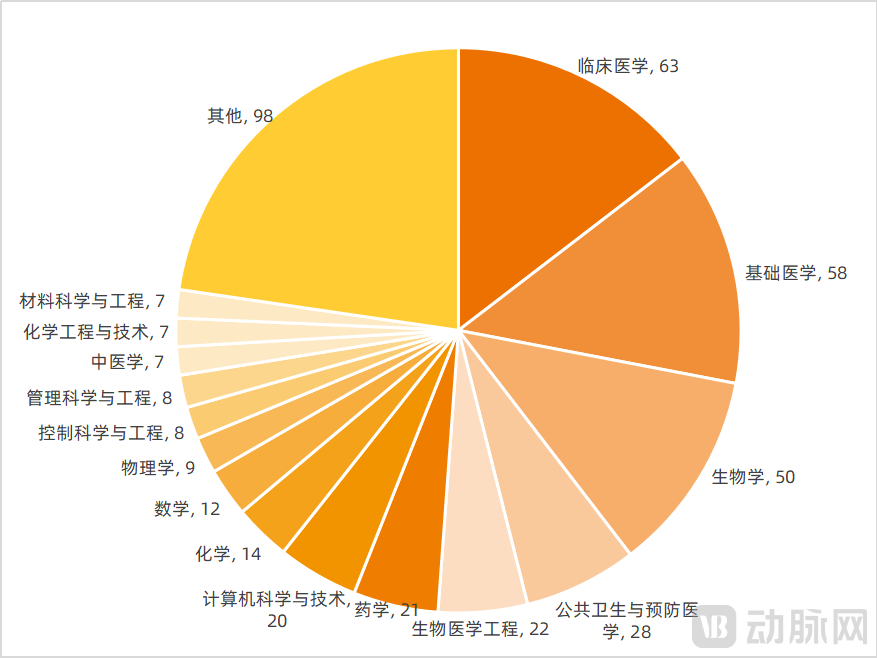
120 First-Level Disciplines Involved in Interdisciplinary Medical Fields, Source: Ministry of Education
According to information released by the Ministry of Education, most of the 120 interdisciplinary medical fields involve three to five original first-level disciplines.
An analysis of these first-level disciplines reveals that clinical medicine, basic medicine, public health and preventive medicine, and pharmacy constitute the core knowledge systems within interdisciplinary fields, accounting for a significant proportion. In addition, biology, biomedical engineering, and computer science and technology are important components. Other involved disciplines include science and engineering fields such as instrument science and technology, safety science and engineering, ecology, optical engineering, and mechanics, as well as humanities and social sciences such as law, education, and sociology.
The frequency of interdisciplinary integration between clinical medicine and medical sciences directly reflects the hotspots and trends in industrial innovation.
First,Accelerate the research, development, and application of intelligent technologies and equipment, fostering the growth of disciplines such as bioinformatics, biomedical informatics, biological intelligence and biocomputing, and robotics science and engineering, ultimately enabling their application in areas including precision diagnostics, drug discovery, biochips, biological 3D printing, and high-end medical devices.
Southern Medical University has established a bioinformatics program that integrates life sciences, computer science, and statistics to analyze, interpret, and effectively manage biological and medical data such as DNA, RNA, and proteins. This approach enables intelligent analysis and scientific understanding of massive datasets, thereby facilitating decision support.
Northeastern University has established an interdisciplinary program in Robotics Science and Engineering, integrating knowledge from multiple disciplines including mechanical engineering, materials science and engineering, control science and engineering, computer science and technology, and biomedical engineering. The program explores research areas such as intelligent robotic behaviors, motion control, information perception, and optimized design of robot bodies, including research on medical image processing.
In 2021, Zhejiang Normal University established the School of Mathematical and Medical Sciences, a novel medical school integrating multidisciplinary fields such as mathematics, computer science and technology, artificial intelligence, data science, informatics, and medicine. In 2022, the interdisciplinary program in “Mathematical Medicine” was approved and registered by the Ministry of Education. The discipline primarily addresses key scientific challenges arising in the precise analysis of medical imaging and the intelligent diagnosis and treatment of diseases.
Secondly,Regenerative medicine has emerged as a prominent discipline, with six universities independently establishing interdisciplinary programs in regenerative medicine that emphasize both basic research and clinical applications.
Regenerative medicine integrates the theories and methodologies of biology, materials science and engineering, basic medicine, clinical medicine, and pharmacy. It aims to repair, replace, and enhance damaged, diseased, or defective tissues and organs in the human body by activating endogenous stem cells or implanting exogenous stem cells, stem cell-derived cells, or functional tissues and organs, thereby achieving disease treatment.
Sichuan University’s interdisciplinary program in regenerative medicine primarily focuses on basic research into solid organ regeneration, as well as studies on tissue regeneration, the construction of immune modulation and immune defense systems, and 3D bioprinting. Sichuan University has also established a Regenerative Medicine Research Center, with the goal of restoring the function of failing human organs to improve quality of life. Centered on reconstructing signaling pathways involved in tissue injury, the center integrates multidisciplinary resources from both basic science and clinical practice to develop theories and methods that mobilize the body’s self-repair capabilities and promote the regeneration of failing organs.
The research, development, and application of new materials also represent a significant area of interdisciplinary study, particularly in their use for drug preparation and delivery, as well as in novel medical devices and consumables.For example, Shanghai University conducts interdisciplinary research in new drugs and new materials to address key issues such as drug design and synthesis, studies on mechanisms of drug action, preparation of novel biomaterials for medical applications, and big data-driven drug discovery. Its primary focus areas include drug design and synthesis, nanomaterials and drug delivery, molecular pharmacology and targeted intervention, and big data analytics in drug development.
Interdisciplinary fields involving medicine and engineering, as well as medicine and basic sciences, are relatively common; however,Medicine has always been about addressing human problems, and the importance of the humanities in this field is self-evident. An increasing number of medical schools are placing greater emphasis on the “integration of medicine and the humanities.”, there are currently 10 universities offering interdisciplinary programs in medical humanities and bioethics.
Furthermore, Shandong University has integrated foreign languages and literatures, Chinese language and literature, and clinical medicine to establish the interdisciplinary field of “Clinical Linguistics.” Leveraging modern linguistic theories and methods, the university conducts research on language disorders in children and adults, diagnosis of neurological diseases, mental health and psychological well-being, the language health industry, as well as doctor–patient communication and relationships.
Some interdisciplinary fields also align with issues of social development, striving to better address population health concerns.
For instance, living environment and dietary patterns are significant determinants of health status, and the onset of many chronic diseases is closely associated with these factors. In response, universities such as the University of Chinese Academy of Sciences, Tianjin University of Science and Technology, and Wuhan Polytechnic University have established disciplines including Food Safety and Health, Fermented Foods and Health, and Nutritional Science and Health Engineering.
In light of the current demographic structure and fertility trends, assisted reproductive technologies (ART) aimed at promoting eugenics and healthy childbirth have become a prominent field. Existing ART can address issues such as female infertility, male infertility, and preimplantation genetic testing.
In the field of reproductive medicine, Nanjing Medical University and Hubei University of Medicine have established interdisciplinary programs in reproductive medicine, integrating knowledge from basic medicine, clinical medicine, public health and preventive medicine, and medical technology. Notably, Nanjing Medical University has also founded the State Key Laboratory of Reproductive Medicine and Offspring Health, which focuses on: the molecular basis of reproductive regulation and technological innovations for fertility enhancement; mechanisms of major diseases causing reproductive disorders and optimization of clinical diagnosis and treatment strategies; reproductive or developmental origins of major birth defects; and factors influencing offspring health along with health promotion initiatives. These efforts aim to promote reproductive health and the health of the next generation from earlier stages.
Overall, interdisciplinary medical fields are witnessing a flourishing and diverse landscape, with increasingly clear objectives for discipline development oriented toward addressing key challenges in clinical applications, social development, and technological innovation.
Interdisciplinary disciplines primarily focus on graduate education, producing talent of a generally higher caliber. Among the innovative enterprises interviewed by VCBeat, most consider high-level interdisciplinary professionals to be one of their core competitive advantages. They also highlighted the current scarcity of talent in frontier interdisciplinary fields; for instance, a domestic radiopharmaceutical company recruited only two suitably qualified specialists over its first seven years of operation. Developing interdisciplinary medical programs is a key approach to addressing this talent shortage.
As a discipline rather than a course, interdisciplinary studies do not focus on imparting a single skill or solving a specific problem. While cultivating high-level talents with multidisciplinary backgrounds, it is also essential to research and construct an independent system of theories, knowledge, and methodologies to support the sustainable development of the discipline.
As interdisciplinary collaboration among research, education, and industry deepens, the value it creates for the sector will extend beyond talent development to become a source of technological innovation.