

Precision Scenario-Based Marketing Emerges as Key Driver for Efficiency in Pharmaceutical Digital Marketing
As the volume-based procurement and two-invoice system policies advance, prices for pharmaceuticals and medical devices continue to decline. Pharmaceutical companies are urgently seeking cost control, which in turn is driving up demand for cost-effective marketing tools, such as precision digital marketing.
Driven by multiple factors, including advancements in digital marketing technologies and shifts in the market environment, the pharmaceutical industry’s digital marketing sector is entering a period of robust growth. According to VCBeat Institute’s 2022 Industry Research Report on Pharmaceutical Digital Marketing, “Endgame Transformation Goal: Digitally Intelligent-Driven Marketing,” the market size for pharmaceutical digital marketing is projected to reach RMB 111 billion in 2025 and RMB 356.8 billion in 2030, with a compound annual growth rate (CAGR) of 33.9% from 2025 to 2030.
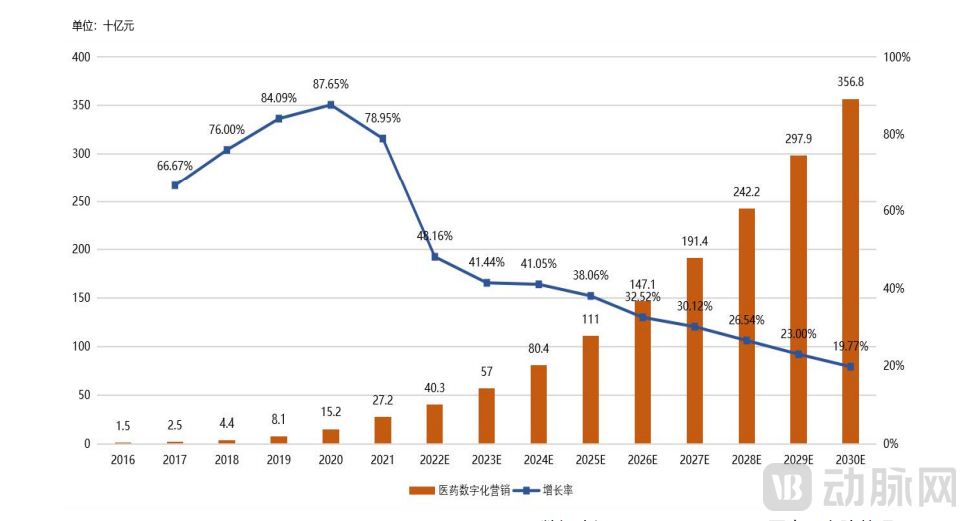
Market Size Trends of China’s Pharmaceutical Digital Marketing Industry, 2016–2030; Data Source: Frost & Sullivan, compiled by VCBeat
Numerous leading digital marketing enterprises in the industry have made extensive efforts to better support pharmaceutical marketing. Centering on the four key stakeholders—pharmaceutical companies, medical representatives, physicians, and patients—we can broadly categorize these enterprises into three types of marketing service providers based on the products and services they offer: technology-driven service providers, platform-based service providers, and retail terminal-oriented providers. Technology-driven service providers primarily assist pharmaceutical companies in marketing by helping them build internal management systems and private-domain traffic cloud platforms; examples include Yibai Technology and Huimei Digital Technology. Platform-based service providers aggregate vast resources of physician and patient information to help pharmaceutical companies reach their target users; examples include physician platforms such as Medlive and MedSci, as well as patient management platforms such as WeDoctor. Retail terminal-oriented providers include retail pharmacies and pharmaceutical e-commerce platforms, which primarily control the final channels through which medications reach patients.
Undeniably, the exploration by leading digital marketing service providers has enhanced communication efficiency for pharmaceutical companies. In this process, pharmaceutical companies’ expectations for digital marketing efficiency are also rising. Are there methods to further achieve precision and improved efficiency?
At the 2023 ESF DXY Medical Ecosystem Partner Conference held on July 18, DXY unveiled a digital precision marketing solution for the pharmaceutical industry, offering new insights:
Building on the reach of targeted professional physicians, this approach addresses their proactive behaviors and cognitive needs within precise scenarios by delivering “the information they most desire at this very moment,” thereby further enhancing marketing efficiency.
Shortened Drug Promotion Lifecycle and Increased Emphasis on Efficient Marketing Strategies
According to data from VCBeat Institute, under the backdrop of "volume-based procurement," generic drug prices have dropped significantly. Seeking innovation has become a strategy for some pharmaceutical companies to maintain growth, and the market share of innovative drugs is accelerating noticeably. From 2016 to 2021, a total of 373 innovative drug products were launched in China, including 234 chemical drugs, 114 biological drugs, and 25 traditional Chinese medicines. Consequently, with the launch of numerous innovative drugs, they face untapped markets, making it crucial to conduct early market education.
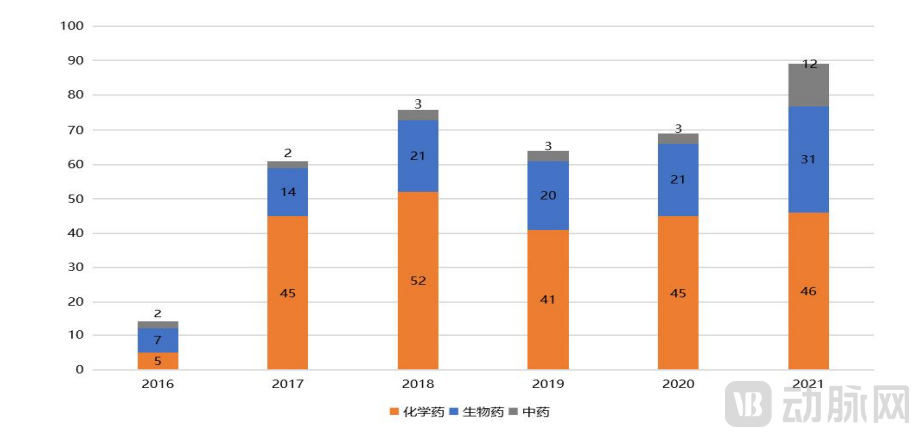
Number and Types of Innovative Drugs Approved in China from 2016 to 2021, Data Source: NMPA, Compiled by VCBeat
Chu Yang, Vice President of DXY, also remarked, “For pharmaceutical companies, the entire lifecycle of drug promotion has been significantly shortened. The pressure to be ‘fast’ looms large. This does not imply that past efforts were ineffective; rather, it means achieving better results than before within a shorter timeframe. This demands high efficiency—reaching more doctors in less time within a limited value cycle.”
Against this backdrop, the use of digital marketing tools by pharmaceutical companies has become commonplace. In this process, digital marketing is demonstrating its unique advantages: broader coverage of target users, stronger platform appeal to retain physicians, and precise targeting of physician users through tagging. However, some pharmaceutical companies have higher expectations for efficiency, aiming not only to reach target users but also to enhance the effectiveness of “information” communication. This requires addressing two current issues—
First, enhance the target users' proactive willingness to engage with "information." In recent years, targeting physicians based on tags such as department and professional rank to deliver customized content, combined with visits from pharmaceutical sales representatives, has indeed improved the efficiency of pharmaceutical marketing to some extent. However, physicians' level of interest in communicated information varies significantly across different scenarios. Delivering information in scenarios where physicians have active needs is evidently more efficient than in other contexts.
Second, minimize the time required to reach the target user base. While attracting physicians through academic content is effective, a protracted approach fails to consolidate physician resources. For instance, digital marketing projects costing anywhere from several hundred thousand to over one million RMB typically involve organizing three to five academic events per year to engage physicians. This lengthy process leads to the gradual dispersion or even loss of physician resources, thereby reducing marketing efficiency.
How to better address the aforementioned pain points and enhance the efficiency of digital marketing in the pharmaceutical industry has become a pressing concern for both pharmaceutical companies and platform service providers.
Insight into users' proactive needs, focusing on precise scenarios to improve efficiency
Dingxiang Yuan has prescribed a “remedy” focused on “precise scenarios.”
“We need to identify the specific ‘context’ within particular physician segments where their interest in a given topic is highest, and then deliver information accordingly. This approach goes beyond merely targeting specific audience segments with tailored content; it focuses more precisely on scenarios that align with physicians’ proactive needs. This is a new pathway discovered by DXY to enhance the efficiency of digital pharmaceutical marketing,” said Chu Yang, Vice President of DXY.
So, in what scenarios do physicians have proactive needs?
The “2023 China Physician Insights Report” released by DXY at this ESF Conference noted that over the past year, physicians continued to spend an average of 11.7 hours per week on online medical activities, with “active learning” accounting for 34% of the total time spent on such activities.
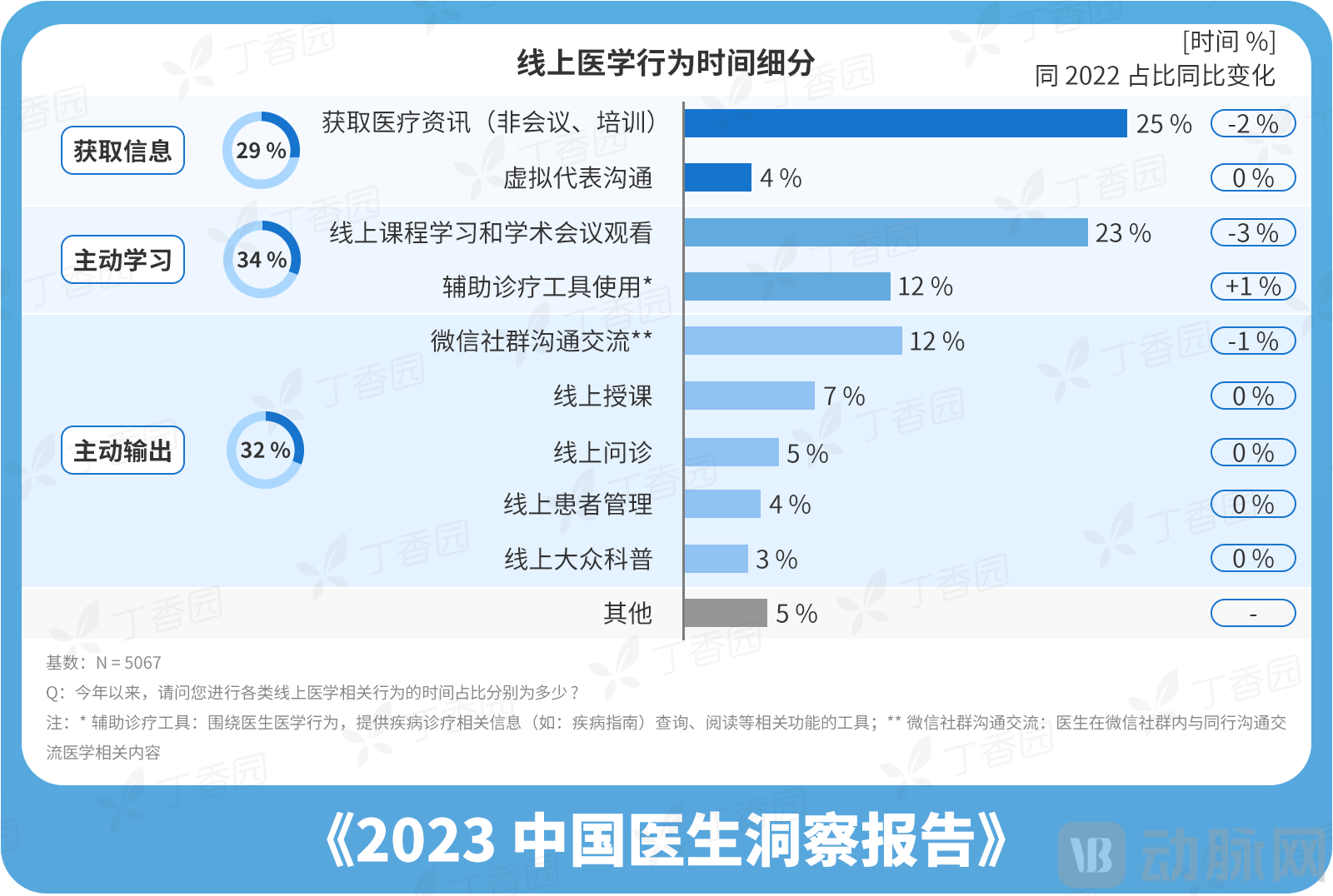
DXY’s deeper insights have identified two precise scenarios where physicians actively express needs—
First, there is the scenario of medication information lookup prior to clinical decision-making. DXY has found that daily learning, inpatient order entry, and outpatient prescribing are high-frequency scenarios when using drug label-based clinical decision support tools. Sixty percent of drug search queries occur before physicians issue clinical prescriptions, with 56% of physicians believing that valuable content can effectively assist their prescribing practices.
Second, structured learning scenarios. A common pain point among physicians is the fragmentation, lack of depth, and absence of systematic content in information acquisition. The “2023 China Physician Insights Report” indicates that over 90% of physicians recognize the value of structured learning and wish to devote more time to structured learning courses to enhance their clinical diagnostic and treatment capabilities.
Implementing digital marketing measures in core scenarios where physicians have proactive needs can undoubtedly enhance the communication efficiency between pharmaceutical companies and physicians, achieving twice the result with half the effort.
It is worth noting that the ability to gain deep insights into physicians’ core needs and thereby enhance the efficiency of pharmaceutical marketing is inherently linked to DXY’s long-standing commitment to the healthcare industry.
On one hand, DXY has deeply cultivated the industry by conducting in-depth research and analysis of physician group behaviors, such as publishing the "China Physician Insight Report" for 11 consecutive years. By grasping physicians’ core proactive needs, exploring scenarios for precise digital marketing in the pharmaceutical industry becomes undoubtedly more authentic, objective, and effective.
On the other hand, DXY leads the industry by a wide margin in its coverage of professional physicians. According to the "Statistical Communiqué on National Economic and Social Development 2022" issued by the National Bureau of Statistics, the number of health technical personnel nationwide reached 11.55 million by the end of 2022. Currently, DXY has over 9 million registered professional users, accounting for approximately 80% of the country's health technical personnel. Furthermore, DXY’s ability to gain insights into physicians’ proactive needs for clinical medication queries stems from its "Medication Assistant App," which has been cultivated for 11 years and achieved over 12 million installations. In 2022 alone, the Medication Assistant App provided up to 500 million medical data query supports to 3 million healthcare professionals.
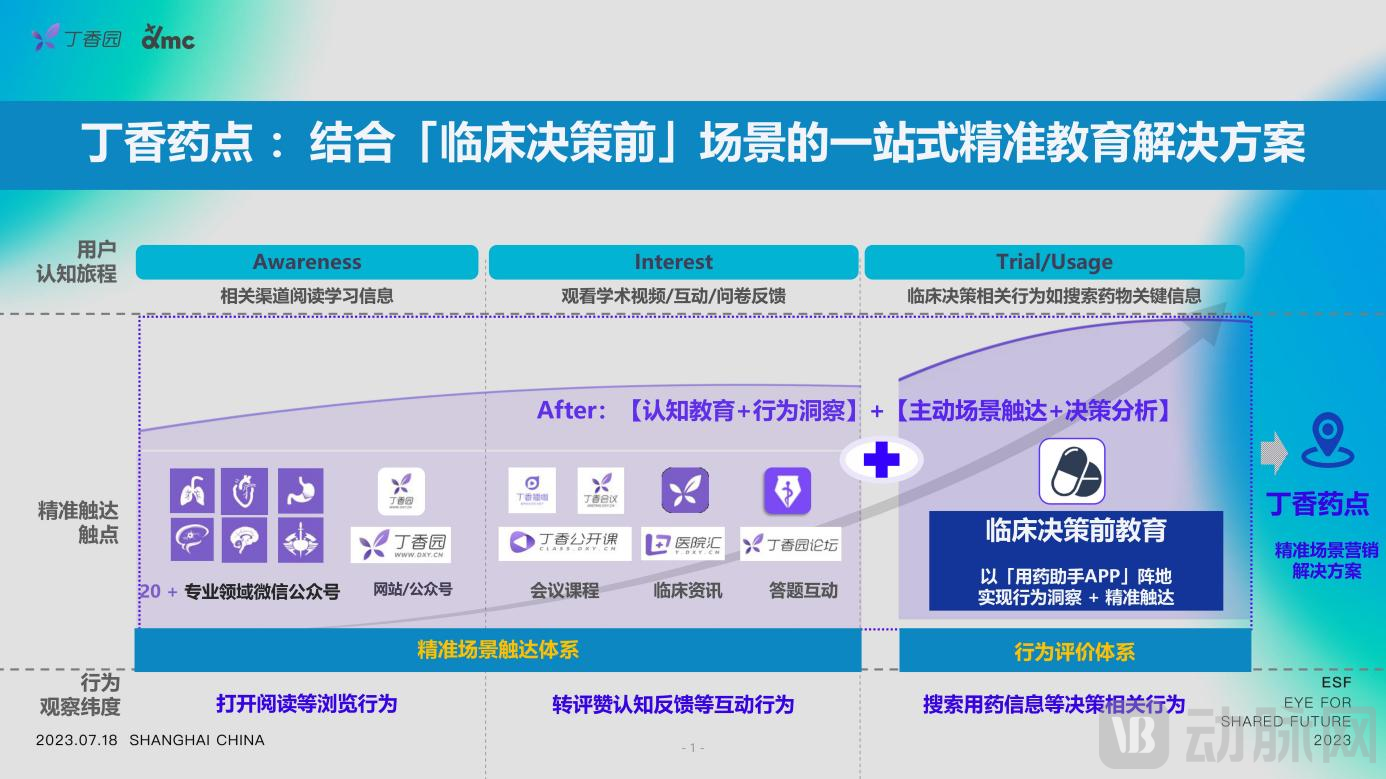
Based on this, DXY has developed a digital precision marketing solution for the pharmaceutical industry. This includes “DXY Drug Point,” a one-stop precision marketing solution that reinforces physicians’ “proactive” behaviors in scenarios where they actively conduct searches, and “Learning Acceleration Camp,” a precision marketing solution designed for systematic physician learning scenarios. The comprehensive solution delivers academic content tailored to physicians’ proactive needs, fostering recognition of high-quality content and accelerating the efficiency of physicians’ journey from “unawareness to awareness, and then to acceptance” of products.
From the perspective of Dingxiang Yaodian, its primary focus is on scenarios where physicians query drug information prior to making clinical decisions. Leveraging big data analytics to assess physicians’ historical preferences and precisely tagging target department physicians, it delivers tailored content such as case studies and guideline interpretations. This personalized content is disseminated through an omnichannel approach—integrating online and offline, in-hospital and out-of-hospital, and on-platform and off-platform channels—to continuously engage physicians throughout the entire drug lifecycle, thereby supporting their clinical prescribing decisions.
Based on the Learning Acceleration Camp, DXY has established deep-learning scenarios and academic social networking environments. It has identified a high-intent target group of physicians who “wish for content to focus more on filling gaps in clinical knowledge” and “seek to exchange academic and clinical experience with peers.” By creating a “themed,” “systematic,” and “companion-style” physician learning model, DXY has built an efficient learning platform and curated in-depth educational content. Through theme-aligned activities and hands-on practice in clinical scenarios, it fosters deep cognitive engagement within 14–30 days. After achieving high-frequency user touchpoints to reinforce memory, it effectively enhances thematic understanding in the short term. Furthermore, its companion-style experience enables precise short- and long-term engagement, helping pharmaceutical companies achieve “comprehensive acceleration” in marketing cycles, promotional effectiveness, and user relationships.
These solutions directly address two major challenges pharmaceutical companies face in marketing: enhancing physicians’ willingness to proactively engage with and endorse promotional content, and shortening the outreach process. Ultimately, by leveraging precision marketing tailored to scenarios driven by physicians’ active needs, DXY helps pharmaceutical enterprises further improve communication efficiency.
Precision Scenarios Emerge as a New Marketing Pathway, Driving Industry Growth Through Multi-Party Benefits
Gaining deep insights into physicians’ proactive needs has emerged as a new pathway identified by DXY to enhance the efficiency of digital pharmaceutical marketing. This approach delivers positive value to physicians, pharmaceutical companies, and the industry at large:
First,For physicians,It can better fulfill physicians’ proactive needs for drug information queries prior to clinical decision-making and support their systematic learning, thereby enhancing their professional expertise and ultimately benefiting patients.
Secondly,For pharmaceutical companies,Enhance marketing efficiency through precision targeting: In broad markets, reach highly motivated physicians not covered by virtual or field representatives; in core markets, improve communication efficiency to strengthen engagement with already-covered physicians, thereby driving overall marketing effectiveness.
Having pioneered new pathways, DXY has not rested on its laurels. At this ESF Conference, the DXY Digital Innovation Research Alliance was officially established. The alliance will further integrate DXY’s resource capabilities, Microsoft’s technological innovation prowess, and the practical needs of medical academic associations and pharmaceutical enterprises. It aims to explore precision-based and intelligent marketing approaches, empowering ecosystem partners to achieve digital transformation in medical education, brand building, patient engagement, and business development, thereby better serving the industry.
“DXY is not a company that champions disruptive innovation; rather, it focuses more on genuinely addressing users’ pain points. For instance, the release of this solution may not appear to involve any flashy or radical overhauls, but it truly zeroes in on resolving the challenges faced by physician users and pharmaceutical and medical device companies. While enhancing user experience, it also improves marketing efficiency for these enterprises, thereby staying true to DXY’s original mission of ‘supporting the professional growth of Chinese physicians’ and ‘serving ecosystem partners,’” added Chu Yang, Vice President of DXY.