

Shukun Technology Secures Ninth Class III NMPA Certificate with AI-Powered ASPECTS Solution, Expanding Its Digital Brain Platform for Comprehensive Stroke Care

SHUKUN
Provider of Intelligent Products and Innovative Solutions
Stroke, a challenging condition characterized by high incidence, high mortality, and high disability rates, urgently requires safeguarding of the “golden hour,” where every second counts in the race against death. However, due to insufficient medical capabilities at the primary care level, patients often experience significant delays from symptom onset to diagnosis, frequently causing them to miss the optimal treatment window.
Recently, SHUKUN’s independently developed Alberta Stroke Program Early CT Score (ASPECTS) for stroke received NMPA Class III medical device certification.
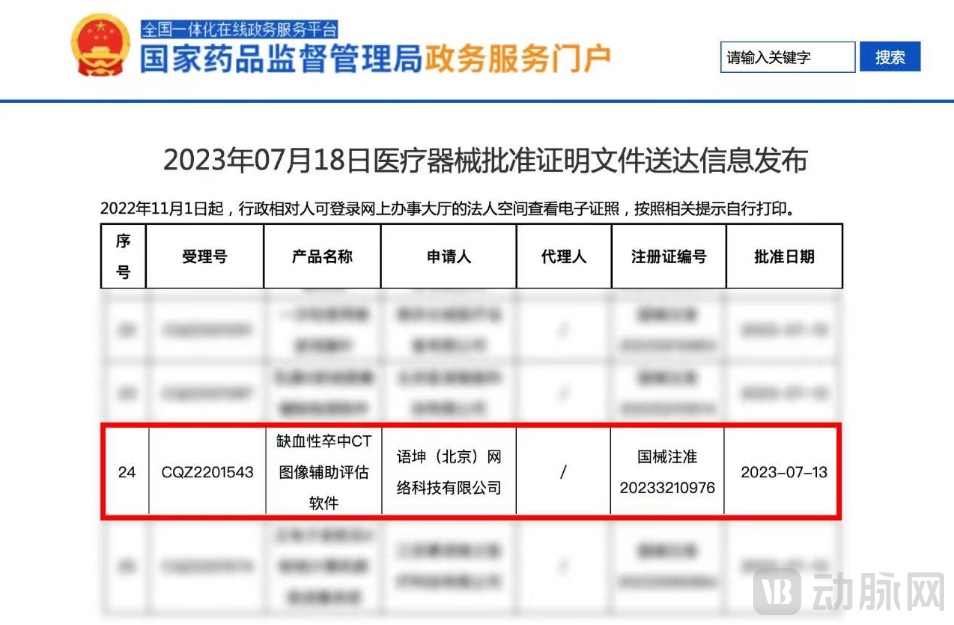
SHUKUN’s CT Image-Assisted Evaluation Software for Ischemic Stroke (EASYASPECT) Officially Receives NMPA Class III Certification
This is the ninth Class III medical device certificate obtained by SHUKUN. The product empowers CT scanners with AI, enabling them to rapidly generate ASPECTS scores based on non-contrast CT images, thereby allowing primary healthcare institutions to diagnose ischemic stroke.
Meanwhile, with this certification, SHUKUN has become the company with the largest number of certifications in the medical AI industry, completing its one-stop stroke solution and further expanding its commercial footprint.
In previous R&D efforts, SHUKUN’s AI has achieved comprehensive coverage in the field of stroke, with its intelligent products spanning the entire workflow of stroke diagnosis and treatment, including examination, diagnosis, treatment, and follow-up.
Aspects, which has recently received approval, takes a novel approach by leveraging AI to enhance non-contrast CT scans essential for stroke diagnosis. On one hand, it optimizes the stroke diagnosis and treatment workflow, providing quantitative information for the precise management of early ischemic stroke. On the other hand, it lowers the diagnostic threshold, enabling primary healthcare hospitals equipped with CT scanners to acquire stroke diagnosis and assessment capabilities through AI empowerment, thereby effectively strengthening primary medical care.
In clinical practice, the Alberta Stroke Program Early CT Score (ASPECTS) is a simple, rapid, reliable, and systematic quantitative method for evaluating early ischemic changes in the middle cerebral artery territory of patients with ischemic stroke. It facilitates rapid semi-quantitative assessment of ischemic lesions using non-contrast computed tomography (NCCT), thereby aiding in the prediction of thrombolytic efficacy and treatment prognosis.
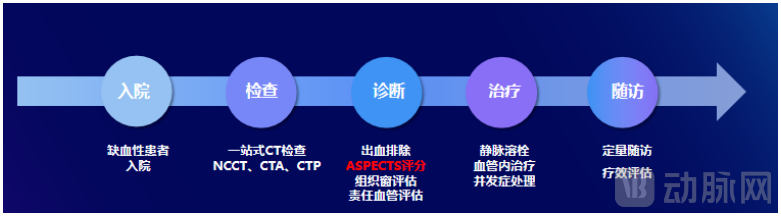 Diagnostic Workflow for Ischemic Stroke
The “Chinese Guidelines for Intravenous Thrombolysis in Acute Ischemic Stroke” state that for patients with anterior circulation acute ischemic stroke due to large vessel occlusion (AIS-LVO) within the time window and an ASPECTS score ≥ 6, the benefit of endovascular therapy is well established, and intravenous thrombolysis is recommended. The “2023 Chinese Guidelines for Endovascular Treatment of Acute Ischemic Stroke” and the “AHA/ASA Guidelines for the Early Management of Patients With Acute Ischemic Stroke” also highly endorse this approach, classifying ASPECTS ≥ 6 as a Class I recommendation with Level A evidence for endovascular intervention.
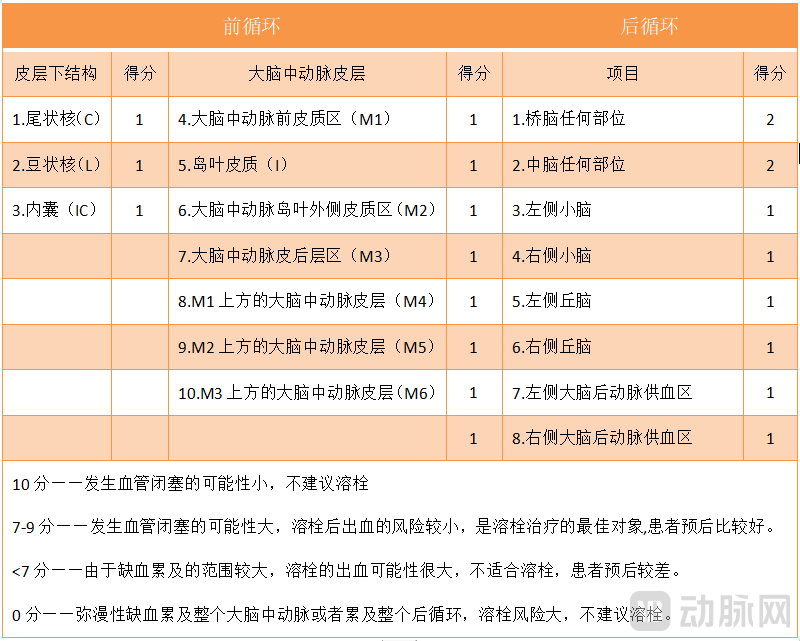
ASPECTS Scale
However, in practice, the data generated by non-contrast CT scans are not fully utilized, and the frequency of ASPECTS application does not match its value.
Since early CT signs of ischemic stroke are often subtle, and the ASPECTS scoring method is complex and time-consuming (requiring manual segmentation by physicians and taking more than 10 minutes), inter-rater agreement on ASPECTS scores is low. This limits its practicality and can adversely affect the precise formulation of treatment plans and longitudinal follow-up. Due to these combined factors, most physicians, after initially determining stroke type using non-contrast CT, prefer to employ MRI, CTA, and other modalities to assess the extent of ischemia.
SHUKUN’s newly approved AI+ASPECTS solution is designed to address the various challenges associated with ASPECTS, thereby maximizing the value of non-contrast CT scans.
Empowered by AI, ASPECTS reduces the time required for CT-based brain region segmentation from over 10 minutes to just a few seconds, while automatically and accurately identifying hyperacute cerebral infarction. Furthermore, constrained by strict segmentation rules, the algorithm yields highly consistent mean CT values for each brain region and ASPECTS scores, providing robust decision support for stroke assessment and subsequent therapeutic diagnosis.
By fully leveraging non-contrast CT data, AI-ASPECTS effectively optimizes the diagnosis and treatment workflow for ischemic stroke. For patients, this streamlined process not only helps reduce treatment costs but also accelerates the formulation of treatment plans by saving time otherwise spent on supplementary examinations.
Currently, SHUKUN’s one-stop intelligent solution for digital stroke care, which includes ASPECTS AI, has been deployed in nearly 3,000 hospitals. As workflows reveal room for optimization, many physicians have begun to reevaluate the value of ASPECTS.
If stroke symptoms are recognized early and patients are promptly transported within 4.5 hours of onset to a (comprehensive) stroke center capable of providing acute stroke care, where they receive standardized reperfusion therapy, the majority can achieve significant or even complete recovery, thereby preserving a good quality of life. In other words, timely identification of early stroke symptoms is critically important; the earlier the detection and intervention, the better the therapeutic and rehabilitative outcomes.
However, within China’s current healthcare system, medical institutions equipped with stroke diagnostic capabilities are typically tertiary hospitals. Given the widespread lack of adequate awareness regarding stroke prevention mechanisms in China, patients admitted to these hospitals are often those who have already developed severe symptoms such as paralysis or syncope. Consequently, the vast majority miss the golden window for treatment, and by the time they arrive at the hospital, some brain tissue has already undergone necrosis.
Therefore, to more effectively reduce stroke-related mortality and disability rates, the diagnosis and treatment of stroke should be decentralized to primary healthcare settings, thereby lowering barriers to accessing stroke diagnosis and enabling more patients to receive timely treatment within the golden window.
This represents another key value of SHUKUN’s ASPECTS solution. According to Zheng Chao, CTO of SHUKUN: “In diagnosing stroke types, CT images generated by both non-helical and helical CT scanners can be used to calculate the ASPECTS score, thereby facilitating the diagnosis of ischemic stroke. The solution is highly compatible and not restricted by specific equipment.”
“This also means that, whereas stroke diagnosis previously required visits to general hospitals, AI empowerment now enables primary healthcare facilities to obtain quantitative brain region data from non-contrast CT scans, assisting physicians in rapidly assessing cerebral ischemia and helping patients receive more precise treatments in a shorter time.”
In other words, the introduction of ASPECTS has effectively improved stroke patients’ access to stroke diagnosis. With more patients receiving timely and more precise treatment, they can achieve better prognoses at lower treatment costs and return to health sooner.
“The 2022 Healthcare AI Industry Report” once defined the AI 2.0 era as an extension of the application scenarios of AI 1.0. The key distinction from AI 1.0 lies in whether knowledge and algorithms can be deeply integrated to disrupt existing medical workflows. In simple terms, initial AI focuses on enhancing the efficiency of operational entities, whereas advanced AI has the capability to overhaul and reconstruct workflows, establishing a new order centered around AI capabilities.
Clearly, the innovation of AI+ASPECTS aligns with the definition of AI in the new era. By gaining a deep understanding of clinical workflows, it optimizes stroke diagnosis and treatment without adding any extra steps, thereby improving patient outcomes and helping hospitals reduce costs while enhancing efficiency.
Within the AI framework established by SHUKUN, the innovation of AI+ASPECTS is not an isolated case.
Previously, SHUKUN launched its “1+X” joint diagnostic screening solution, overcoming the high demands on equipment and personnel traditionally associated with cardiac screening. By performing a single low-dose non-contrast chest CT scan using a 16-slice CT scanner, the solution yields multiple early-screening results, including detection of pulmonary diseases and hidden risks of coronary heart disease. Such a health screening model would be unattainable without AI empowerment.
Centering on cardiovascular and cerebrovascular diseases, SHUKUN has established the “Digital Heart” family, which includes products and modules such as CTA+CT-FFR, FAI, non-gated coronary artery calcium scoring, and intelligent analysis of CT cardiac function; as well as the “Digital Brain” family, covering products and modules such as non-contrast CT (NCCT), CT angiography (CTA), and CT perfusion imaging (CTP). These solutions comprehensively empower clinicians in both clinical practice and research, driving a pivotal transformation in cardiovascular and cerebrovascular imaging diagnosis from morphological to functional assessment, and from imaging diagnosis to clinical decision-making.
According to reports, the Digital Human Platform 2.0 now encompasses more than 40 AI products, covering multiple imaging modalities including CT, MR, DR, ultrasound, and DSA. It also provides comprehensive coverage across all stages of disease screening, diagnosis, and treatment, enabling high-precision navigational collaboration and accurate diagnosis and treatment throughout the entire disease management process.
As various systems are further refined, SHUKUN’s AI may further reshape clinical workflows. The convergence of these systems will ultimately give rise to a comprehensive “Digital Human.”