

PangCe Medical Completes Nearly RMB 100 Million Series A+ Financing Led by Shenzhen Capital Group to Accelerate Global Rollout of Domestic Hair Transplant Robot

Puncture Robotic
Medical Robot Developer

SCGC
Investment Institutions in Innovative Fields
VCBeat has learned that Puncture Robotic (Shanghai) Intelligent Medical Technology Co., Ltd. (hereinafter referred to as“Puncture Robotic” announced the completion of its A+ financing round, raising nearly RMB 100 million. The round was led by Shenzhen Capital Group Co., Ltd (SCGC), with Huayi Capital participating as a co-investor, and Probe Capital serving as the exclusive financial advisor. The funds raised will be utilized for product research and development, clinical certification, production capacity enhancement, and global market expansion.
Puncture Robotic, established in 2019 and headquartered in Shanghai, is a company incubated by the Harbin Institute of Technology’s robotics ecosystem, specializing in medical robots. The company is committed to becoming an enabler of precision medicine. Its R&D team identifies common clinical features across various diseases, uncovers shared clinical needs requiring urgent solutions, and leverages advanced robotic technologies to develop highly specialized robots for niche medical fields.
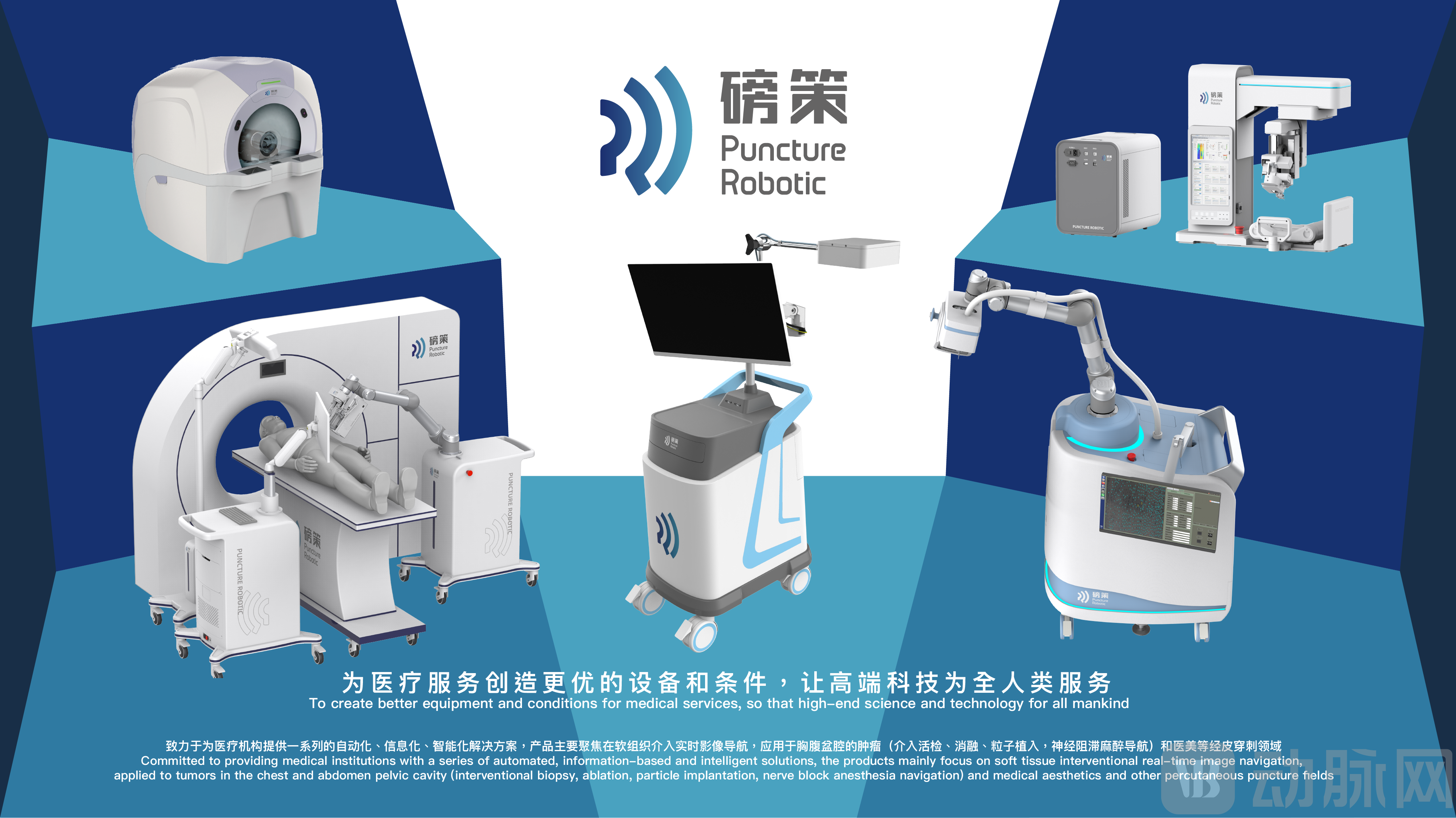
Puncture Robotic’s product pipeline covers both serious medical care and consumer healthcare, with existing products such as hair transplant robots and surgical robot puncture navigation systems, spanning fields including medical aesthetics and oncology.
According to statistics from the National Health Commission, China currently has over 250 million people suffering from hair loss, meaning one in every six individuals is affected. This includes approximately 164 million men and 89 million women. There is substantial room for growth in the penetration rate of the hair transplant market, making the hair care industry an unequivocal sunrise industry of the future.
FUE (Scarless Hair Transplantation Technique) is currently the most common and widely used hair transplant method on the market. This approach requires manual extraction of hair follicles, relying heavily on the physician’s experience and expertise, with high demands for professional skills and surgical precision. Inaccurate judgment by the physician, or improper control of the extraction angle or depth, can damage the hair follicles, resulting in failure of the transplanted follicles to survive. Moreover, such high-precision surgeries, often lasting 5–8 hours, place a dual strain on the surgeon’s visual acuity and physical endurance.
Ensuring the quality of follicular unit harvesting without causing damage is one of the key factors determining the success or failure of hair transplantation surgery. This task, which requires balancing “precision” with “repetitive mechanization,” is precisely where robots excel.
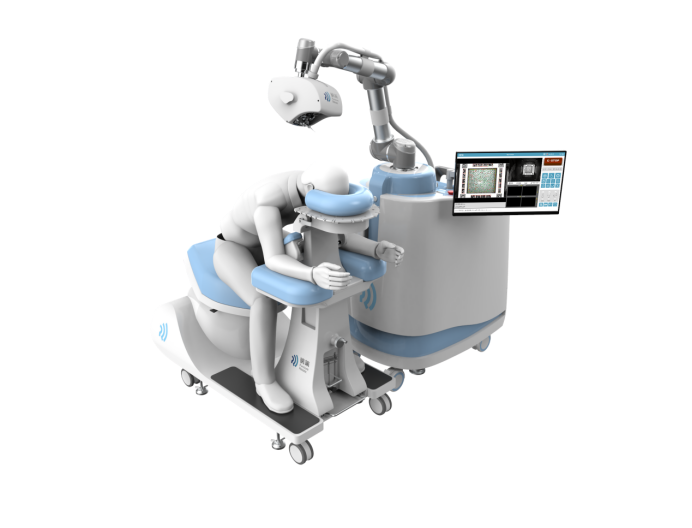
Puncture Robotic Hairo®Hair Transplant Robot
Leveraging deep clinical insights and robust technical expertise, Puncture Robotic has independently developed Hairo®Hair Transplant Robot. By leveraging stereoscopic vision for localization, intelligent path planning, robotic arm force feedback protection, and real-time motion compensation, the controlled robotic arm can safely, efficiently, and precisely perform follicular unit extraction surgery. The product has commenced clinical trials this June.
“After more than two years of research and development on our hair transplant robot, we have secured nearly 100 patents. In our core hand-eye integration technology, the ‘eye’ component enables the camera to move in sync with the motion axes. This approach is relatively rare in the application of robotic technology in China and represents the highest level of integration between robotics and visual artificial intelligence. With each hair strand having a diameter of approximately 0.05 mm, the overall precision must exceed the hair diameter by an order of magnitude. Our hair transplant robot achieves precise extraction and implantation of hair follicles,” said Zhang Zhaodong, Founder and CEO of Puncture Robotic, in an interview with VCBeat.
Puncture Robotic Hairo®For medical institutions, hair transplant robots significantly reduce reliance on physician experience and lower existing procedural costs, effectively shorten operation times, increase patient turnover rates, and enhance the institution’s capacity for scalable business replication. For medical staff, these systems minimize repetitive tasks, reduce the need for excessive manpower, lower work intensity, elevate the professional value of healthcare providers, and shorten the learning curve. For patients, the surgical process is more standardized, yielding superior outcomes with more uniform and aesthetically pleasing incisions. The efficient procedure also improves the overall patient experience, reduces anesthesia usage, and shortens the postoperative recovery period.
Upholding the corporate mission of “creating superior equipment and conditions for medical services, and leveraging advanced technology to serve all humanity,” Puncture Robotic has dedicated itself to diligent development over several years and has gradually entered a period of harvest in recent years.
In terms of commercialization, the company adheres to a dual-drive market strategy for both domestic and international markets. Domestically, it has established strategic partnerships with leading hospitals such as Huashan Hospital, China-Japan Friendship Hospital, and Ruijin Hospital, as well as with collaborative partners including GE HealthCare, KUKA Med, Beiduo, and Health 160, along with major hair transplant and medical aesthetics chain brands. The next step will involve intensifying the development of clinical demonstration centers across China. Internationally, certification applications have been initiated simultaneously, with overseas expansion expected by the end of next year.
Puncture Robotic continues to strive to explore the high-value frontiers of hair diagnosis and treatment. In June this year, it jointly established the Artificial Intelligence Hair Innovation Center with the Shanghai Hair Medicine Engineering Technology Research Center, the Suzhou Collaborative Innovation Institute for Medical Robots, the National Center for Integrated Traditional Chinese and Western Medicine, the Harbin Institute of Technology’s Institute of Artificial Intelligence, and Life Tree Medical. By building an upstream and downstream industrial resource platform, cultivating interdisciplinary talent, and advancing the level of industrial technological development, Puncture Robotic aims to provide superior solutions for patients.
In the future, Puncture Robotic will join forces with more professional medical institutions to deepen its presence in the hair transplantation sector, safeguarding patients’ “top priority” through standardized clinical procedures.
For this round of financing,Zhang Zhaodong, Founder of Puncture RoboticPuncture Robotic stated: “Since its inception, Puncture Robotic has aimed to center on precision minimally invasive procedures through robotic technology, promoting consistency in diagnosis and treatment quality via product innovation, and addressing the accessibility and affordability of medical technologies. Committed to advancing medical science and technology, Puncture Robotic believes it will undoubtedly leave a valuable ‘footprint’ in the history of medical progress.”
SCGC Investment Team“Puncture Robotic’s focus on the medical robotics sector holds broad application prospects. Compared to the United States and Europe, the penetration rate of medical robots in China’s healthcare sector remains relatively low, leaving substantial unmet clinical needs. Our group has long maintained a strategic focus on the medical robotics segment, with investments across numerous niche tracks. We are particularly optimistic about Puncture Robotic’s development in the niche fields of hair transplantation and percutaneous puncture. The Puncture Robotic team possesses composite expertise in both robotics and medicine, featuring transferable platform-based technologies. Furthermore, the team demonstrates strong cohesion and drive. The company’s hair transplantation robot is poised to be among the first batch of products to reach the market. We look forward to collaborating with the company to contribute to the advancement of domestic substitution.”
Huayi Capital Investment Teamstated: “We are highly confident in the prospects of the hair transplant robotics sector. Given the widespread prevalence of hair loss among the Chinese population, the hair care industry is undoubtedly a sunrise industry with significant future potential. As an industry leader, Puncture Robotic has already covered diagnostic and treatment processes in application areas such as medical aesthetics and oncology. Its flagship product is poised to become the first hair transplant robot approved in China, offering advantages such as significantly reduced surgical time, improved efficiency, standardized procedures, and enhanced surgical outcomes. The product has undergone extensive clinical validation and has established strategic partnerships with numerous hair transplant and medical aesthetics chain brands. We firmly believe that the field of hair transplant robotics holds immense development potential. With advancements in medical technology and growing public attention to personal health and aesthetics, hair transplant robots, as an innovative technology in the medical field, will attract increasing interest from healthcare institutions and patients. As investors, we will continue to closely monitor Puncture Robotic’s future development and support the company in becoming an industry frontrunner.”
About SCGC
Shenzhen Capital Group Co., Ltd. (hereinafter referred to as “SCGC”) was established in 1999 with capital contributed by the Shenzhen Municipal Government and guided social capital. With a mission to discover and empower great enterprises, SCGC is committed to being a discoverer and cultivator of innovative value. It has developed into a comprehensive investment group centered on venture capital, with a registered capital of RMB 10 billion and total assets under management exceeding RMB 440 billion. As of June 30, 2023, SCGC ranked among the industry leaders in terms of the number of invested companies and the number of portfolio companies that went public: it had invested in 1,703 venture capital projects (covering 1,414 companies), with cumulative investments amounting to approximately RMB 97.6 billion, and had exited from 525 portfolio companies (including IPOs). Among these, 254 portfolio companies were listed on 17 major capital markets worldwide (excluding the National Equities Exchange and Quotations). SCGC has consistently ranked among the top in comprehensive rankings of venture capital firms conducted by authoritative institutions such as the China Venture Capital Association, Zero2IPO Group, and CVSource.
About Huayi Capital
Huayi Capital was established in 2015, focusing on investments in the medical and healthcare industry. It has filed multiple healthcare funds with the Asset Management Association of China (AMAC). As one of the representative research-driven investment institutions in China, it is a definer of the panoramic landscape of domestic medical investment. Its subsidiary, Huayi Research Institute, is one of the few primary market medical investment research institutes in China and also serves as a definer of the panoramic landscape of domestic medical investment. The institute focuses on six major sectors, 36 sub-industries, and over 200 niche areas within the medical industry. It possesses an industry-leading evaluation system for corporate growth value. After years of research accumulation, the institute has gathered operational data from tens of thousands of healthcare companies, maintaining long-term interactions and real-time updates on their latest developments. It has become a leading big data research institution for medical and healthcare enterprises in China, regarded by industry insiders as the "S&P" of the medical and healthcare sector.