

YiSheng JianKang Files IPO Prospectus: Pioneering the Emerging Internal Anti-Aging Market for Women with an Internet-Driven Full-Lifecycle Health Service Ecosystem

Testing OneLife
Internet Health Management Service Provider
The women's health market is experiencing rapid growth, with data offering a glimpse into its surging popularity.
According to Acumen Research & Consulting,The global women's health market reached a total size of $25.3 billion in 2021.(approximately RMB 183.5 billion), and is projected to expand to USD 97.3 billion (approximately RMB 705.7 billion) by 2030, with a compound annual growth rate (CAGR) exceeding 16% from 2022 to 2030, indicating rapid growth.
During this process, niche sectors such as HPV vaccine appointment services, early anti-aging interventions, maternal and infant care, assisted reproductive technology (ART), and postpartum rehabilitation have gained significant momentum, attracting widespread industry attention. For instance, the field of HPV vaccine appointment services has drawn strategic investments and layout from major internet companies, including JD Health, Ali Health, Tencent Health, Baidu Health, and Pinduoduo.
Beyond the industry giants, the vast blue ocean of women’s health is attracting a growing number of entrepreneurs who are actively entering the field, seeking and exploring new opportunities and possibilities within the sector.
For instance, VCBeat recently contactedTesting OneLife, an innovative enterprise, has pioneered the niche field of internal anti-aging for women by focusing on the female endocrine system—a previously overlooked area. The company achieved a technological breakthrough in precise, at-home early screening of ovarian function using peripheral blood. Furthermore, it established the industry’s first internet-based, closed-loop health service covering the entire lifecycle of women’s internal anti-aging, thereby driving a renewed surge in the home testing, nutritional supplements, and health management sectors.
Why Is Internal Anti-Aging for Women So Important? What Are the Key Challenges and Pain Points? What Innovative Efforts Has Testing OneLife Made? How Will the Industry Evolve in the Future? To address these questions, VCBeat conducted an in-depth interview with Wang Qiangyu, Founder and CEO of Testing OneLife, and reviewed relevant scientific literature to shed light on the answers.
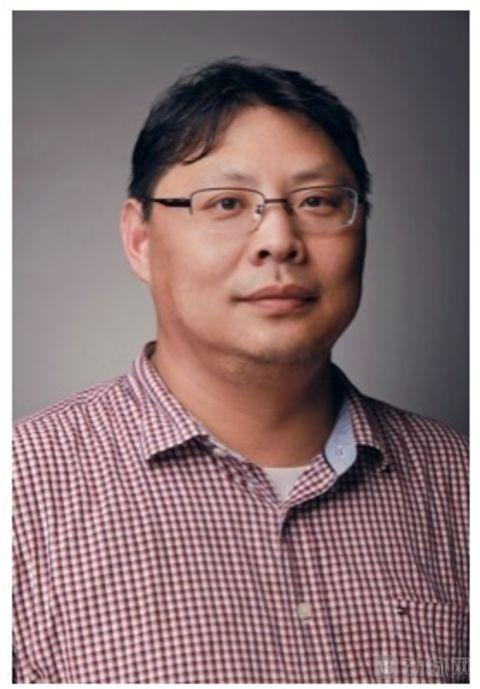
(Wang Qiangyu, Founder and CEO of Testing OneLife)
The persistent emphasis on physical appearance has driven robust demand for non-invasive anti-aging treatments among women, fostering the emergence of multi-billion-dollar niche markets for products such as hyaluronic acid, botulinum toxin, and collagen. Studies indicate that skin-tightening and anti-aging procedures have risen to the top, with facial rejuvenation becoming a new trend in medical aesthetics consumption.
However, anti-aging for women requires a holistic approach that addresses both internal and external factors.
Taking the endocrine system as an example, it is one of the most critical regulatory systems in the human body, playing a vital role in growth and development, reproduction, metabolism, and the maintenance of internal homeostasis. Once women experience endocrine disorders (hormonal imbalances), they may clinically present with a variety of issues, such as melasma, sallow skin, acne and hyperpigmentation, irritability, obesity, and infertility.
“Female reproductive endocrine disorders are primarily caused by abnormalities in the hypothalamic-pituitary-ovarian (HPO) axis and occur throughout a woman's life cycle.“Wang Qiangyu, Founder and CEO of Testing OneLife, told VCBeat.”
In his article “The Pacemaker of Female Aging: Ovarian Aging,” published in International Frontiers, Wang Shixuan, Executive Deputy Director of the Department of Obstetrics and Gynecology at Tongji Hospital affiliated with Tongji Medical College of Huazhong University of Science and Technology, and Deputy Director of the National Clinical Research Center for Obstetric and Gynecologic Diseases, also noted that ovarian aging is not merely responsible for menopause and its associated syndromes, which currently receive considerable attention and emphasis. Rather, it is a significant process characterized by early onset, progressive functional decline, and broad impacts on overall health. Ovarian aging not only impairs female reproductive function, leading to infertility, but can also cause diseases in target organs or related systems due to diminished endocrine function.
From this perspective, ovarian aging serves as a warning sign of internal aging in women.
Furthermore, the preclinical phase of internal aging in women is often asymptomatic. As a result, many women only recognize underlying health issues when ovarian aging leads to ceased estrogen secretion, resulting in deteriorated skin quality, insomnia, and infertility. This delay causes significant distress and inconvenience for women.
Premature ovarian insufficiency has also garnered widespread attention within the industry. In February 2023, the top-tier journal Nature published a paper on the “genetic code of ovarian aging,” indicating that premature ovarian insufficiency has become a major hotspot in scientific research.
Chen Zijiang, Director of the Women’s and Children’s Medical Research Center at Shandong University, Chief Expert at the Affiliated Reproductive Hospital, and Academician of the Chinese Academy of Sciences, also stated during the inaugural Ai Chao Public Welfare Month that the ovaries regulate women’s health throughout their entire life cycle—from development to aging. Ovarian aging leads to reproductive decline, which in turn marks the onset of systemic aging in women. Early detection, diagnosis, and prevention are crucial to women’s lifelong health and well-being.
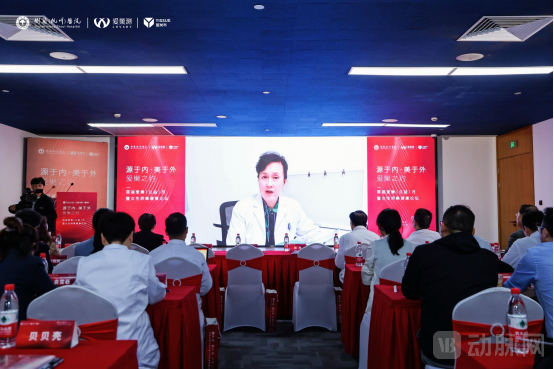
(Director of the Women's and Children's Medical Research Center at Shandong University, Chief Expert at the Affiliated Reproductive Hospital,
Academician Chen Zijiang of the Chinese Academy of Sciences Participates in the First “Love Ovary” Public Welfare Month)
Synthesizing perspectives from both academic and clinical sectors, early screening for internal aging in women is particularly warranted:Internal aging profoundly impacts women’s health and beauty throughout their lives, creating a strong, inelastic demand, while early screening enables timely detection and resolution of related issues.
ExactlyMassive Population Demand(China has 690 million women, and women require internal anti-aging throughout their lives),Prop Up the Hundred-Billion-Level Ultra-High Imagination Space of the Female Internal Anti-Aging Market(product + service, characterized by high-frequency consumption), making it a sector with significant potential for explosive growth.
How to conduct early screening? And how to diagnose premature ovarian insufficiency? There is already a clinical consensus, namelyPrimarily involves Anti-Müllerian Hormone (AMH) testing and the six-item hormone panel., if AMH is less than 1.1 ng/ml, it suggests a trend of declining ovarian function; if AMH is below 0.1, premature ovarian failure is considered to have occurred.
The good news is that domestic attention to women’s internal health is growing, with related research continuously underway in China; some Grade 3A hospitals have already established departments of gynecological endocrinology. However, this field remains in its early exploratory stage.
Furthermore, constrained by insufficient supply, women face challenges in pursuing internal anti-aging interventions, such as the need for frequent hospital visits, which entail considerable time and effort spent on registration and waiting for consultations. In addition, there are few existing ovarian health management solutions, and the industry still suffers from issues including lack of targeted approaches, insufficient convenience, and absence of comprehensive multidimensional evaluation.
It is precisely for the aforementioned reasons thatThe market is in urgent need of a game-changer.
How to provide better health management services for women has been Wang Qiangyu’s top concern since he founded Testing OneLife.
As the former Vice President of DingTalk and the founder of the short-video app “Qupai” and the social product Real, Wang Qiangyu has a deep understanding of the strategies and logic of the internet industry. His subsequent decision to venture into the medical and health sector stemmed from his strong interest in the industry and his profound insight into the pain points of women’s health.
“After undergoing testing, female users often also wish to know how to maintain their health in the subsequent period,” Wang Qiangyu told VCBeat. The original intention of Testing OneLife is to provide consultations by a professional medical team for female users after they complete their tests, and to help them address any issues encountered.
To this end, Testing OneLife has courageously broken new ground and established new paradigms, itsGrounded in rigorous scientific and medical principles, and leveraging the foundational logic of the internet, we have introduced the “Scientific Ovarian Care Method” to provide comprehensive, lifecycle health services for women.
With the overall direction in place, how can specific pathways be effectively established?
Testing OneLife’s solution isProvide at-home testing first.Because when female users can obtain test results without leaving home, it not only saves their time but also conserves hospital medical resources.
The key challenge lies in ensuring the precision and reliability of at-home testing. To address this, scientists at Testing OneLife have successfully developed precise micro-testing technology and an integrated device for capillary blood collection. Compared to the cumbersome process of venous blood collection, this device enables users to accurately, quantitatively, and conveniently collect capillary blood within minutes. It also ensures the safety and reliability of sample transport over extended periods at room temperature, thereby facilitating the precise detection of multiple indicators.
Data validated across thousands of individuals indicate that the test results from capillary blood dried blood spots (DBS) after elution, developed by Testing OneLife, are largely consistent with those from venous plasma, meeting medical standards for correlation.
Undoubtedly, precision micro-testing technology has provided great convenience for users to conduct self-tests, and has also opened up a highly imaginative market space for at-home women’s health testing.
However, in Wang Qiangyu’s view, home-based testing is merely the first step; “one-time testing, lifelong management” truly reflects a responsible approach toward female users.
Centered on this direction, Testing OneLife has partnered with top clinical experts to create “Aichao Test“products, thereby providing female users with easy-to-understand test reports that help them comprehensively assess their ovarian and endocrine functions, and provide early warnings of health risks. It is also equipped with health consultants who offer guidance on healthy lifestyles from multiple dimensions, including dietary nutrition, exercise prescriptions, and lifestyle adjustments, to provide users with closed-loop management of ovarian health throughout their entire life cycle, thereby assisting female users in managing endocrine health and internal anti-aging.”
In addition, Testing OneLife is launching commercial initiatives across the consumer (C-end), business (B-end), and healthcare provider (small H-end) sectors, while actively collaborating with major platforms such as Douyin, Weibo, and Xiaohongshu to strengthen public education on ovarian health.
More importantly, after conducting tests for female users, Testing OneLife provides personalized solutions through its professional medical team, making the benefits of health management truly visible.
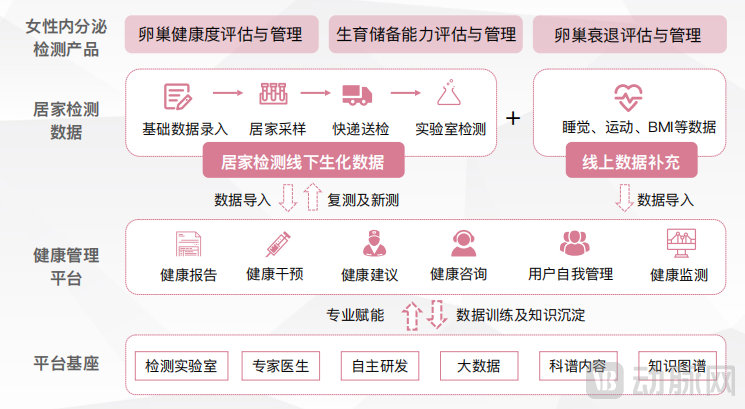 (Schematic diagram of the closed-loop ecological chain from Testing OneLife’s home-based endocrine testing to health management. Photo provided by the company)
But this is not enough.Leveraging its team’s internet DNA, Testing OneLife also places particular emphasis on building a robust underlying technological foundation.
“For example, Testing OneLife has already developed an internal intelligent system called Tolemis, which can automatically generate reports. ‘We leverage big data and automation technologies to produce professional and authoritative report interpretations. This enables us to provide efficient, accurate, and standardized services as testing volumes continue to grow, thereby meeting the demands of large-scale operations. Meanwhile, we are building a virtual ovarian health specialist using ChatGPT to help users address more issues related to ovarian health,’ said Wang Qiangyu.”
As can be seen,From detection to customization, and then to solutions and interventions, Testing OneLife has centered on women’s internal anti-aging needs. By upholding rigorous scientific and medical standards, it has leveraged internet-based approaches to establish China’s first closed-loop system for women’s full-lifecycle health services, earning strong reputations among core female users and bringing new possibilities to the industry.
Testing OneLife will continue to advance in depth as it faces future development.
“By detecting issues early through screening and then implementing interventions—such as designing customized nutritional packages for individuals in a sub-health state, followed by scientifically guided health interventions—we have verified through re-testing that significant improvements can be achieved. Our practice has demonstrated that this approach is entirely viable,” said Wang Qiangyu.Female internal anti-aging is closely related to medicine and offers significant potential for innovation. It can collaborate with nutritional supplements, meal replacements, fitness and health apps, and even hospitals to jointly safeguard women’s internal health.
Currently, Testing OneLife has driven the development of upstream and downstream industries, such as other testing services, women’s health science popularization content on Xiaohongshu and Douyin, and the market and research for nutritional supplements, achieving synergistic ecosystem development.
In terms of product portfolio, Testing OneLife is also providing more solutions for female users. For instance, the “Ovarian Health Assessment” targets young women aged 18–55 in first- and second-tier cities, helping them monitor and improve their skin condition (appearance), body shape, mood, and sleep quality. For career-oriented women aged 25–40 with family-planning intentions, the company has launched the “Fertility Reserve Capacity Assessment.” Additionally, a specialized “Six Sex Hormones Assessment” has been introduced to address endocrine health. This demonstrates that Testing OneLife’s products, centered on the core pain points of women at various stages, have achieved coverage across the entire female life cycle.
Wang Qiangyu told VCBeat that Testing OneLife will strengthen collaboration with more partners to deepen and comprehensively enhance women’s internal health management.
It is worth mentioning that,In terms of future prospects, the emerging sector of internal anti-aging for women also appears highly attractive.
First, atClinical Side, with the rise of the new sector focused on internal anti-aging for women, hospitals will attract new patient flows and promote the development of female endocrinology departments, thereby providing more and better clinical solutions.
Second, inIn terms of user value, internal anti-aging for women is an essential need for hundreds of millions of Chinese women. It is a scientific approach to maintaining ovarian and endocrine health, which will significantly enhance women’s quality of life, health, and well-being throughout their lives.
Third,In terms of market size, female internal anti-aging represents a highly typical emerging consumer sector and a multi-billion-dollar market opportunity for win-win collaboration among all stakeholders in the industry ecosystem. Closely linked to women’s health and beauty, it holds immense potential for rapid market expansion as consumer awareness rises and supply increases.
Policies are also supporting this trend.In 2021, the “Outline for the Development of Chinese Women (2021–2030)” issued by the State Council stated that a comprehensive health management model for women across their entire life cycle should be established and improved, providing all-around health management services tailored to the health needs of women during adolescence, childbearing age, pregnancy and childbirth, menopause, and old age.
In this process, innovative enterprises that continuously create greater value for female consumers will inevitably reap the dividends of the rapid growth in the emerging sector of internal anti-aging solutions for women.