

AstraZeneca China's Wang Jian on R&D Innovation and Ecosystem Building to Empower Healthcare Research Commercialization
On June 29, 2023, at the VB-Link Future Medical Achievement Transformation and Cooperation Conference held at the InterContinental Hotel in Yujiapu, Binhai New Area, Tianjin, Wang Jian, Executive Director of Digitalization and Business Innovation at AstraZeneca China, delivered a keynote speech titled “R&D Innovation + Ecosystem Building Empowering the Translation of Medical Research Achievements.”
Wang Jian emphasized that while the translation of scientific and technological achievements has become a hot topic, with national and local authorities undertaking a series of initiatives to promote industry-academia-research collaboration, the process remains complex and fraught with challenges. These include issues related to interdisciplinary cooperation, the alignment of R&D products with market demands, insufficient investment, and the need to clarify intellectual property ownership.Furthermore, Wang Jian noted that AstraZeneca, a multinational pharmaceutical company that has been committed to China for thirty years, has consistently ranked first among multinational pharmaceutical companies in the Chinese market for several consecutive years. In recent years, it has continuously increased its R&D investments across multiple therapeutic areas. The company has not only engaged in deep collaborations with Chinese cities and hospitals by signing strategic memoranda but also partnered with Chinese research institutes and enterprises to drive innovative R&D. Additionally, AstraZeneca has intensified its efforts to build an innovation ecosystem in China. This includes promoting the refinement and implementation of whole-disease management solutions across multiple therapeutic areas through integrated diagnosis and treatment models; facilitating various stages of industry-academia-research translation, such as collaborating with local governments to help incubate and settle high-quality enterprises and advancing city-level medical cooperation; and establishing industrial funds to invest in premium companies within the fields of biopharmaceuticals, medical devices, diagnostic services, and digital health.
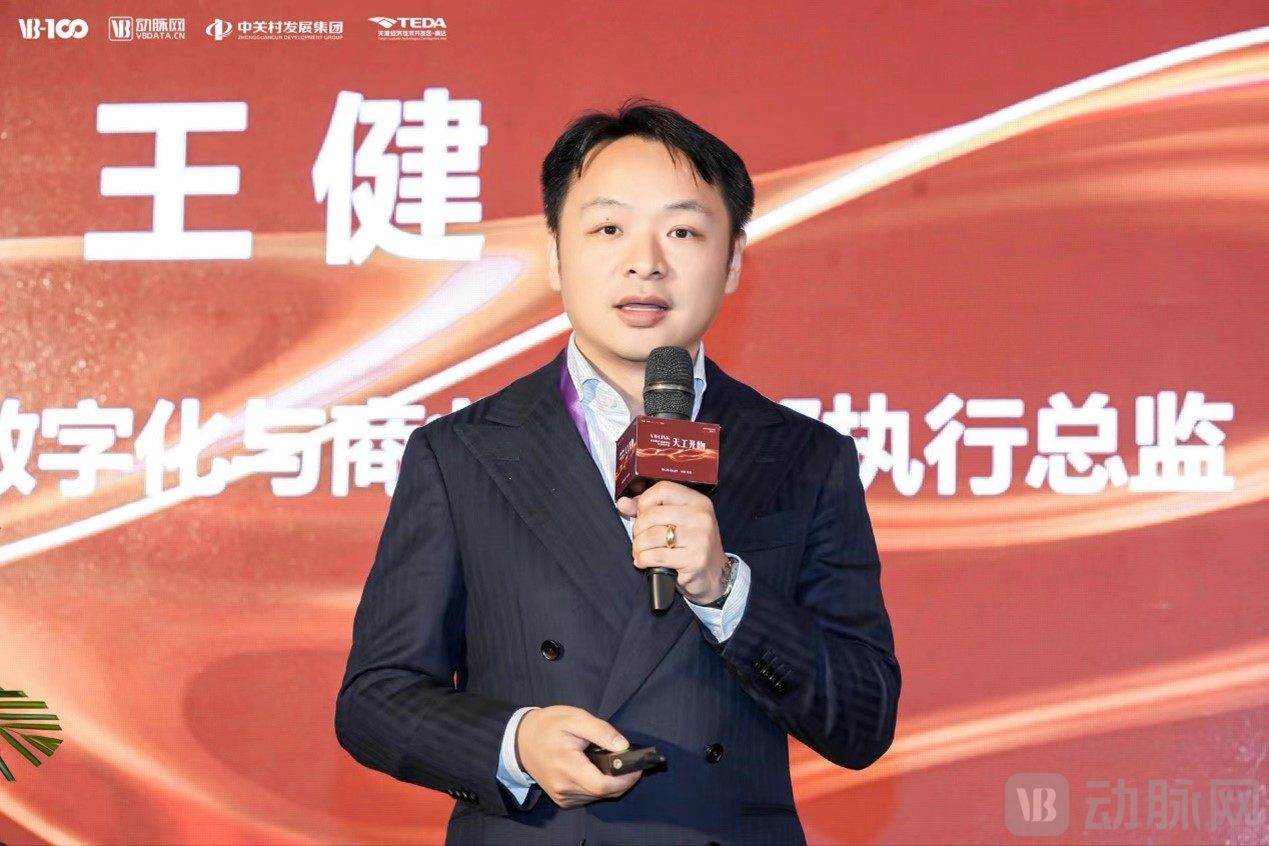
Wang Jian, Executive Director of Digital and Commercial Innovation, AstraZeneca China
I am from AstraZeneca, where I oversee initiatives related to innovative integrated digital diagnosis and treatment. In alignment with the conference’s objectives, my presentation today focuses on the translation of scientific research achievements. In this process, we approach it from two perspectives: first, from an R&D standpoint, involving pharmaceutical innovation from the perspective of a pharmaceutical company; second, from an ecosystem standpoint, as AstraZeneca China strives not only to operate as a pharmaceutical company but also to make greater strides in building a comprehensive healthcare ecosystem.
In short, the translation of medical research into clinical practice is indeed a highly topical issue today. The state hopes for more outcomes from medical innovation, and we have seen a series of supportive measures introduced at both national and local levels. Healthcare institutions, as well as research institutes and universities, are all promoting integration among industry, academia, and research. As many previous speakers have noted, this is a complex and challenging endeavor involving interdisciplinary collaboration and market demand for R&D products, thus requiring continuous progress and innovation. Due to mismatches in demand, underinvestment has become an issue during this process. We have also observed that, compared with the previous two to three years, there have been certain changes in the enthusiasm and trends regarding innovation investment over the past year or so.
Previous speakers have also addressed intellectual property (IP) issues. It is essential to clarify the direction for implementing the ownership of scientific research IP. In addressing the pain points that drive translation, we believe that this involves not only R&D innovation but also collaboration within the industry’s innovation ecosystem, engaging various stakeholders. First and foremost, government guidance plays a primary role. Additionally, it requires academic research within the industry, the healthcare system, and enhanced communication and coordination among industry, academia, research institutions, and medical entities. Only through the combined efforts of technology, capital, talent, and other channels can we optimize the R&D outcomes of industry-academia-research translation and ultimately ensure its successful implementation.
A Brief Introduction to AstraZeneca: We entered the Chinese market in 1993, and this year marks our 30th anniversary in China. As stated by Wang Lei, our President for China, we are a localized multinational corporation (MNC). Unlike other international pharmaceutical giants, we are deeply committed to embracing localization in China. China is AstraZeneca’s second-largest market globally, and we have ranked first among multinational pharmaceutical companies in the Chinese market for consecutive years, with last year’s revenue reaching approximately USD 5.75 billion. Since entering China, we initially focused on introducing more medicines to the country as a pharmaceutical manufacturer. Subsequently, we increased our investment in local manufacturing by establishing facilities in Wuxi, Taizhou, and Qingdao, transforming China into a production hub for medicines that benefit patients worldwide.
Over the past six to seven years, we have increased our investment in building an innovation ecosystem. In terms of therapeutic areas, these include the following major fields:
First, the most fundamental areas in oncology, such as breast cancer, lung cancer, prostate cancer, and a series of other fields;
Second, respiratory-related conditions such as COPD and asthma;
Third, cardiovascular diseases, including heart failure, hypertension, and hyperlipidemia;
Fourth, the kidney and metabolic disease areas. Additionally, this includes the digestive health and rare disease sectors. Since the beginning of this year, AstraZeneca has had multiple new oncology and rare disease drugs approved in China.
We prioritize R&D innovation. In 2021, we established our Global R&D China Center in China. The center currently manages a pipeline of over 180 assets, which are projected to deliver 15 new drugs to the Chinese market by 2030. Over the next five years, more than 80 new drugs and new indications are expected to gain regulatory approval in China. Furthermore, we have signed strategic memoranda of understanding with more than 400 hospitals across over 170 cities in China to deepen collaboration and facilitate the translation of medical research into clinical applications.
We launched a translational medicine fund last year to support basic medical research and translational medicine studies conducted by Chinese clinicians. This initiative involves collaborations with various Chinese research institutes, including the Guangzhou Institute of Respiratory Health led by Academician Zhong Nanshan, as well as research projects at Peking University and Fudan University. Furthermore, we engage in joint R&D with leading Chinese enterprises and facilitate the international market entry of Chinese pharmaceuticals. For instance, we have supported the global launch of Orpathys (savolitinib) in the oncology sector. In the field of solid tumors, we collaborate with Chinese companies not only to bring innovative R&D layouts to China but also to jointly drive R&D innovation from China to the global stage.
We drive the “three pillars” of the innovation ecosystem:
First, the China Center for Intelligent Healthcare Innovation (CCiC) extends beyond pharmaceuticals to encompass platforms and medical devices. We collaborate with leading experts and academicians across China to promote integrated diagnosis and treatment models across multiple therapeutic areas, covering both in-hospital settings and care scenarios that extend from hospitals into the community.
Second, we collaborate with governments and various cities across China to establish the International Life Sciences Innovation Park (iCampus), empowering and incubating enterprise development.
Third, we partnered with CICC Capital to establish the AstraZeneca CICC Healthcare Industry Fund, providing financial support to foster the growth of outstanding enterprises. Through these three initiatives, we collectively build a health innovation ecosystem.
Specifically, the concept of commercial innovation involves integrating broader ecosystem partners into existing diagnostic and treatment frameworks, in collaboration with experts, to transform current care delivery models. For instance, we support Academician Ning Guang’s National Standardized Metabolic Disease Management Center (MMC) initiative, which covers internal medicine departments in nearly 1,200 hospitals. We assist in their upgrading and transformation, particularly in managing metabolic diseases, including diabetes and other non-diabetic metabolic disorders. Furthermore, we facilitate the implementation of integrated diagnosis and treatment models for conditions such as cough and asthma, chest pain, and chronic kidney disease. By working with experts to deliver categorized clinical care within hospital settings, we focus on leveraging ecosystem partnerships to elevate diagnostic and therapeutic innovation to a higher level, thereby benefiting both patients and the healthcare system.
During the incubation of innovative enterprises, we engage in early-stage R&D, translation of innovations into practical applications, demonstration of innovative outcomes, and acceleration of commercialization. In our collaborations with innovative companies, AstraZeneca China focuses more on commercialization scenarios, targeting early-stage enterprises, while also facilitating the establishment of high-quality companies through partnerships with government entities.
Our integrated diagnosis and treatment innovation model has established collaborations across China. We prioritize the practical application of this innovative model within local healthcare settings and the resulting patient benefits. Where opportunities arise to further drive the local implementation of industries related to the therapeutic area, we will engage with local governments to facilitate the incubation of enterprises within the specialized disease and specialty ecosystem.
The industrial fund jointly established by AstraZeneca and CICC Capital currently manages over RMB 3 billion in assets, primarily investing in biopharmaceuticals, medical devices, diagnostic services, and digital health. It has already invested in approximately 20 portfolio companies.
Today’s topic is the commercialization of scientific and technological achievements. We hope to work with the government and our partners in industry, academia, research, healthcare, and investment to advance every stage of this commercialization process through two development pathways: R&D innovation and ecosystem building.
Thank you all!