

Innovating Non-Standard Risk Health Insurance: Unlocking a New Breakthrough in the RMB 2 Trillion Health Insurance Market?
Recently, the National Financial Regulatory Administration released the latest operational data for life and property insurance companies: in the first five months of 2023, gross written premiums for health insurance amounted to RMB 480.8 billion, a year-on-year increase of 6.14%, which was lower than the overall industry growth rate.
Prior to 2020, the health insurance sector experienced several years of rapid growth. In accordance with the "Opinions on Promoting the Development of Commercial Insurance in the Social Services Sector" issued by 13 departments, including the former China Banking and Insurance Regulatory Commission (CBIRC), efforts are being made to expand the supply of commercial health insurance, with the goal of achieving a market size exceeding RMB 2 trillion by 2025.
With a highly publicized moment in the spotlight behind it and vast market potential ahead, the health insurance market, currently at a bottleneck, urgently needs an innovative breakthrough.
For a long time, mainstream health insurance products have mostly covered only healthy individuals. However, these products are becoming increasingly homogeneous, competition is intensifying, and penetration rates among the healthy population have already reached high levels. Therefore, health insurance products designed for substandard risks are expected to become a breakthrough point for industry growth.
The population of individuals with non-standard health profiles is substantial, and they have more rigid demand for health insurance. However, their health conditions and disease risks are more complex, making it difficult for insurers to directly apply their past experience with traditional health insurance to this group. In this context, the design, risk control, distribution channels, and services of health insurance products for non-standard bodies all require innovative models.
On July 19, at the 2023 Molecular Wuzhen InsurTech Festival, Shanghai Kingstar Winning Software Science and Technology CO., LTD. and its specialized subsidiaries (collectively referred to as “Kingstar Winning”) unveiled a non-standard risk health insurance solution based on the Managing General Agent (MGA) model, offering insights into innovative breakthroughs for the health insurance sector.
The population of individuals with non-standard health profiles is substantial, with growing numbers presenting conditions such as breast abnormalities, pulmonary nodules, thyroid nodules, and prediabetes. As population aging intensifies, the scale of this non-standard health group will continue to expand. Compared to healthy individuals, those with non-standard health profiles face higher disease risks and demonstrate a stronger willingness to mitigate out-of-pocket medical expenses through commercial health insurance.
In fact, the industry has also recognized the huge potential of non-standard risk individuals. In recent years, many products targeting non-standard risks have emerged, mainly by excluding specific high-risk groups. For example, some million-yuan medical insurance plans include "people with three highs" (high blood pressure, high blood sugar, and high cholesterol), but if the insured suffers from a critical illness caused by these conditions, the insurance policy stipulates that no claim will be paid.
Such products fail to provide policyholders with a sufficient sense of gain and do not truly offer protection for non-standard risks, reflecting the dilemma faced by insurers: difficulties in pricing and underwriting.
In recent years, the rapid development of new-generation information technologies, such as big data and artificial intelligence, has made it possible to leverage technology for more rational pricing of non-standard risk insurance products. However, another challenge has emerged: the scarcity of readily available reference data and the lack of actuarial models based on health data from non-standard risk individuals have led to significant difficulties in pricing.
Meanwhile, the health conditions of substandard risks are highly heterogeneous, making underwriting scenarios significantly more complex. Overly lenient underwriting may directly lead to increased claims risk down the line, while overly stringent underwriting can adversely affect the scale of policy enrollment. This constitutes the core challenge in underwriting insurance for substandard risks.
Among the solutions released by Shanghai Kingstar Winning Software Science and Technology CO., LTD. are product customization targeting individuals with non-standard health risks and underwriting and claims control risk management services. Over the past 11 years, the company has served the National Healthcare Security Administration, healthcare security administrations in more than 20 provinces, and numerous commercial insurance companies, providing technical services for healthcare fund supervision, commercial insurance claims processing, long-term care insurance, and inclusive commercial health insurance. Its solutions for non-standard risk insurance fully leverage its accumulated experience.
In terms of product customization, Shanghai Kingstar Winning leverages its capabilities in big data models previously developed for social medical insurance and commercial health insurance, clinical knowledge bases, pharmaceutical knowledge bases, and healthcare risk control experience. By using comprehensive health indicators of target customer groups as the basis, it establishes empirical and actuarial models to construct a multi-factor pricing system aligned with the characteristics of commercial health insurance products.
In the area of underwriting and claims risk control, Shanghai Kingstar Winning has assembled a professional team comprising product experts, actuaries, physicians and pharmacists, medical insurance analysts, and algorithm engineers. The team specializes in intelligent health assurance services, leveraging AI and big data analytics within the realms of public medical insurance and commercial insurance, as well as clinical analysis. Furthermore, the company has deployed two core engines for commercial insurance rule review and medical rule review, integrating professional expertise with automated auditing to balance underwriting efficiency and accuracy.
For insurance companies, pricing must comprehensively consider factors such as cost and policyholder acceptance, while balancing underwriting risk control with participation rates, to ensure that non-standard risk products maintain sufficient profit margins and achieve sustainable life cycles.
In the marketing phase, individuals with non-standard health profiles present unique characteristics.
On one hand, the health status of non-standard risks generally encompasses conditions such as sub-health, chronic diseases, and histories of prior illnesses. There is significant heterogeneity within this insured population regarding disease types, therapeutic interventions (including pharmacological and surgical treatments), risks of complications, and individual perceptions of health insurance products designed for non-standard risks.
In the sales process of non-standard health insurance, brokers are required to possess professional insurance expertise and comprehensive medical knowledge, master product details across multiple diseases and types, understand the needs and awareness levels of different demographic segments, and match them with more suitable products.
Traditional insurance brokers primarily focus on selling standardized products and lack sufficient specialization, causing their conventional marketing approaches to face challenges when addressing complex customer segments.
On the other hand, individuals with non-standard health profiles are prevalent in specific settings. Medical institutions and health examination centers typically serve a large population of such individuals. Additionally, patient communities, patient organizations, and patient service platforms for certain diseases represent other typical active scenarios. Traditional insurance sales channels rely on offline brokers, which have low overlap with these active scenarios for non-standard risks.
All of the above indicate that non-standard health insurance must also achieve innovative breakthroughs in its marketing processes.
To this end, Kingstar Winning has entered into a deep strategic partnership with renowned insurance brokerage firms and acquired Weijia Insurance Brokerage in 2023. This enables the company to build flexible sales systems for insurers, encompassing marketing campaign planning and operations, intra- and cross-industry collaborations, private-domain traffic management, and marketing training.
Furthermore, Shanghai Kingstar Winning Software Science and Technology CO., LTD. has served over 6,000 hospitals since its establishment, with a high degree of overlap in coverage scenarios for non-standard risk populations, thereby providing stronger channel support for the product.
Overall, only by leveraging a professional and scenario-based system can products precisely reach and resonate with target customers.
Health risks associated with non-standard risks are uncertain; in addition to reasonable pricing through actuarial models, health management is required to minimize the likelihood of disease occurrence.
In fact, health management has virtually become a “standard feature” of health insurance.
In 2020, the former China Banking and Insurance Regulatory Commission (CBIRC) issued the Notice on Regulating Health Management Services of Insurance Companies, which clarified the concept of health management and increased the maximum proportion of health management service costs in insurance products from 10% to 20%. The essential significance lies in maintaining health status and reducing disease incidence through health management, thereby lowering medical expenditures and insurance claims.
This is a win-win trend: health insurance is shifting from “covering illness” to “promoting health,” benefiting both policyholders and insurers.
Similarly, Kingstar Winning leverages its platform role to integrate service resources in the broader health sector, including medical care services, direct payment for specialty drugs, health check-ups, rehabilitation services, chronic disease management, and health consultations. These offerings are bundled according to the needs of different products and segmented populations to provide corresponding health services.
It is worth noting that the integration of health management into health insurance is still in its early stages. Constrained by factors such as policyholders’ awareness, adherence to managed care protocols, and the practical utility of health services, health management has primarily addressed the initial challenge of establishing basic coverage. Further data validation is required to demonstrate its efficacy in genuinely reducing disease risk and lowering premium expenditures, necessitating concerted efforts across the entire industry.
It is understood that Shanghai Kingstar Winning Software Science and Technology Co., Ltd. is also expanding its collaborations with various pharmaceutical service providers to explore more innovative service models, thereby achieving more effective synergy between non-standard risk health insurance and health management.
Overall, Kingstar Winning has established an MGA model featuring “insurtech + insurance brokerage + insurance services.”
MGA (Managing General Agent), or managing general agent, represents a further specialization of labor within the insurance market. Its primary function is to match and manage the interface between insurance product providers and distribution channels, thereby enhancing the operational and service segments of the insurance ecosystem.
As the integration of health insurance, digital technology, and medical services deepens, the Managing General Agent (MGA) model has gradually taken root in China in recent years, though it remains in its early stages. In 2022, cities such as Shenzhen and Beijing issued documents to support and regulate MGA operations, aiming to reduce costs and enhance efficiency for the overall development of the insurance industry.
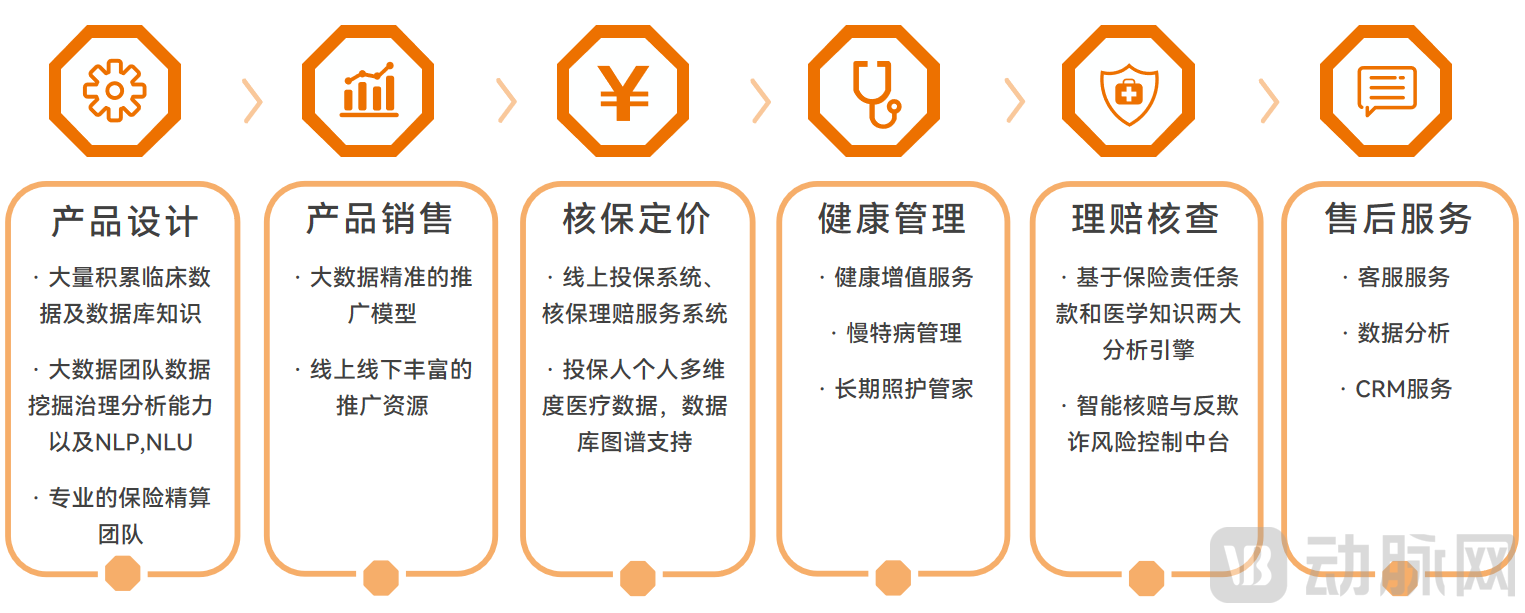
Kingstar Winning’s Health Product and Service System
In practice, Shanghai Kingstar Winning has adopted the MGA model to partner with a major insurance company, jointly customizing an IVF lump-sum benefit insurance product, and has engaged in marketing collaborations with renowned insurance brokers.
Upon purchase of this product, if the insured undergoes in vitro fertilization-embryo transfer (IVF-ET) and its derivative procedures for a single oocyte retrieval cycle at designated medical institutions during the insurance period, and if clinical pregnancy fails to be achieved after three consecutive embryo or blastocyst transfers within that single oocyte retrieval cycle, the insurer shall pay the insurance benefits as stipulated in the policy.
Among the aforementioned products, Shanghai Kingstar Winning Software Science and Technology CO., LTD. has leveraged its assisted reproductive technology (ART) data models to provide insurance companies with product design, actuarial pricing, and underwriting and claims risk control services, while offering ART-related health consultations and services to insured individuals. The company also collaborates with renowned insurance brokers to conduct precise online and offline channel marketing.
The MGA model, which provides end-to-end solutions for insurance companies, is highly compatible with non-standard risk health insurance.
First, from an insurance underwriting perspective, the MGA model seamlessly integrates scenario penetration, marketing operations, claims management, and health services. This enables target populations to gain a clearer and more comprehensive understanding of non-standard risk products, while policyholders experience a stronger sense of value. These factors collectively contribute to enhancing the market penetration of non-standard risk health insurance.
Secondly, from the perspective of industry growth, the MGA model provides insurers with end-to-end services, including actuarial assessment, product management, underwriting and risk control, and resource integration. This facilitates differentiation of health insurance products, expansion of the potential customer base, and control of claims risks—all of which are key factors in driving new growth points for the health insurance sector.
Finally, from the perspective of industry ecosystem, the MGA model connects partners such as medical institutions, health service providers, and specialty drug service providers, facilitating information flow and serving as mutual channels to create an ecosystem of reciprocal empowerment.
According to a report by Securities Daily, the National Healthcare Security Administration has recently drafted the “Agreement between the National Financial Regulatory Administration and the National Healthcare Security Administration on Promoting Information Sharing between the Commercial Health Insurance Information Platform and the National Healthcare Security Information Platform (Draft for Comments).”
Although no specific timeline has been announced for the establishment of this information-sharing mechanism, the healthcare security authorities have previously implemented relevant measures to support the development of commercial health insurance.
In May 2023, at the “Authoritative Departments Discuss the Opening Phase” series of press conferences held by the State Council Information Office, the National Healthcare Security Administration revealed that, under the premise of ensuring the security of medical insurance data and information, pilot programs for authorized query and use of personal medical insurance information had been launched in 12 cities across China. In these pilot cities, insured individuals can access their personal medical insurance information through various online and offline channels. Upon obtaining individual authorization, relevant personal information can be shared with commercial insurance companies, thereby providing greater convenience for the public when handling procedures such as purchasing commercial insurance and filing claims.
If information is shared between public health insurance and commercial insurance, non-standard risk health insurance will see significant benefits. Leveraging public health insurance data, commercial health insurers can enhance the precision of product design and actuarial pricing, thereby gaining greater confidence in developing products for non-standard risks.
Accordingly, non-standard commercial health insurance will also highlight its value in China's multi-tiered medical security system: under the premise that basic medical insurance covers fundamental needs, it will strengthen the weak links in commercial health insurance, meet the public's diverse protection demands, and ultimately help enhance overall coverage capabilities.