

MicroNanodynamics: Pioneering Domestic Optoelectronic Tweezers and Magnetically Controlled Micro/Nano Robotic Platforms for Precision Medicine

Micro Nano Robot
R&D and Manufacturing of Life Science Research Equipment and Medical Devices
Do you believe in the power of “light”?
In daily life, we commonly use mechanical methods to grasp objects. However, for micro- and nano-scale objects that are imperceptible to the naked eye, an alternative approach can be adopted by harnessing the power of “light.”
In 2005, scholars at the University of California, Berkeley, proposed “optoelectronic tweezers technology,” which, as the name suggests, uses optoelectronic effects to manipulate microscopic objects.
Optoelectronic Tweezers: A Novel Manipulation Technology Combining Optical Tweezers and DielectrophoresisOptoelectronic tweezers represent a novel manipulation technology that integrates optical tweezers with dielectrophoresis. Based on the principles of dielectrophoretic manipulation, this technique employs optical electrodes to replace traditional physical electrodes. By projecting optical patterns onto a photoconductive layer via projection equipment, dynamic virtual optical electrodes are formed, which in turn induce non-uniform electric fields to enable the manipulation of micro- and nano-scale objects.
Traditional mechanical tweezers must make physical contact with an object and apply a certain amount of pressure to grasp it. In contrast, optoelectronic tweezers offer a gentle, non-contact manipulation method that confines objects entirely through optoelectronic forces, enabling flexible manipulation and directional control of microparticles such as cells, viruses, and macromolecules via reconfigurable optical patterns.
As research on optoelectronic tweezers involves cutting-edge disciplines such as optics, semiconductors, micro- and nanofabrication, robotic control, materials science, and biomechanics, only one U.S.-listed company worldwide has achieved commercialization of this technology after nearly two decades of effort, with each unit priced as high as RMB 25 million.
The towering technical barriers and scarcity of specialized talent had previously left China’s research in the field of optoelectronic tweezers in a near-blank state. However, this situation has now been broken.
Weina Power (Beijing) Technology Co., Ltd. (abbreviated as “Weina Power”)Established in March 2022, the company is a leading enterprise in China with integrated capabilities in the research and development, manufacturing, and sales of optoelectronic tweezer-based cell sorting chips. It is committed to becoming a pioneer in micro/nano optoelectronic manipulation technology and micro/nano robotics. Currently, the company has developed high-throughput cell sorting systems and magnetically controlled nanorobots, focusing on optical and magnetic control technologies respectively, aiming to advance the application of precision medicine in fields such as cancer therapy.
In less than a year and a half since its establishment, the company has rapidly completed two rounds of financing. The angel round in August 2022 was invested by Taiyu Investment, Baiyan Fund, Beijing-Tianjin-Hebei National Technology Innovation Center, Yuanhe Capital, and Beihang Tianhui, among others. Recently, the company successfully closed a pre-A round of financing amounting to tens of millions of RMB, with joint investment from the Greater Bay Area Collaborative Innovation Research Institute, Guangzhou Science City Venture Capital, the Rainforest Fund under the Technology Services Sector of Zhongguancun Development Group, and New Highland Capital. Beihang Tianhui continued to increase its investment, while Zero2IPO Capital served as the company’s exclusive financial advisor.

Overcoming challenges in the fabrication of optoelectronic thin films and distortion in microscopic optical imaging,
Self-Developed High-Throughput Cell Sorting Device Based on Optoelectronic Tweezers
Single-Cell Screening Technology Holds Significant Applications in Biopharmaceuticals. Single-cell screening instruments isolate and analyze large populations of cells, ultimately extracting individual target cells for downstream processes in antibody drug development and cell therapy. This technology has advanced cell biology, oncology, and immunology into the realm of single-cell microsurgical manipulation and molecular-level analysis.
Common single-cell screening methods currently available on the market include micromanipulation, limiting dilution, and flow cytometry. These techniques are largely based on fluorescent staining and require months of manual labor to complete. Due to the limitations of manual operation, they are prone to high false-positive rates, low screening throughput, and a lack of full-process visualization. Furthermore, the functional viability of cells isolated through these methods may be compromised, severely undermining the success rate of immune cell therapies in applications such as cancer treatment.
In response to the aforementioned pain points, after years of intensive technological breakthroughs, Weina Power has independently developed“High-Throughput Cell Sorting Device Based on Optoelectronic Tweezers”。
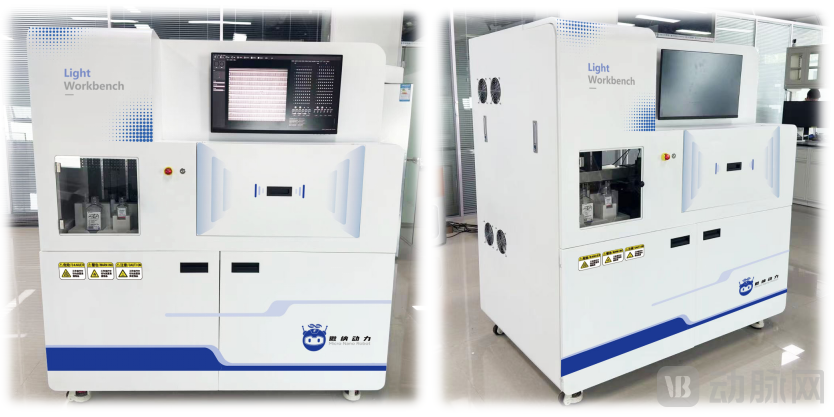
Weina Power’s High-Throughput Cell Sorting Equipment Selected for the First Batch of Key Projects under the National Key R&D Program for Disruptive Technology Innovation
According to Professor Feng Lin, founder of Weina Power, photoconductive thin-film fabrication technology is one of the core technical barriers for optoelectronic tweezers. Although optical tweezers provide high resolution for capturing individual particles, they suffer from issues such as laser-induced thermal damage and limited capacity for manipulating cells at the focal point. Meanwhile, while dielectrophoresis achieves high throughput, it lacks the flexibility and spatial resolution necessary for controlling individual cells. To effectively combine the advantages of both technologies while mitigating their drawbacks, specially designed photoconductive thin films are required. Leveraging semiconductor-based design of photoconductive film structural layers and research on thin-film parameters through sputtering deposition processes, Weina Power has developed proprietary technology for the in-house fabrication of photoconductive thin films.
In addition to the core optoelectronic thin films, the team addressed issues such as image distortion and low resolution in traditional optical paths by optimizing the optical design. By utilizing beam reducers and Fourier transform lenses, and customizing all optical lenses, they independently developed a complete set of optical imaging systems, thereby constructing a high-resolution, distortion-free imaging system.
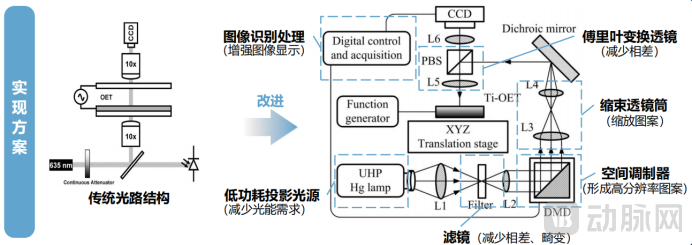
Weina Power optimized the imaging system, resolving issues such as distortion and low resolution.
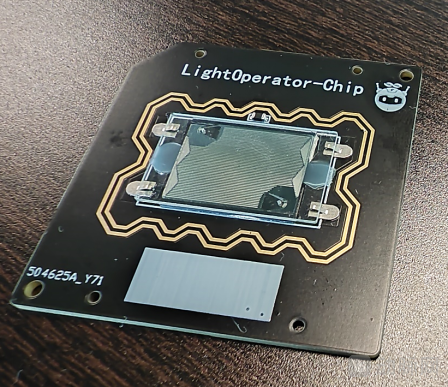
Optoelectronic Tweezers Chip: A Self-Developed Chip with 20,000 Micron-Scale Single-Cell Chambers
By overcoming a series of technical challenges, Weina Power’s high-throughput cell sorting equipment achieves contact-free cell manipulation, effectively ensuring the viability of sorted cells without causing damage. Balancing high throughput with precision, it enables parallel manipulation of micro- and nano-scale biological particles such as cells, bacteria, and microorganisms.
In addition, the device achieves full-process automation, compressing workflows such as cell sorting, testing, and analysis—which traditionally take tens to hundreds of days—into just a few days. This significantly reduces labor and financial costs and substantially advances the industrialization of cell analysis and related technologies.
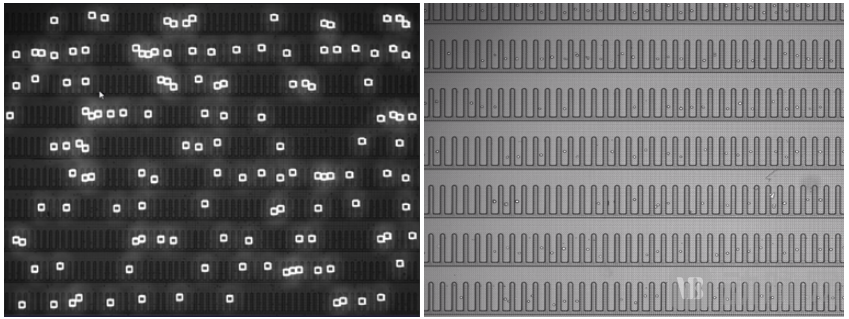
Provide individual microchambers for each of the 20,000 cells to ensure monoclonality.
It is reported that the device now achieves a cell screening time of approximately one day per round; screens no fewer than 10,000 cells per round; attains an independent single-cell manipulation speed of 200 μm/s; and maintains a cell viability rate of over 80% throughout the entire screening process. The technology is independently developed and controllable, reaching an internationally advanced level.
Optoelectronic Tweezers Micro-Manipulation System
Weina Power’s optoelectronic tweezer micro-control system has completed prototype development and integrated debugging, and is currently undergoing trials at multiple major biopharmaceutical R&D companies and CRO firms in China.
In addition to the optoelectronic tweezer technology described above, Weina Power is also committed to utilizing electromagnetic forces to drive magnetic materials for precise motion control. Based on technological research in this area, the company has developedActive targeted drug delivery micro/nanorobots and magnetically levitated capsule gastroscope robots.
According to Professor Feng Lin, due to the limitations of traditional drug administration methods, less than 1% of drugs actually take effect at the lesion site. Furthermore, molecular (passive) targeted drugs suffer from low targeting efficiency; only 0.7% of these agents reach the tumor location, resulting in limited tumoricidal efficacy and a high propensity for drug resistance. If disinfectants could be precisely delivered to tumor tissues without affecting other organs, they could serve as highly effective anti-tumor agents. However, constrained by the limitations of existing delivery tools, no one dares to inject disinfectants into the human body. Therefore, the development of precise drug delivery systems is of paramount importance.
Through in-depth research on the human body’s microenvironment and close collaboration with oncology experts, Weina Power has designed a variety of actively targeted drug-delivery micro/nanorobots for multiple tumor applications, including glioma, diffuse large B-cell lymphoma, liver cancer, and breast cancer. Paired with its self-developed ultra-high-power electromagnetic control system, these robots can navigate precisely through complex vascular environments in vivo to deliver drugs directly to tumors. This technology increases the drug targeting rate from 0.7% to 70%, revolutionizing existing cancer treatment modalities.
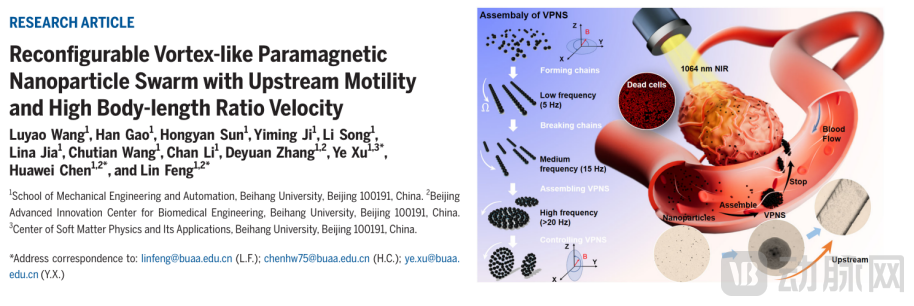
Professor Feng Lin’s Research Group Recently Published a Study on Micro/Nanorobots Moving Against the Flow in Blood Vessels in *Research*
Professor Feng Lin told VCBeat that micro/nanorobots are ultimately intended for clinical oncology treatment, not merely as a hyped concept. “Our true advantage lies in applying micro/nanorobots in mice, achieving a tumor inhibition rate of 91%.”
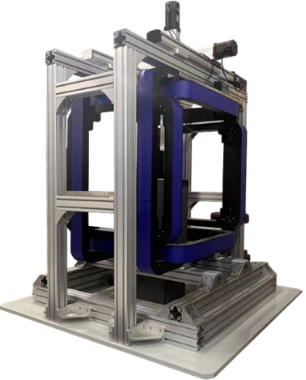
Core Components of Large-Scale Magnetic Field Control Devices for Micro/Nanorobots
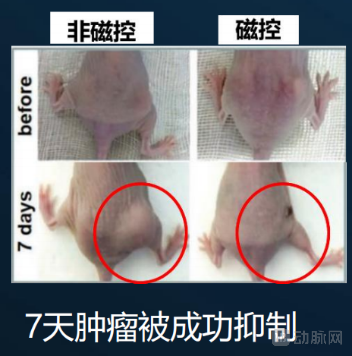
Micro- and Nanorobots Have Completed Animal Trials
Whether it is high-throughput cell sorting equipment, magnetically controlled micro/nanorobots, or the company’s advanced products under development—such as automated micro/nanorobot synthesizers, micro/nanorobot consumable kits, and integrated magnetic control and imaging systems for micro/nanorobots—achieving the integration and innovation of a series of technologies at the micro- and nanoscale, invisible to the naked eye, is akin to “performing elaborate rituals inside a snail’s shell, maneuvering within a square inch.”
Although Weina Power has been established for a relatively short period, its ability to achieve remarkable progress simultaneously in scientific and technological capabilities, pipeline planning, and clinical development is attributable to its strong professional team behind the scenes.

Professor Feng Lin, Founder of Weina Power
Professor Feng Lin, the company’s founder, is a Professor under the “Excellent Hundred Talents Program” at Beihang University, a doctoral supervisor, a National Changjiang Scholar (Young), a recipient of the Beijing Distinguished Young Scholars Fund, and a Beijing Science and Technology Star. He was selected as an Outstanding Young Scholar by the Japan Society of Mechanical Engineers in 2011, a GCOE Scholar in 2012, and a JSPS Scholar by the Japan Society for the Promotion of Science in 2013. He has served as a Board Member of the IEEE International Committee on Micro-Nano Robotics since 2020 and as a Director of the Chinese Society for Micro-Nano Robotics. Professor Feng has secured over 20 national and provincial/ministerial-level projects, including the National Key R&D Program Special Project on Intelligent Robots titled “Precision Technology and Medical Basic Research on Field-Controlled Micro-Nano Robots for Targeted Drug Delivery,” and one of the first batch of National Key R&D Programs on “Disruptive Technologies” titled “Non-destructive Automated Single-Cell Screening Equipment Based on High-Sensitivity Photoelectric Tweezers Using Optoelectronic Thin Films,” which was among only 21 projects approved. He currently serves as Associate Editor for Bio-Design and Manufacturing and Cyborg and Bionic Systems, Vice Chairman of the Organizing Committee of the Biomanufacturing Branch of the Chinese Mechanical Engineering Society, and Director of the Micro-Nano Robotics Branch of the Chinese Society of Micro-Nano Technology. He also holds roles such as Editorial Board Member and Session Chair at top international robotics conferences, including the IEEE International Conference on Robotics and Automation (ICRA) and the IEEE/RSJ International Conference on Intelligent Robots and Systems (IROS).
Published 130 papers in journals such as Research, International Journal of Robotics Research, Small, and Lab on a Chip, including over 70 SCI-indexed papers (10 cover articles and 1 highly cited paper), and over 60 papers accepted by top-tier international EI conferences such as ICRA and IROS. Received 10 awards, including the IEEE Best Paper Award in Mechanical Engineering. Published four books, including the first textbook in the field of micro-nano robotics, Introduction to Micro-Nano Robotics, as well as an English monograph. Main research areas include: intelligent micro-nano robots and micro-nano operation systems (mainly applied to cancer targeted therapy, tissue engineering, and regenerative medicine).
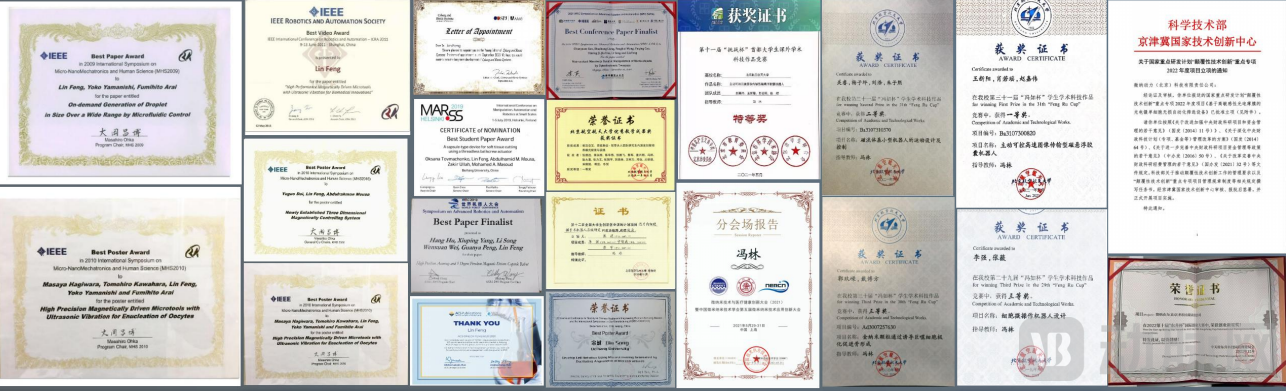
Display of Selected Honors Received by Weina Power
The remaining team members are Professor Feng Lin’s research group at Beihang University. All employees hold master’s or doctoral degrees and are personally mentored by Professor Feng Lin. The team features diverse academic backgrounds, spanning biomedical engineering, materials science, clinical medicine, as well as engineering, computer science, and robotics. The interdisciplinary integration of these cutting-edge fields provides a continuous source of momentum for innovation.
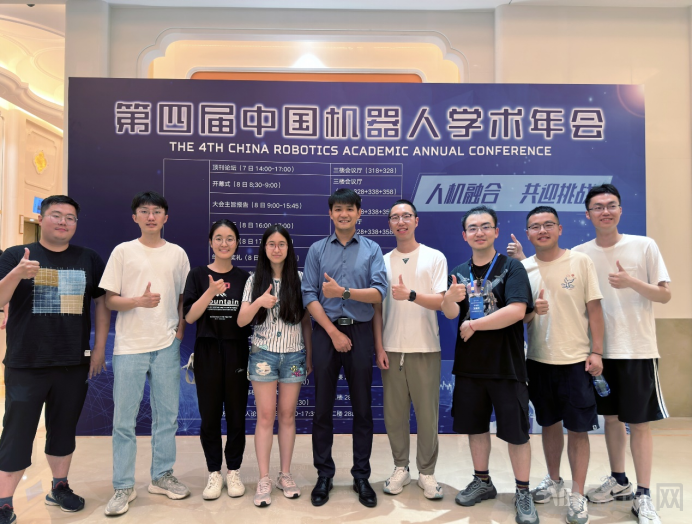
Group Photo of Some Members of Professor Feng Lin’s Research Team
In terms of commercialization,Weina Power has established collaborations with multiple medical institutions, including Beijing Tongren Hospital, Tsinghua University School of Medicine, Beijing Tiantan Hospital, and Beijing Shijitan Hospital.
The company is currently seeking a new round of financing to support the research and development of new technology products, the commercialization of existing products, and the enhancement of its talent team.
Reference: “Academic Partners of the Beijing-Tianjin-Hebei Center | Professor Feng Lin’s Team at Beihang University: Domestically Produced Photoelectric Tweezers for Micro-Nano Manipulation Systems, Achieving Innovative Breakthroughs in Overcoming Foreign Technological Monopolies”