

From Lab to Market: The Commercialization Journey of Gardasil, the World’s First Cancer-Preventing Vaccine
In 2006, the U.S. FDA approved the first cervical cancer prevention vaccine.Gardasil. With the launch of Gardasil, the global market gap in cervical cancer prevention was filled. Accompanying this was the tremendous commercial success achieved by Gardasil.
As the manufacturer of Gardasil, Merck has gained a first-mover advantage in cervical cancer prevention, securing a significant market share and a leading position in the industry.
Looking back to the earliest origins, it took 23 years from the first confirmation of the pathogenesis of cervical cancer to the market launch of Gardasil for the translational journey of the HPV vaccine. Over these 23 years, we have observed that the translation of the HPV vaccine involved not only Merck & Co., but in fact,The entire translation process forms an innovation closed loop comprising scientists, universities, and enterprises.
The Scientists Behind the HPV Vaccine
HPV vaccines originated from laboratory research. In the lab, scientists studied HPV to understand its structure, life cycle, and mechanisms of infection. Through these studies, researchers identified the association between HPV and cancers such as cervical cancer, thereby sparking academic and market interest in preventing HPV infection.
In the exploration of the frontier of cervical cancer research, three individuals must be mentioned.
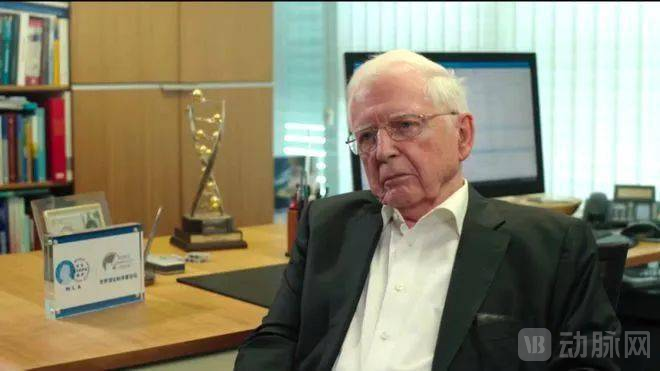
▲ The photo shows Professor Zur Hausen. Source: World Laureates Forum
The first is a German scientist.Zur Hausen. In 1974, Hausen proposed a bold hypothesis:Persistent chronic HPV infection can lead to cervical cancer.. However, no one believed his theory at the time. Despite the difficulties, Hausen did not give up; he led his research team to continue their efforts, attempting to identify the genetic material DNA of human papillomavirus associated with cervical cancer.
Finally, in 1974, Hausen’s research team discovered HPV particles in cervical cancer cells. After three years of effort, Hausen identified four additional HPV subtypes, which he named HPV-1, HPV-2, HPV-3, and HPV-4. However, the experimental results were disheartening, as these four HPV types showed no association with cervical cancer.
The research reached an impasse. It was not until 1981 that Hausen discovered a new subtype, HPV-6, followed by the discovery of HPV-11 the next year. However, this still did not fully prove the association between cervical cancer and HPV. After several more years of relentless effort, the research team finally identified HPV-16 and HPV-18 in 1983 and 1984, respectively; these two viruses were detected in approximately 70% of cervical cancer samples.
This discovery sent shockwaves through the scientific community and provided a crucial scientific basis for the prevention and treatment of cervical cancer. In recognition of his pioneering research on the relationship between HPV and cervical cancer, Hausen was awarded the 2008 Nobel Prize in Physiology or Medicine.
Having understood the pathogenesis of cervical cancer, the story moves to the next chapter. The two protagonists are from ChinaDr. Jian Zhouand from AustraliaDr. Ian Frazer. In 1989, they met at the University of Cambridge.
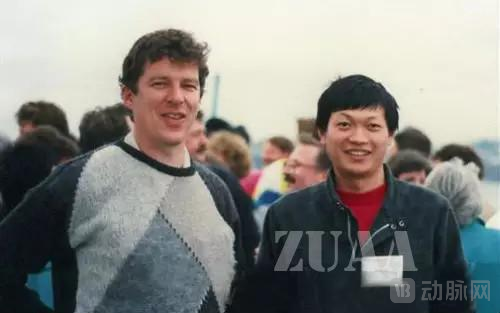
▲ Dr. Ian Frazer and Dr. Jian Zhou, sourced from the internet
“As our laboratories were adjacent, and both of us were dedicated to research on cervical cancer and HPV, we often met during coffee breaks and discussed how to collaborate to develop and validate new ideas,” recalled Dr. Ian Frazer.
However, due to various reasons, the two were unable to engage in extensive collaborative work at Cambridge. As Frazer prepared to return to Australia, he extended a gracious invitation to Jian Zhou and his wife to join his laboratory at the University of Queensland. In 1990, Jian Zhou accepted the invitation and moved to the University of Queensland to continue his research on HPV.
Less than a year after arriving at the University of Queensland, Zhou JianSynthesized an HPV virus-like particle. Prior to this, HPV virus-like particles had never been successfully cultured in the laboratory. This is because once HPV infects host cells, it integrates its genome into the host cell’s genome. Consequently, intact virus-like particles cannot be observed in vitro.
Following Zhou Jian’s approach, two existing late HPV proteins were placed in a test tube with certain additives, and after approximately two weeks, HPV virus-like particles were synthesized. Frazer and Zhou promptly published these findings in Volume 185 of the Journal of Virology in 1991. In July of the same year, they presented this work at the International Papillomavirus Conference held in Seattle, United States, quickly attracting significant attention from both the academic and industrial communities.
Support from Universities and Enterprises
With virus-like particles (VLPs), one can, to a certain extent, claim to have a vaccine. This is because VLPs are empty shells lacking viral DNA cores and are non-infectious; however, their surfaces display numerous antigens that stimulate the immune system to produce antibodies upon entering the body, thereby functioning as a vaccine in their own right.
However, it remains a long way off from becoming a marketable vaccine.
From the outset, the goal was to target project commercialization. In June 1991,The University of Queensland has filed a patent for this invention., and implemented intellectual property protection measures. Furthermore, the University of Queensland funded the two researchers to continue animal trials on HPV virus-like particles; following the success of these animal studies, the project advanced to human clinical trials.
However, when the clinical trials reached a certain stage, the University of Queensland was unable to cover the high research costs and sold part of its patents to an Australian biotechnology company.CSL, followed by clinical trials conducted by the company.
Sun Xiaoyi (widow and assistant of Dr. Zhou Jian) said: “In every transaction involving the sale of vaccine patents, these companies are required to provide Kunming University with a substantial fund to support ongoing research. As a result, our laboratory has secured additional funding, enabling us to conduct more experiments.“So this is a virtuous cycle, which is truly exciting.” For researchers, Zhou Jian seemed more inclined to explore the unknown in basic research, and the partial assignment of patents was undoubtedly the optimal choice.
At that time, many countries around the world had already launched clinical trials. After Zhou Jian’s passing, in order to accelerate the project’s development, Frazer chose to partner with a more resourcefulMerck & Co.Collaborate to develop HPV vaccines. They first selected HPV-16 as the research and development target for "proof of concept," because cervical cancer caused by persistent HPV-16 infection accounts for more than half of the total cases.
Merck’s vaccine researchers adopted the experimental technique invented by Dr. Jian Zhou to successfully recombine and express the capsid protein L1 in yeast cells, causing it to assemble into virus-like particles (VLPs). In 1993, they further validated in preclinical animal studies that vaccines based on these VLPs could effectively prevent HPV-16 infection.
Subsequently, Merck’s vaccine researchers selected HPV-6, HPV-11, HPV-16, and HPV-18 as antigens to develop a quadrivalent HPV vaccine. Through continuous process optimization, Merck successfully produced the world’s first quadrivalent HPV vaccine, which was approved by the FDA.It was listed in the United States in June 2006 under the brand name Gardasil.
This is the world’s first vaccine capable of preventing cancer. The commercialization of Gardasil immediately filled the gap in cervical cancer prevention and opened up the global market.
Summary and Implications
Starting with scientific research, scientists, universities, and enterprises have formed a unique innovation loop. These elements are closely interconnected, ultimately facilitating the commercialization of HPV vaccines.
Simply put, the commercialization of HPV vaccines is aIntroduction, Development, Turn, and Conclusionprocess. Scientists play a pioneering role in exploration, being the first to elucidate pathogenic mechanisms and subsequently identify therapeutic targets or synthesize virus-like particles. Once breakthrough achievements are made, universities assist scientists in filing patent applications and securing research funding, thereby providing the conditions necessary for sustainable research. Meanwhile, scientists’ research outcomes offer enterprises a novel technology platform.
Just as Merck & Co. collaborated with Frazer to jointly conduct the research and development of HPV vaccines. Frazer and Zhou Jian provided relevant expertise and technical support, while Merck & Co. was responsible for funding, human resources, and R&D facilities. This collaboration enabled Merck & Co. to leverage the innovative achievements of Frazer and Zhou Jian to develop the Gardasil vaccine.
So, what insights can the experience with HPV vaccines offer for the commercialization of scientific research achievements in China?
The topic of translating domestic scientific research achievements into practical applications is gaining increasing momentum. Scientists engage in this translation through diverse approaches; entrepreneurship is merely one option, while technology transfer and assignment play a more prominent role in driving the commercialization of projects. Regardless of the chosen translation pathway, we observe that"Industry-Academia-Research Collaboration Remains the Unchanging Foundation of the Translation Process"。
The promotion of the translation and commercialization of scientific achievements is by no means solely the responsibility of scientists. Beyond single-dimensional exploration, it requires the joint efforts of universities, enterprises, and even the government to establish a virtuous cycle of innovation. Only in this way can a single spark start a prairie fire, enabling innovative projects to successfully enter the market.