

Asia's First Robot-Assisted Retinal Surgery Successfully Completed by Disight Medical, Paving the Way for Broader Microsurgical Applications

Dessight Biomedical
Developer of Microsurgical Robotics Platform
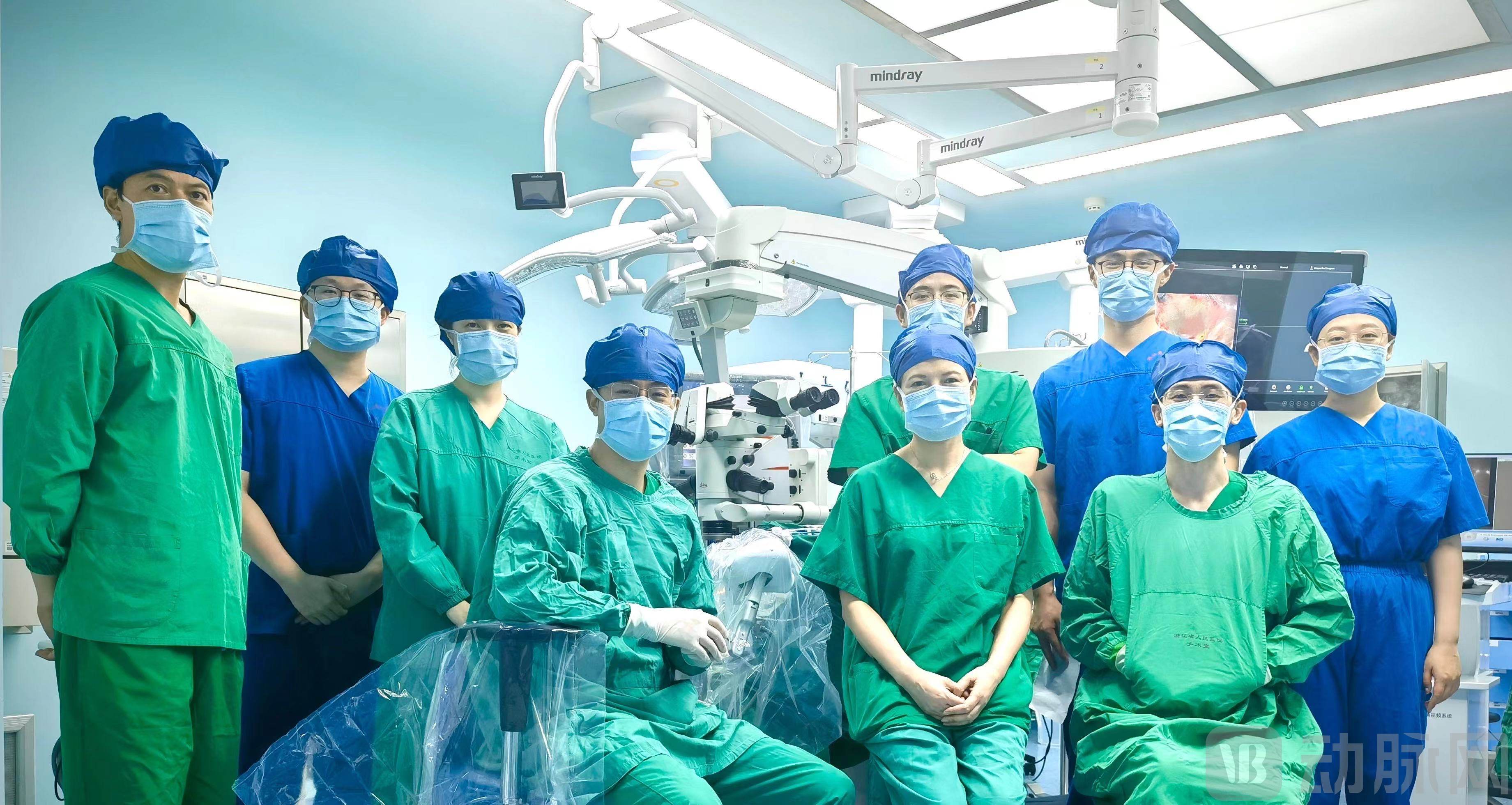
Recently, the “Dessight MicroBlade” ophthalmic surgical robot, developed by Hangzhou Dessight Biomedical Co., Ltd. (hereinafter referred to as “Dessight Biomedical”), successfully completed its first subretinal thrombolysis procedure for treating macular hemorrhage at Zhejiang Provincial People’s Hospital. The surgery proceeded safely and smoothly, the patient recovered well, and has since been discharged in stable condition.
Following detailed preoperative examinations and meticulous preparation, the fundus surgery team from the Eye Center of Zhejiang Provincial People’s Hospital, led by Professor Shen Lijun and Professor Chen Yiqi, operated the “Dessight MicroBlade” ophthalmic surgical robot. Using a microsyringe needle with an outer diameter of 100 micrometers, the team precisely injected 400 microliters of the thrombolytic drug recombinant tissue plasminogen activator (rtPA) into the patient’s subretinal space within three minutes. Intraoperative OCT imaging confirmed that the drug was accurately delivered to the lesion site and successfully retained in the subretinal space above the retinal pigment epithelium, as planned. The entire surgical procedure was smooth, stable, and precise.
It is reported that this marks the first clinical application of an ophthalmic surgical robot in Asia. The successful completion of this surgery also signifies a major step forward for domestically produced ophthalmic surgical robots toward clinical application and broader adoption.
The average thickness of the fovea in the macular region of the retina is approximately 250 μm, which may become further thinned following pathological changes. The ideal instrumental motion precision is within 10 μm, whereas the human hand inherently exhibits an insurmountable physiological tremor of approximately 100 μm, which even the most skilled surgeons cannot avoid. Such perceptual limitations and tremors can easily cause tearing of incision tissues during complex and delicate ophthalmic surgeries, making it difficult to perform precise operations and stable injections at the micron-level lesion site, thereby affecting postoperative healing and visual recovery. Furthermore, the number of senior ophthalmologists is limited, and their training cycle is extremely long. Prolonged periods of high-intensity concentration inevitably lead to surgeon fatigue, posing potential surgical risks.
The introduction of ophthalmic surgical robot technology is of great significance for improving the precision and safety of surgeries, reducing surgical risks and physician fatigue, shortening the learning curve for surgeons, and transcending the physiological limits of human manual dexterity.
Currently, only a handful of companies and research institutions in Europe, the United States, Israel, and other countries are engaged in R&D in this field. The ophthalmic surgical robot “Dessight MicroBlade,” independently developed by Dessight Biomedical, has taken the lead in filling the domestic gap in this area.
After years of dedicated refinement, Dessight Biomedical has independently developed the “Dessight MicroEdge” surgical robot, which is committed to bridging the shortage ratio between ophthalmologists and patients in fundus surgery, extending the careers of frontline surgeons, improving surgical success rates, and reducing postoperative complications, while also providing a robust delivery platform for gene and cell therapies.
Dessight Biomedical leverages its technical advantages in personalized medical-engineering integration, master-slave controlled multi-degree-of-freedom systems, and proprietary flexible mechanisms to achieve a motion precision of up to 3 micrometers, ranking among the highest internationally.
Early animal clinical data indicate that, compared with the 85.5% success rate of manual operations performed by clinicians, the success rate of subretinal injection assisted by the “Dessight MicroBlade” ophthalmic surgical robot can be increased to 100%.
This ophthalmic surgical robot has been clinically applied to treat subretinal hemorrhage in the macular region caused by various conditions, including age-related macular degeneration (AMD). Hemorrhage in this area leads to a rapid decline in central vision; without treatment, most patients cannot recover spontaneously. According to statistics from the International Agency for the Prevention of Blindness, AMD and its complications are the third leading cause of blindness worldwide. The World Health Organization estimates that 196 million people globally had AMD in 2020, a figure projected to rise to 288 million by 2040. As China’s population ages, the number of individuals affected by AMD is expected to continue increasing.
The treatment of age-related macular degeneration (AMD) has long been one of the most challenging aspects of clinical ophthalmology. With the successful clinical application of ophthalmic surgical robots, exemplified by "Dessight MicroBlade," more AMD patients will undoubtedly regain their vision in the future.
Professor Shen Lijun, Director of the Zhejiang Provincial People's Hospital Eye CenterIt is well recognized that fundus retinal surgery requires ophthalmologists to perform intricate microsurgical maneuvers under an operating microscope for extended periods. This imposes significant physical and mental stress, with prolonged procedures and static postures predisposing surgeons to occupational hazards such as cervical spine and wrist disorders. These challenges make the training of qualified fundus retinal surgeons exceptionally difficult, with an average learning curve spanning up to 10 years. Furthermore, due to age-related physiological constraints, there is a scarce pool of senior surgeons capable of performing complex and delicate procedures. The introduction of the Dessight ophthalmic surgical robot has provided ophthalmologists with a powerful new tool. It shortens the learning curve, alleviates operational strain, and transcends human physiological limitations, thereby enabling newer and more precise surgical interventions and bringing greater benefits to patients.
Professor Chen Yiqi, Executive Deputy Director of the Zhejiang Provincial People's Ophthalmology CenterIt indicates that ophthalmic microsurgical robots are driving ophthalmic surgery toward minimally invasive, intelligent, and precise practices. Research focus has gradually shifted from prototype development and animal studies to clinical applications in humans. These systems hold broad future prospects, with expanded applications in various macular diseases, retinal vascular occlusive disorders, stem cell therapy, gene therapy, and remote fundus surgery, thereby delivering significant social and economic benefits.
Dessight Biomedical Technical Advisor: Researcher Zhou Mingchuan, Zhejiang UniversityMicro-manipulation primarily focuses on micron-level operational precision, operating at the boundary of human manipulation and perceptual limits, thereby posing significant challenges to human dexterity and sensory capabilities. Robotic micro-manipulation can assist humans in performing dexterous tasks at the microscale more effectively, holding substantial application value in healthcare, agriculture, and industry. The ophthalmic microsurgical robot developed by Dessight Biomedical enables surgeons to achieve stable, safe, precise, quantifiable, and visualized operations on delicate tissues during complex procedures. This allows surgeons to focus more on intraoperative decision-making, thereby driving significant technological innovation in ophthalmology and ultra-microsurgery.
Dr. Di Cui, Founder and CEO of Dessight BiomedicalRepresentative of ultra-microsurgical robots in ophthalmology, this system is a multidisciplinary achievement integrating computer science, engineering, and medicine. We have applied this innovative technology to clinical surgical treatments for patients, receiving strong support from the Hangzhou Municipal Government and high recognition from the market. Our R&D and clinical teams have conducted extensive testing to ensure the system’s high precision and safety. This marks the first clinical application of our product and signifies a major step forward for China’s ophthalmic surgical robots toward international leadership. We firmly believe that the clinical adoption of ophthalmic surgical robots will benefit more patients.
Dessight Biomedical, established in 2021 in Shangcheng District, Hangzhou, Zhejiang Province, specializes in developing intelligent surgical robotic systems for medical assistance, with ophthalmology and ultra-microsurgery as its core focus areas and biomedical technology as its foundational support.
The founding team hails from Germany’s world-leading robotics and artificial intelligence laboratories, as well as a Fortune 500 German pharmaceutical company. With nearly a decade of deep technical expertise in microsurgery, the team possesses core technologies with complete independent intellectual property rights.
This month, Dessight Biomedical announced the completion of its tens-of-millions-of-yuan Pre-A+ financing round, led by Infinity & OKG Cooperative Fund, with participation from New Silk Road Capital and Fangfu Venture Capital, and continued support from existing shareholders such as Linear Capital. This marks the second financing round completed by Dessight Biomedical within six months, following its Pre-A round in February 2023, which was led by Linear Capital and participated in by GL Ventures (Hillhouse Ventures).
Ophthalmic surgery is a typical application scenario for microsurgery. Dessight Biomedical has entered the field through ophthalmic surgery and continues to deepen its expertise in microsurgery.
It is reported that the microsurgical robot developed by Dessight Biomedical features nearly 20 ultra-high degrees of freedom, enabling it to assist microsurgeons in performing various highly difficult and ultra-microscopic, precise, and dexterous procedures. These include anastomosis of lymphatic vessels, blood vessels, or nerves with diameters ranging from 0.3 to 0.8 millimeters, demonstrating significant application value across multiple specialties such as otolaryngology, lymphatic surgery, neurosurgery, and plastic surgery.
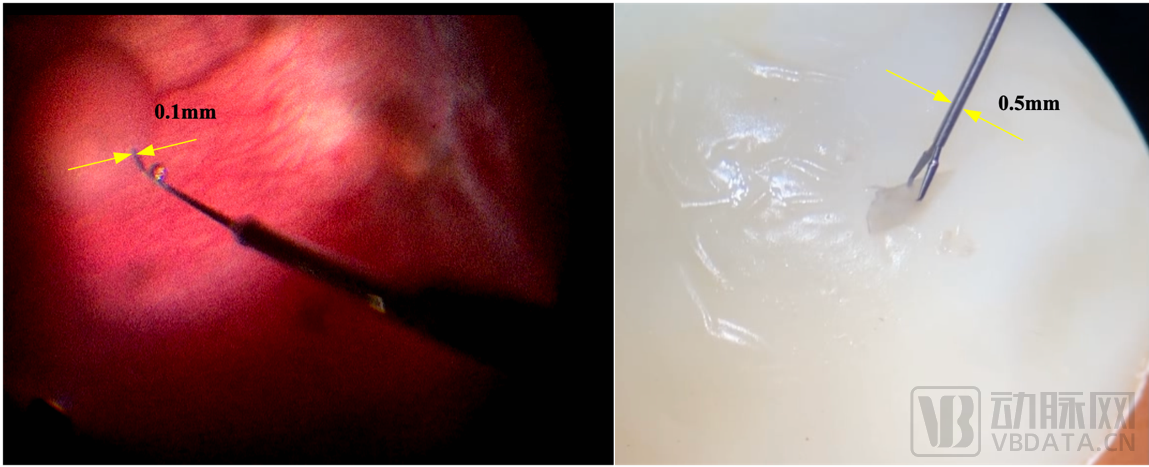
Left: A physician operates the Dessight robot for subretinal injection in a live rabbit; Right: A physician operates the Dessight robot forPeeling of 20 µm-thick eggshell membrane
In the future, Dessight Biomedical will focus on continuous innovation in robotic micromanipulation technology, developing and providing a high-precision, highly dexterous, and highly stable robotic micromanipulation platform. This platform will assist physicians in achieving precise, quantified, and visualized operations during delicate tissue handling and complex surgical procedures, thereby driving breakthrough technological advancements in ophthalmology and super-microsurgery.