

Why Mental Health Startups Are Drawing Record VC Interest: 40 Deals in Six Months Across China and the U.S.

Beijing Zhujian Technology
Mental Health Service Platform
Recently, an article has been widely circulated in the venture capital and private equity community. It suggests that domestic investors, having endured a prolonged industry downturn, difficulties in fundraising from limited partners (LPs), and intense competition among projects, are largely living with a complex mix of anxiety, anticipation, disappointment, and renewed vigor. Therefore, out of self-interest,When it comes to mental health projects, investors can’t help but take a closer look.。
This “self-interest” also aptly reflects the dynamics of the primary market in recent years. According to incomplete statistics from the Artery Orange database,Since 2020, a total of 84 financing deals have been completed in China's mental health sector, with more than 10 deals occurring in the first half of 2023 alone, totalingInvested in over 50 startups, many of which have already reached Series B and beyond, including Yi Xinli, Simple Psychology (Beijing Zhujian Technology), Zhaoyang Doctor, Haixinqing, Dami and Xiaomi, and Yidianling.
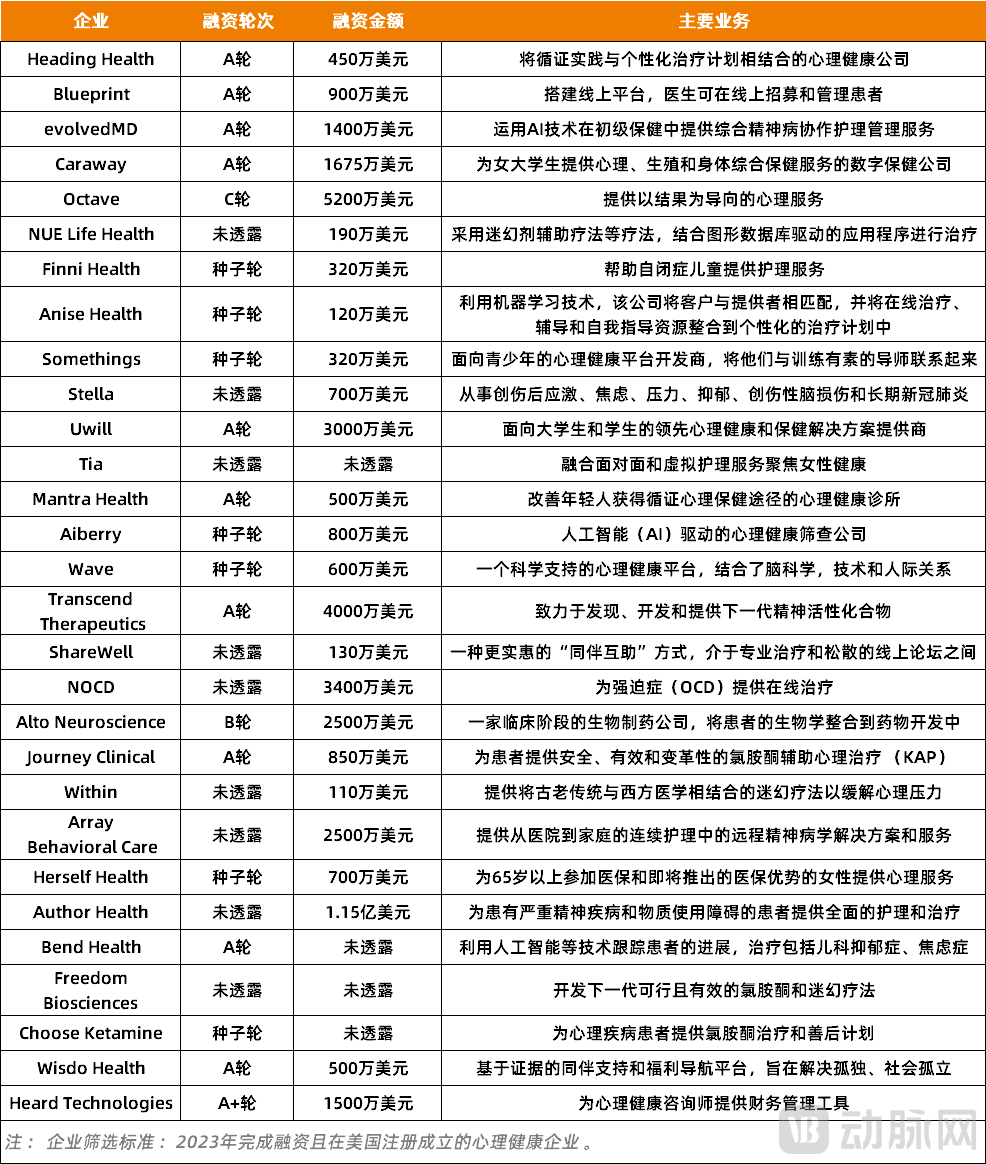 Figure 1. Mental health companies incorporated in the United States that completed financing in 2023 (Source: VCBeat)
Even though the mental health sector in China is already quite hot, it still falls far short compared to the frequency of investments by U.S. venture capital firms. According to incomplete statistics from VCBeat, between 2021 and 2022,U.S. venture capital firms have invested in nearly 150 startups in the mental health sector, entering 2023, another 30 were newly added,Total investment has exceeded $10 billion.Meanwhile, the U.S. secondary market remained active; in the first half of 2023 alone, five mental health companies, including PsyBio Therapeutics and Greenbrook TMS, rang the bell for their IPOs on Nasdaq.
What insights into the mental health industry do these encouraging figures reveal?
The pandemic seems to have made everyone understand mental health.
Many people believe that it isThe Pandemic Accelerated the Maturation of the Mental Health Industry, and this is indeed the case. The boom in the primary market serves as the best illustration, with numerous startups in the psychology sector securing funding one after another since 2020. In addition, some publicly listed companies are extensively laying out product pipelines related to mental health and have already reaped substantial profits. Taking the internet healthcare giant Teladoc as an example, its mental health service provider, BetterHelp, generated over $1 billion in revenue in 2022, becoming a new pillar of its revenue growth.
There are many similar cases, but from the perspective of industry development, what kind of impetus did the pandemic actually provide to the field of mental health?
Starting with the commonalities between the Chinese and U.S. markets,First, what we felt was the surge in industry demand., taking the United States as an example, in a survey conducted by the U.S. Census Bureau in December 2020, more than 42% of participants reported symptoms of anxiety or depression, representing a substantial 31% increase from the previous year. Driven by this trend, the U.S. mental health market size reached $45 billion in 2021.
Secondly, the physical isolation caused by the pandemic has provided greater scope for online medical consultations in the field of mental health.On one hand, the integration of digital technologies has liberated psychotherapy from a singular offline service model, making it more accessible and diverse. On the other hand, policy deregulation has effectively stimulated consumer potential in the mental health market; for instance, many psychotropic medications were prescribed online during the pandemic and delivered directly to patients.
Finally, there are the capital market changes triggered by the pandemic. Entering 2023, many investors have reignited their enthusiasm for consumer healthcare, largely due toIt boasts a large and relatively mature market, resulting in a very rapid realization of returns.. Take the widely discussed “weight-loss wonder drug” semaglutide as an example; it already generated $4.2 billion in sales in the first quarter, and products in the mental health sector possess similar explosive potential.
Having discussed the “common causes,” let us now focus on the current differences between the mental health industries in China and the United States, which also reflectWhy US VCs Have Entered a “Buy, Buy, Buy” Phase for Mental Health Projects。
Liu Aona, Chairman of Manlang Medical, revealed the essence of the psychological industry in an interview, namelyCognition Precedes Consumption, which means it requires prolonged market education and is a long-term process of laying the groundwork.
In fact, modern mental health education originated in the United States. As early as 1908, American mental health expert Clifford Beers established the world’s first mental health organization—the Connecticut Society for Mental Hygiene. After nearly a century of development, Americans now generally have a high level of awareness regarding mental health and are willing to pay for related services, a situation that the current domestic psychological market in China cannot yet match.
In addition to cognition,The U.S. mental health industry is also supported by a vast commercial insurance system.LifeStance is a mental health service provider that successfully listed on the U.S. stock market in 2021. According to its financial reports, 91% of its revenue in the first three quarters of 2022 came from commercial insurance, and the number of commercial insurance companies it cooperates with has exceeded 250. However, this model is not applicable to the current Chinese psychological market, as the coverage rate of commercial insurance in China is generally low, and medical insurance payment remains the primary method. Although local medical insurance bureaus, represented by Jiangsu Province, have been making attempts in recent years, these initiatives have not yet been implemented.
Beyond the cognitive and payment systems,The delivery capacity of psychological therapy in the United States is also very strong., which is mainly reflected in two aspects. One is the service capacity; according to statistics, the ratio of psychological counselors to the total population in the United States is 1:1,000. The other aspect is the quality of the service supply side. According to Ms. Dai Shasha, a senior venture capital investor in the field of mental health, psychological counselors in the United States are highly professional and standardized, requiring thousands of hours of supervised case counseling experience to obtain a license. AndChina's mental health market remains trapped in a vicious cycle characterized by a significant service gap and inconsistent quality of care. Many counselors begin practicing after only minimal training, resulting in suboptimal user experiences.。
Therefore, the pandemic’s impetus for the mental health industry is an objective reality. It has not only raised public awareness of the importance of mental health but also injected new vitality into the sector through rapidly developed innovative technologies, such as digital therapeutics and brain-computer interfaces. However, compared with China, the U.S. psychological care market benefits from a relatively robust commercial insurance payment system and stronger support for physician quality, resulting in higher industry maturity and consequently faster growth in commercial scale.
Has the mental health industry resolved its own “psychological issues”?
Although the pandemic has accelerated the development of the mental health industry by 10 to 20 years, the sector as a whole remains in its early stages. Among the 30 startups in the United States that have secured funding this year, most are at Series A or earlier, with only two having reached Series B or beyond.
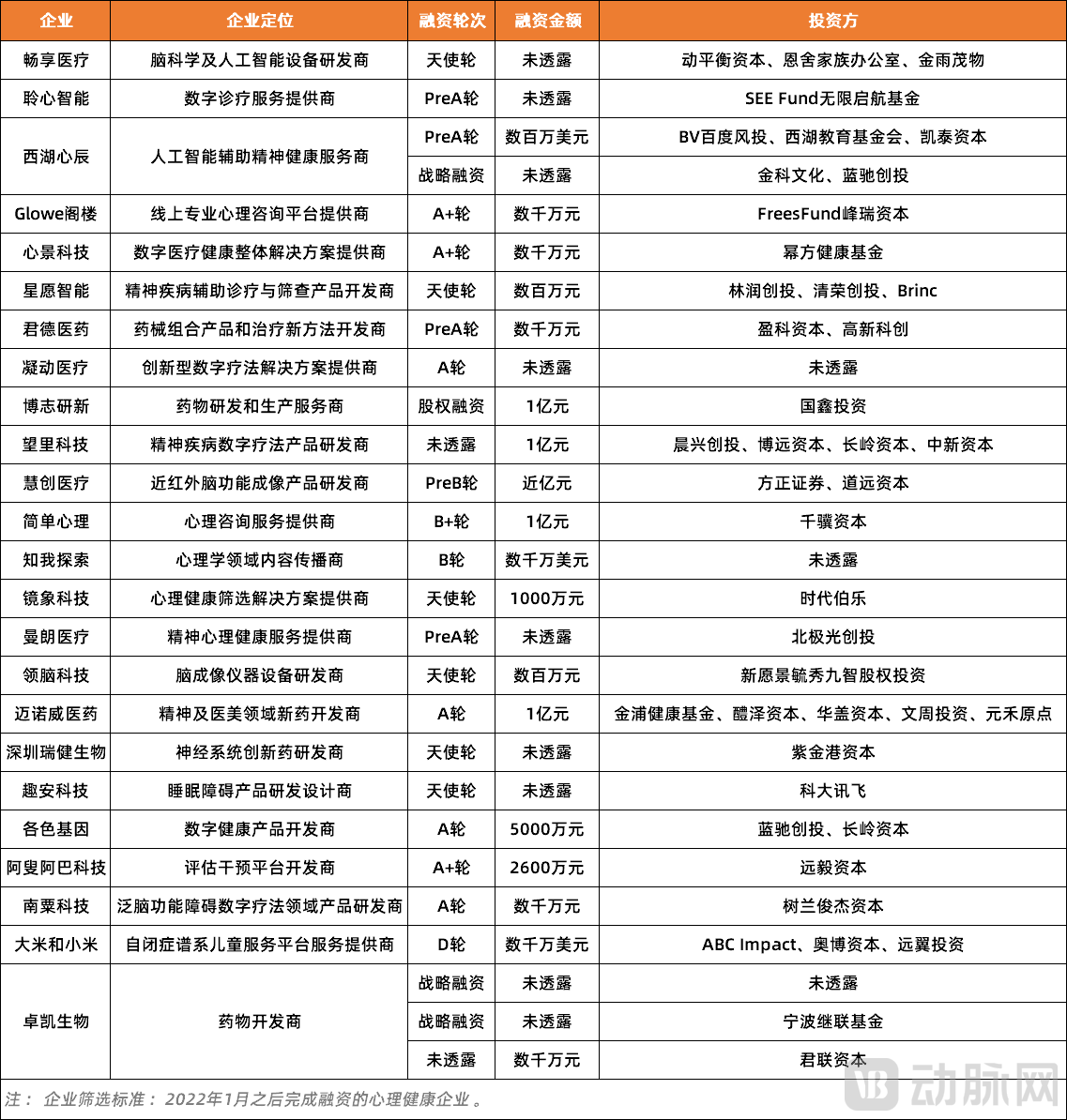 Figure 2. Mental health enterprises in China that completed financing after 2022 (Data source: VCBeat)
In contrast, China’s mental health industry, after experiencing cyclical surges in popularity, is gradually returning to rationality and entering a new phase of steady development:On one hand, primary market financing is declining, with fewer than 10 mental health funding deals in China during the first half of this year; on the other hand, companies in the later stages of fundraising are facing challenges in commercialization and securing further investment, under significant pressure to move forward.。
Therefore, entrepreneurs and investors in this field are also rethinking: What issues in the mental health sector still need to be addressed?
First, social awareness is relatively low.Although the pandemic has helped raise market awareness of the mental health industry, most people still struggle to confront mental health issues openly, and stigma remains widespread. Therefore, even though China has a large patient population, the proportion of individuals who actively seek psychotherapy and are willing to pay for it is likely less than 10%.
Secondly, the industry lacks standards, which is mainly reflected in the diagnosis and treatment levels.. Let’s start with diagnosis. Currently, it primarily relies on questionnaires, but this approach is highly subjective; some patients may intentionally make “incorrect” choices to appear “unaffected.” At the treatment level, the core challenge at present is the lack of a relatively mature and standardized protocol. This has indirectly hindered explosive growth in the market, especially for patients with mild to moderate conditions, who have alternative options besides professional psychotherapy, such as travel and yoga.
Then there is insufficient supply-side capacityFrom the current perspective, there are relatively few professional psychological counselors, or professional teams and institutions. As a result, the industry is rather chaotic, with uneven service quality, which can easily discourage patients from actively seeking psychotherapy. In addition, the mental health industry currently lacks effective market channels and remains relatively closed; service outreach relies mostly on user referrals. According to Liu Aona, Chairman of Manlang Medical, the most significant customer acquisition channel for the company at present is word-of-mouth, namely, mutual recommendations among users.
Lastly, no product has yet emerged that offers a “cure-all” solution.. In the current healthcare system, the treatment of mental disorders primarily relies on pharmacotherapy and psychological interventions. However, medications often entail significant side effects and high costs; for instance, opting for imported drugs typically results in monthly expenses of around RMB 5,000. Psychological interventions, meanwhile, can be regarded as a secondary or less preferred therapeutic option. Although innovative technologies such as artificial intelligence have been integrated into this field in recent years, there is currently no established solution for how to effectively combine and apply these two approaches.
Dai Shasha previously worked at a leading mental health enterprise, where she participated in investments in multiple early-stage mental health startups in the Chinese and U.S. markets and provided fundraising services for companies in this field. Consequently, she has gained profound insights into the mental health industry. She believes that “the demand in the mental health sector is indeed substantial, with an increasingly pronounced trend toward younger demographics in recent years. However, due to inadequate public awareness of psychotherapy in China, a shortage of high-quality professional supply, and the lack of established industry standards, the industry remains immature and faces numerous challenges. Nevertheless, this also signifies significant room for future growth.”Everyone is, in fact, waiting for a breakout moment.Point。”
What Kind of Companies Will Own the Future of Mental Health?
According to forecasts from the authoritative database Statista,Global mental health market revenue is projected to reach $20.09 billion in 2023, with an average growth rate exceeding 25%, indicating substantial market potential.A chief physician in the psychiatry department of a Beijing hospital also confirmed this trend to VCBeat. She stated, “Although our department has been overcrowded in recent years, the situation is particularly pronounced this year, with many patients ultimately having to seek care in neighboring cities.”
In such a “crowded” market, which types of companies will be the first to emerge? Everyone has their own answer to this question; VCBeat has organized and distilled these perspectives.
I. Precisely Define Customer Personas and Enhance Market Verticality. According to VCBeat, most domestic mental health companies in China currently focus their core business scenarios on adolescents, such as Dami and Xiaomi, which focuses on childhood autism. The U.S. market shows a similar trend: among the companies that have completed financing this year, more than half are targeting this sector. Typical representatives include Mantra Health, a mental health clinic improving young people’s access to evidence-based psychological care, and Finni Health, which provides psychological care services for children with autism.
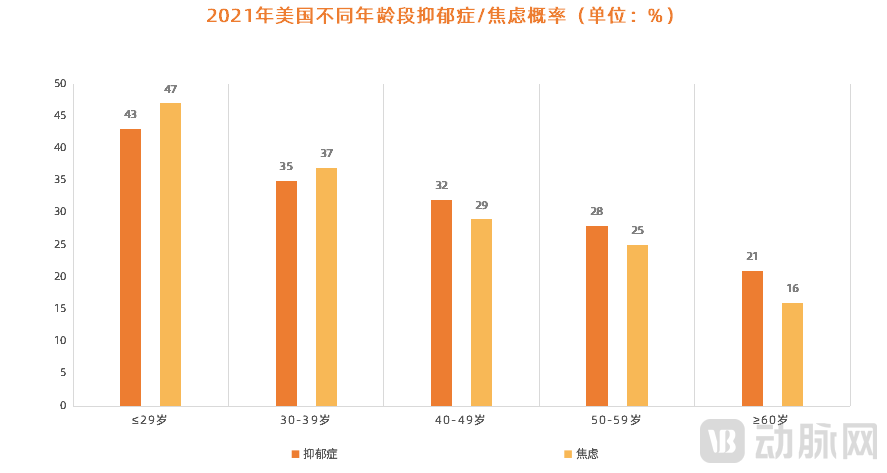
Figure 3. Probability of Depression/Anxiety by Age Group in the United States, 2021 (Source: Statistics)
This is attributable to two reasons:1. The market is large enough, According to the "2022 Blue Book on Depression in China," the trend toward younger age of onset for depression in China is becoming increasingly pronounced, with patients under 18 years of age accounting for 30% of the total, and 50% of depressed patients being enrolled students. The trend toward younger age groups with psychological issues is even more pronounced in the United States; according to data from the U.S. Centers for Disease Control and Prevention, nearly 15% of American children received treatment for mental health disorders in 2021.
Besides market size,Compared with other groups, adolescents' greatest advantage is their strong willingness to pay., while many parents may be reluctant to pay for their own mental health care, they are often very generous when it comes to their children. Therefore, the market strategy for mental health services is becoming increasingly clear: focus on youth-oriented mental health initiatives and strengthen targeted collaborations with schools or education bureaus.
In addition to adolescents, specific groups such as postpartum women, firefighters, police officers, and doctors also have certain demands for psychological services. In particular, many confinement care centers and female-oriented service providers have incorporated mental health into their service offerings in recent years, especially for pregnant women.
II. Provide standardized digital diagnostic and treatment plans for patients with mental health conditions. Recently, ketamine, which Elon Musk has been taking long-term, was considered by The New England Journal of Medicine (NEJM) to be non-inferior to electroconvulsive therapy (ECT) in the treatment of non-psychotic, treatment-resistant major depression, with no serious adverse events observed. However,For adolescents, medication is not an ideal choice; an integrated multidisciplinary team (MDT) diagnosis and treatment model, supplemented by digital diagnostic, therapeutic, and intervention tools to enhance efficiency and adherence, may represent the optimal solution., Liu Aona, Chairman of Manlang Medical, also agrees with this point. She stated that in Manlang's existing psychotherapy system, medication accounts for less than 20%.
So, how can we effectively implement digital psychological interventions? On one hand, it is essential to adhere to the principles of evidence-based medicine; on the other hand, we must explore the significant potential of cutting-edge technologies such as digital therapeutics and brain-computer interfaces (BCIs) in mental health, while innovating treatment models—with a particular focus on BCIs. During this interview, both entrepreneurs and investors agreed that BCIs hold substantial application value in the future mental health market. For instance, abnormal or absent brain signals are common phenomena in many psychological and neurological disorders. By leveraging BCI technology, healthcare professionals can directly utilize these signals as therapeutic interventions to achieve the goal of treating mental illnesses.
III. Achieve Upstream and Downstream Industry Connectivity to Form a Closed-Loop Service Ecosystem. In the view of Liu Aona, Chairman of Manlang Medical, China’s current mental health services market is relatively fragmented, with players operating independently and exploring their own business models at this stage. However, for an industry to mature, it must establish a closed-loop service system centered on patients. This requires forming a complete pathway from patient outreach to diagnosis and then to treatment. Within this pathway, there are integrated service scenarios as well as more collaborative closed loops among different enterprises.
IV. Returning to the Essence of Healthcare and Services: The Most Effective Approach Is to Strengthen Supply-Side Capacity. In Dai Shasha’s view, the most critical issue in the field of mental health remains a supply-side problem: first, there is an urgent need for more professional psychological counselors and psychiatrists; second, there is a pressing demand for more efficient treatment protocols grounded in evidence-based medicine. Ultimately, whether users are willing to pay continuously, develop stickiness, and generate positive word-of-mouth to attract more users hinges on whether their psychological issues can be effectively resolved and whether they can have a satisfactory experience. All of this requires robust supply-side quality as support.
Recently, psychotherapy service provider Octave completed a $52 million Series C funding round. Co-founder and CEO Sandeep Acharya stated, “The demand for mental health services in today’s society is higher than ever before. However, our mission extends beyond merely ensuring access to care; we aim to help patients effectively resolve their issues and provide sustainable mental health services. With this financing, our goal is not only to directly advance the development of healthcare services but also to influence how the entire system operates—including healthcare payment models, care discovery mechanisms, and the tools we use to support healthcare delivery.”
Final Thoughts
During the process of conducting interviews and researching materials, I have become increasingly aware of the urgency and importance of current mental health issues. This led me to wonder: how wonderful it would be if there were a “happy pill” that could instantly lift the spirits of those feeling down. Unfortunately, no such “miracle drug” is currently available on the market.
Therefore, the current value proposition of the entire mental health industry has evolved into,Practitioners need to identify innovative therapeutic solutions in certain cutting-edge technological fields. These solutions must be proven effective, standardized, and systematized as much as possible, while minimizing the physical and financial burden on patients. Furthermore, patient experience should be enhanced on this basis.。
However, in this regard, both user education and corporate growth must adhere to their cyclical characteristics during the development process. The mental health industry in China has a relatively short history of growth and inevitably requires a period of incubation. Even with the sustained stimulus of a market valued at hundreds of billions of yuan, the support of abundant capital, and the integration of more innovative technologies, while this growth cycle may be accelerated, it will still necessarily undergo its essential developmental stages.