

Wuhan University's Professor Liu Hudan Advances T-ALL Research with Unmet Translational Potential
Leukemia is a term familiar to most people.
The blockbuster film Dying to Survive, which gained immense popularity in recent years, has once again brought the tragic reality behind leukemia to public attention. As a malignant hematologic disorder, and due to the nature of the disease, most patients endure their lives in pain, especiallyAcute T-Lymphoblastic Leukemia (T-ALL), oral ulceration; desquamation, with raw and bloody tissue in severe cases; chest tightness and shortness of breath, even asphyxiation; persistent aching and numbness in the bones day and night... Such conditions occur daily in patients with T-cell acute lymphoblastic leukemia (T-ALL), imposing an unbearable burden on them.
In terms of incidence and treatment outcomes, T-ALL accounts for approximately 10%–15% of cases in children and around 20% in adults. The 5-year survival rate for pediatric T-ALL patients is 75%–85%. In contrast, the prognosis for adult T-ALL patients is less favorable, with chemotherapy alone achieving a cure rate of only about 50%.
In recent years, medical science and technology have continued to break through, but the survival outcomes of patients with T-cell acute lymphoblastic leukemia (T-ALL) have not changed significantly.
A Stranded Achievement
Transformation.
Leaving the field of basic biological research, Professor Liu Hudan joined the research area on the pathogenesis of acute leukemia in 2007, working under the mentorship of Professor Warren Pear at the Department of Pathology and Laboratory Medicine, Perelman School of Medicine, University of Pennsylvania.
“For a considerable period, I was under significant pressure,” said Professor Liu Hudan. As a novice, she had to learn to work with mouse models, master the use of flow cytometry, and become familiar with other unfamiliar techniques. Fortunately, this transition proved highly successful. During her stay in the United States, Professor Liu achieved a series of accomplishments and received the Research Award from the Lymphoma Research Foundation.
To further elucidate the pathogenesis and potential therapeutic strategies for T-cell acute lymphoblastic leukemia (T-ALL), Professor Liu Hudan returned to China in 2011 to establish an independent research program. After more than a decade of accumulation, her team has developed a systematic research framework.
In 2020, Professor Liu Hudan’s team published an article titled“Direct Phosphorylation and Stabilization of MYC by Aurora B Kinase Promote T-cell Leukemogenesis”research findings, proposedA Novel Mechanism by Which MYC S67 Phosphorylation Antagonizes GSK3 Binding to Enhance MYC Protein Stability, and to confirm its critical role in the initiation and progression of T-ALL.
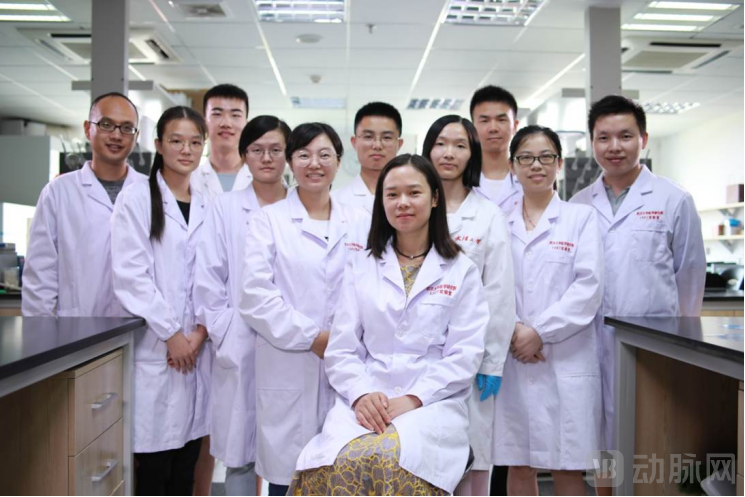
▲ Professor Liu Hudan’s Research Group, Source: Official Website of Wuhan University
Unfortunately, this achievement was not further advanced. According to Professor Liu Hudan, one reason is that when the team attempted to pursue targeted therapy, the small-molecule drugs used were primarily sourced from foreign companies. In such a scenario,The developed product cannot be considered a patent project independently developed by the team.
On the other hand, during communications with the company, Professor Liu Hudan discoveredMost companies categorize T-ALL disease research and its market as niche.. The incidence of T-ALL is lower than that of B-ALL, and its therapeutic efficacy and treatment advances have also lagged behind. In China, whether in pediatric or adult patients with acute lymphoblastic leukemia, the cure rate remains very low for a subset of patients. These patients can only be treated and cured by undergoing allogeneic hematopoietic stem cell transplantation.
“We also have limited resources dedicated to commercialization.”Professor Liu Hudan stated that, after failing to receive positive market feedback, the team chose to remain focused on laboratory work and did not deliberately pursue product development or commercialization.
What Opportunities Remain for T-ALL?
In the overall research and development and translational landscape of acute leukemia, CAR-T cell therapy has gradually transitioned from basic research to clinical application after more than two decades of development. It has demonstrated remarkable efficacy in cancer immunotherapy, particularly in the treatment of hematologic malignancies, significantly improving response rates and survival outcomes for patients with relapsed or refractory B-cell acute lymphoblastic leukemia.
“CAR-T therapy is a critical treatment modality for acute lymphoblastic leukemia, particularly for relapsed or refractory cases."Professor Liu Hudan also remarked."However, the application of this star therapy in T-ALL has consistently failed to make effective progress.Although T-cell CAR-T products have been manufactured since 2016, these products remain in clinical trials, and no breakthrough clinical data have been released to date.
This is primarily due to the issue of specific targets for T cells.
T cells are normal immune cells in the human body and lack specific targets to distinguish them from tumor cells. Furthermore, T-cell acute lymphoblastic leukemia (T-ALL) is itself a malignancy of T cells. Upon relapse, the disease progresses rapidly, and a high tumor burden can suppress the proliferation of normal T cells. These factors collectively result in the inability to collect sufficient healthy T cells, which significantly limits the application of CAR-T cell therapy in T-ALL.
What Other Translational Opportunities Exist for Refractory and Relapsing T-ALL?
Overall, the breakthroughs in T-ALL in recent years have mainly been in two aspects: one isMedication Use, such as the use of nelarabine. The NCCN Clinical Practice Guidelines indicate that “nelarabine plus chemotherapy” can achieve a complete remission rate of over 90%, with an 18-month overall survival rate as high as 62%. Therefore, nelarabine has become a new therapeutic agent for T-cell acute lymphoblastic leukemia or T-cell lymphoma.
Second,Targeted Drug Therapy, such as CD38 antibodies, which, despite their limited efficacy, can still benefit a subset of patients. Another segment involves the development of small-molecule drugs targeting mutations such as NOTCH and JAK, which are currently in clinical trials.
At present,The Center for Acute Leukemia Research Remains in the United States. However, in recent years, domestic research in this field has also made continuous progress. “The Institute of Hematology & Blood Diseases Hospital of the Chinese Academy of Medical Sciences, Peking University People’s Hospital, Shanghai Ruijin Hospital, and The First Affiliated Hospital of Zhejiang University School of Medicine have all achieved significant breakthroughs in the research and clinical diagnosis and treatment of hematologic diseases,” said Professor Liu Hudan.
From Professor Liu Hudan’s perspective, both T-ALL and B-ALL hold broad prospects for development. In the future, Professor Liu Hudan will lead her team to further expand their research into the field of acute myeloid leukemia.We are also highly eager to collaborate with enterprises in launching translational research and clinical trials, thereby further advancing the translational progress of acute leukemia."Finally," stated Professor Liu Hudan.
Expert Profile
Liu Hudan, Professor and Doctoral Supervisor at the Medical Research Institute of Zhongnan Hospital, Wuhan University; Recipient of the National Science Fund for Distinguished Young Scholars (Hematology). She currently serves as Vice Chair of the Hematophysiology Committee of the Chinese Physiological Society, Member of the Hematologic Oncology Committee of the China Anti-Cancer Association, and Member of the Experimental Hematology Committee of the Chinese Society of Pathophysiology.
Dedicated to basic research on the pathogenesis and targeted therapy of acute leukemia, with a focus on identifying multiple potential therapeutic targets and molecular markers within the NOTCH1-MYC signaling network, thereby providing scientific evidence for exploring new strategies in targeted leukemia treatment. Has presided over more than 10 national and provincial/ministerial-level projects, published over 40 SCI-indexed papers, and accumulated more than 3,000 total citations.
As corresponding author, he/she has published more than 20 research papers in internationally renowned academic journals, including Cancer Cell, Nature Communications, Science Advances, and Clinical Cancer Research. His/Her research achievements were selected as one of the Top Ten Advances in Chinese Hematology of the Year.