

Electric Finger Exercise Device for Post-Coronary Angiography Rehabilitation Files IPO Prospectus
Coronary heart disease is a cardiovascular condition that poses a serious threat to health, known as“World-Class Coronary Artery Disaster”In developed countries, deaths from coronary heart disease (CHD) account for approximately one-third of all deaths, while the incidence rate in China has remained persistently high. According to the "2022 Report on Trends in Cardiovascular and Cerebrovascular Health," as of its release in September 2022, the estimated number of prevalent cases of cardiovascular disease in China reached 330 million, including 11.39 million patients with CHD, with a trending shift toward younger age groups among the patient population.
Simply put, coronary heart disease (CHD) refers to pathological changes in the blood vessels that supply the heart. Given the critical importance of myocardial perfusion, a diagnosis of CHD necessitates lifelong intervention. Early diagnosis can significantly reduce both treatment risks and complexity.
Currently, China’s healthcare system relies more on the results of objective tests than on patients’ subjective symptoms for the diagnosis and intervention of coronary heart disease (CHD), with coronary angiography serving as the “gold standard” for diagnosing CHD. After undergoing coronary angiography, physicians need to assess the patientCompression Hemostasis at the Radial Artery Puncture Site, during this process, patients may experience discomfort due to hand pressure, which can be effectively alleviated through rehabilitation exercises. However, in settings with limited medical resources, it is challenging to ensure patient adherence to rehabilitation exercises. Addressing this clinical pain point,Shi Chaoxiong, Charge Nurse, Department of Geriatric Cardiology, Jiangsu Province People's HospitalDeveloped aElectric Finger Exercise Device, to ensure the recovery of the patient's fingers after angiography.
I. Improve Patient Compliance and Enhance Rehabilitation Efficiency
Unlike conventional CT imaging, coronary angiography requires the injection of a contrast agent into the coronary arteries to visualize them via X-ray, thereby enabling the assessment of any pathological changes. This procedure necessitates local anesthesia and puncture of either the femoral artery in the lower limb or the radial artery in the upper limb, allowing a catheter to be advanced through the arterial pathway to the ostium of the coronary arteries.
After the angiography, removing the contrast catheter may cause arterial bleeding in patients. The most commonly adopted measure is throughHemostatic Compression Device for Hemostasis. Currently, there is no uniform standard for the duration of compression hemostasis following the first postoperative decompression.Deflation is generally initiated 1–2 hours postoperatively, for a total of four cycles.
However, compressive hemostasis can prevent the blood pressure in the patient's hand from equilibrating with external pressure, leading to varying degrees of swelling, numbness, cyanosis, and even pain. To accelerate finger recovery, physicians typically instruct patients to elevate their arms and perform regular finger flexion and extension exercises. Due to limited medical resources, healthcare providers cannot continuously supervise patients’ finger exercises, which often results in poor compliance. This may lead to suboptimal finger recovery in mild cases, and in severe cases, impair systemic microcirculation in the limbs.
This electric finger movement device, designed by Shi Chaoxiong, extends to the patient’s forearm, elevates the entire arm, and assists finger movements through motorized assistance. Once worn, the device enables patients to automatically perform finger rehabilitation exercises without interfering with other activities.
II. Bidirectional Enhancement of Functionality and User Experience
Shi Chaoxiong told VCBeat’s Orange Bureau that this electric finger mobility device mainly featuresThree Major Innovations.
First, in terms of functionality, the electric finger movement device is equipped with an intelligent counting system.Shi Chaoxiong found that patients occasionally forget the number of repetitions during finger rehabilitation exercises due to external distractions. Insufficient repetitions fail to achieve the desired therapeutic effect, while excessive repetitions can cause fatigue, leading to reluctance in subsequent sessions. Therefore, the device incorporates a built-in counter, enabling patients to track repetitions accurately and avoid both under-exercising and over-exercising.
Secondly, the motorized finger movement device can automatically reset and adjust its range of motion during operation, ensuring that each patient movement is complete and properly executed.After transitioning from active to passive movement, the patient experiences greater ease of operation and achieves better outcomes.
Finally, for consumables, Shi Chaoxiong specifically adopted silicone and breathable materials.In her clinical practice, she observed that many medical braces and supports were made of non-breathable materials, requiring patients to bring their own towels or apply talcum powder to absorb sweat and reduce friction, thereby preventing skin damage. To address this, she specifically incorporated silicone and breathable materials to enhance the patient experience.
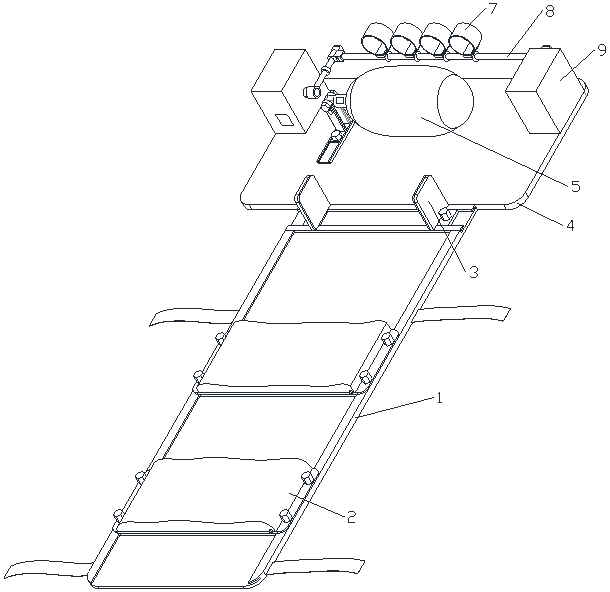
Design Diagram of Electric Device for Finger Movement
After reviewing the literature, Shi Chaoxiong found that no homogeneous products are currently available on the market. Currently, electric devices for finger movementPatented, next, Shi Chaoxiong aims to complete the prototype design first, laying the foundation for subsequent technology transfer.
However, due to the heavy workload of clinical nursing, Shi Chaoxiong has not yet found a suitablePartners and Third-Party Conversion PlatformsShi Chaoxiong stated, “As clinical nursing professionals, we still face an information gap between scientific research and the market. Therefore, I aim to find a partner who understands both the market and our research philosophy, so that we can jointly bring the electric finger movement device to market and improve patients’ medical experience.”