

WoZhen Biologics Unveils Breakthrough MegaR Technology, Successfully Solving Cryo-EM Structures of CCR8 and GPRC5D for Next-Generation Membrane Protein-Targeted Drug Discovery
The efficacy of drugs in the human body depends on target selection. Among currently marketed drugs, the primary targets can be broadly categorized into five classes: G protein-coupled receptors (GPCRs), ion channels, kinases, nuclear hormone receptors, and proteases. Of these, GPCRs and ion channels are both membrane proteins.
Membrane proteins play a pivotal role in cellular signal transduction and substance transport, regulating a wide array of physiological processes. They also encompass numerous druggable targets located on the cell surface, which are applicable to disease diagnosis and pharmacotherapy. Taking G protein-coupled receptors (GPCRs), the largest family of membrane proteins in the human body, as an example, incomplete statistics indicate that there are 475 FDA-approved drugs targeting GPCRs, accounting for 34% of all FDA-approved medications.
GPCRs are important targets in the field of membrane protein drug development and are closely linked to major diseases such as central nervous system disorders, heart disease, diabetes, and cancer. However, due to factors like structural instability and low expression levels, obtaining GPCR proteins is challenging. As a result, the structures of most GPCRs remain unresolved, making it difficult to design drugs based on their structures and achieve precise regulation of GPCR function. According to literature reports, out of approximately 800 potential GPCR targets, only 134 have been developed. In other words, currently less than 17% of potential targets have been "drugged."
Furthermore, GPCR drug development faces additional challenges: unclear structure-function relationships of GPCRs, poorly understood pathological mechanisms of GPCR-related diseases, difficulties in GPCR activity assay technologies, multi-objective optimization in drug development, and the inherent challenges in developing GPCR-targeting antibody drugs. These needs and challenges call for in-depth research on these receptors by the industry. Wozhen Bio is one such company that has actively engaged in this field.
Mentored by a pioneer of structural biology in China, with 20 years of dedicated expertise in the field of membrane proteins
“From the perspective of membrane protein structural biology, we have roughly gone through three stages,” said Dr. Liao Jun, founder of Wozhen Bio.
“The first phase occurred in the mid-to-late 1980s, when Hartmut Michel, Johann Deisenhofer, and Robert Huber were awarded the Nobel Prize in Chemistry for elucidating the three-dimensional structure of the photosynthetic reaction center complex, thereby ushering in the era of structural biology of membrane proteins. Nevertheless, membrane proteins at that time were primarily isolated from native tissues, a process characterized by low efficiency.”
The second phase occurred in the late 1990s, when Roderick MacKinnon, Peter Agre, and others achieved breakthroughs in the heterologous expression, purification, and crystallization of membrane proteins. They systematically resolved the challenges associated with obtaining X-ray crystal structures of membrane proteins and were awarded the 2003 Nobel Prize in Chemistry.
While significant breakthroughs were being made internationally in the fundamental research of membrane proteins, Liao Jun was undergoing graduate training at the Institute of Biophysics, Chinese Academy of Sciences. Under the supervision of Academician Liang Dongcai and Academician Chang Wenrui, regarded as the founders of structural biology in China, he engaged in structural biology research to solidify his theoretical and practical expertise in the field.
In 2004, Liao Jun went to the University of Texas Southwestern Medical Center in the United States for postdoctoral research. His mentor, Professor Youxing Jiang, was one of the key contributors to the 2003 Nobel Prize in Chemistry-winning work on “the atomic basis of potassium ion channel proteins and ion-selective transport.” “This achievement has deepened our understanding of the selective permeability mechanism of cation channels and marked that structural biology research on membrane proteins can be systematized and standardized, bringing it closer to commercialization,” Liao added.
With breakthroughs in computing technology and hardware, more sensitive electron microscopes and smarter software have emerged, enabling the capture of clearer molecular structures and resolving the long-standing challenge of low resolution in cryo-electron microscopy. In 2013, researchers at the University of California achieved near-atomic resolution of membrane protein structures using cryo-EM, marking a new era for this technique and propelling structural biology of membrane proteins into its rapidly advancing third phase.
From academia to industry, Liao Jun has dedicated over two decades to the field of membrane protein structural biology. Upon returning to China, he served as a Professor and Doctoral Supervisor at ShanghaiTech University, held an adjunct researcher position at the Suzhou Institute of the Institute of Biochemistry and Cell Biology, Chinese Academy of Sciences, and worked as a scientific consultant for GE (Shanghai) and other biotechnology companies. He specializes in the expression and structural elucidation of multi-pass transmembrane proteins.
In 2022, Liao Jun devoted himself entirely to the industrial sector by founding Wozhen Biology, a company dedicated to providing global pharmaceutical and biotechnology firms with technical services—including expression, purification, and structural elucidation of multi-pass transmembrane proteins—with a focus on targets such as multi-pass transmembrane proteins and challenging kinases. “Although cryo-electron microscopy (cryo-EM) can already achieve high resolution, many targets remain unsuitable for structural determination via this method, particularly numerous small-molecule GPCR targets with favorable druggability,” Liao noted.
Building on this, Liao Jun and the core team at WoZhen Biologics conducted intensive research. In June of this year, WoZhen Biologics unveiled its groundbreaking MegaR technology, which enables the structural elucidation of low-molecular-weight GPCRs that were previously intractable to analysis, as well as their complexes with ligands or drugs.
MegaR Technology: No Need for GPCR to Be in an Agonist State, and the Transmembrane and Extracellular Regions of GPCR Maintain Their Native Conformations
“The primary issue is that membrane proteins are prone to inactivation or alteration of their functional characteristics once removed from their native membrane environment.” Following the widespread application of cryo-electron microscopy (cryo-EM) in elucidating the structures of GPCR targets, the first challenge encountered was the preparation and purification of high-quality protein samples.
During the purification of membrane proteins, it is essential to first select appropriate detergents to maintain the spatial conformation and activity of the membrane proteins. Once a suitable detergent is identified, the membrane proteins are extracted from the cell membrane and purified using chromatographic methods. Many membrane proteins exhibit reduced stability after detergent extraction; however, protein engineering techniques can often be employed to enhance their stability.
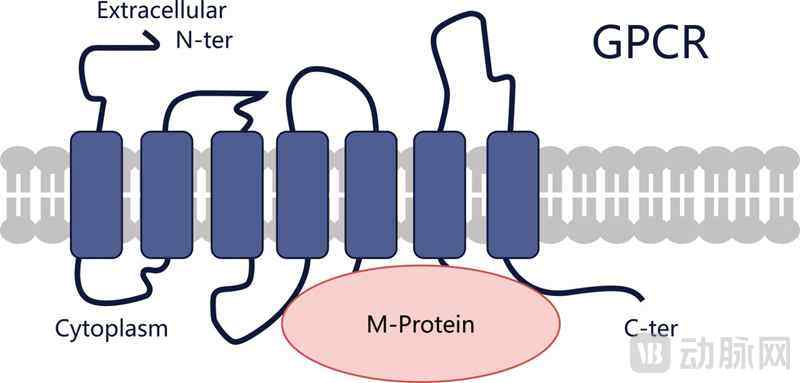
“Secondly, the molecular weights of hundreds of GPCRs fall within the range of ~37–50 kDa. For instance, members of the rhodopsin-like family, which accounts for 80% of all GPCRs, have molecular weights too low to be suitable for cryo-electron microscopy (cryo-EM) studies. The common solution is to stabilize GPCRs in an agonist-bound active state, enabling them to form complexes with G proteins from downstream signaling pathways, thereby facilitating structural determination by cryo-EM. However, this approach presents another challenge: when using cryo-EM to analyze the interactions between antagonist drugs and GPCRs, it is not possible to obtain structures by forming GPCR–G protein complexes. This difficulty has hindered the development of antagonist drugs,” said Liao Jun. According to incomplete statistics, antagonists account for more than 45% of GPCR-targeting drugs that are either already on the market or under development.
After years of dedicated research and development, Wozhen Biotechnology has officially released its MegaR technology.According to reports, the MegaR technology can effectively increase the molecular weight of GPCRs without requiring them to be in an agonist-bound state, thereby resolving the challenges associated with high-resolution cryo-EM structural analysis of antagonist-GPCR complexes. The advantage of the MegaR technology lies in its ability to accelerate the development of research on interactions between various GPCR subfamilies and different ligands or drugs.
MegaR Technology Platform (Photo provided by the interviewee)
MegaR technology employs genetic engineering to fuse a tag consisting of only 30 amino acids onto GPCRs, thereby minimizing the impact of such modifications on GPCR expression and proper folding.“The fusion tag does not form a continuous helical structure with the transmembrane helices of the GPCR, thereby preserving the native conformation of the GPCR transmembrane helices. This maintains the stability of the engineered GPCR protein and facilitates the structural determination of various types of GPCRs to resolve conformational differences. During purification, two additional proteins form a tight complex with this 30-amino-acid tag, enveloping it from both sides. By adjusting the length of the linker peptide between the tag and the GPCR, these two proteins can establish more extensive interactions with other regions of the GPCR, resulting in an overall protein particle with a highly rigid spatial structure,” introduced Liao Jun. Test results demonstrated that the molecular weight of the engineered GPCR could be increased to over 90 kDa, meeting the requirements for cryo-EM structural analysis.
“MegaR technology also offers advantages such as stability and advanced capabilities in GPCR drug development.”Liao Jun stated. According to reports, GPCR fusion proteins generated through MegaR technology modifications can be efficiently expressed in mammalian cells, exhibit exceptional stability, and resist dissociation during purification. This eliminates the need for extensive optimization of purification conditions for complex formation and cryo-EM sample preparation. More breakthroughly, the MegaR technology enables structural elucidation of complexes formed by various GPCRs—whose expression and purification are typically challenging—with their ligands or drug molecules.To date, Wozhen Bio is the only company in the world that has elucidated the structures of CCR8 and GPRC5D.
Successful Elucidation of the Cryo-EM Structures of CCR8 and GPRC5D Facilitates Breakthrough Drug Development for Multiple Tumors
The chemokine receptor CCR8 is a seven-transmembrane GPCR, with CCL1 as its primary ligand. In recent years, tumor immunotherapy has achieved revolutionary breakthroughs in cancer treatment. Studies have shown that inhibiting or depleting Treg cells specifically expressing CCR8 within the tumor microenvironment can enhance the efficacy of immunotherapy. Currently, there are no CCR8-targeting drugs approved for market globally, but more than 40 candidates are in development, resulting in intense competition.
“Elucidating the structure of CCR8 and its complex with monoclonal antibodies will provide valuable insights for the development of therapeutic antibodies targeting CCR8. Due to the extremely small size of CCR8, its expression and purification are highly challenging, which has long hindered the determination of its three-dimensional structure and consequently delayed the development of certain drugs. By leveraging MegaR technology to increase the molecular weight of CCR8, we resolved the cryo-EM structure of CCR8 in its apo state at a resolution of 3.24 Å, which will significantly accelerate the research and development of CCR8-targeting therapeutics,” said Liao Jun.
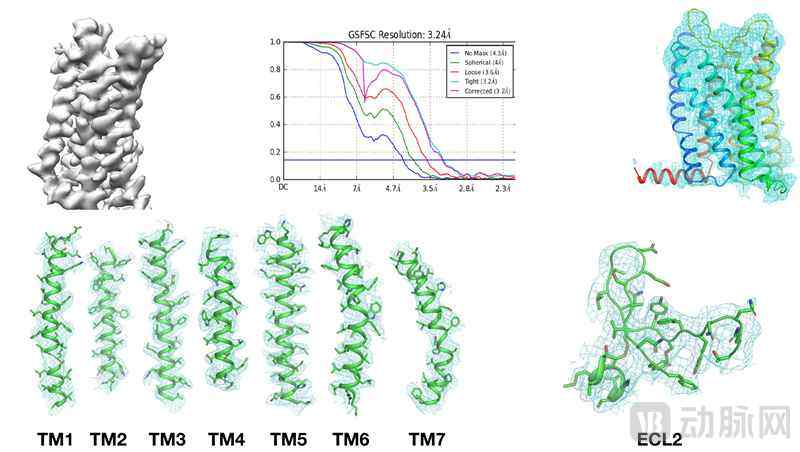 MegaR Technology Used for Cryo-EM Structure Determination of CCR8. Image provided by the interviewee
GPRC5D is also a seven-transmembrane protein belonging to the orphan receptor family. Published studies have shown that GPRC5D is highly expressed on the surface of primary multiple myeloma cells, whereas its expression in normal tissues is restricted to hair follicle regions. Furthermore, over 50% of patients with multiple myeloma exhibit GPRC5D expression levels exceeding a defined threshold, and this expression is relatively independent of the BCMA target. Therefore, GPRC5D has emerged as a therapeutic target for the treatment of multiple myeloma.
Currently, there are thirty antibody pipelines targeting GPRC5D under development. Only Johnson & Johnson’s Talquetamab has been approved for market launch this January, while other leading candidates have entered Phase II clinical trials. However, how do these antibodies bind to the GPRC5D target? How can the affinity between the antibodies and the target protein be further optimized? Answers to these questions require insights from the structure of the GPRC5D-antibody complex. Yet, as GPRC5D is a low-molecular-weight orphan receptor, its structure has remained unresolved. Leveraging MegaR technology, WoZhen Biotech has successfully determined the structure of this membrane protein. The subsequent elucidation of the receptor-antibody complex structure will provide clear answers to the aforementioned questions.
“After successfully expressing, purifying, and resolving the structures of two highly challenging membrane proteins, CCR8 and GPRC5D, Wozhen Biologics will continue to iterate its technologies to resolve the structures of more GPCR family membrane proteins, while also conducting in-depth research on transmembrane proteins such as ion channels and transporters, as well as challenging kinases,” said Liao Jun.
“Structural biology not only greatly helps humans understand complex life activities at the molecular level, but its more practical significance lies in helping us design drugs that block or enhance their effects through structural insights. In particular, structure-based drug design can significantly improve the precision and specificity of drugs, ultimately benefiting all humanity,” Liao Jun added.