

Two Decades, $956 Million, and 7,000 Proteins: SomaLogic’s Journey in Building a Clinical Proteomics Database

SomaLogic
Proteomics Data Developer
In 1995, Marc Wilkins and his colleagues published the first journal article mentioning the proteome in the journal Electrophoresis, stating: “The ‘proteome’ refers to the total protein complement of a genome.”
Five years later, Professor Larry Gold of the University of Colorado founded SomaLogic by pursuing the then-emerging field of proteomics.
As one of the earliest innovators to venture into the field of proteomics, SomaLogic has now been in operation for 23 years, specializing in protein biomarker discovery and clinical diagnostics. Currently, SomaLogic’s proteomics technology platform, the SOMAmer Assay, can measure approximately 7,000 proteins, representing nearly half of the roughly 20,000 proteins found in the human body. Supported by its technology platform and clinical proteomics database, SomaLogic aims to revolutionize precision medicine and address unmet medical needs.
Over the past two decades of witnessing the industry’s rise,SomaLogic has completed 17 rounds of financing and successfully went public in 2021, when proteomics was at its peak. The company has raised a total of over $956 million (approximately RMB 6 billion), and its current market capitalization stands at $423 million.
SomaLogic’s steady growth over the past two decades is attributable to its team with extensive industry experience.
Founder Larry Gold is a seasoned entrepreneur. Since 1970, Larry Gold has been affiliated with the University of Colorado Boulder, where he served as Chair of the Department of Molecular, Cellular, and Developmental Biology. Prior to founding SomaLogic, he established two biotechnology companies, NeXagen and Synergen. With deep roots in the field of proteomics, Larry Gold has received numerous honors, including the CU Distinguished Teaching Award, the NIH Merit Award, the Career Development Award, and the Chiron Biotechnology Award.
Adam Taich joined SomaLogic in late 2021, initially serving as Chief Business Officer before being appointed Interim CEO of SomaLogic. He has over 20 years of experience in the life sciences and healthcare markets. Previously, he served as Vice President and General Manager of the Molecular Biology business at Thermo Fisher Scientific, where he played a pivotal role in managing a complex global business with revenues exceeding $1 billion.
As Chief Medical Officer of SomaLogic, Stephen A. Williams, M.D., oversees clinical development, medical affairs, and regulatory and quality functions. Prior to joining SomaLogic, he co-founded the pharmaceutical consulting firm Decisionability, LLC. Previously, he served as Vice President and Global Head of Clinical Technology at Pfizer.
Dr. Jason Cleveland is the Chief Technology Officer of SomaLogic. He was previously a co-founder and chairman of Asylum Research, which was later acquired by Oxford Instruments. He also served at Digital Instruments. Currently, Dr. Cleveland’s work at SomaLogic focuses on driving technological advancements to the SomaScan platform.
Benefiting from the core team’s insights into market demands and potential opportunities in proteomics, SomaLogic pioneered the development of a groundbreaking proteomics assay platform, enabling the company to achieve continuous breakthroughs in proteomics research.
In addition, the team demonstrated exceptional adaptability in the face of various changes and uncertainties in the market environment, flexibly adjusting strategies to enhance the company’s resilience and risk resistance.
Although SomaLogic’s financial performance in the first quarter of 2023 was less than ideal, with revenue declining by 11% year-over-year and gross margin dropping to 39.6% from 49.3% in the same period of 2022, the SomaLogic team has actively taken measures to address market uncertainties and challenges. Excluding licensing revenue, the company’s revenue actually increased by 2% year-over-year.
In response to challenges such as demand fluctuations and supply chain disruptions caused by the pandemic, the team proactively adjusted its operational and management strategies and implemented a cost-reduction plan to ensure financial stability.Currently, SomaLogic holds $500.6 million in cash, cash equivalents, and short-term investments, providing financial security for the company’s future strategic options and sustained development.
Proteome refers to the complete set of proteins expressed by a cell, tissue, or organism at a specific point in time. Similar to the genome, the proteome represents comprehensive information about all proteins in an organism, including their types, quantities, structures, functions, and interactions with one another.
Proteomics research plays a pivotal role in the fields of biology and medicine. In biology, proteomic analysis elucidates the functions and regulatory mechanisms of proteins in critical biological processes such as cellular function, signal transduction, and metabolic pathways. In medicine, proteomics research facilitates the discovery of potential biomarkers for early disease diagnosis and monitoring of disease progression, laying the foundation for personalized medicine while also providing important targets and strategies for drug development.
Solving Mass Spectrometry Challenges: Detecting Up to 7,000 Proteins
Proteins circulate in the blood and other bodily fluids, making them easy to sample. However, analyzing the proteome remains challenging. The primary tool used by many proteomics laboratories is mass spectrometry (MS), which can identify and quantify the molecular content of a given sample. This method requires breaking down molecules into smaller fragments, which are then analyzed and interpreted based on their unique mass-to-charge ratios. Although mass spectrometry is a mature and well-established technique, its coverage is limited—it is difficult to simultaneously analyze both low-abundance and high-abundance proteins.
Peter Ganz, a cardiologist at the University of California, San Francisco, pointed out that mass spectrometry (MS) is slow and lacks the dynamic range necessary for the discovery of effective biomarkers. In untargeted experiments, MS can measure high-abundance proteins but fails to detect low-concentration proteins.
SomaLogic’s SomaScan Assay proteomics platform addresses this issue by employing SOMAmer reagents. These chemically modified, DNA-based SOMAmer reagents are selected and engineered to bind specifically to target proteins with high affinity. SOMAmer reagents are applied to clinical samples in the SomaScan Assay platform,It can be used to simultaneously detect up to 7,000 different proteins, covering a dynamic range of ten orders of magnitude from femtomolar to micromolar concentrations.
Requires only a 55 µL small sample for testing, with results presented visually
The SomaScan Assay is the first platform capable of measuring 7,000 proteins from a 55 μL sample. Sample types include plasma, serum, cerebrospinal fluid, and various other complex sample types (both human and non-human). The platform also offers excellent reproducibility.The coefficient of variation (CV) for the median value is approximately 5%., it can enhance the ability to discover new protein biomarkers, examine causal relationships, and identify new drug targets.
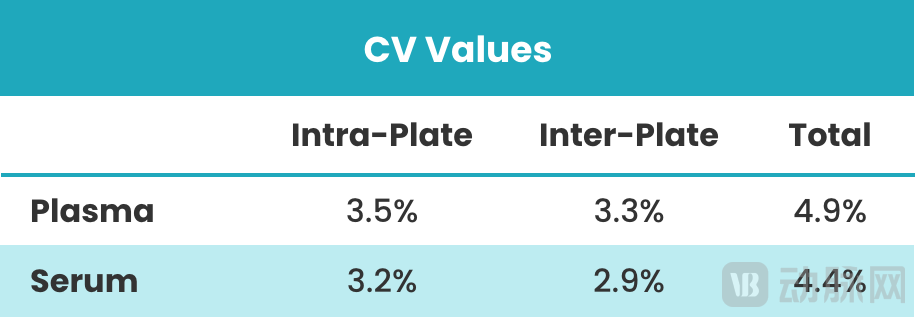
The SomaScan assay does not rely on variable polyclonal antibodies,
Therefore, the coefficient of variation for SomaScan data is lower than the industry standard.
Meanwhile, by employing a stratified dilution method, the SomaScan Assay is used to separately measure proteins of very high and very low abundance.A total dynamic range of 10 logs can be measured from 55 μL of plasma or serum.. The stratification method of the SomaScan Assay can consistently detect rare proteins without sample preprocessing. The product also features high throughput,Capable of analyzing over 1,000 clinical samples per day。
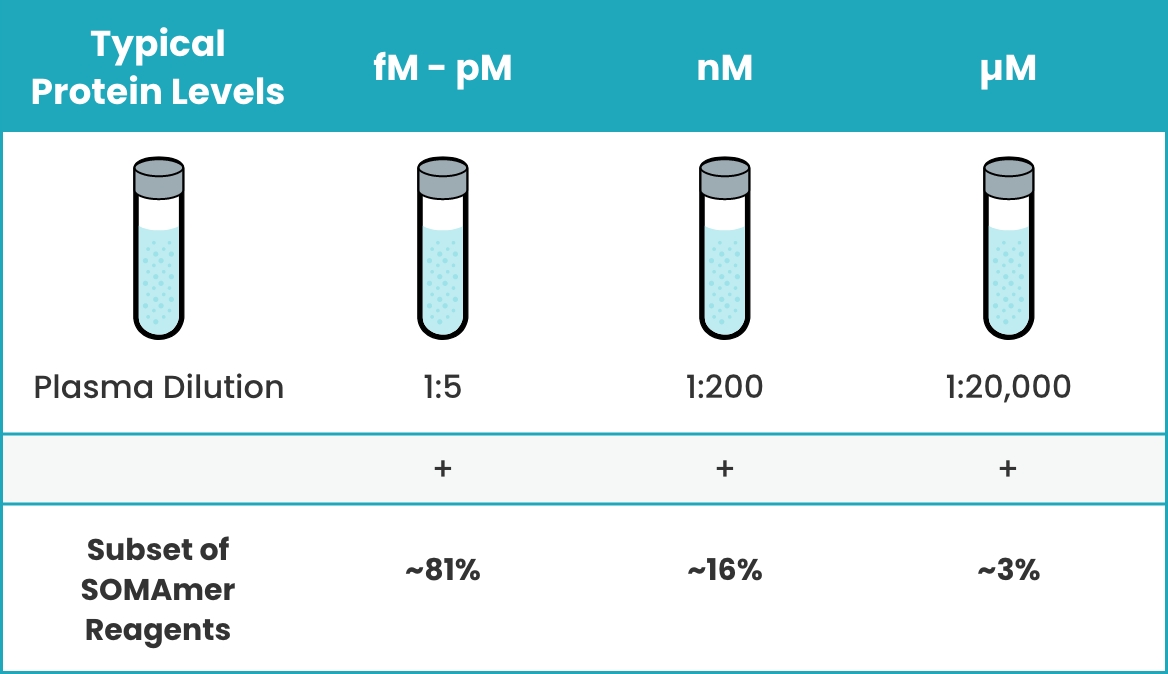
Graded Dilution Method for Measuring Proteins with Very High and Very Low Abundance
Users can integrate the SomaScan Assay with SomaLogic’s DataDelve statistical platform to conduct exploratory statistical analysis, and create visualized and customizable charts, including generating scatter plots, box plots, and CDF plots, as well as performing various statistical tests such as correlation analysis, t-tests, and U-tests.
Currently, to address diverse market demands, SomaLogic offers two types of services. The first is testing services for pharmaceutical and academic research based on the SomaScan Assay platform. The second is the SomaSignal test service, which provides multiple clinical assessments from a single blood draw.
The SomaScan Assay platform can be applied in pharmaceutical R&D for target identification, target validation, mechanism of action studies, pharmacokinetics, clinical trial enrichment, and clinical trial stratification. It is also suitable for academic research, such as disease biology modeling, disease subphenotyping, physiological investigations, and pathway regulation studies.
The SomaSignal test is applied in clinical trial monitoring, enabling frequent sampling through simple blood tests without the need for specialized physicians or pathologists. This test provides a range of clinically significant metrics, including 21 quantitative clinical indicators covering cardiovascular disease, NASH (non-alcoholic steatohepatitis), diabetes, and other conditions, while also reporting patients' current health status and assessing their risk levels.
These tests are also available for research purposes, covering multiple aspects such as body fat percentage, resting energy expenditure, glucose tolerance, and the risk of heart attack, stroke, or heart failure within four years.
Since 2015,SomaLogic has established more than 300 industry partnerships and customer relationships, including those with biopharmaceutical companies, academic laboratories, CROs, and health systems. SomaLogic’s partners currently include well-known pharmaceutical companies such as Novartis and Amgen, and its proteomics assays have been deployed in laboratories at the U.S. Food and Drug Administration (FDA) and the National Institutes of Health (NIH).
On May 10, 2023, SomaLogic extended its reach into the Chinese market by entering into a strategic cooperation agreement with Shanghai Renke Biotechnology Co., Ltd. (hereinafter referred to as “Renke Biotech”).Renke Biologics will become SomaLogic’s first licensed partner in China, providing Chinese users with SomaScan Assay analysis services and delivering corresponding SomaScan Assay data to clients.