

KAI Biosciences: How Integrated Large and Small Animal CRO Services Accelerate CNS Drug Development
The challenges in developing central nervous system (CNS) drugs have become widely recognized. Over the past few decades, multinational corporations (MNCs), as representatives of new drug R&D companies, have fiercely competed in the CNS field, only to suffer repeated setbacks, with very few achieving significant success.
Upon examination, the industry generally agrees that CNS new drug development faces several major challenges:Animal Model Challenge, Clinical Diagnosis Challenge, Biomarker Challenge, and Clinical Trial Challenge.From a pathological perspective, the unclear pathogenesis of CNS diseases inevitably leads to low clinical translatability of most animal models, difficulties in experimental design, and a lack of disease biomarkers for objective quantification and assessment, further increasing the challenges in CNS drug development.
According to statistics from the PharmCube database, the central nervous system (CNS) therapeutic area is currently the second most popular field after oncology. China’s CNS drug development pipeline ranks third globally, accounting for 9% of the global total. With the advent of an aging society, China is becoming a hotbed for innovative CNS drug research and development, and correspondingly, contract research organization (CRO) services for innovative drugs have also entered a fast lane of growth. In this field,VCBeat’s New Medicine has noted a “long-established” innovative drug CRO company—Kci Biotech。
Nearly 40 Years of Dedication to Pathology, Embarking on an Entrepreneurial Journey in 2014
For Zhuang Yongjie, a medical school graduate, choosing pathology was by no means “following the beaten path.” “Becoming a clinical surgeon would have better aligned with my family’s expectations, but pathology serves as a bridge between basic and clinical medicine. It helps answer medical questions by investigating disease etiology, pathogenesis, and pathological changes, which also aligns with my personal interests,” said Zhuang Yongjie.

Kci Founder: Zhuang Yongjie
Since the 1980s, Zhuang Yongjie has been deeply engaged in pathological research. After completing his master’s degree in pathology in China, he earned his Ph.D. in pathology from Akita University in Japan and subsequently conducted postdoctoral research in cardiovascular biology at Stanford University. Upon graduation, Dr. Zhuang was invited by the Vice Dean of Stanford University School of Medicine to join KAI Pharmaceuticals, where he worked on preclinical pharmaceutical research.
In 2011, KAI Pharmaceuticals was acquired by the multinational pharmaceutical company Amgen, prompting Zhuang Yongjie to reflect on his future. “During my years abroad, I gained firsthand insight into the disparities between the domestic and international pharmaceutical sectors. In particular, my experience at KAI Pharmaceuticals, where it took us six years to ultimately launch a new drug, provided me with invaluable learning and insights.”
After returning to China, Zhuang Yongjie accepted an offer from a company in Kunming to continue his work in preclinical pharmacology research. “While abroad, I worked with almost all types of laboratory animals, except monkeys,” Zhuang joked. He thus spent several years working in Kunming. “During those years, I came to recognize the importance of preclinical pharmacology research for new drug development in China and even globally. Perhaps I could make a contribution.”
In Zhuang Yongjie’s view, pharmacological evaluation is crucial for both generic drugs and innovative drugs.In 2014, Zhuang Yongjie founded Kci Biotech (small animals), and subsequently established Jiangsu KMQ BioTech Inc. (large animals) in 2017, with a joint commitment to building a comprehensive preclinical efficacy and druggability evaluation system for both small and large animals.
Development of Hundreds of Animal Models for Diseases Across Multiple Therapeutic Areas
Leveraging Zhuang Yongjie’s extensive experience in novel drug development, Kci Biotech has taken a leading position in establishing cardiovascular disease models and has subsequently developed hundreds of animal disease models across various therapeutic areas, including immune-mediated diseases, inflammatory disorders, metabolic diseases, urological conditions, oncology, and neurological disorders.
In animal experiments, it is essential to implement scientific breeding and stringent quality control measures for experimental animals, and to carefully select methods for establishing and utilizing disease animal models. This ensures that the research is accurate and closely reflects real-world conditions, thereby yielding results that are scientifically valid, reproducible, and clinically comparable.
In April 2023, the Center for Drug Evaluation (CDE) issued the "Technical Guidelines for Drug Research Based on the Animal Rule (Trial)," which raised higher requirements for disease-related animal models in drug applications. Due to the complexity of diseases, the selection of animal disease models is also crucial. Reliable models can contribute to research projects such as scientifically predicting the effects of drugs in humans and extrapolating clinical data from animal data.
Zhuang Yongjie told VCBeat New Medicine,Animal species, disease types, and clinical indicators all influence clinical translation rates.“All animal disease models must be established in relatively healthy animals, whether mice, rats, or large animals; however, such models inevitably have limitations. They may not truly reflect or reproduce the full spectrum of clinical indicators of human diseases, and might only capture a single clinical parameter of the disease.”
The primary methods for constructing disease models include natural and induced approaches, with the latter further categorized into surgical induction and chemical induction. In clinical practice, when natural disease models are difficult to identify, induced techniques must be employed; whether through surgical or chemical induction, it is necessary toPrecise positioning to ensure the stability of disease models.
Regarding surgical techniques, Zhuang Yongjie introduced a key technology to VCBeat New Medicine—Intracranial Site-Specific Injection Technique。
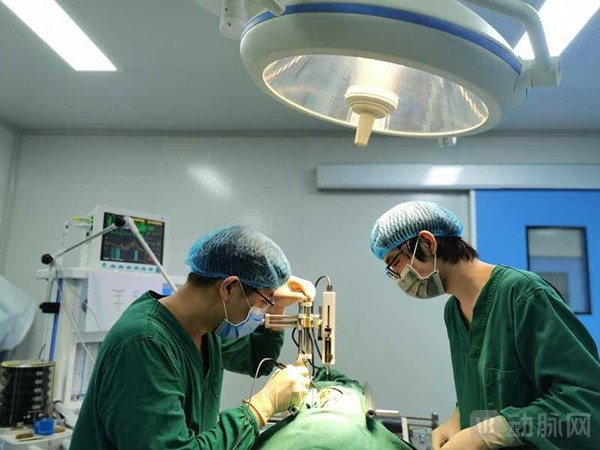
IntraoperativeUse of Intracranial Site-Specific Injection Technique. Image provided by the interviewee.
“During a clinical trial of a novel stem cell therapy, the Kci team faced significant challenges in achieving precise intracranial drug delivery. While MRI or CT are commonly used for localization, relying solely on MRI fails to accurately assess bone density or cortical thickness, whereas using CT alone also presents localization limitations. To address this, we spent a month developing a key technology—intracranial site-specific injection—which integrates MRI and CT imaging with comparative anatomical data on bones and tissues across various animal species to achieve precise targeting,” said Zhuang Yongjie. To date, Kci Biotech has secured multiple patents for such technologies, as well as patents for animal models of related diseases.
Furthermore, drawing on four decades of pathological research, Kci Biotech has also labeled and documented disease models across various diseases and species to authentically and comprehensively reflect disease characteristics. “A single animal model rarely provides a complete picture; validation across multiple disease models is essential. We place great emphasis on the spectrum of pathological changes that occur in different animals under baseline conditions, encompassing both microscopic and macroscopic levels,” said Zhuang Yongjie.
In the case of CNS disorders, which are relatively unique, Zhuang Yongjie believes that large animals may offer greater reference value than small animals due to differences in brain structure.andMoreA major challenge is that suitable animal models may not be available for certain disease studies.. For CNS diseases such as Parkinson’s disease and Alzheimer’s disease, the primary manifestation in pathological progression is brain atrophy. Zhuang Yongjie stated that, based on years of experience in constructing CNS disease models, no animal model has been found to date that fully replicates the brain atrophy symptoms observed in humans; “either there is no atrophy, or it is not significant.” This has become one of the major challenges in constructing CNS disease models.
CNS diseases also face greater challenges. In Zhuang Yongjie’s view, “Even for common CNS disorders such as stroke, although the pathogenic mechanisms are well understood, determining the underlying cause remains difficult.”Currently, Kci Biotech has successfully established various disease models in rats, dogs, and monkeys, including ischemic stroke, hemorrhagic stroke, Parkinson’s disease, Alzheimer’s disease, and ALS. The company can evaluate therapeutic efficacy using pathological and imaging techniques.
Collaborating with over 300 pharmaceutical companies in China and abroad
Currently, Kci Biotech has established multiple R&D service platforms to provide preclinical druggability evaluation services, including a preclinical animal pharmacology and efficacy research platform, a translational medicine platform, a pharmacokinetics (PK), PK/PD, and preliminary toxicology testing platform, a pathology research platform, an in vitro pharmacology platform, and stem cell medical animal experimental models.Collaborated with over 300 pharmaceutical companies domestically and internationally.Kci Biotech has established long-term partnerships with renowned pharmaceutical companies such as WuXi AppTec, Good Doctor, Hengrui Medicine, Abogen Biosciences, and Huada Bio.

Kci Small Animal Platform Rendering | Image provided by the interviewee
According to reports, following its expansion, Kci Biotech’s small animal platform will cover an area of nearly 10,000 square meters and is scheduled to become fully operational by the end of the year. The platform will focus on pharmacological and efficacy studies in small animals, non-GLP toxicology research, and medical device evaluation. Meanwhile, Kci Biotech is constructing a non-human primate experimental base at the Haimen Linjiang Biopharmaceutical Park. ““Integrating breeding, husbandry, and experimentation to provide more comprehensive and reliable laboratory animal data for various preclinical pharmacological and pharmacodynamic studies.”Zhuang Yongjie said.

Rendering of Kci’s Large Animal Base. Photo provided by the interviewee
In terms of disease models, in addition to the CNS field, Kci Biotech has established disease models across a broader range of therapeutic areas, including complex diseases such as NASH, to meet the needs of preclinical research.
At the end of the interview, Zhuang Yongjie candidly shared with VCBeat New Medicine, “Drug development is an arduous endeavor that may span several years or even one to two decades. This requires those of us truly engaged in drug development to maintain a clear mind, perseverance, and steadfast commitment. The same principles apply to our CRO services: we must uphold perseverance and a genuine service-oriented attitude to provide customers with authentic and reliable data.”