

Tuodao Medical's Cheng Min: Building a 'Comprehensive and Diversified' Surgical Robotics Startup Across Five Core Segments

Tuodao Medical
Surgical Robot Developer
2022 Tuodao Medical TuoHand®Orthopedic surgical robots and Daoying mobile C-arm X-ray machines have been approved for market launch; in mid-2023, Daoying 3D mobile C-arm X-ray machines and Tuoying®The mobile C-arm X-ray machine has obtained certification and achieved commercialization, with one additional product expected to launch in the second half of the year.
Cheng Min candidly stated that the current development of Tuodao Medical has far exceeded his initial expectations.
Cheng Min’s entrepreneurial journey involved leveraging his technical expertise to identify a suitable application domain.
As an engineer with formal academic training, he spent his entire undergraduate, master’s, and doctoral studies immersed in the Robotics Laboratory at the University of Science and Technology of China. Upon graduation, he joined a major robotics company as Chief Technology Officer (CTO). At that time, Cheng Min primarily oversaw projects focused on special-purpose robots, using this niche as an entry point to extend into intelligent robotics applications across sectors such as electric power, firefighting, energy, transportation, municipal services, and oil and petrochemicals, all with the aim of improving people’s quality of life.
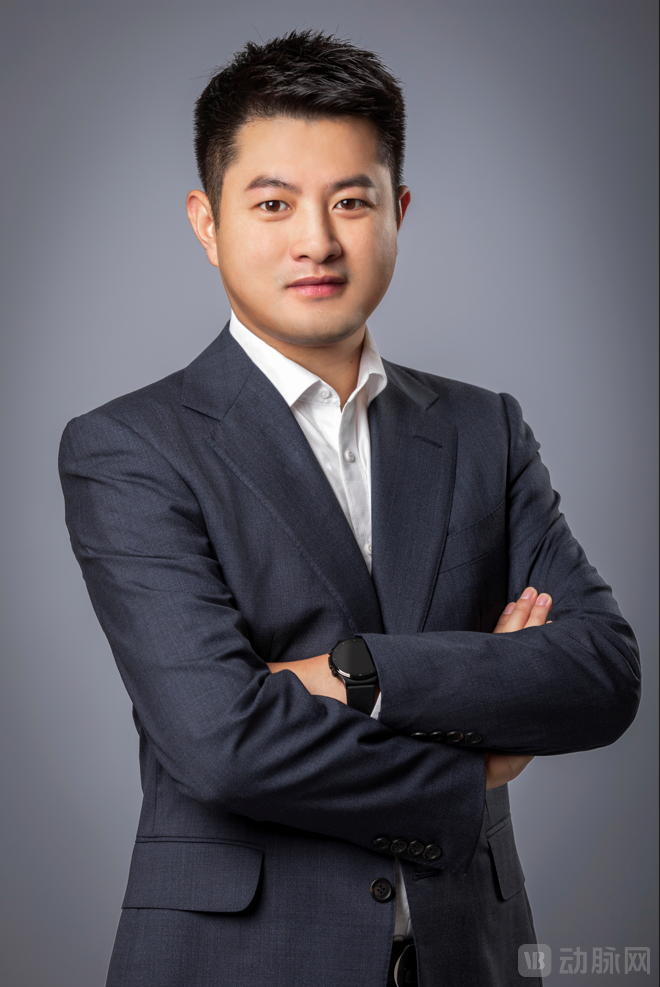
In 2018, Cheng Min witnessed a robot-assisted surgery firsthand for the first time at the World Medical Robot Conference in Germany and heard many doctors and practitioners present share insights on the practical value of surgical robots in clinical applications and their future development prospects.
“At the patient level, surgical robots enable minimally invasive, precise procedures with rapid recovery while ensuring optimal surgical outcomes. At the physician level, they accelerate professional development and reduce unnecessary radiation exposure, thereby extending career longevity. From the perspective of the healthcare industry, surgical robots can help alleviate China’s shortages of medical resources and uneven distribution of doctors and patients by improving primary care capabilities and promoting tiered diagnosis and treatment.“This experience changed his career plan.
In 2019, Tuodao Medical was officially established in Nanjing, coinciding with the explosive growth phase of the global surgical robot market. Overseas medical device giants actively entered the surgical robotics sector, with several major acquisitions taking place in this emerging field. Johnson & Johnson acquired Auris Health; Stryker purchased its sister companies, Mobius Imaging and Cardan Robotics, for $500 million; and Smith & Nephew acquired the robotics company Blue Belt Technologies. The early moves by these overseas industry leaders helped accumulate more clinical evidence for the surgical robot market, while the strong global sales of the da Vinci and Mako surgical robots demonstrated the commercial potential of this technology.
At that time, several domestic surgical robotics companies were beginning to emerge, but they were generally small in scale and still in the early stages of development. Driven by a sense of social responsibility to address China’s vast patient population and the increasingly pronounced imbalance in the distribution of medical resources, Cheng Min entered this emerging market of surgical robotics. He recognized that a significant blue ocean awaited exploration, yet he was also acutely aware that this path would inevitably entail substantial investment and high risks.
Leading a startup surgical robotics company, Cheng Min believes that it is essential to first clarify one’s positioning and strategic layout. Developing products based on clinical needs is key, but a broader long-term perspective is also required.Working backward from commercialization to develop products that meet clinical needs and have viable commercial pathways。
Cheng Min stated, “The surgical robotics field is divided into numerous niche segments based on the specific clinical departments where they are applied. When surgical robots reach the commercialization stage, companies incur substantial consumption of systemic resources, particularly in market-facing investments. If a company focuses on a single product category or a single track, it becomes difficult to amortize the high market and operational costs. Therefore, it is essential to continuously launch multiple products to the market based on a surgical robotics platform, thereby spreading the costs and ultimately enabling the company to achieve its profitability goals.”
Tuodao Medical has strategically positioned itself in five key sectors: orthopedic surgical robots, laparoscopic surgical robots, natural orifice transluminal endoscopic surgical robots, percutaneous puncture surgical robots, and medical imaging equipment.. This is a decision fraught with both risks and opportunities.
Startups have limited human resources, and the investment in each individual product pipeline is also constrained. However, the five strategic sectors laid out by Tuodao Medical are interrelated, meaning the company does not simply incur five times the labor costs. Underlying technologies are reusable, and R&D and market experience can be leveraged across sectors. Furthermore, by providing products for different clinical departments and more comprehensive solutions, the company can strengthen its stickiness with hospitals, build brand equity, and continuously leverage its existing sales network.
Cheng Min is fully aware of the importance of core technologies and independent R&D, and has therefore made substantial investments in research and development.Among Tuodao Medical's nearly 400 employees, R&D personnel account for over 50%., over 50% of the R&D team hold master’s or doctoral degrees, with extensive experience in artificial intelligence, robotics, computer vision, and medical image processing.
The company has established a core technology platform, encompassing multiple technologies including robotic precision control, multimodal medical image fusion, optical spatial reconstruction and localization tracking, multi-axis robot configuration and control, and end-effector precision transmission structure and control.。
Building on its core technology platform, Tuodao Medical has rapidly expanded into five major sectors, currently covering 14 products across five product lines.
How to develop products that meet clinical needs based on core technologies? This is a question that Cheng Min and his team have been contemplating. In his view, the greatest barrier for surgical robots lies not in technology, but in developing products with practical utility by integrating clinical demands.
Initially, they also took some detours. “Our initial product direction was a fully automated bone cement injection robot, which could be described as a clinical need imagined off the cuff. Later, through communication with clinicians and in light of national registration and review policies, we eliminated certain features that appeared sophisticated but lacked actual clinical value, thereby establishing the final direction for our orthopedic surgical robot product.”
The key to the development of medical devices lies in effectively integrating medicine and engineering. Tuodao Medical has established in-depth collaborations with multiple renowned hospitals in China, identifying three major pain points in robot-assisted orthopedic surgery. The first isProlonged Preoperative Preparation Time, the robot's preparation time alone exceeded half an hour, and the intraoperative imaging equipment, the C-arm, also needed to be adjusted; secondly,Lack of a compatible C-arm, traditional C-arms are not designed for robotic use, leaving room for improvement in terms of size and ease of coordinated operation; thirdly,The operational precision and intelligence of surgical robots still need improvement, and imported products are priced relatively high.。
The integration of imaging equipment with surgical robots is the clinical choice. Therefore, Tuodao Medical has launched“Orthopedic Surgical Robot + C-arm” Solution, reshaping the robotic surgery workflow.Based on the hyper-converged design of "orthopedic surgical robot + C-arm," one-click registration takes only 72 seconds, reducing surgical time by approximately 30 minutes, while the integrated configuration significantly reduces space occupancy.
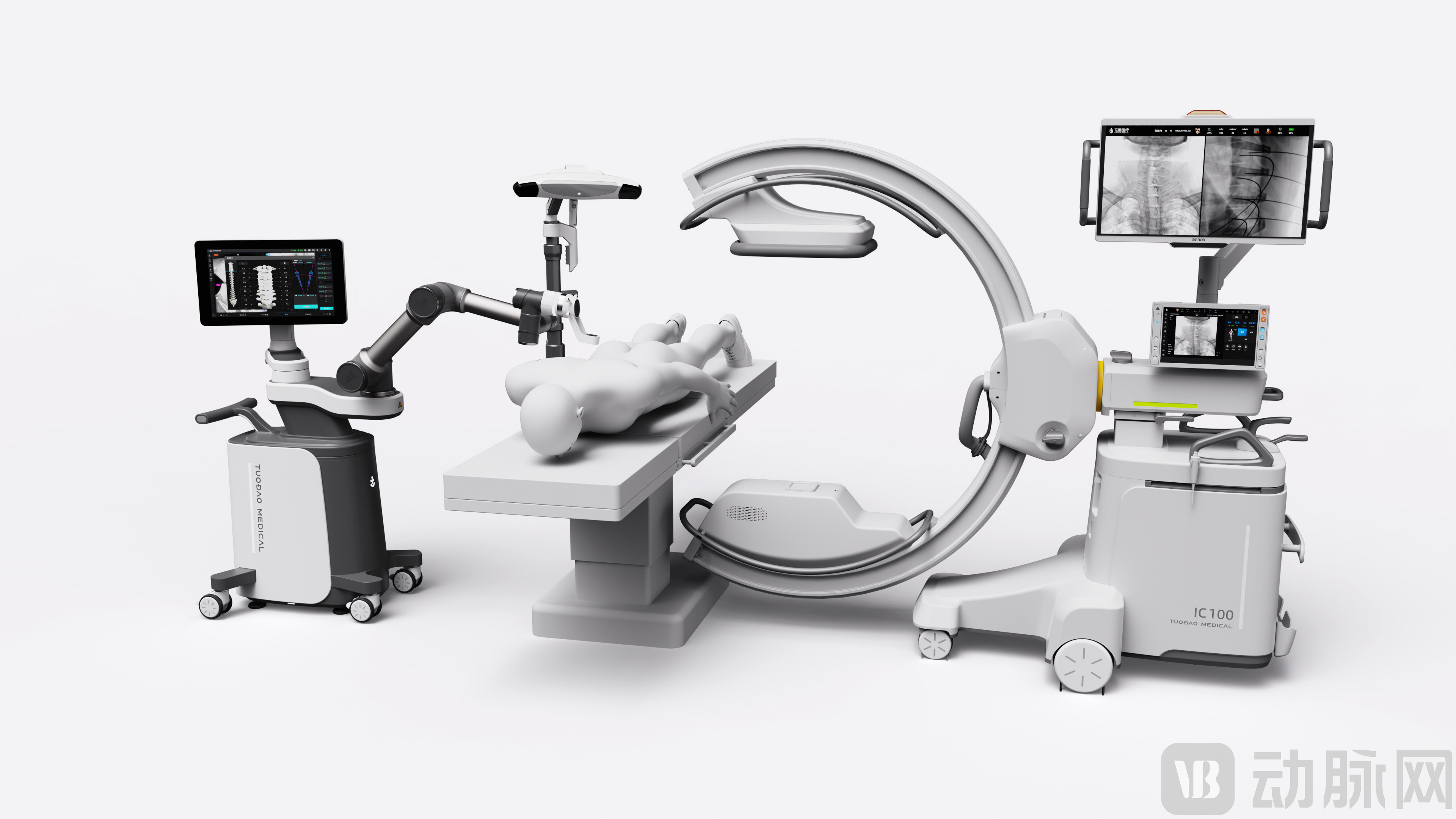
Tuodao Hand®Orthopedic surgical robots can assist surgeons in accurately establishing surgical trajectories during pedicle screw fixation procedures, as well as in various spinal decompression, fusion, and augmentation surgeries involving screw fixation. Based on medical images acquired from a C-arm system, surgeons can perform preoperative planning on the robotic arm console, determining bone parameters, screw trajectory, and entry points. Guided by the surgeon’s plan, the robotic arm precisely assists in executing the procedure, improving operational accuracy by nearly 20%. Real-time position monitoring and servo control via an optical tracking system further enhance surgical safety.
This robot has completed China’s first multicenter, randomized controlled clinical trial for a similar robotic product, using an established domestically marketed orthopedic robot brand as the control. The trial results show that Tuoshou®The screw placement excellence rate and surgical accuracy of orthopedic surgical robots are superior to those of comparable control products.Meanwhile, Tuodao Medical®The orthopedic surgical robot has won the Red Dot Design Award, becoming the world’s first spine navigation and positioning robot to receive this honor.
2022, Tuodao®Orthopedic surgical robots and the Daoying mobile C-arm X-ray machine have successively received approval, with Tuodao Medical officially promoting its comprehensive solution in clinical settings since the first quarter of this year.The company boasts a mature supply chain and production management system, with self-developed core components, offering distinct advantages in product quality control, delivery lead times, and pricing.Meanwhile, the company plans to establish its own sales network. On one hand, this will strengthen clinical education and market promotion, helping to build brand image; on the other hand, it lays the foundation for the future marketing of multiple products.
Beyond the orthopedic surgical robotics sector, Tuodao Medical is also experiencing rapid growth in other areas. According to Cheng Min,Tuodao Medical’s percutaneous puncture surgical robot is expected to receive regulatory approval in the third quarter of this year; its laparoscopic surgical robot is planned to commence clinical trials; and its natural orifice surgical robot is currently undergoing functional prototype development., as there are no mature products available for reference in this market, the cycles for technical validation and clinical verification will be longer.
China’s surgical robotics sector started relatively late. The markets for laparoscopic and orthopedic surgical robots are among the most mature segments, yet they remain dominated by imported products. According to Frost & Sullivan, the market size of surgical robots in China was approximately USD 760 million in 2021.
In recent years, the national government has vigorously promoted the development of surgical robots, encouraging innovation in domestically produced surgical robots. Many provinces and cities have issued fee standards for surgical robot procedures, further driving the development of high-performance, cost-effective surgical robot products.
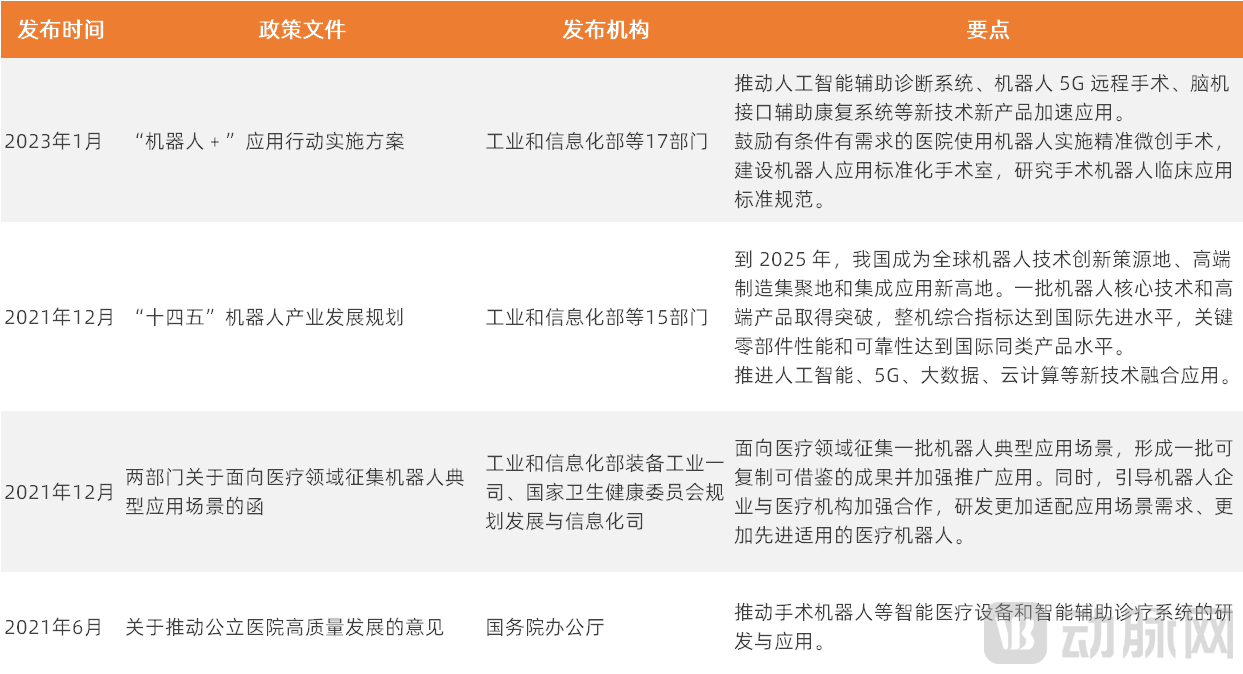 Policies on Surgical Robots
In 2022, surgical robots entered a peak period of regulatory approvals and certifications, with domestically produced surgical robots collectively reaching the market, having overcome R&D barriers and now facing the challenges of commercialization. In the relatively competitive field of laparoscopic surgical robots, the da Vinci system still holds a monopolistic position. According to Intuitive Surgical’s Q1 2023 financial report, the total installed base of da Vinci surgical systems had reached 7,779 units by the end of March 2023. The da Vinci surgical robot has established comprehensive patent barriers and follows a mature commercial pathway, and it has begun to penetrate into primary healthcare institutions in China.
However, Cheng Min still identified opportunities for development. “For large, high-end therapeutic devices, national policy favors domestic substitution. In addition to matching the Da Vinci Surgical System in performance and quality, domestic brands must leverage their price advantage and capitalize on localization benefits to develop products better suited to the Chinese physique and clinical environment.”
Tuodao Medical’s laparoscopic surgical robot features fully independent intellectual property rights, with all core components and algorithms developed in-house. It pioneers the industry’s first one-click positioning technology, enhancing surgical operational efficiency and enabling autonomous planning of surgical pathways. Furthermore, the system is equipped with multiple intraoperative safety alerts and protective measures, significantly improving clinical application safety.
Regarding the trend of intensifying competition within the sector, Cheng Min does not view this as a negative development; on the contrary, such intense competition presents an opportunity for natural selection and market consolidation. In terms of surgical robot technology, areas such as haptic feedback and multi-instrument coordination still require refinement. In clinical applications, surgical robots are evolving toward greater intelligence, full automation, and comprehensive coverage of the entire procedural workflow. From a commercialization perspective, imported surgical robots face challenges including high sales costs and rising expenses for consumables, which have, to some extent, hindered their market promotion and sales.
Addressing the current situation where top-tier (Grade 3A) hospitals find limited utility for surgical robots while grassroots institutions cannot afford them, Cheng Min stated, “Surgical robots are an emerging, niche product. It is difficult to make bold, sweeping moves at the outset, and achieving widespread, large-scale adoption during the initial promotion phase is challenging. This prevents companies from amortizing their early-stage investment costs, resulting in relatively high market pricing. However, as time progresses, with market expansion, government support, and the development of domestically produced alternatives, prices will gradually decline.”
Tuodao Medical provides surgical robots that are “widely applicable, physician-preferred, and affordable” in clinical practice, along with core components compatible with these systems and high-quality, continuous after-sales service. By expanding the market boundaries for surgical robots and driving volume growth through broader market adoption, the company aims to achieve comprehensive profitability.
Regarding Tuodao Medical’s strategic layout, Cheng Min emphasized the need to first establish a firm foothold in the Chinese market. The company aims to continuously refine its products to maturity through domestic clinical feedback and build a strong brand presence in China, where it holds competitive advantages, before expanding into overseas markets.Currently evaluating Europe and the Middle East.“Going global is a major trend, but entering overseas markets without preparation is a low-probability gamble.”
Over the past five years, Tuodao Medical has experienced rapid growth, steadily advancing toward its goal of becoming a leader in China’s surgical robotics industry. Meanwhile, Cheng Min has evolved from an R&D-focused engineer into a seasoned veteran in surgical robotics and a skilled corporate executive. In terms of product philosophy, he increasingly emphasizes practical value and precise market positioning; in corporate operations and team management, he has accumulated extensive experience, leading a high-performing team of nearly 400 employees.
“From an observer to a participant in the surgical robotics market, he has gained new insights into this sector. ‘Surgical robotics involves the high-level integration of various core technologies and systems. Its commercialization is influenced by multiple stakeholders, including regulatory agencies, hospital procurement decision-makers, clinicians’ evaluations, and patient acceptance. Meanwhile, healthcare is a heavily regulated industry where policy dictates the rise and fall of niche markets. Companies must closely monitor policy adjustments and align their strategies with these developments.’”
At the Top 100 Conference, Cheng Min, drawing on years of accumulated experience, also proposed corresponding solutions. “First, enterprises mustIn-Depth Clinical Practice, to create truly practical products; secondly, it is necessary to haveHolistic Thinking, given the numerous stakeholders involved in medical products, it is essential to strike a proper balance among their interests. Furthermore, corporate development requiresStrategic Resolve, and be prepared for long-term hard work and investment. Finally, the company needs to build a comprehensive service system encompassing the entire chain from supply chain and quality control to production and social services.”
Looking ahead, Tuodao Medical will continue to deepen its expertise in existing sectors, achieving true integration into clinical applications. Simultaneously, the company will identify new strategic directions and launch differentiated products. In the healthcare industry, particularly within the high-barrier surgical robotics sector, five years represents merely a short development cycle. Tuodao Medical possesses the confidence and capability to dedicate another 5 to 10 years to developing superior surgical robotic systems, while also promoting the broader adoption of surgical robotics technology to benefit a larger patient population.