

Cleveland Clinic's Century of Innovation: From the First Coronary Angiography to Pioneering Robotic Surgery
In 1917, World War I officially entered its third phase, and the United States formally joined the war against Germany. Under the organization of Dr. George Crile, a group of doctors and nurses from Cleveland established the first American medical unit to land in France, known as the Lake Unit.
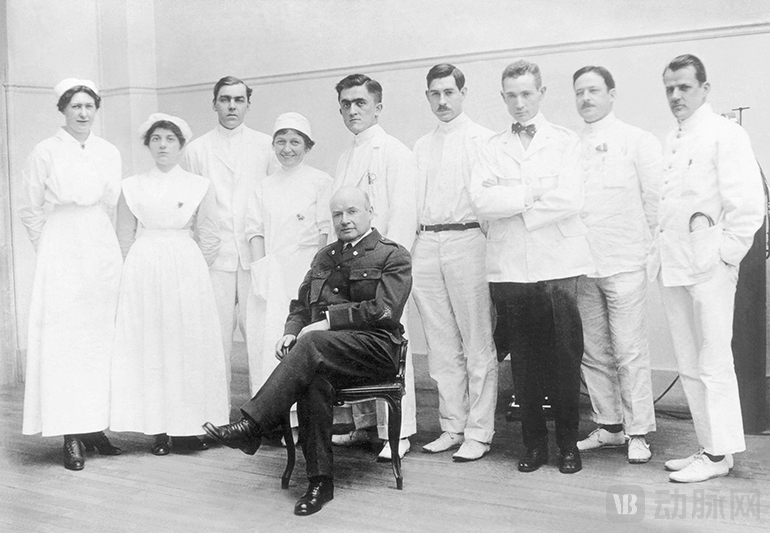 Lakeside Troops (Image source: Cleveland Clinic official website)
At the Lakeside Unit, Dr. George Crile, Dr. Frank Bunts, and Dr. William Lower met and bonded over shared medical interests, becoming close friends during their service. In 1919, after the war ended, they returned to Cleveland and joined their former colleague, Dr. John Phillips, to establish the Cleveland Clinic.
The four founders originally intended only to establish a clinic defined as “a nonprofit group practice dedicated to patient care.” Little did they know that, a century later, this small clinic would evolve into a world-renowned, elite research hospital. Over the course of its more than 100-year history, Cleveland Clinic has given rise to one groundbreaking medical innovation after another. In retrospect, these innovations have rewritten the history of medicine.
I. The World’s First Coronary Angiography in 1958
In 1958, Dr. F. Mason Sones, a pediatric cardiologist at the Cleveland Clinic, invented coronary angiography, an innovation that originated from a “medical accident.”
At that time, due to limitations in medical technology, the coronary arteries were considered a no-go zone for surgery, as real-time visualization of blood vessels was unattainable, making surgical procedures extremely difficult. During one examination, Dr. Sones accidentally injected contrast medium into a patient’s artery. This medical incident drew the hospital’s attention. Dr. Sones immediately examined the patient and found that, far from showing signs of life-threatening distress, the patient’s coronary vasculature appeared with unprecedented clarity under X-ray imaging.
In the wake of this accident, Dr. Sones refined and invented coronary angiography, thereby removing the coronary arteries from the realm of surgical contraindications. Consequently, the Cleveland Clinic pioneered procedures such as coronary artery bypass grafting, emerging as a leader in cardiac care at the time.
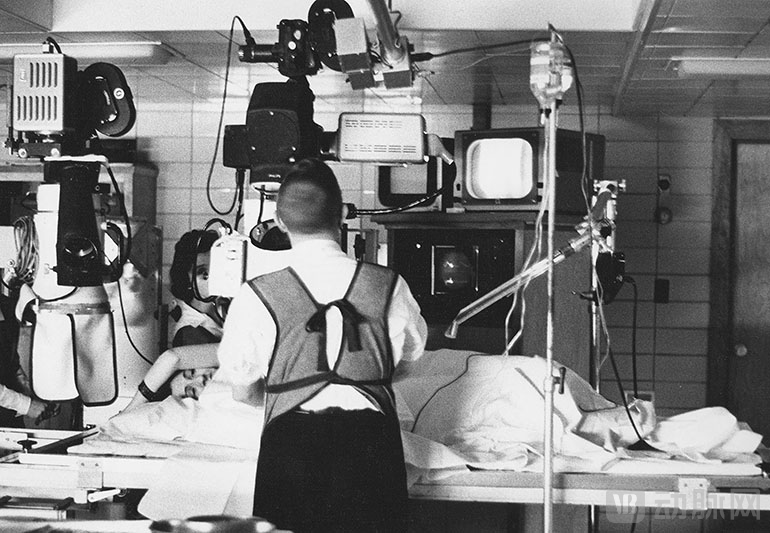 Dr. Sones studies coronary angiography (Image source: Cleveland Clinic official website)
II. Development and Refinement of Coronary Artery Bypass Grafting in 1967
Ten years after Dr. Sones invented coronary angiography, Dr. René Favaloro pioneered coronary artery bypass grafting surgery at the Cleveland Clinic in 1967.
In fact, in 1962, Dr. Sabiston performed the world’s first saphenous vein coronary artery bypass grafting; however, the patient died three days postoperatively due to acute thrombosis at the proximal anastomosis. It was not until 1967 that Dr. Favaloro successfully completed the first coronary artery bypass graft surgery by using the patient’s own great saphenous vein from the thigh to replace the stenotic segment of the right coronary artery, thereby increasing blood flow to the heart. In doing so, he also established key technical details such as median sternotomy and end-to-side vascular anastomosis.
In 1968, Dr. Fanaloro performed the world’s first reported coronary artery bypass grafting (CABG) surgery, bringing new prominence to Cleveland Clinic’s pioneering cardiac surgery program. By 1970, in less than three years, Dr. Fanaloro had successfully completed approximately 1,000 CABG procedures and was recognized by the medical community as the “Father of Coronary Artery Bypass Grafting.”
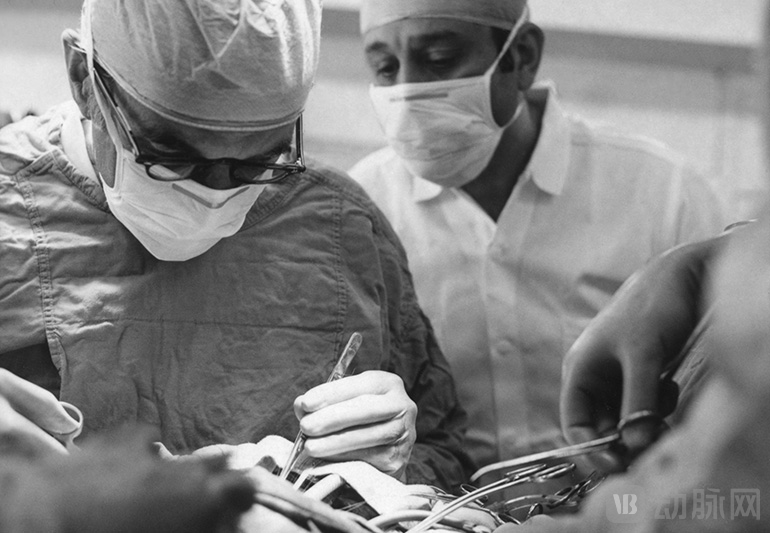 Dr. Fanaloro performs coronary artery bypass grafting (Image source: Cleveland Clinic official website)
III. The First Minimally Invasive Aortic Heart Valve Surgery in 1996
In 1991, Dr. Delos Cosgrove pioneered the development of valvuloplasty for heart valve repair at the Cleveland Clinic. This technique represented a significant advancement over its predecessors, with improvements in both surgical efficiency and postoperative complications, and it remains in use to this day.
Until 1996, also at the Cleveland Clinic, Toby Cosgrove, M.D., pioneered another innovation by performing the first minimally invasive heart valve surgery. This milestone has since become the most significant direction in the development of heart valve therapy.
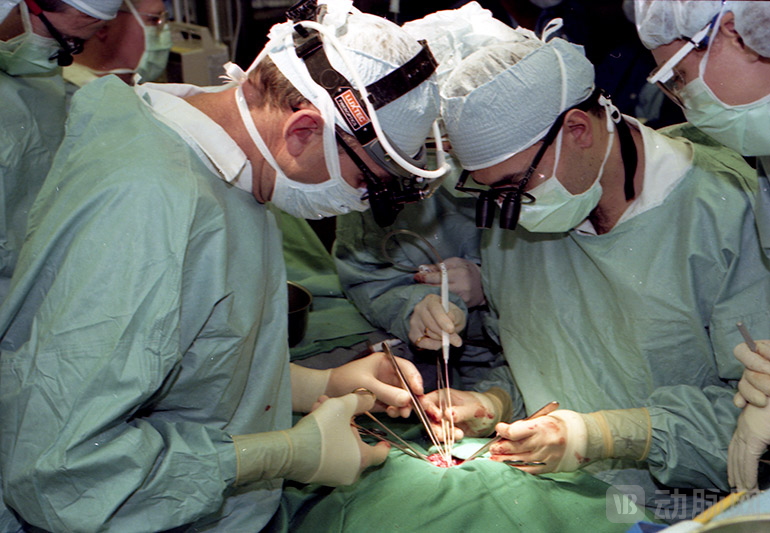 Minimally Invasive Heart Valve Surgery (Image source: Cleveland Clinic website)
IV. The First Successful Laryngeal Transplantation in 1998
The larynx is a multi-tissue organ comprising cartilage, muscle, mucosa, and the thyroid gland. As an organ exposed to environmental contaminants, it serves as a conduit for respiration and sputum passage. The bacterial profiles of laryngeal donors and recipients differ significantly. Post-transplantation, persistent infections may occur due to immunosuppressive therapy, and there is currently no established clinical experience in preventing graft rejection.
Meanwhile, laryngeal transplantation encompasses all the techniques within head and neck surgery, including microsurgical techniques, vascular surgical techniques, and laryngeal reconstruction techniques, making it a highly challenging procedure. To this end, Dr. Marshall Strome studied and extensively practiced microsurgical techniques. Finally, in 1998, Dr. Strome performed the world’s first successful laryngeal transplantation at the Cleveland Clinic.
As of 2023, there have been only four successfully reported cases of laryngeal transplantation with detailed documentation worldwide.
V. 2004: Statins were first found to effectively reduce coronary artery plaque
In 2004, the Cleveland Clinic first demonstrated that intensive cholesterol lowering with statins could reverse atherosclerosis—arterial hardening—in coronary arteries. These advances raised the standards for lipid-lowering therapy and reshaped how such therapies are evaluated.
The Cleveland Clinic classifies plaques into six distinct types based on their radiodensity and composition as observed in CTA scans. In order of increasing density, these are: low-density plaque, fibrofatty plaque, fibrous plaque, low-density calcified plaque, high-density calcified plaque, and highest-density calcified plaque.
CTA observations revealed that, compared with patients not receiving statin therapy, those treated with statins
This was associated with a reduction in the volume of low-density plaques and fibro-fatty plaques, as well as an increase in plaque calcification within high-density and highest-density calcified plaques.
These results indicate that statin use is associated with an increased degree of calcification in coronary atherosclerotic plaques, which helps reduce the risk of atherosclerosis.
VI. The First Near-Total Face Transplant in the United States in 2008
In 2008, a car accident left a middle-aged man with severe facial injuries and triggered a series of complications.
Dr. Maria Siemionow performed the world’s first face transplant on him at the Cleveland Clinic. The procedure involved transplanting more than 90% of the facial tissues, including approximately two-thirds of the scalp, the forehead, the upper and lower eyelids, the orbital sockets, the nose, the upper cheeks, the maxilla, the upper teeth, the facial nerves, the salivary glands, the facial muscles, and the skin.
Postoperatively, the patient recovered well, with no impairment of respiratory or swallowing function despite the tracheal resection, and retained limited vision. Although lifelong immunosuppressive therapy is required, the patient’s ability to eat, speak, smile, and even perceive odors remained unaffected.
This surgery is also considered the largest and most complex facial transplant in the world. In 2022, Dr. Maria Siemionow successfully performed the second facial transplant procedure globally.
VII. 2011: The relationship between the gut microbiome and cardiovascular disease was discovered for the first time
Dr. Stanley Hazen has made multiple groundbreaking discoveries in the fields of atherosclerosis and inflammatory diseases.
It was not until 2011 that he discovered the association between gut microbiome pathways and the pathogenesis of cardiovascular disease (CVD), as well as heart failure and chronic kidney disease. Gut dysbiosis leads to disturbances in microbial community structure, disrupts host basal metabolic processes, and thereby induces the onset and progression of cardiovascular diseases such as coronary heart disease, hypertension, and heart failure.
These scientific achievements led to Dr. Hazen being named a Distinguished Scientist by the American Heart Association in 2017.
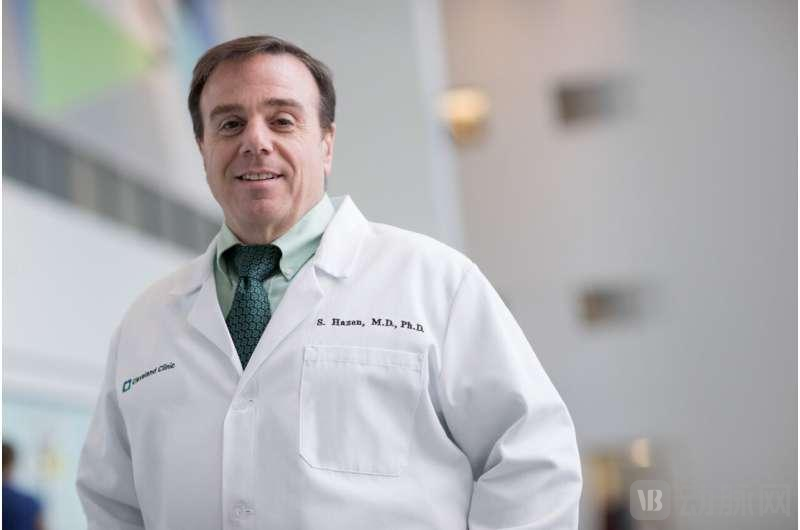 Dr. Stanley Hazen (Image source: Cleveland Clinic official website)
VIII. The World’s First Surgery in 2017 to Restore Post-Stroke Function via Deep Brain Stimulation
“Cerebral stroke” (also known as “stroke”) is an acute cerebrovascular disease. It refers to a group of conditions that cause brain tissue damage due to the sudden rupture of cerebral blood vessels or blockage of blood flow to the brain.
Although the pathogenesis of stroke was identified long ago, and treatments such as pharmacotherapy, carotid endarterectomy, or extracranial-intracranial arterial anastomosis have been employed, there are still no better options for prognosis other than patients undergoing rehabilitation training on their own.
In 2017, Dr. Andre Machado, Director of the Neurological Institute at Cleveland Clinic, performed the world’s first deep brain stimulation (DBS) procedure for stroke recovery at Cleveland Clinic. Postoperative assessments conducted by the clinic confirmed that the procedure improved motor function in stroke patients, thereby initiating research into DBS implantation.
Researchers are currently attempting to treat neurological disorders such as Parkinson's disease and dystonia through deep brain stimulation (DBS) surgery.
IX. The First Living-Donor Uterus Transplantation in North America in 2019 (Deceased Donor)
In February 2016, the Cleveland Clinic in the United States conducted a clinical trial on uterus transplantation. However, two weeks after the transplant, life-threatening hemorrhage occurred due to infection, necessitating the removal of the transplanted organ, and the trial ultimately ended in failure. It was not until 2019 that the trial was resumed.
Although organ transplantation has evolved over several decades and reached maturity, uterine transplantation remains fraught with challenges.
On one hand, uterine transplantation is essentially an allogeneic organ transplant, thus facing the persistent immune rejection associated with allografts. Therefore, in previous cases of uterine transplantation, the uterus was removed again after patients successfully gave birth to one or two children to avoid the impact of immune rejection.
On the other hand, the completion of a transplant surgery does not guarantee successful conception comparable to that of individuals with normal reproductive function. Since the recipient’s ovaries and uterus are not anatomically connected (although the recipient retains normal ovarian function), in vitro fertilization followed by embryo transfer remains necessary. This also implies that the prohibitive cost of the procedure places it beyond the financial reach of many patients.
Moreover, the limitation on the survival time of the donor uterus remains an unknown challenge.
In 2019, a uterine transplant performed at the Cleveland Clinic was successful, and the recipient subsequently gave birth to a healthy infant. This marked the world’s first live birth resulting from a uterus transplanted from a deceased donor. It confirmed the feasibility of allogeneic uterine transplantation, representing a significant milestone in the history of medical advancement.
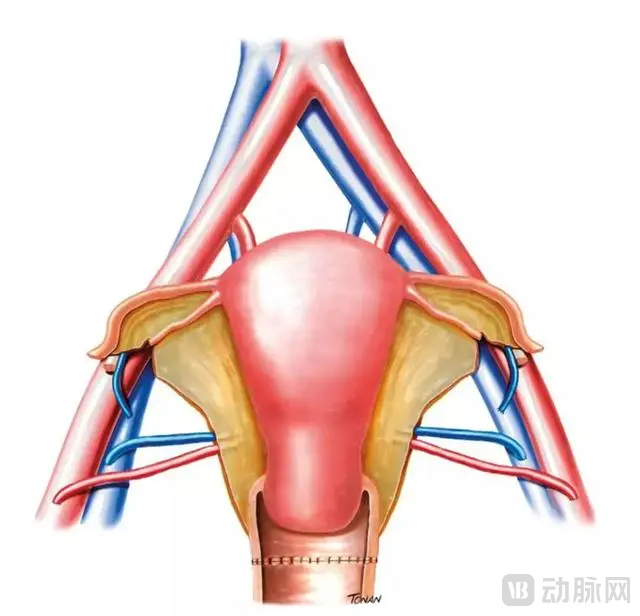
Uterine Transplantation Schematic (Source: The Lancet)
X. Pioneer of Robotic Kidney Transplantation in 2019
As an early adopter and innovator in robotic surgery, Cleveland Clinic was the first hospital to successfully perform radical prostatectomy, transvesical simple prostatectomy, and partial nephrectomy using a single-port robotic surgical system.
In 2019, Dr. Jihad Kaouk of Cleveland Clinic performed a kidney transplant on a female patient with renal disease using Intuitive Surgical’s single-port robotic system, marking the world’s first kidney transplant procedure completed via a single-port robot.
Studies have shown that open surgical wounds are significantly associated with the incidence of complications, particularly in patients who are immunosuppressed or obese; the larger the open surgical wound, the higher the risk.
Robotic surgery not only results in smaller incisions but also offers higher surgical efficiency. According to Cleveland Clinic, a single-port robotic kidney transplantation procedure took a total of four hours, with the patient discharged just two days postoperatively. This not only marks the advent of a novel technique for kidney transplantation but also validates the potential of the single-port robotic approach to further reduce complications.
Epilogue
Innovation has always been a guiding principle at Cleveland Clinic. Since 2006, the clinic has hosted an annual Medical Innovation Summit, where it unveils its Top 10 Medical Innovations of the Year—an event that has become a major gathering for medical researchers worldwide.
Currently, scientific research innovation and the translation of achievements in the medical field are progressing vigorously around the world. In this context, hospitals, as the primary drivers of innovation in healthcare, have naturally become the focal point of the industry. Therefore, there is a growing need for more high-level research-oriented hospitals akin to the Cleveland Clinic—those that identify clinical pain points and translate scientific breakthroughs back into clinical practice.
In 2023, China surpassed the United States for the first time to rank first in the list of natural science journals. This signifies an explosive growth in Chinese scientific research output, accompanied by a significant improvement in quality. With the growing emphasis on original innovation, it is believed that in the near future, our innovations will also make a profound and lasting impact on the history of medicine.