

Wyss Institute at Harvard: Powering Global Innovation Through Interdisciplinary Research and Startup Incubation
Recently, organ-on-a-chip company Emulate completed an $82 million Series E financing round. Leveraging next-generation in vitro model technologies, this Boston-based biotechnology firm has raised more than $225 million within just a few years. Behind its remarkable achievements lies an invaluable contribution from a world-renowned biomedical research institute—the Wyss Institute at Harvard University, which is the focus of our discussion today.
The establishment of the Wyss Institute traces back to a substantial donation received by Harvard University. In 2009, Harvard received the largest individual donation in its history at that time—$125 million. The donor was Hansjörg Wyss, a Swedish philanthropic entrepreneur and alumnus of Harvard Business School. The purpose of this donation was to establish an interdisciplinary research institution. Consequently, the core laboratories of 14 Harvard University professors were merged to form the initial Wyss Institute under the leadership of Professor Donald E. Ingber.
Since its inception, the Wyss Institute has secured over 1,093 issued patents, entered into 115 licensing agreements, and spawned dozens of startup companies. Through innovations in life sciences, materials science, engineering, and other fields, it has exerted a profound impact on the world.
In 2010, the Wyss Institute expanded its operational space to 60,000 square feet. In addition to its location in Boston’s Longwood Medical Area, the Institute established a new site at Harvard University’s main campus in Cambridge. The expanded laboratory also reorganized research resources. Beyond leveraging its own resources and talent, it formed collaborative alliances with neighboring universities and hospitals. These partners included Harvard University and its affiliated hospitals—Beth Israel Deaconess Medical Center, Brigham and Women’s Hospital, Boston Children’s Hospital, Dana-Farber Cancer Institute, Massachusetts General Hospital, and Spaulding Rehabilitation Hospital—as well as Boston University, the Massachusetts Institute of Technology (MIT), Tufts University, and the University of Massachusetts Medical School. Later, the University of Zurich and Charité – Universitätsmedizin Berlin joined the alliance.
In 2013, Swiss philanthropist and entrepreneur Hansjörg Wyss increased his donation to $250 million. By that time, the institute had expanded to a facility spanning 100,000 square feet. To date, the Wyss Institute employs more than 350 full-time staff members from Harvard University and its affiliated institutions, including 11 core faculty professors and 15 associate professors, as well as nearly 40 scientists and engineers recruited from industry.
A Dream Team of Top Scholars
The Wyss Institute brings together some of the world’s most cutting-edge and influential scientists from diverse fields, including Professor Donald E. Ingber, a member of the U.S. National Academy of Engineering; George Church, the “father of genetics”; George Whitesides, recipient of the Kavli Prize in Nanoscience; and James J. Collins, a member of four national academies.
Donald E. Ingber is the Founding Director of the Wyss Institute, the Judah Folkman Professor of Vascular Biology at Harvard Medical School, and Professor of Bioengineering at the Harvard John A. Paulson School of Engineering and Applied Sciences. He has made significant contributions to mechanobiology, tissue engineering, tumor angiogenesis, systems biology, and nanobiotechnology.
Professor Donald E. Ingber’s research spans from novel anticancer drugs and drug-screening assays to technologies such as medical devices, microfabrication techniques, and computer software. He has founded five companies and was elected a member of the U.S. National Academy of Engineering for his interdisciplinary contributions to mechanobiology and microsystems engineering, as well as for his leadership in bioinspired innovation.
Under the leadership of Professor Donald E. Ingber, the Wyss Institute has conducted extensive interdisciplinary research and innovation, with its R&D efforts organized into six enabling technology platforms and two cross-platform initiatives. These eight key R&D areas cover a broad spectrum of fields, namely: Bioinspired Therapeutics & Diagnostics, Computational Design & Discovery, Diagnostics Accelerator, Immuno-Materials, Living Cellular Devices, Molecular Robotics, 3D Organ Engineering, and Synthetic Biology.
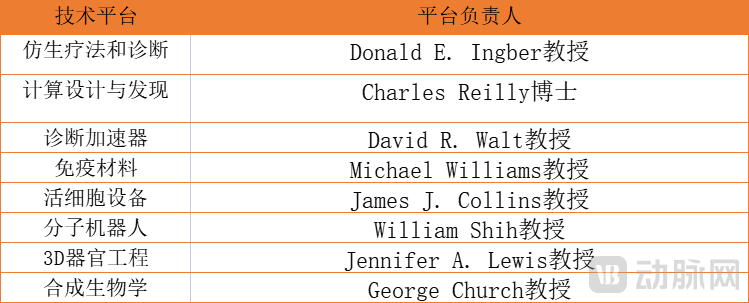
(Data from the Wyss Institute website)
The heads of these eight technology platforms play pivotal roles in their respective fields. Below are brief introductions to the other seven leaders:
Dr. Charles Reilly is the Chief Scientist and Head of the Computational Design and Discovery Program, integrating tools from the visual effects industry with scientific modeling to elucidate multiscale molecular biophysics and therapeutic design, thereby supporting research across the entire institute.
Professor David R. Walt, a core member of the Wyss Institute, is the founder and director of the Wyss Diagnostic Accelerator (Wyss DxA). He is dedicated to rapidly developing diagnostic technologies to address high-value clinical challenges through deep collaboration among bioengineers, clinicians, and industry stakeholders.
Professor Michael Williams, Director of Immunomaterials at the Wyss Institute and Adjunct Professor in the Joint Department of Biomedical Engineering at UNC–NCSU. His research has remained at the forefront of the immunomaterials field, actively exploring and discovering novel translational therapeutic solutions.
Professor James J. Collins, Professor of Medical Engineering and Science at the Massachusetts Institute of Technology (MIT) and a core founding member of the Wyss Institute, has played a pivotal role in the institute’s development. A pioneer in the field of synthetic biology, Professor Collins currently focuses on leading his team to harness synthetic biology for creating next-generation diagnostics and therapeutics.
Professor William Shih is a Professor in the Department of Biological Chemistry and Molecular Pharmacology at Harvard Medical School, and also serves as a Professor in the Department of Cancer Biology at the Dana-Farber Cancer Institute. He holds an appointment in the Programmable Biomaterials Laboratory at the Wyss Institute, where he leads research on molecular robots.
Professor Jennifer A. Lewis, the Wyss Professor of Biologically Inspired Engineering. In recognition of her pioneering contributions to the programmable assembly of biomaterials, Professor Lewis leads research in the field of 3D organ engineering at the Wyss Institute and is actively involved in most of the institute’s other key initiatives.
Professor George Church, Professor of Genetics at Harvard Medical School, and Professor of Health Sciences and Technology at Harvard University and the Massachusetts Institute of Technology (MIT). He leads synthetic biology efforts at the Wyss Institute to create new tools for applications in regenerative medicine and the biosynthesis of chemicals.
Excellence in Translational Research
Beyond breakthroughs in frontier research, the Wyss Institute has also achieved remarkable excellence in translation and innovation. By pioneering an innovative, collaborative model for technology transfer, it has facilitated cooperation that transcends institutional and disciplinary barriers.
The Wyss Institute’s multidisciplinary research has achieved world-leading status in fields such as synthetic biology, computer science, and inorganic chemistry. However, what truly merits emulation and reference is the Institute’s collaboration with industry—a distinctive hallmark of the Wyss Institute.
1. "Advanced Technology Team"
The institute began collaborating with enterprises and technology managers at an early stage, recruiting nearly 40 technical personnel, scientists, and engineers from the industry. These professionals, known as the “Advanced Technology Team” (ATT), have brought extensive product development and management expertise to the institute.
To establish a product development and operations pipeline, the research institute assembles researchers, students, and corporate professionals from the same field into working groups. They believe these teams can truly grasp the core issues, understand the product development pathway, and assess the competitive landscape.
“We are not just receiving funding from them,” Donald E. Ingber stated in a speech.
2. “Collaborative Laboratory”
Another distinguishing feature is that the Wyss Institute has proposed breaking down information “silos” in the research process by organizing its physical space around the concept of “collaborative laboratories.” Instead of providing faculty members with their own independent labs, the Institute assigns a “collaborative laboratory” to each project. In this way, when one scientist raises a medical technology challenge, the answer can readily be provided by another scientist within the same lab.
A researcher who once worked at the Wyss Institute revealed that individuals from seemingly unrelated research fields may sometimes come together to form a team for a specific project. This is perhaps the unique hallmark of interdisciplinary collaboration.
This combination means that the research achievements of the Wyss Institute will naturally move towards translation. In addition to the well-known Professor George Church, a large number of researchers at the Wyss Institute are at the forefront of the entrepreneurial wave. The following are some innovative companies translated from the Wyss Institute:
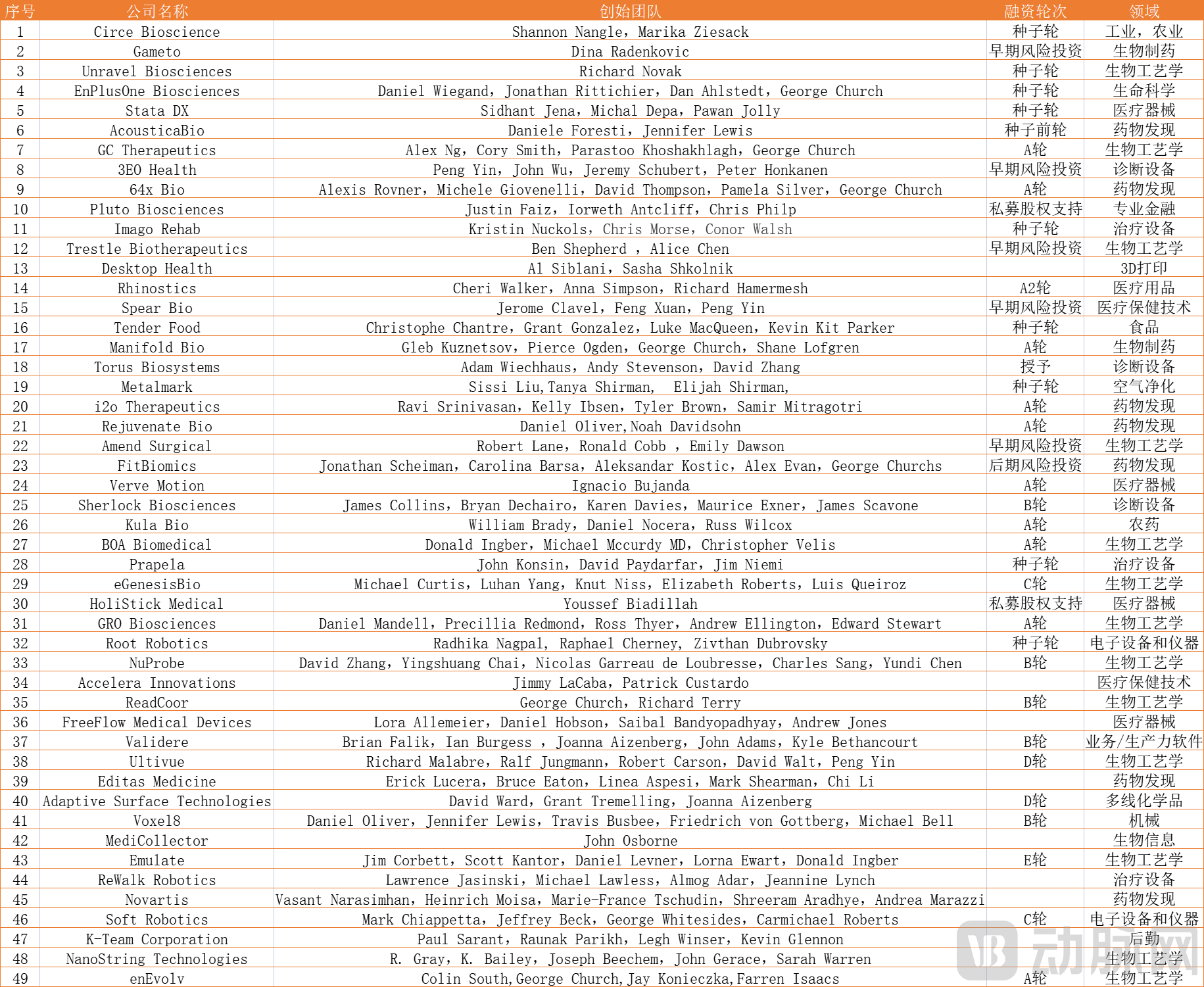
(Data sourced from the Artery Orange database)
Beyond its imaginative collaborations, the Wyss Institute has also made inroads into the art world. A few years ago, artist Lynn Hershman Leeson approached the Wyss Institute, seeking a partnership to create a piece for her upcoming exhibition, “Twisted.” The artwork features AquaPulse, a Wyss Institute system that employs microbes to remove plastic from water.
This idea later evolved into a validation project at the Wyss Institute, which employs genetically engineered microbes to degrade plastics, with the aim of tackling the more than 360 million metric tons of plastic waste generated globally each year.
Summary and Implications
What Can We Learn from the Wyss Institute?
First is the ideal strategy of “R&D + Market + Validation” that runs through the entire process.
Donald E. Ingber recognized that “breakthrough discoveries cannot change the world if they never leave the laboratory.” The entire translation process at the Wyss Institute spans from ideation and early-stage technology development to further de-risking, business development, intellectual property protection, and final commercialization. This workflow is referred to as the “Technology Innovation Funnel,” whereby only technologies that successfully pass technical validation are licensed to large corporations or startups.
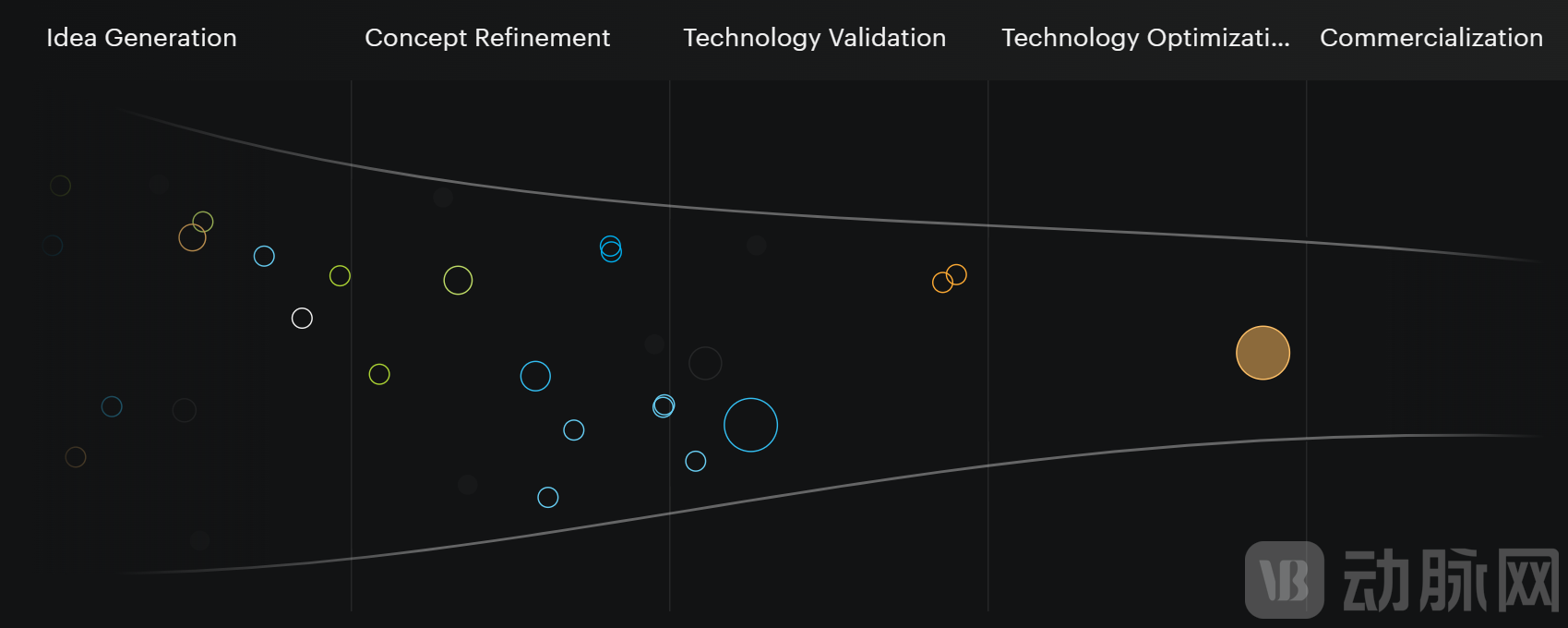
(Image from the Wyss Institute website)
Furthermore, all intellectual property generated by the Wyss Institute is owned and managed by Harvard University, with patents licensed to companies through the university. Leveraging Harvard’s mature technology transfer framework and the expertise of its Technology Development Office, the Wyss Institute gains a critical advantage in filing intellectual property, thereby better establishing its value.
Next is the high-profile, high-impact operational strategy. Harvard University is one of the world’s premier academic institutions, and the Wyss Institute’s founding members comprised a group of leading scholars from 14 disciplines at Harvard. This ambitious approach laid a solid foundation for the institute. As a non-profit research entity, its funding relies primarily on donations from social foundations; the combination of “top-tier faculty + sustained research output” translates into stable philanthropic support. This effectively resolved the critical issues of “talent” and “funding” from the outset.
Once again, emphasis is placed on the practice of interdisciplinary research in experimental projects. This is also the most distinctive hallmark of the Wyss Institute. The “collaborative laboratory” model is also novel within American academia. However, practical experience has shown that its introduction has indeed addressed communication challenges arising from interdisciplinary collaboration during the research and development of specific products or technologies, thereby enhancing R&D efficiency and success rates.
Finally, it is important to value recommendations from the industry. For the Wyss Institute, the industrial sector is not merely the downstream recipient of research commercialization; it is also regarded as an “idea bank” for academic research.
They value input and feedback from the industry. During the project initiation phase, they invite industry professionals to engage in discussions with laboratory researchers and students, involving them in the early-stage architectural design and the formation of initial technical concepts. Building on this foundation, they also discuss research development directions with investors.
Of course, this exchange of ideas is mutual. The institute also encourages researchers to engage with industry, allowing them to serve as CEOs in R&D projects, and urges them to proactively gain a comprehensive understanding of all aspects related to cost reduction and cancer treatment research.
This strategy ensures that laboratory research is market-driven, enabling projects to identify suitable market directions for translation and implementation from the very inception. With a reciprocal relationship between scientific research and industry, R&D risks are mitigated for both the team as a whole and individual members, whether in the context of research and development or commercialization.