

Exploring Patent Portfolio Strategy and Innovation Transformation in the Medical Field: Insights from Meng Xiangbin, General Manager of Yuli BioSci
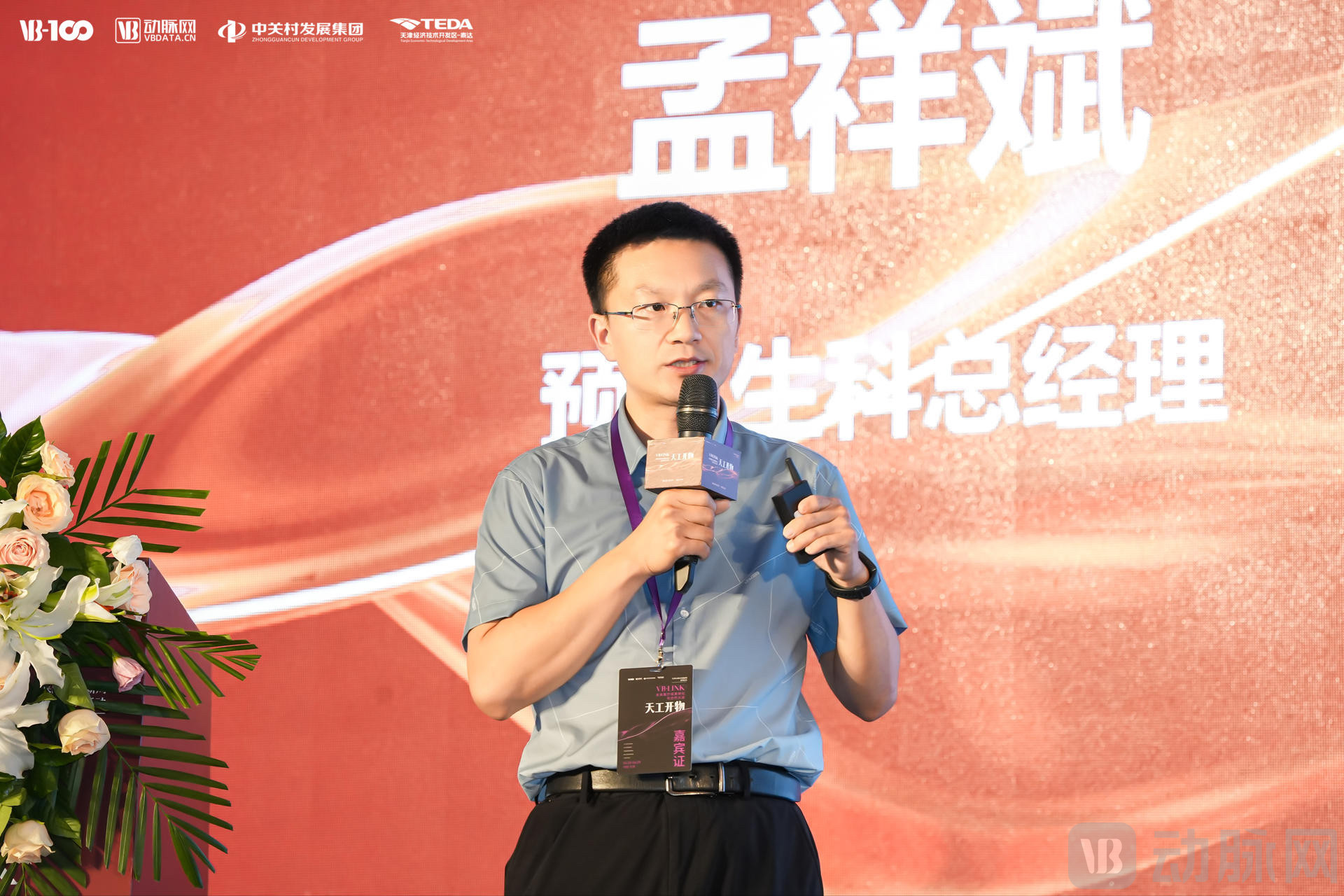
On June 29, 2023, at the VB-Link Future Healthcare Achievement Transformation and Cooperation Conference held at the InterContinental Hotel in Yujiapu, Binhai New Area, Tianjin, Meng Xiangbin, General Manager of Yulishengke (Pre-Life Sciences), delivered a keynote speech titled “Exploration of Patent Layout and Transformation Innovation in the Medical Field.”
Meng Xiangbin shared the critical role of medical patents in the translation of technological innovations. He highlighted the importance of patent layout in safeguarding innovative achievements and mitigating potential risks, proposing considerations across three levels: first, patent layout targeting innovative products and technologies; second, patent protection for ancillary outputs generated during the product translation process; and third, patent layout for new technologies where industry standards have not yet been established. Through multiple case studies, he demonstrated the practical application of patents in the translation of pharmaceutical innovations, including patent layouts for ultra-long-acting anesthetics, breast cancer medications, and negative-pressure puncture techniques. Furthermore, Meng Xiangbin proposed strategies to enhance hospital-based translation efforts, including developing demand-oriented solutions, establishing an industry-academia-research ecosystem, and implementing comprehensive patent layouts. He also emphasized the cultivation and management of patents, which involves selecting appropriate patent layout strategies, conducting early patent analysis, and determining patent layout directions based on the hospital’s strengths. Finally, Meng Xiangbin recommended adopting patent protection strategies, such as global patent protection and staged patent layouts, to improve the success rate of medical patent translation.
Transcript of the Speech
We are an agency specializing in the life sciences and pharmaceutical sector. You may wonder why an agency would focus on patent commercialization. When we started our business over a decade ago, we also aimed to facilitate commercialization. However, given that commercialization is inherently a long-term process, and considering that the policy landscape and commercialization environment were not as favorable as they are today, we chose to enter the market by offering patent application services. Nevertheless, throughout these years of providing patent services, we have never lost sight of our original mission to assist in commercialization, continuously exploring how patents can promote the translation of innovations into practical applications. Drawing on our extensive experience and years of industry observation, we will share case studies illustrating the innovative protective role that patents play in the process of achieving successful outcome commercialization.
Regarding patents, the primary objectives of patent portfolio strategy are to address two key issues: first, to comprehensively protect one’s own innovative achievements; and second, to systematically identify potential patent risks. In practical implementation, considerations are mainly approached from three levels. The first level involves the specific products developed by the innovation team or the novel technologies they have researched. The second level addresses higher-order challenges encountered during the commercialization process of these products, including process scale-up, production of ancillary devices, and quality control—all of which can serve as focal points for patent portfolio development. As introduced by Mr. Si, their company specializes in vaccine research. However, after developing a vaccine, they found that no existing technologies offered particularly suitable ancillary devices, necessitating the research and development of complementary medical devices. This illustrates that, in the course of professional collaboration, patent allocation and protection should extend beyond our core products to encompass upstream and downstream products and related technologies.
Yesterday, I spent the day attending presentations on innovative projects, many of which featured cutting-edge products and technologies. A key challenge facing these emerging technologies is the absence of established R&D standards; instead, such standards are being gradually explored and defined by enterprises during the process of industrialization. As industry leaders, companies can strategically position themselves to influence standard-setting during product commercialization. This professional approach enables them to better safeguard future innovation and technology transfer initiatives through patent protection, thereby establishing a strong competitive advantage in the long run.
There are several effective strategies for patent planning and layout. However, the core of these strategies lies in selecting different patent approaches based on the R&D progress of existing competitors or other innovation teams during the innovation research process. If our technology is relatively advanced in the industry, a robust protection strategy can be established through basic patents, protecting fundamental solutions with a limited number of patents. If we and our competitors each have their own advantages and there are multiple technological routes for industrialization, relying solely on a patent layout for a single technological route will likely fail to achieve optimal protection. If our team lags behind other competitors or innovation teams in certain technical aspects, but these technologies are essential, we should consider implementing peripheral patent layouts around the foundational patents held by other teams, thereby laying the groundwork for cross-licensing agreements.
Next, let us examine some of the issues that arose during their patent portfolio planning, through cases of technology commercialization at hospitals.
The first case involves the team led by Liu Jin at West China Hospital. In 2018, this team filed a patent application for an ultra-long-acting anesthetic, effectively leveraging patent strategies. They claimed priority rights as the one-year deadline approached and filed separate patent applications for different compounds. One of these compounds was not only granted patent protection in China but also entered the patent systems in the United States, Europe, and Japan. Through this straightforward patent layout, the project achieved successful technology transfer. As a pharmaceutical patent strategy, once key compounds are protected by patents, the core early-stage patent layout is essentially complete. For this project, as a core product, considerable future patent work remains to be determined by the pace of industrialization. This includes filing a series of patents covering drug crystal forms, formulations, and properties—constituting peripheral patent protections around the core product—to establish a robust patent network. Such an approach facilitates better industrialization of the product and can also serve to indirectly extend the exclusivity period of the patented product.
The second case involves Professor Ma Fei’s team at the Chinese Academy of Medical Sciences. This team has long been engaged in research on medications for breast cancer. Since 2014, we have assisted the team with patent portfolio strategy. The key innovations focus primarily on patient sensitivity to different medications and the side effects experienced by diverse populations after drug administration. It is extremely difficult to commercialize such achievements by focusing on a single innovation point of a single product. Because breast cancer is driven by multiple genes, using single-gene testing cannot effectively and comprehensively address clinical challenges, making industrialization highly difficult. This has led to the current situation where different testing companies analyze different gene loci, which neither adequately resolves clinical issues nor avoids low-level competition. Given these considerations, relying on a single patent makes it difficult to achieve robust patent protection for a product. Based on years of research, Professor Ma Fei has filed patents sequentially according to different drug profiles, with more than ten applications submitted to date. Furthermore, through big data analysis, a systematic medication guidance framework for breast cancer can be established. In the future, patients visiting hospitals will first undergo comprehensive testing, and predictive models will be used to determine the most suitable medication for each patient.
The third case involves Professor Zhao Chan’s team at Peking Union Medical College Hospital, focusing on a disposable negative-pressure anterior chamber paracentesis needle. The team filed a patent for this device in 2014 and has collaborated in recent years with Beijing Huashi Nuowei. During the productization process, Huashi Nuowei added an implant guide structure and an auxiliary guide needle to facilitate commercialization, resulting in the generation of new patents throughout this period. This demonstrates that additional patents often emerge during the later stages of industrialization, building upon earlier conceptual products.
The fourth case is a patent project from Xiangya Hospital of Central South University. At the time, both we and Shanghai Chuangrui considered this project highly promising, and subsequently established a project company to incubate it. Previously, skin incision was performed mechanically using scalpels and scissors, which posed numerous inconveniences, including risks of contamination and operational difficulties. To address these issues, the team adopted laser-based skin incision technology and developed supporting instruments. The project initially filed a patent in 2017. After two years of incubation, the product has taken its preliminary form. Five additional patents have been filed successively, covering both consumables and instrumentation.
The final case involving this medical device is quite typical. The products in the preceding cases were relatively innovative, as they represented offerings that had not been previously developed by others. The last case is somewhat different; it involves a device related to circumcision, which has undergone three generations of technological innovation. The first generation relied on manual suturing, the second generation utilized a circumcision stapler, and the third generation integrated circumcision and suturing into a single process. In the second-generation product, Shang Jianzhong’s team developed a new circumcision suturing device to address issues arising from traditional suturing methods in conventional surgeries, thereby achieving smoother incisions and reduced bleeding. The team also implemented a patent strategy for this product. During their patent planning, other teams had already filed and published two patents, disclosing the core concept. This is actually quite common, as hospitals engage not only in foundational innovations but also in extensive incremental innovations. Under such circumstances, how can commercialization be effectively pursued? This necessitates broader patent protection for the product. Based on the limitations of existing technologies, the team made structural improvements. These structural enhancements were considered from two perspectives: first, what the team itself had developed, and second, other feasible approaches capable of achieving similar effects. Shang Jianzhong’s team developed structures featuring an outer ring snap-fit design, a double-layer sleeve design, and a ring-sleeve design. Although these different structures achieved the same effect, the team implemented distinct patent strategies for each. Furthermore, for these three approaches, the team established complementary patent layouts targeting improvable innovation points, ultimately resulting in the described patent portfolio. For such a seemingly simple product, there are 158 patents worldwide, including 99 patents specifically arranged around the core product. Additionally, patents were filed for alternative solutions, covering all approaches that achieve similar effects. Moreover, 36 patents were applied for regarding the associated mechanical components.
Finally, we can examine the comparison of patent filings between Shang Jianzhong’s team and other teams during the same period. While other teams filed only 1–2 or 3–5 patents, Shang Jianzhong’s team adopted a highly concentrated patenting strategy. The team successively initiated litigation against several medical device companies, end-user hospitals, and companies producing infringing products, ultimately using this approach to deter other companies from entering the field. This demonstrates that even if a product does not involve core technological innovation, comprehensive protection through strategic patent layout can still secure a favorable market share.
Through the detailed case studies above, it is clear that patent planning and layout requirements vary across different projects. For hard-core innovative products, a small number of patents can provide robust protection; however, for products featuring incremental innovation, patent deployment is required at every stage of development.
Part II explores how to cultivate patents during the process of medical patent commercialization. For the commercialization of projects originating from hospitals, two key aspects must be considered: the project itself and the team members. The project evaluation should focus on the project’s intrinsic merits and its associated patents. Regarding team members, factors such as their academic influence should be assessed to determine whether such influence facilitates the subsequent commercialization of the project.
High-value biomedical patents possess the following characteristics: first, high legal value; second, high market value; and third, high technical value. The so-called legal value involves not only patent drafting and filing but also considerations such as whether the scope of patent protection is reasonable, whether the granted rights remain stable, and whether it is straightforward to determine infringement when other teams attempt to imitate the product or technology. Furthermore, while technical and market values will not be discussed here, it is imperative to address clinical issues during the translation process.
Recommendations for Enhancing Hospital-Based Technology Transfer: First, adopt a clinical needs-driven approach to develop pharmaceutical and medical device products that address critical clinical pain points. Second, build a patent commercialization ecosystem that integrates multiple elements, including medical research, academia, industry, and investment. Third, implement strategic planning and layout of high-value patents for innovative projects.
Regarding patent commercialization, our focus extends beyond the mere transfer of patent rights; instead, we aim to reduce the difficulties associated with project implementation through a multidimensional approach. In assisting physicians with innovative patent applications and subsequent commercialization, we have observed that the process involves product validation, registration, and other steps following the granting of the patent. On the hospital side, some institutions have performed notably well. For instance, Wenzhou Eye Hospital not only encourages patent protection but has also established a supporting industrial park. Within this park, a clinical research-oriented hospital has been set up, drug registration policies and corresponding approval authorities have been introduced, and products are applied within the park, thereby forming an effective closed loop. This demonstrates that the transformation of hospital achievements is not solely a matter of patents, but rather a comprehensive systemic issue.
Hospitals must also consider the implementation of tiered patent management, wherein patents are classified based on evaluation results to determine the level of resource allocation, management processes, and operational models. The objective of tiered patent management is to enhance the efficiency of patent administration, reduce management costs, and optimize the hospital’s patent assets. In this tiered approach, in addition to employing objective criteria for patent screening—such as technological, legal, and market dimensions—it is essential to assess the hospital’s specific strengths and the characteristics of its various departments to identify areas where the hospital holds a comparative advantage in innovation.
In recent years, China has seen a substantial increase in the number of patents, while the state has imposed increasingly stringent requirements for patent examination. Last year, the Patent Office designated hundreds of thousands of applications as “abnormal patents” to curb the volume of low-quality filings. Going forward, hospitals must not only foster innovation but also prioritize the identification of high-quality innovations. Each hospital should strategically select inventions for patent protection based on its unique strengths in medical expertise and clinical resources.
When seeking patent protection for specific projects, the following recommendations are offered:First, select an appropriate patent layout strategy. In patent applications, it is essential not only to consider one’s own technologies and ideas but also to assess whether similar technologies already exist in the field. It is advisable to conduct a systematic patent search beforehand to evaluate the external competitive landscape and identify one’s own patent advantages and technological innovations. Furthermore, factors such as element decomposition and extension along the upstream and downstream segments of the industry chain should be considered. Based on project requirements, choose the optimal timing and jurisdictions for implementing the patent layout for the product.Second, it is recommended that teams conduct patent infringement analysis at an early stage. Many projects have avoided errors in technical solutions during R&D by conducting systematic patent research in the early phases, thereby mitigating risks during later-stage industrialization.Third, for medical devices, comprehensive patent protection should extend beyond the product itself to include areas such as preliminary diagnosis and post-treatment rehabilitation, enabling a series of strategic patent layouts.Finally, for high-quality projects, teams should not limit themselves to domestic patent applications in China but should also seek patent protection in other regions outside China.