Infineon Technologies Enters the Sleep Health Market with No-Contact Monitoring Solutions
As the trends toward wearable devices, the Medical Internet of Things (IoMT), and medical artificial intelligence become increasingly prominent, we seem to consistently focus on the front-end “finished product” market—paying attention to its market size and industry pain points—while devoting scant attention to the back-end “technology support” market.
In fact, this market has grown into a substantial one. Relevant data indicate that the global medical semiconductor market had already reached $15 billion in 2019, with the Asia-Pacific region accounting for nearly half of the total market share. Meanwhile, the report also points out that, driven by population aging and the rising prevalence of chronic diseases, the medical semiconductor market will continue to maintain rapid growth, and is projected to reach $30 billion by 2025.
Within this landscape, not only is there a diverse mix of companies—including international giants and domestic Chinese enterprises—but the niche sectors they have chosen are also highly varied. For instance, some companies have entered the medical AI market, focusing on areas such as assisted diagnosis and surgical robots; others have pursued smart hospital solutions, intelligent and IoT-enabled medical devices; while still others have opted for the wearable device sector, or more precisely, the vital signs monitoring segment.
Infineon has also prioritized “vital signs monitoring” as its entry point into the healthcare sector.
Global Semiconductor Giants Cross Over into Healthcare, Targeting the Unobtrusive Sleep Monitoring Sector
Anyone familiar with the semiconductor industry is certainly no stranger to the name Infineon.
This is a globally renowned enterprise in the fields of automotive, power management, energy-saving technologies, and the Internet of Things (IoT). According to documents on its official website, as of September 30, 2022, it achieved revenue of €14.218 billion (approximately RMB 112.52 billion, calculated at an exchange rate of 1 euro = 7.9139 renminbi), representing a 23.8% increase compared to 2021.
Among these, the Automotive (ATV) segment still accounts for the largest share of Infineon’s revenue at 45%, followed by the Power & Sensor Systems (PSS) segment at 29%, while the Connected Secure Systems (CSS) and Green Industrial Power (GIP) segments each account for 13%.
Furthermore, the document also points out that,In the automotive and new energy sectors, Infineon has secured the top global position, while in the microcontroller field, it has also ranked among the top five worldwide.It is evident that automotive, power management, and connected security—particularly the automotive sector—are Infineon’s areas of strength. Why, then, has it entered the healthcare field?
Let us rewind to 2019, when a U.S. health monitoring solutions provider approached Infineon, seeking assistance in integrating sleep monitoring capabilities into its smart hardware devices. This marked the opportunity for Infineon to enter the healthcare sector, or more precisely, the sleep monitoring field.
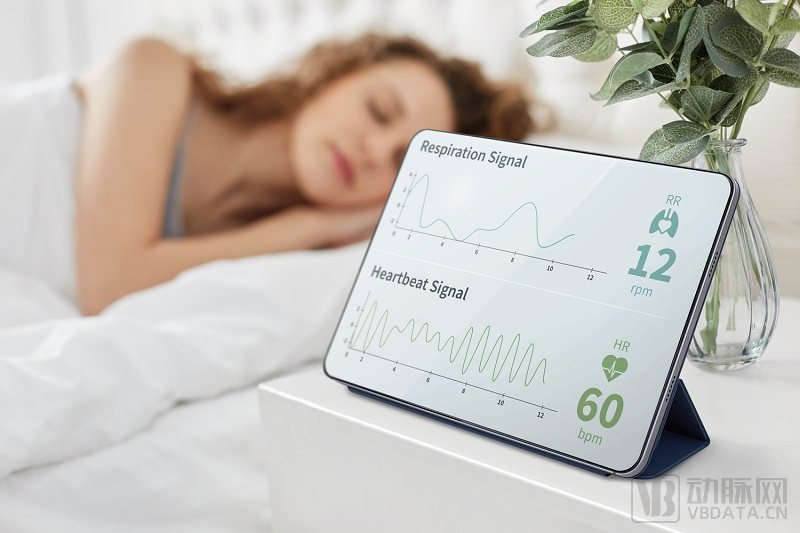
The feedback received from the project further solidified Infineon’s resolve to enter the sleep monitoring sector. “The feedback we received at the time indicated that both user experience and performance met market expectations. This has strengthened our commitment to continuing the promotion of this technology’s applications in the field of health monitoring,” said Cai Zhihui, Application Marketing Manager for Greater China at Infineon’s Power & Sensor Systems Division.
We will temporarily set aside what Cai Zhihui referred to as “this technology.” Let us first examine the current state of the sleep monitoring market that Infineon initially targeted.
In fact, we have not found market data directly related to sleep monitoring, but from some market data related to the concept of “sleep monitoring,” we seem to be able to indirectly depict the appearance of this market.
According to the "China Sleep Index Report," in 2022, the comprehensive sleep index for Chinese residents was 67.8 points. Although this represents a slight increase from 64.78 points in 2021, it merely surpasses the passing threshold. Additionally, relevant surveys by the Ministry of Health indicate that in 2018, approximately 38% of China's population suffered from various sleep disorders, a figure significantly higher than the global average of 27%.
Meanwhile, the sleep economy is quietly on the rise, with media outlets predicting thatIn 2020, the market size of China's sleep industry will reach over RMB 400 billion, and it is expected to surpassExceeding 1 trillion.Among these, the smart home hardware market has become a red ocean, while wearable products such as smart bands still hold significant growth potential.
This represents the first market opportunity identified by Infineon, or more precisely, its first healthcare application scenario.
Centered on millimeter-wave radar technology, it enhances user experience while delivering more flexible solutions.
It is referred to as the “first healthcare scenario” becauseInfineon has been, is, and will continue to be centered on millimeter-wave radar technology for a long time to come, continuously exploring its applications in health monitoring areas such as respiration and heart rate.
In other words, Infineon’s strategy in the healthcare sector will center on millimeter-wave radar technology—a mature solution already widely adopted in the automotive industry and thus a core strength for Infineon. Monitoring vital signs such as respiration and heart rate is one of the primary applications of millimeter-wave radar in healthcare. Coincidentally, these same parameters are key indicators for sleep quality assessment. Leveraging its years of expertise in millimeter-wave radar technology, Infineon has been able to enter the sleep monitoring and broader health monitoring markets.

Specifically,Compared with traditional sleep monitoring methods, the main advantages of sleep monitoring solutions using millimeter-wave radar technology are their non-intrusive nature and convenience.“Previously, in-hospital sleep monitoring methods required users to be attached to numerous sensors, resulting in a very poor user experience. In contrast, millimeter-wave radar technology can now ‘remotely’ capture information such as the user’s respiration, heart rate, and body movements. This avoids the discomfort caused by physical contact with multiple sensors, thereby providing a more comfortable and convenient monitoring experience. Furthermore, the device is not limited by location; it can be installed in home bedrooms, nursing homes, and other settings, operating wherever standard mains power and Wi-Fi coverage are available,” stated Cai Zhihui.
In addition to enhancing user experience, sleep monitoring solutions utilizing millimeter-wave radar technology have also demonstrated substantial practical efficacy. According to relevant data from Infineon, “Compared with professional-grade products, sleep monitoring solutions utilizing Infineon's millimeter-wave radar technology can achieve an accuracy of over 90%.”
However, the application of cutting-edge millimeter-wave radar technology, which makes sleep monitoring solutions more comfortable while ensuring accuracy, is just one feature of Infineon’s sleep monitoring solution. Another key feature lies in its collaboration model with brands.
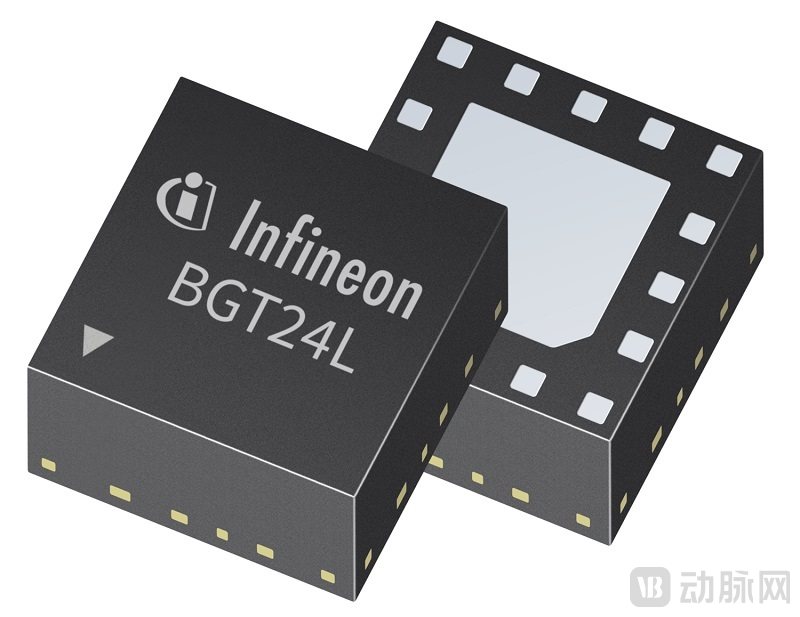
Compared to providing SoC solutions that include a processor, Infineon is more inclined to offer discrete millimeter-wave radar solutions to its partners.The primary reason lies in the rapid advancements of emerging technologies such as artificial intelligence, with algorithms and computing power both increasing at an accelerated pace.Providing millimeter-wave radar without bundling it with a processor enables partners to promptly update and iterate their processors in response to the rapidly evolving industry landscape. In other words, this collaboration model offers greater flexibility for partners.
However, it is important to note that this does not mean Infineon can only provide millimeter-wave radar. For partners with specific needs, Infineon is also capable of delivering comprehensive solutions that include processors, charging technologies, and wireless data transmission. Furthermore, these solutions are characterized by two prominent features: low-carbon footprint and digitalization.
Regarding Infineon’s aforementioned four major business segments, energy efficiency—specifically low power consumption—is clearly its core competency, so this article will not elaborate further. What warrants attention is the data encryption system adopted by Infineon. Unlike conventional data encryption systems, Infineon’s solution not only reads the device ID sent by the software when the cloud accesses it, but also probes the underlying hardware ID.
“It’s like checking an ID: you don’t just look at the photo and ID number, but also examine the physical ID card itself,” Cai Zhihui analogized.
However, in an interview, Cai Zhihui also revealed to VCBeat the current challenges facing the application of millimeter-wave radar in sleep monitoring, such as improving monitoring stability under dynamic conditions. Addressing these challenges requires collaborative efforts from all sectors of the industry. Therefore, on Wednesday, August 2, at 19:30, Cai Zhihui, Application Marketing Manager for Greater China at Infineon’s Power and Sensor Systems Division; Wang Hongsheng, Design Manager at Avnet; and Duan Chaijie, Co-founder and Head of Product at Shenzhen Huayi, will host an online thematic discussion on the market and technology of non-intrusive sleep monitoring products. You are welcome to scan the QR code to reserve your spot for the live broadcast!