

Biolansing Showcases 'No-Shave Hair Transplant Technology' at Asian Hair Restoration Summit, Earns Global Experts’ Praise as 'Artwork'
“Her long, flowing hair belied her deep concern over her receding hairline; however, following surgery using the ‘no-shave hair transplant technique,’ the defects in her hairline were perfectly corrected.” This was the impression left on hair transplant experts from multiple countries by Men Linlin, a consultant at Biliansheng and a hair restoration patient, at the conference.
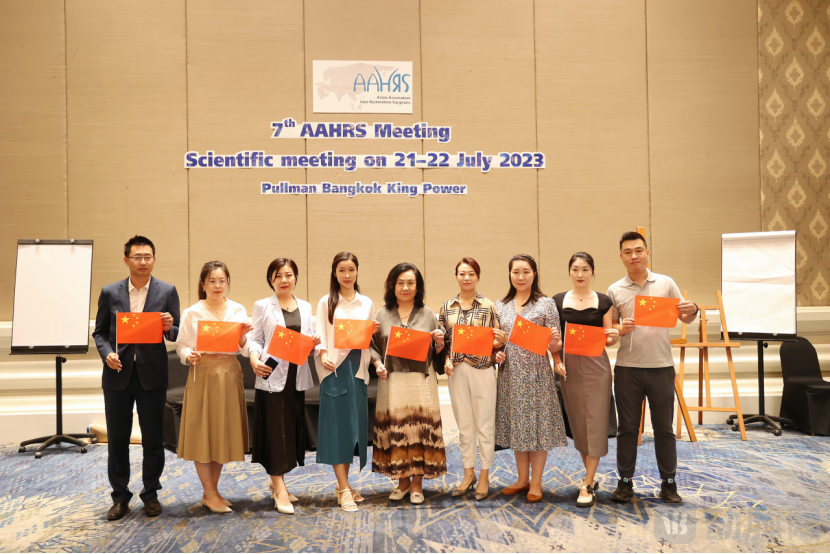
From July 20 to July 23, 2023, the 7th Asian Association of Hair Restoration Surgeons (AAHRS) Meeting was held in Bangkok, Thailand. Experts, scholars, and industry leaders from around the world gathered at the event to exchange insights on clinical advances in pharmacological treatments for hair loss, novel diagnostic and therapeutic technologies, and hair transplantation techniques.
Among them, Biliansheng Medical (hereinafter referred to as “Biliansheng”), a leading enterprise in China’s hair transplant industry, was invited to participate in the conference. At the event, Biliansheng comprehensively showcased its “Non-Shaven Hair Transplant Technique.”
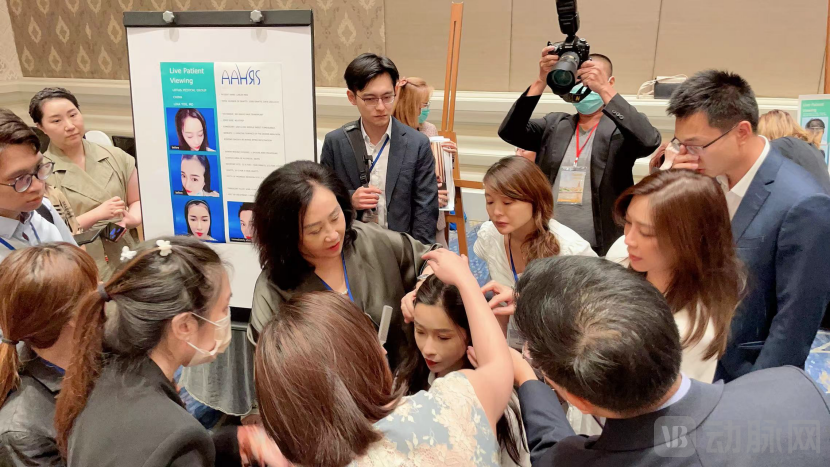
The image shows the Asian Hair Transplant Conference, where Biliansheng is showcasing its “No-Shave Hair Transplantation Technique.”
Founded in 2005, Biliansheng currently operates 42 directly-owned chain branches across China, with over 100 licensed physicians and more than 700 licensed nurses, including over 10 chief and associate chief physicians. The company has helped at least 350,000 patients alleviate their hair loss concerns.
Bilian Sheng was the first company in China to introduce FUE (Follicular Unit Extraction). In 2002, when the new FUE technology emerged and was introduced to China, Bilian Sheng, then only three years old, took the lead in abandoning FUT (Follicular Unit Transplantation), a scarring hair restoration technique, and fully adopted FUE technology across its chain of medical institutions.
To meet the growing demands of hair loss patients, Biliansheng began researching non-shaven hair transplantation techniques in 2015, starting with the shortest hair strands. Through nearly six years of dedicated research and development—progressing from extracting and transplanting elongated hairs from the occipital region to the forehead area, to achieving completely non-shaven extraction and implantation—the technology was officially launched in August 2020.
The "2022 China Hair Transplant Industry Research Report" points out that non-shaven hair transplantation is currently the cutting-edge technology in the industry. It has overturned traditional hair transplant practices, achieving dual innovations in follicular unit extraction and implantation techniques, marking a groundbreaking advancement in the hair restoration sector. Furthermore, the emergence of this technology has resolved long-standing concerns among patients, such as post-procedure aesthetic embarrassment and difficulties in resuming normal social activities.
“With the growing emphasis on physical appearance, consumers are increasingly concerned about issues such as hair thinning and imperfect hairlines,” stated Zhang Jufang, President of the Hair Medicine Branch of the Chinese Association of Plastics and Aesthetics, on her personal Weibo account during the 7th Asian Hair Transplant Congress. She noted that some patients expressed interest in hair transplantation but were deterred by the prolonged recovery period that hinders a swift return to normal social interactions, as they wished to avoid facing work and daily life with an awkward appearance. Driven by contemporary aesthetic demands, hair restoration options have gradually evolved from shaved techniques to non-shaved methods, and even long-hair transplantation.
At the conference, You Lina, Chairwoman of Biliansheng, elucidated the technical philosophy, achievements, and future development directions of the “non-shaving hair transplantation technique” through real-life case studies.
As an aesthetic designer, Men Linlin has beautiful long hair, but she had previously been troubled by a high forehead and a sparse hairline. On August 15, 2021, she underwent a hair transplant procedure at Biliansheng. Men Linlin received Biliansheng’s most advanced non-shaven hair transplant technique, which restores the hairline through aesthetic design, extraction, and implantation steps without requiring the head to be shaved.
Yulina explained, “Our client, Linlin, underwent a hair transplant involving 2,500 follicular units, with the entire procedure lasting seven hours. Nearly two years post-surgery, no white spot scarring—often associated with donor area extraction—has developed in her occipital region. Her hairline remains intact, with no signs of shedding.”
“After the hair transplant, my hairline returned to normal. Now, the hair on my forehead grows normally, just like everyone else’s, and I no longer have to worry about a high hairline,” said Men Linlin at the conference.
Many scholars and experts present expressed their approval and affirmation, even describing the results of Biliansheng’s “No-Shave Hair Transplant Technique” as a “work of art.”
Driven by factors such as genetics, prolonged traction on the hair, and follicular damage, an increasing number of people are suffering from hair loss. Hair loss has become a disease of significant global concern.
According to World Health Organization statistics, approximately 1.6 billion of the global population of over 7.5 billion people are affected by hair loss. Furthermore, survey data from the National Health Commission indicates that in 2019, the number of individuals suffering from hair loss in China exceeded 250 million. In other words, one in every six people experiences hair loss. Men are more prone to androgenetic alopecia, with a prevalence rate of approximately 21.3%, while the prevalence rate among women is relatively lower, at around 6%.
“Compared with the age of hair loss in the previous generation, it has advanced by at least 20 years, and the trend of affecting younger individuals is becoming increasingly evident.” The data from the White Paper on Scalp Health of Chinese People also explains.
The vast population suffering from hair loss also signals a huge market potential. Data from Frost & Sullivan shows that the size of China's hair medical service market was 18.4 billion yuan in 2020, and is expected to rise to 138.1 billion yuan by 2030, with a growth rate as high as 750%.
“On one hand, amid the predicament of hair loss affecting 250 million people in China, market demand for hair transplantation is growing increasingly robust; on the other hand, with over two decades of development in the hair restoration industry and ever-more stringent expectations regarding technology and aesthetics, industry policies and regulatory oversight have become increasingly comprehensive, while hair transplantation techniques have advanced significantly. Notably, non-shaven hair transplantation represents one of the key directions for the current and future development of the hair restoration industry,” stated You Lina.
At the recent media open day event series held by Biliansheng’s Chongqing Branch, Dr. Liu Chao from the branch explained, “The non-shaving technique has evolved from semi-shaved extraction to trimmed-hair extraction, then to layered shaving extraction, and finally to the current completely non-shaved extraction. Similarly, hair implantation has progressed from shaved implantation to non-shaved density enhancement, ultimately achieving fully non-shaved implantation.”
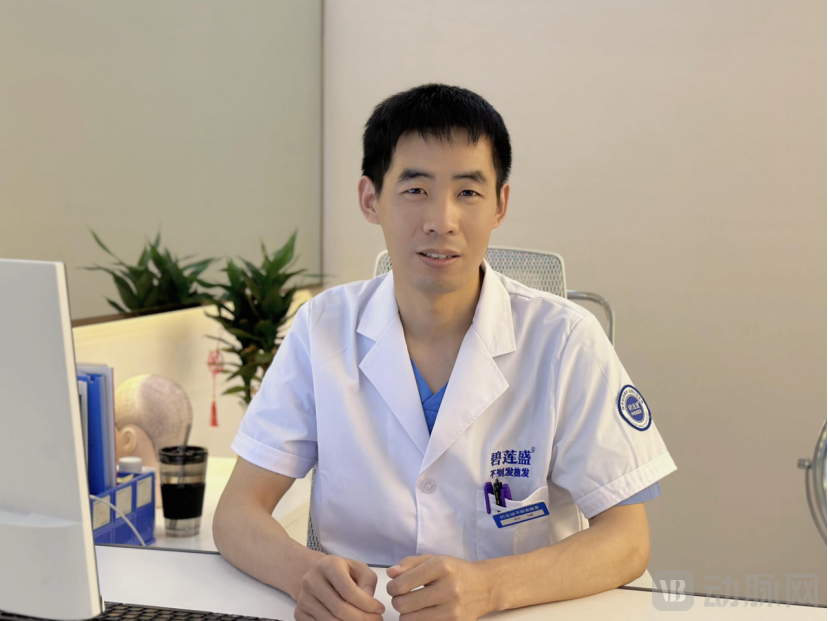
In August 2020, Biliansheng officially launched its no-shave hair transplantation technology, becoming the first company in China to truly implement the “no-shave” concept.
According to Biliansheng, as of February 2023, the number of non-shaven hair transplant procedures performed by the company had exceeded 30,000, with an average of 2,200 follicular units implanted per procedure, involving a total of over 60 million hair follicles. Data from third-party institutions also show that 92.8% of users opting for non-shaven hair transplant technology chose Biliansheng.
It is reported that Biliansheng has held media open-day events in nearly 20 cities across China, aiming to allow the media to closely observe the development of the hair health industry. Meanwhile, the company leads by example, maximizes the protection of consumers’ legitimate rights and interests, substantially improves service quality, and actively fulfills its responsibilities as an industry leader.