

Professor Yichang Jia of Tsinghua University: Uncovering Disease Mechanisms and Translating Discoveries into Therapeutics for ALS
May 4, 2023, Tsinghua University,Professor Jiachang Jia, Founder of Shenji Changhua; Professor Zhaobing Gao, Shanghai Institute of Materia Medica, Chinese Academy of Sciences; and Professor Dongsheng Fan, Peking University Third HospitalInNatureJournal Sub-journalCell ResearchCover Article Published Online (2023, Issue 7), TitledDisruption of ER ion homeostasis maintained by an ER anion channel CLCC1 contributes to ALS-like pathologies。
This studyFirst demonstration that CLCC1 is an endoplasmic reticulum-localized chloride channel, with physiological functions in facilitating endoplasmic reticulum calcium release and regulating endoplasmic reticulum ion homeostasis. Professor Jia Yichang revealed that loss of CLCC1 function disrupts endoplasmic reticulum ion homeostasis, thereby inducing endoplasmic reticulum stress and affectingAmyotrophic Lateral Sclerosis (ALS)contributes to the pathology and pathogenesis.
Amyotrophic lateral sclerosis (ALS), a rapidly progressive and fatal neurodegenerative disease that primarily affects motor neurons in the cerebral cortex, brainstem, and spinal cord, is more commonly known as “Lou Gehrig’s disease.” This neurodegenerative disorder carries an extremely high mortality rate; it is reported that the 3-year and 5-year mortality rates for patients with ALS are 50% and 80%, respectively. Moreover, as the number of ALS patients increases, the related market continues to expand. Statistical data show that the global ALS market was valued at USD 700 million in 2021 and is projected to reach USD 1 billion by 2023. The new discoveries made by Professor Ji Yichang’s team serve as a vital breakthrough, offering new possibilities for the treatment of ALS.
Over a Decade of Research Culminates in the Discovery of ALS-Causing Genes
Starting from the very beginning. Professor Ji Yichang told Chengguo Bureau that this studyIt originated from his postdoctoral work in Dr. Susan Ackerman’s laboratory at The Jackson Laboratory, the Mecca of mouse genetics in the United States., utilizing mouse genetics to study the pathogenesis of neurodegenerative diseases.
“Actually, during my time in the United States, it took us three years to identify CLCC1 as the disease-causing gene in mice. However, after establishing the link between CLCC1 and neurodegenerative diseases in mice, I left the U.S.,” said Professor Ji Yichang. In 2013, Professor Ji returned to China to serve as an Assistant Professor at the School of Medicine, Tsinghua University, where he continued to focus on this project. “With the support of Dr. Susan Ackerman, I brought the mouse models from the United States to China to continue our research,” Professor Ji said with a smile.
After extensive research, Professor Jia Yichang’s team confirmed that CLCC1 is associated with the human disease ALS. In a flash, ten years have passed.
Prior to this discovery, although scientists had identified approximately 50 genes associated with the pathogenesis of amyotrophic lateral sclerosis (ALS), the mechanisms underlying its onset and progression remained incompletely understood. The identification of CLCC1 provides a new perspective on the pathogenic mechanisms of ALS.
In a new cohort of Chinese patients with amyotrophic lateral sclerosis (ALS), Professor Ji Yichang’s team identified eight rare mutations, including W267R and S263R. Through a series of experiments encompassing single-channel electrophysiology, calcium imaging, and pathological examinations in gene-knock-in mice, the teamConfirmed that S263R and W267R are loss-of-function mutations.
In subsequent further studies, in the brains of S263R and W267R ALS mutation knock-in mice,Mutant CLCC1 protein undergoes ubiquitin-dependent degradationMeanwhile, the team also found that in mice with conditional knockout of the CLCC1 gene in spinal "ChAT+" motor neurons, there was extensive motor neuron death and endoplasmic reticulum stress in motor neurons, accompanied by characteristic pathological features of amyotrophic lateral sclerosis (ALS)—nuclear export of TDP-43 protein and ubiquitinated aggregation of TDP-43.
These experimental results truly link CLCC1 mutations to amyotrophic lateral sclerosis (ALS). “By correlating gene mutations in mice with human diseases, our core objective is to understand the pathogenesis of human diseases,” said Professor Ji Yichang.
Unveiling the Mystery of Endoplasmic Reticulum Anion Channels
“Our mechanism suggests that chloride ions are crucial for maintaining endoplasmic reticulum function. This is also the first time such a conclusion has been proposed worldwide,” said Professor Ji Yichang.
The endoplasmic reticulum (ER) is a crucial intracellular organelle for calcium ion storage. It not only releases calcium ions through inositol 1,4,5-trisphosphate receptors (IP3R) and ryanodine receptors (RyR) channels distributed on its membrane but also recaptures calcium ions via the SERCA pump. Within the cell, the flux of calcium ions across the ER membrane induces changes in electrical potential, necessitating the involvement of other ions to maintain charge and osmotic balance.
Previous studies have confirmed the existence of the endoplasmic reticulum potassium channel TRIC; however, monovalent potassium ions cannot simultaneously counterbalance the membrane potential and osmotic pressure gradients generated by the release of divalent calcium ions. Therefore, an anion channel must also be present on the endoplasmic reticulum membrane. Yet, the elusive identity of this anion channel has remained uncharacterized.
“Besides calcium ions, the most abundant cation in the body is potassium, while the most abundant anion is chloride. Therefore, we considered the entire process by comprehensively examining calcium, potassium, and chloride ions,”Finally, the ‘2Ca2++Cl-=3K+’. This resolves the balance of charge and osmotic pressure associated with calcium ion flux across the endoplasmic reticulum membrane."Professor Ji Yichang remarked.
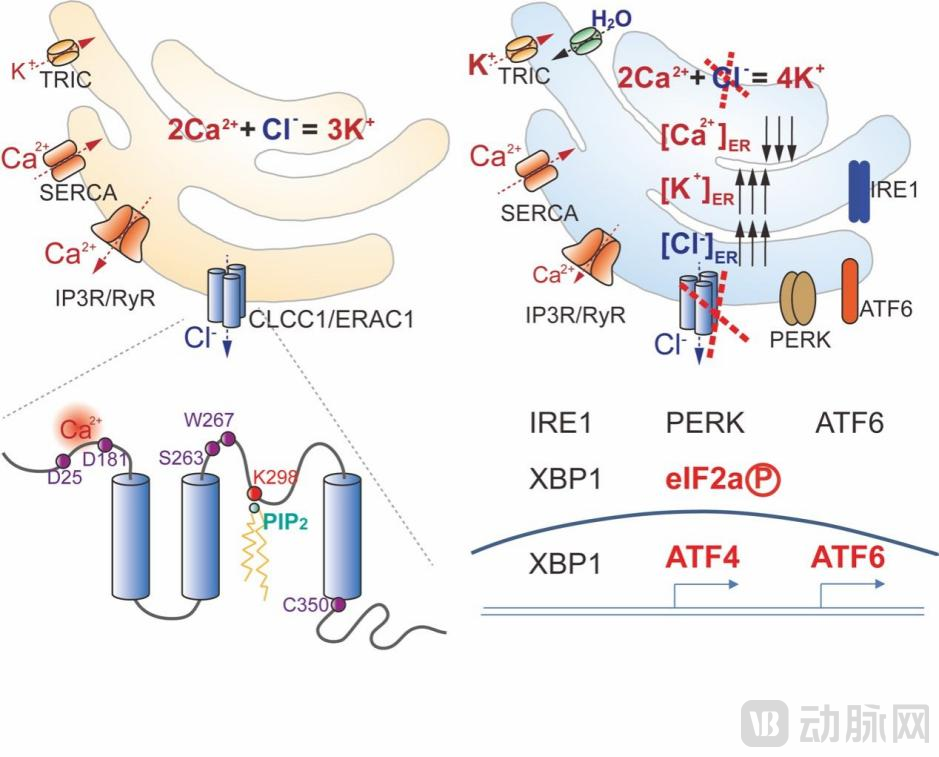
▲ The Endoplasmic Reticulum-Localized Anion Channel CLCC1 Regulates Endoplasmic Reticulum Ion Homeostasis
To further link CLCC1 to endoplasmic reticulum (ER) homeostasis, it is necessary to examine whether CLCC1 participates in regulating ER ion homeostasis. To this end, the team led by Jia YichangThe world's first endoplasmic reticulum-targeted ratiometric chloride probe and ratiometric potassium probe were prepared, and 293FT cells were analyzed using flow cytometry.. The results showed that knockdown of CLCC1 led to resting-state [Cl-]ERand [K+]ERElevated.
This indicates that, unlike the elongated, ribosome-bound endoplasmic reticulum (ER) structures observed in control cells, CLCC1-knockdown cells exhibit a greater abundance of short, rod-like ER structures, along with an increase in the average width of the ER. This finding also serves as a key basis for the team’s discovery that CLCC1 maintains chloride and potassium ion concentrations within the ER, as well as ER morphology.
The entire process of making important discoveries is a lengthy one and the result of mutual collaboration.When it comes to scientific research collaboration, Professor Ji Yichang is decidedly proactive. Upon identifying a need for R&D, he promptly initiated collaborations with Professor Gao Zhaobing’s team at the Institute of Materia Medica, Chinese Academy of Sciences, and Professor Fan Dongsheng’s team at Peking University Third Hospital. “Leveraging the respective strengths of each laboratory“The hospital provides access to its case database, and the Institute of Materia Medica is well-versed in electrophysiology techniques, while our team primarily focuses on protein purification and exploring disease mechanisms. Our collaboration is accelerating and capable of addressing many challenges,” said Professor Ji Yichang.
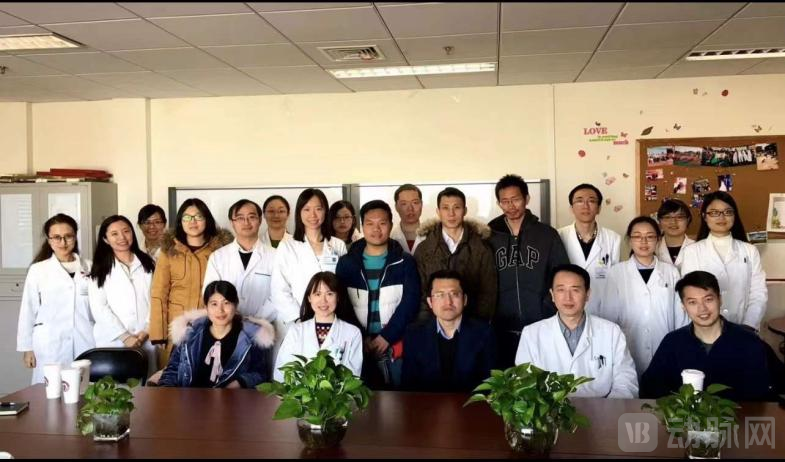
▲Group photo of Jia Yichang’s team at Tsinghua University and Fan Dongsheng’s team at Peking University Third Hospital
No scientist is indifferent to seeing their findings translated into practice, and Professor Ji Yichang is no exception.
“We now believe that CLCC1 is highly likely to serve as a novel therapeutic target for improving the condition of patients with amyotrophic lateral sclerosis (ALS),” stated Professor Jia Yichang. For patients with CLCC1 gene mutations, on one hand, it is possible toAchieving therapeutic effects by activating or inhibiting the activity of endoplasmic reticulum anion channels on the endoplasmic reticulum; on the other hand, it canvia gene therapy, to improve patient outcomes.
“These are all potential future applications of CLCC1 in the field of ALS,” he remarked. “Whether as a researcher or an entrepreneur, our original aspiration remains singular: to”We hope that the research findings will benefit patients.。”