

Why Scientists Favor 'Drug Repurposing' Despite Investor Skepticism
Authors: Shen Yuting, Shi Yi
In 1995, the blockbuster drug metformin was launched, bringing hope to patients with type 2 diabetes.
To this day, this medication remains the first-line and lifelong therapy for type 2 diabetes. Beyond its use in treating type 2 diabetes, continued attention from the scientific research community has revealed additional properties of metformin. According to incomplete statistics, in addition to lowering blood glucose, metformin has demonstrated potential in multiple areas, including cardiovascular protection, anti-tumor effects, and anti-aging.
Metformin is not the only “old drug” finding new uses. For instance, lidocaine, originally used for analgesia, was later found to have central antitussive effects; methotrexate, initially developed for cancer treatment, has also shown remarkable efficacy in managing immune-mediated diseases such as rheumatoid arthritis. These cases compel us to delve deeper into further exploration—Why Does the Scientific Community Favor “Drug Repurposing”?
1. “Finding the Lock with the Key in Hand”
“Drug repurposing” is not a new concept. Cases of drug repurposing emerged in large numbers during the last century. With technological advancements, the landscape of drug repurposing has changed significantly. A researcher engaged in drug repurposing studies stated:“Drug repurposing today is like using a key to find the right lock.”
“Thalidomide” (thalidomide) was once a globally popular medication for preventing morning sickness in early pregnancy. However, many infants born to mothers who took the drug suffered from congenital malformations, including limb deformities, cleft palate, and blindness or deafness. The birth of a large number of “phocomelia babies” led to a global ban on the drug in the 1960s, earning it the notorious title of “the most evil pharmaceutical invention.”
Shortly thereafter, by chance, researchers discovered that thalidomide not only blocks the production of pro-inflammatory factors and inhibits enzymes and cytokines involved in inflammatory responses, but also reduces cell migration and adhesion, exerts anti-angiogenic effects, and suppresses rapid tumor growth. These two major pharmacological mechanisms have brought thalidomide back into clinical use, establishing it as a highly effective treatment for immune-mediated conditions such as erythema nodosum leprosum (ENL) in type II leprosy, discoid lupus erythematosus, subacute cutaneous lupus erythematosus, and Behçet’s syndrome.
“Thalidomide” is just one example of drug repurposing; other successful cases of “old drugs” finding new life include the use of the anti-alcohol medication disulfiram for cancer treatment, the antidiabetic drug metformin for anti-aging and anticancer purposes, the poison arsenic trioxide for cancer therapy, and thalidomide for the treatment of multiple myeloma.
Some were found to have beneficial effects on other diseases accidentally after being administered to patients, while others were identified by researchers as targeting pathways relevant to other disease targets.In short, their “rebirth” is always accompanied by contingency.
However, with the advancement of the times,AI, High-Throughput Screening Technologythe iterative upgrades of upstream tools for drug design,The Discovery of New Uses for Old Drugs Has Shifted from “Chance” to “Inevitability”。
Taking high-throughput screening as an example, researchers simultaneously screen for usable molecular pathways among existing drugs and identify disease-related genomic profiles or therapeutic targets. Only after conducting these parallel screenings and performing systematic pairwise comparisons and matching can the direction for drug repurposing be determined.
Furthermore, the increasing sophistication of biochip technology has made biochemical reactions and information transmission in experiments more accurate and rapid. This helps researchers overcome technical hurdles commonly encountered in traditional drug development, thereby improving the success rate of pharmacotherapy. Supported by tools such as computer-aided design, researchers can proactively investigate how specific chemical molecules target certain diseases, significantly accelerating the pace and speed of drug repurposing.
But, as researchers have noted, drug repurposing is still in the stage of “trying keys to find the right door,”Yet there are countless doors, and just as many keys.Matching them all one by one is undoubtedly like finding a needle in a haystack. There is still significant room for improvement in the screening methods for drug repurposing.Narrow the matching scope to enhance the precision of drug molecule-target interactions.It remains a pain point in drug repurposing research that needs to be optimized.
II. The “Hot Cake” of the Scientific Research Community
Some people say:“Drug development is a huge ‘gamble.’”"This statement is not untrue. Although first-in-class drugs offer high returns, they require substantial investment and carry even higher risks."
From the outset of drug design, the instruments, tools, talent support, and even financial backing required to discover new targets entail substantial investment. If all goes smoothly and the project advances to the mid-stage, it still must navigate cumbersome procedures such as preclinical studies, safety testing, and regulatory filings. According to current mainstream statistical data, bringing a new drug from concept to market requiresIt takes 12 to 15 years and costs more than $1 billion.
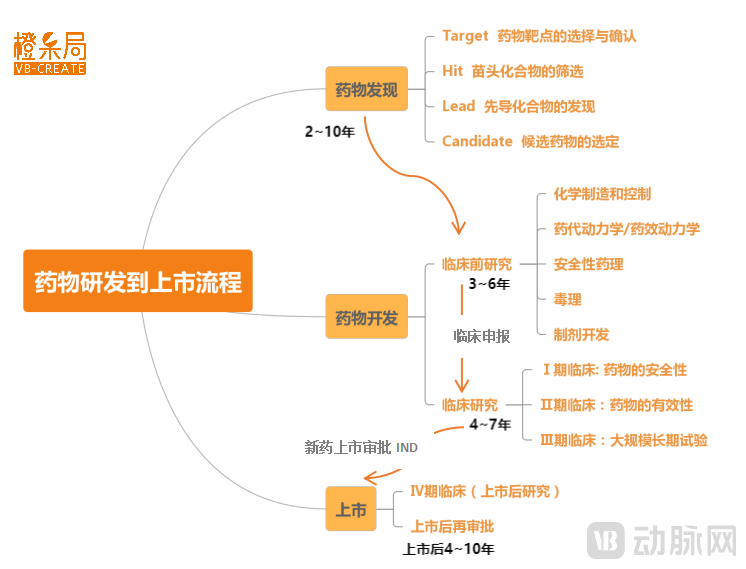
Of course, there is also an “easy mode” to this “high-stakes gamble,” namely drug repurposing.
Professor Liu Huanliang from the Sixth Affiliated Hospital of Sun Yat-sen University once mentioned in an interview, “Drug repurposing projects generally haveLow cost, low risk, and high success rateadvantages.”
First, in terms of the R&D cycle, drug repurposing takes only about 6 years,It is up to twice as fast compared to first-in-class drugs. This is because “older drugs” typically have a longer history of clinical use and large patient populations, which thoroughly validate their safety and potential risks. Therefore, drug repurposing can bypass Phase I toxicity assessments and proceed directly to efficacy verification. This approach not only saves time and resources but also enables faster market entry.
Secondly, in terms of R&D costs, drug repurposing can reduce expenses to one-tenth of the original amount.The mechanisms of action for existing drugs are often well-defined, eliminating the need for researchers to use sophisticated equipment to discover drug pathways or synthesize molecular elements “from scratch.” Instead, the focus is largely on screening and optimization. Furthermore, by the time these drugs reach the market stage, their product lines are already mature with a solid market foundation, enabling “existing drugs” to gain public acceptance at minimal cost. On average, revitalizing an existing drug requires an investment of $300 million.
Finally, in terms of returns, repurposed drugs are no less competitive than first-in-class drugs.Take “Thalidomide” as an example. After discovering new indications for Thalidomide, Celgene acquired the global exclusive development rights and relaunched the drug in 1998. In its first year on the market, sales of Thalidomide reached $3.3 million, rising to $24.1 million a year later. By 2008, sales of Thalidomide hit a new high of $510 million. This is not an isolated case; older drugs that had already been successfully commercialized, such as aspirin and naftifine hydrochloride, have generated greater revenue for companies after their indications were expanded—this is beyond doubt.
Overall, “drug repurposing” not only saves substantial time and resources but also significantly accelerates the drug development process, while markedly reducing the failure rate and cutting R&D costs.This validates Nobel laureate James Black’s famous quote: “The best way to discover a new drug is to start with an old one.”(The best way to discover new drugs is to start with old ones.)
III. The Market Sits on the “Cold Bench”
Logically, drug repurposing not only saves on research costs but also shortens the development cycle. As a “hot commodity” in the scientific community, it should theoretically be equally popular in the marketplace.But this is not the case.
During the discussion, an investor with a focus on the healthcare sector stated bluntly:“I’m not particularly fond of investing in drug repurposing.”Upon further reflection, we find that while drug repurposing offers numerous advantages—such as established safety profiles, shorter development cycles, and lower costs—its commercialization still faces significant hurdles, including limited market potential and challenges in patent protection.
Academician Edwards from the University of Toronto also mentioned in the internationally renowned journal "Journal Of Chemical Information And Modeling" ("Chemical Information and Modeling Journal"),“It is difficult to identify examples of drug repurposing that originated from virtual screening or clinical trial concepts, were ultimately approved, and are now used in clinical practice.”
Overall, the reasons for the lukewarm market reception of drug repurposing can be summarized in two aspects: one is the technical side, and the other is the patent side.
On the technical front, the size of the drug library and the indications of drugs have limited the market expansion of drug repurposing.Starting with the drug library, currently available marketed drugs are still quite limited. As of 2023, there are fewer than 2,000 small-molecule drugs approved globally. Compared to compound libraries such as HTS and DEL, which contain millions or even hundreds of millions of compounds, the selection space for marketed drug molecules remains narrow.
Secondly, from the perspective of drug indications, marketed drugs are typically designed for specific diseases and may not achieve optimal efficacy in new indications. Differences in pathogenesis and related physiological and pathological processes across different diseases can lead to reduced therapeutic efficacy of existing drugs when repurposed. If the drug’s mechanism of action is not modified, the scientific value of such research would be limited. However, if modifications to the drug’s pathway are made, the advantages of existing drugs—namely, low cost and short development cycle—would be entirely lost.
From a patent perspective, insurmountable issues of patent protection and infringement constitute the greatest barrier to the commercialization of drug repurposing.Patent Status of Established Drugs: Typically Categorized as Either Within or Outside the Patent Term
If the original patent rights to a drug are held by major pharmaceutical companies or other research institutions, and the patent holders decline collaborative development, researchers’ clinical trials must either halt at that stage or the research outcomes must be sold off as a package, making it extremely difficult to establish an independent enterprise. In cases where the drug’s patent has expired, although researchers can continue their trials, other companies are free to manufacture and market identical drugs, intensifying competition and eroding the drug’s market value. This makes it challenging for startups to build a sustainable business model.
Therefore, it is also rumored in the market circle that"Short Lifespan of Companies Repurposing Old Drugs"rumors—many startups that began by repurposing old drugs often transition into service companies in their later stages, screening targets or drug pathways for other companies.
IV. Epilogue
From a scientific research perspective, drug repurposing represents a novel attempt and expansion: no drug can be fully understood in its entirety; regardless of how slim the odds may seem, the potential for repositioning always exists. Therefore, drug repurposing offers more than just procedural convenience and cost savings to scientific research; it primarily broadens research paradigms and facilitates the discovery of new mechanisms.
However, in the market, investors also give considerable thought to drug repurposing. They assess the market value and potential returns of the new indication, as well as associated risks, including the level of competition in the field, the size and needs of the target population, and patent protection, among other factors.
Only when investors and researchers reach a consensus can old drugs make a “remarkable comeback.”