

Conformal Medical Secures $35M Series D Funding to Advance Foam-Based Left Atrial Appendage Closure System

Comfort Medical
Providers participating in medical insurance
Atrial fibrillation (AF) has numerous etiologies and can be classified into valvular and non-valvular AF. Valvular AF may be caused by conditions such as mitral stenosis, mitral regurgitation, aortic stenosis, and aortic regurgitation; non-valvular AF is commonly associated with coronary artery disease, hypertension, and cardiomyopathy.
According to the Framingham Study, the risk of thromboembolism in patients with valvular atrial fibrillation is 17.6 times that of the general population, whereas the risk in patients with non-valvular atrial fibrillation is 5–7 times higher. Therefore, in the management of atrial fibrillation, restoring sinus rhythm is as important as stroke prevention.
The most common sites of thrombus formation in atrial fibrillation are the left atrium and the left atrial appendage,In patients with valvular atrial fibrillation, 60% of thrombi originate from the left atrial appendage and 40% from other sites within the left atrium; in patients with non-valvular atrial fibrillation, 90% of thrombi originate from the left atrial appendage and 10% from other sites within the left atrium.Therefore, in theory, for non-valvular atrial fibrillation, occluding the left atrial appendage to isolate it from the systemic circulation can prevent and treat the vast majority of atrial fibrillation-related thrombus formation at its source.
Conformal Medical (hereinafter referred to as “Conformal”) is such a company. The CLAAS system developed by the company is a left atrial appendage closure device for patients with non-valvular atrial fibrillation, which can effectively seal the left atrial appendage.
VCBeat learned that on June 5, 2023, Conformal Medical completed a $35 million Series D financing round. The round was led by SPRIG Equity, with all existing investors from the Series C round participating. The funds will be used to complete clinical trials for the CLAAS system, further demonstrating its safety and efficacy.
During atrial fibrillation, the atrial excitation frequency reaches 300–600 beats per minute; the heart rate is often rapid and irregular, and the atria lose their effective contractile function. Patients with atrial fibrillation typically require long-term anticoagulant therapy to prevent stroke; however, pharmacological anticoagulation is associated with challenges such as poor adherence, increased risk of bleeding, and low rates of achieving therapeutic targets.
Left Atrial Appendage Occlusion (LAAO) has emerged as a timely solution. The left atrial appendage (LAA), a remnant of the embryonic left atrium (LA), communicates with the LA and is situated superior to it. It typically presents as a narrow, curved, blind-ended tubular structure with an irregular shape. During normal cardiac cycles, the LAA exhibits effective contractility, ensuring smooth blood flow.
When atrial fibrillation occurs, its unique anatomical structure causes blood flow to form vortices and slow down, leading to blood stasis and thrombus formation. Once a thrombus dislodges and travels to the cerebral vasculature, it may cause complications such as cerebral infarction, cardiac vascular embolism, myocardial infarction, and limb arterial embolism.
LAAO is performed via an interventional approach involving percutaneous puncture of the femoral vein. A catheter is advanced through the femoral vein in the thigh to deliver the occluder to the left atrial appendage (LAA). The occluder is then deployed to seal the LAA, isolating its lumen from that of the left atrium (LA), thereby preventing thrombus formation within the LAA.
LAAO is indicated for patients with non-valvular atrial fibrillation who have a CHA2DS2-VASc score of ≥2. It eliminates the need for long-term oral anticoagulation, offering a new therapeutic option for patients who are unable or unwilling to undergo long-term anticoagulant therapy, as well as those at high risk of bleeding.
In 2002, following the successful completion of the world’s first left atrial appendage occlusion (LAAO) procedure, this technology began to gain prominence, leading to the continuous emergence of various LAAO devices. Currently, the LAAO devices used in clinical practice are primarily all-metal structures with a nitinol alloy framework. However, the retention of metallic foreign bodies in some patients may lead to complications such as nickel ion allergy and damage to surrounding structures.
Traditional LAAO procedures largely rely on transesophageal echocardiography (TEE) for localization and monitoring, requiring intravenous combined anesthesia and endotracheal intubation, which causes significant discomfort to patients. Meanwhile, the procedure necessitates the presence of cardiac surgeons and perfusionists to promptly manage any unforeseen complications.
Conformal’s CLAAS system is a left atrial appendage closure device that is fundamentally different from existing marketed products, incorporating a novel polycarbonate urethane foam matrix with a porous open-cell structure and pore sizes ranging from 400 to 600 μm.The CLAAS system leverages the elasticity and plasticity of foam materials to enable the implant to conform to the inner wall of the left atrial appendage (LAA), forming a uniform sealing layer. The system is also equipped with an adjustable catheter that allows the implant to be delivered into the LAA at various angles.。
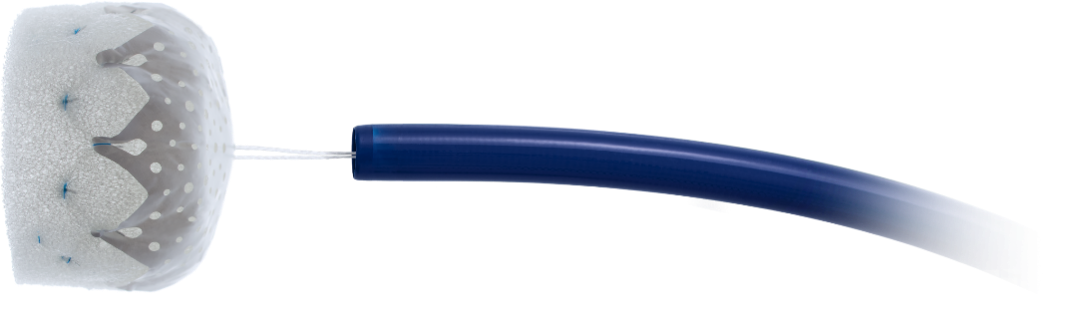 CLAAS System. Image source: Conformal official website
First, a catheter is inserted through a small incision in the groin area and guided via the vein to the ostium of the left atrial appendage (LAA). The CLAAS system is then delivered through the catheter into the LAA. Once deployed, the CLAAS system occludes the LAA.
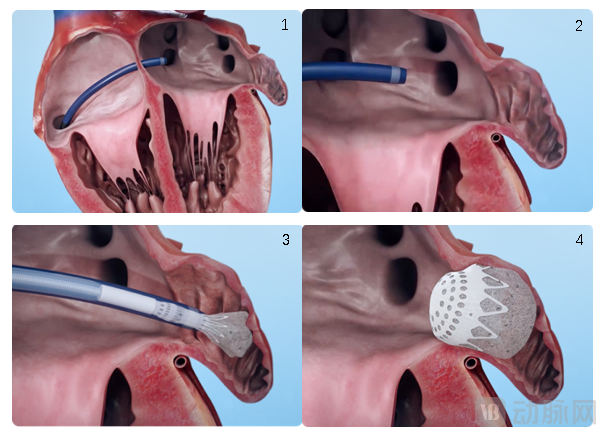
CLAAS System Implantation Steps. Image source: Conformal official website
The system features the following characteristics:
1. Trauma-free delivery, reduced residual leakage: The foam matrix of the CLAAS system is elastic and malleable, providing cushioning during delivery to ensure safe and atraumatic deployment. Its porous expanded polytetrafluoroethylene (ePTFE) covering layer, attached to the proximal end, effectively reduces residual peridevice leakage and prevents thrombus formation;
2.High Flexibility, Wide Adaptability: Compared to other left atrial appendage (LAA) occlusion devices made of metal or polymer materials, which require more precise positioning and a wider range of sizes, the foam-based matrix offers greater flexibility, accommodating the anatomical structures of most patients' LAA with only two sizes: 27 mm and 35 mm;
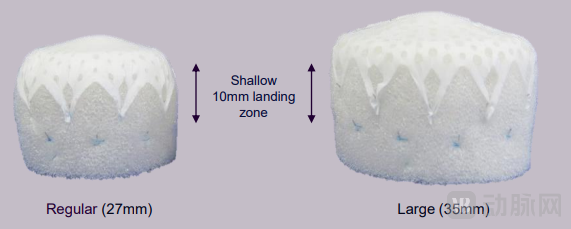
Two Sizes of the CLAAS System. Image source: Conformal official website
3.Alleviate patient suffering and simplify the surgical procedure: Allows for off-axis positioning, and does not require TEE, endotracheal intubation, or general anesthesia during the procedure; surgery can be performed with intracardiac echocardiography (ICE) assistance. ICE is an innovative technology that can replace TEE, providing effective assessment and guidance information for LAAO, which can simplify the surgical process to some extent.
Currently, Conformal has completed animal model trials of the CLAAS system and is conducting the pivotal CONFORM trial to evaluate the safety and effectiveness of the CLAAS system compared with other commercially available left atrial appendage closure devices.
Conformal Medical, founded in 2016 and headquartered in New Hampshire, USA, comprises team members with extensive experience in the medical device industry, having conducted research across multiple specialized segments.
Since September 2022, James Reinstein has served as CEO and Chief Executive Officer of Conformal. Prior to joining Conformal, James held positions as President and CEO or board member at multiple medical device and diagnostics companies, including Saranas, Cutera, Drawbridge Health, Aptus Endosystems, and LivaNova. He led teams in the research and development of various medical devices, such as laser aesthetic instruments, blood collection systems, aortic repair devices, and heart-lung machines for extracorporeal circulation.

James Reinstein. Image source: Conformal’s official website
Aaron Kaplan serves as Chairman and Chief Medical Officer of Conformal. He is an interventional cardiologist at Dartmouth-Hitchcock Medical Center and a Professor of Medicine at the Geisel School of Medicine at Dartmouth. Aaron was a founding team member of several venture capital-backed medical device companies, including Tryton Medical, LocalMed, and Perclose. Additionally, he has published more than 65 papers and holds 45 U.S. patents.
The company’s Vice President of Engineering is David Melanson, who holds more than 40 U.S. patents. With over 25 years of experience in the design, development, and manufacturing of medical devices, David has served as a senior engineer at CR Bard, Focal, Confluent Surgical, GI Dynamics, and Boston Scientific, developing products spanning cardiology, general surgery, thoracic surgery, spinal surgery, cranial surgery, gastroenterology, urology, and gynecology.
In addition, the company’s Chief Scientific Officer Carol Devellian, Vice President of Clinical Affairs David Pomfret, and Vice President of Therapeutic Development Dana Sullivan have each accumulated over thirty years of experience in the medical device industry, laying a solid foundation for the development of the innovative CLAAS system.
The patient population for the left atrial appendage occluder market is substantial. According to Frost & Sullivan analysis,The global number of patients with atrial fibrillation is projected to increase from 63 million in 2021 to 72 million in 2030, while the number of such patients in China is expected to rise from 20 million in 2021 to 27 million in 2030.。
The growing patient population is driving a continuous increase in market demand. Taking Boston Scientific’s Watchman left atrial appendage closure device as an example, its sales reached $446 million in the first half of 2022, representing a year-on-year growth of 23.3%, despite the impact of the global COVID-19 pandemic. Compared with Europe and the United States, China has a larger population base, offering greater growth potential for left atrial appendage closure devices in the Chinese market.
While foreign brands such as Boston Scientific and Abbott dominate the domestic market, Chinese companies are quietly gaining momentum and actively expanding their presence. Companies including LifeTech Scientific, Pulse Medical, Shanghai Pushi Medical, Beijing Medtop, Denovo Electrophysiology, and Lepu Xintai Medical are accelerating their efforts to catch up. Currently, the left atrial appendage occluders developed by these companies have successively received approval from the National Medical Products Administration (NMPA).
As domestic brands continue to rise, the localization rate of left atrial appendage (LAA) occluders will keep increasing, and the market for domestically produced LAA occluders holds significant growth potential.