

Microbot Medical Submits Prospectus for LIBERTY™: The World’s First Single-Use, Remotely Operated Vascular Interventional Robotic System with 100% Preclinical Success Rate
Microbot Medical
Transformative Microbot Medical Device Developer
In recent years, the surgical robotics market has achieved continuous breakthroughs. Companies such as Stryker and Medtronic lead the orthopedic surgical robotics sector, while Intuitive Surgical’s da Vinci system has long dominated the laparoscopic surgical robotics market. As these companies focus on outcomes and profitability, vascular interventional surgical robotics remains in an early stage of development with low market penetration. However, driven by growing market demand and sustained momentum from socioeconomic factors, supportive policies, and capital investment, financing in the vascular interventional surgical robotics field is heating up, gradually revealing its potential as a dark horse.
Vascular intervention is a diagnostic and therapeutic technique performed via the vascular route using instruments such as puncture needles, guidewires, and catheters under the guidance of medical imaging equipment. While vascular intervention has developed rapidly, it presents significant surgical challenges, high entry barriers, and difficulties in achieving standardization. The emergence of vascular interventional surgical robots has enhanced procedural precision, improved surgical outcomes, and substantially reduced physicians’ radiation exposure, earning them the reputation as the “crown jewel” of vascular interventional technology.
Microbot Medical (NASDAQ: MBOT, hereinafter referred to as “Microbot”) is a preclinical medical device company focused on the design and development of transformative microrobots. Its flagship product, LIBERTY, is the world’s first single-use robotic system for vascular intervention procedures. VCBeat has learned that on June 27, 2023, Microbot announced a $2 million registered direct offering priced at the market in accordance with Nasdaq rules, issuing 624,618 shares of its common stock at $3.25 per share, representing a 52% increase compared to its previous secondary offering.
LIBERTY is a fully disposable robotic system designed for neurovascular, cardiovascular, and peripheral vascular procedures, enabling the manipulation of microcatheters within the human vasculature. After use by healthcare institutions, the device is mailed back to Microbot for recycling and disposal.
In terms of design, the LIBERTY robotic system features a compact external structure, with lightweight instruments roughly the size of an adult’s palm. Its internal mechanism resembles a vintage cassette tape, where specially designed catheters are pre-coiled and loaded into the robot. The proprietary catheter tip is capable of automatic rotation.LIBERTY’s simple design lowers costs and significantly shortens the learning curve for physicians.。
In terms of configuration, LIBERTY consists of a control system and an operating handle. The control system is strapped to the patient's thigh, while the physician holds a game controller-like operating handle to advance and manipulate instruments such as guidewires and catheters through the blood vessels during the procedure.The operation is extremely simple, which can streamline the surgical workflow; it also supports remote operation by physicians, thereby avoiding radiation exposure. Physicians are no longer required to wear heavy lead aprons or maintain a seated posture for extended periods, and the risk of cross-infection between physicians and patients is further reduced.。
In addition,LIBERTY offers strong compatibility and can be used with various commercially available catheters and guidewires.. When used in conjunction with other technologies, LIBERTY can also be applied in interventional cardiology, interventional radiology, and interventional neuroradiology.
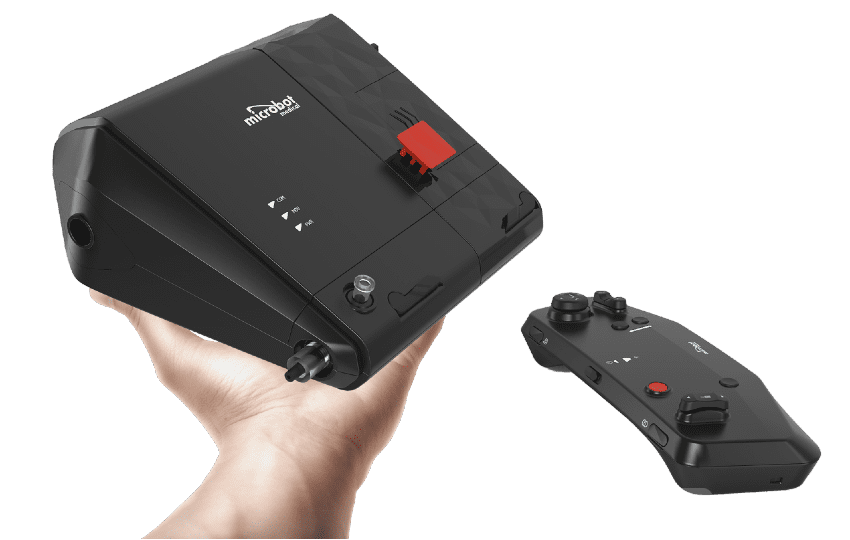
LIBERTY Robotic System. Image source: Microbot official website
On May 22, 2023, Microbot announced the successful completion of extended preclinical animal studies for LIBERTY. In the study, several radiologists performed 48 catheterizations on predetermined vascular targets using the system.100% Success Rate in Reaching the Intended Target, vascular targets included the distal branches of the gastric, hepatic, splenic, mesenteric, renal, and hypogastric arteries. According to physician feedback, LIBERTY is intuitive, easy to set up, and user-friendly; its remote operation capability was utilized during the procedure, with no intraoperative complications observed.
Microbot is planning to conduct preclinical studies in the United States and other target markets, and to initiate its first-in-human clinical trials, in preparation for the continued commercialization of LIBERTY.
In addition to the LIBERTY system, the company’s current technology platforms also include: One&Done, NovaCross, TipCAT, and ViRob. The first two are guidewire technologies, while the latter two are micro-robots.
Guidewire Technology: One&Done
One&Done is a guidewire technology that Microbot acquired from CardioSert in 2018. The technology is characterized byIt integrates an internal movable guidewire with an external microcatheter, enabling continuous and progressive control of the distal shape and stiffness.Integrating One&Done into the LIBERTY system eliminates the need for multiple consumables, reduces maintenance costs, and enables the expansion of LIBERTY to other potential applications in the cardiovascular, peripheral vascular, and neurovascular spaces.
NovaCross Series Microcatheters
In 2022, Microbot announced the acquisition of Nitiloop, an Israeli company, and its NovaCross series microcatheter portfolio, including NovaCross CTO, NovaCross Xtreme, and NovaCross BTK, all of which have received FDA approval.NovaCross consists of a support microcatheter and a smaller microcatheter, with an operator-controlled nitinol stent and telescoping segment at its distal end to enable wire positioning and distal support.。
Following the acquisition of Nitiloop, Nitiloop will customize the NovaCross microcatheter series for Microbot Medical and integrate it with One&Done technology to create a comprehensive suite of procedural kits for the LIBERTY System, thereby establishing a complete vascular interventional robotics ecosystem.
Autonomous Propulsion Endoscope TipCAT
TipCAT is a flexible, self-propelled, semi-disposable endoscope capable of navigating the human colon, blood vessels, and urinary tract, offering both diagnostic and therapeutic functionalities.TipCAT does not require external pressure to be pushed into the patient’s lumen; it can advance or retract autonomously by sequentially contracting and relaxing its balloon, generating sufficient friction with minimal pressure.. This locomotion mechanism enables it to achieve autonomous, gentle, rapid, and safe movement within human body lumens.
In its most mature colonoscopy applications, TipCAT can also carry various therapeutic tools to perform additional treatments during the colonoscopy procedure. Currently, Microbot is expanding the applications of TipCAT, with plans to extend its use to minimally invasive neurosurgery and vascular intervention.
Autonomous Crawling Robot ViRob
In the past, abdominal surgery required opening the patient’s abdominal cavity. As medical interventions have become increasingly advanced, most procedures can now be performed through small incisions of just a few centimeters or even millimeters using laparoscopic techniques. However, with the advent of miniature medical robots, even such minimal incisions are no longer necessary.
ViRob is an automatic crawling micro-robot controlled by remotely applied electromagnetic fields,With a diameter of less than 1 mm, its miniature size enables it to navigate and crawl within human body lumens, remain implanted for extended periods, and be widely applied in interventional minimally invasive therapies such as neurosurgery, radiotherapy, and targeted drug delivery.. Depending on specific clinical needs, ViRob can be remotely controlled to deliver cameras, medications, or instruments to the blood vessels, gastrointestinal tract, respiratory system, and other areas, thereby assisting physicians in performing minimally invasive surgeries.
Microbot is an Israeli medical robotics company co-founded in 2010 by Harel Gadot, Moshe Shoham, and Yossi Bornstein.
Harel Gadot is the Chief Executive Officer and Chairman of the Board of the Company. In 2013, he also founded another robotics company, XACT Robotics, where he serves as Chairman, leading the team in developing autonomous needle-guidance robots for minimally invasive interventional procedures such as biopsies and ablations. Prior to founding Microbot, Mr. Gadot served as Global Group Marketing Director at Johnson & Johnson, overseeing the company’s global strategic marketing.
Moshe Shoham, a member of the U.S. National Academy of Engineering, currently serves as the company’s Chief Science Officer. With over three decades of experience in the field of medical robotics, his recent achievements include the development of swimming microrobots and the Mazor Robotics Renaissance mechanical guidance system for spinal surgery. He is also the inventor of ViRob, a microrobot under Microbot Medical. Additionally, Shoham previously served as the Director of the Robotics Laboratory in the Department of Mechanical Engineering at Columbia University in New York. He has published more than 200 papers and holds 50 patents.
The third co-founder is Yossi Bornstein. Prior to founding Microbot, he served as CEO of the global biopharmaceutical company Bristol-Myers Squibb, founded Shizim Group, an integrated life sciences holding group in Israel, as well as the medical device innovation hub ShizimXL and the digital health innovation hub ShizimVS. He also co-founded the robotics company XACT Robotics with Gadot.
 From left to right: Harel Gadot, Moshe Shoham, Yossi Bornstein
Under the leadership of several seasoned entrepreneurs, Microbot developed several micro-robots within a few years and became a Nasdaq-listed company on November 28, 2016.
In 2022, faced with conflicting commercialization pathways between the self-cleaning cerebrospinal fluid (CSF) shunt system SCS and LIBERTY, coupled with the prolonged regulatory process for SCS, they decided to adjust their corporate strategy after careful consideration. They suspended further R&D of SCS and shifted their strategic focus to the development of LIBERTY.
In that year, Microbot’s R&D expenses amounted to $7.736 million, representing a 25.7% increase from $6.153 million in 2021. The suspension of the SCS research project helped offset a portion of the R&D costs for LIBERTY.
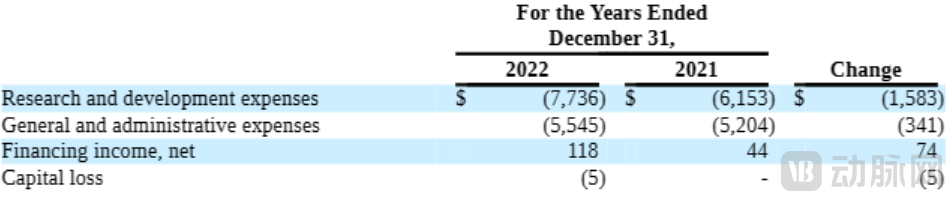 Microbot Financial Performance Data Source: Microbot Annual Report
As its products remain in the development stage, Microbot has consistently incurred losses. Since its inception, Microbot has raised approximately $59 million in net cash proceeds through equity offerings and grants from the Israel Innovation Authority (IIA), while its cumulative losses have totaled approximately $71.614 million.
As of March 31, 2023, Microbot’s cash reserves stood at $5.057 million, which the company expects to be sufficient to fund its research and development and operational activities for the next four months.. However, as several candidate products undergo further development, R&D investment will continue to rise, leading to increasing annual losses. The company will still require a steady influx of capital to support its ongoing operations.
According to VCBeat’s “Research Report on Vascular Interventional Surgical Robots,” vascular interventional surgical robots demonstrate significant clinical and economic value. Clinically, these robots achieve a higher success rate (99.1%) than manual procedures in complex cases, reduce patient radiation dose by 17%, and decrease operator radiation exposure by 95%. From a health economics perspective, robot-assisted vascular interventions can reduce stent usage, saving 8.3% of related costs.
Based on this, the global market for vascular interventional surgical robots is developing rapidly, with accelerated expansion in market size.Its global market size is projected to reach $180 million in 2022 and $4.48 billion by 2030, representing a compound annual growth rate (CAGR) of 49.2% from 2022 to 2030.。
Currently, developed regions such as the United States and Europe constitute the primary markets for vascular interventional surgical robots. Companies including Siemens, Johnson & Johnson, Robocath, Stereotaxis, and Catheter Precision have already obtained regulatory approval for their vascular interventional surgical robot products in the United States or the European Union. In contrast, China’s market for vascular interventional surgical robots is in its early stages of development, with many enterprises actively positioning themselves to support the advancement of domestically produced vascular interventional surgical robots.
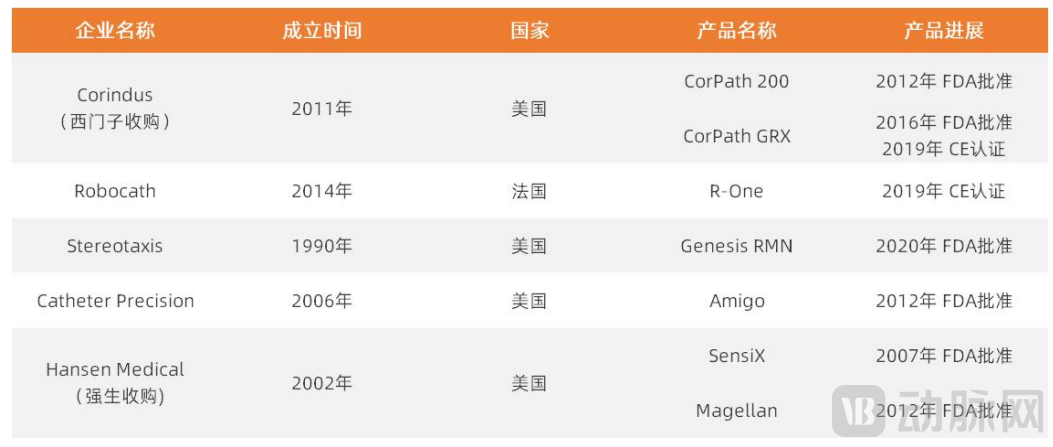 Overview of Overseas Vascular Interventional Surgical Robot Companies | Image Source: Artery Orange
Currently, companies such as MicroPort MedBot, Wansi Medical, Runmai Medical, RuiXin Medical, Weimai Medical, Huihe Medical, Aopeng Medical, Weiya Medical, Mayo Magnetocardiography, and Aibo Medical Robot have entered the field of vascular interventional surgical robots in China. Among them, Wansi Medical’s cerebrovascular interventional surgery assistance system has obtained registration certification from the National Medical Products Administration (NMPA), while other vascular interventional surgical robot products are mainly in the stage of animal experiments or clinical trials.