

ShiftMed Files for IPO: The On-Demand Nursing Platform Powering 350,000 Registered Nurses and Serving Over 1,500 Healthcare Facilities

ShiftMed
Mobile Application Provider
The World Health Organization states that “nurses are the backbone of all health systems,” yet the shortage of nurses is a global issue, affecting even developed countries.
In 2021, the American Nurses Association (ANA) wrote to the U.S. Department of Health and Human Services (HHS), urging U.S. authorities to “declare the current unsustainable nursing staff shortage a national crisis.”The U.S. Bureau of Labor Statistics states that the United States will face a talent shortfall of approximately 200,000 by 2030.
Nursing resources are unevenly distributed not only in total volume but also across regions. According to statistics from the industry website Nurse.org, 42 of the 50 U.S. states may experience a nurse shortage by 2030. Meanwhile, eight states are projected to have a surplus of nurses relative to demand.
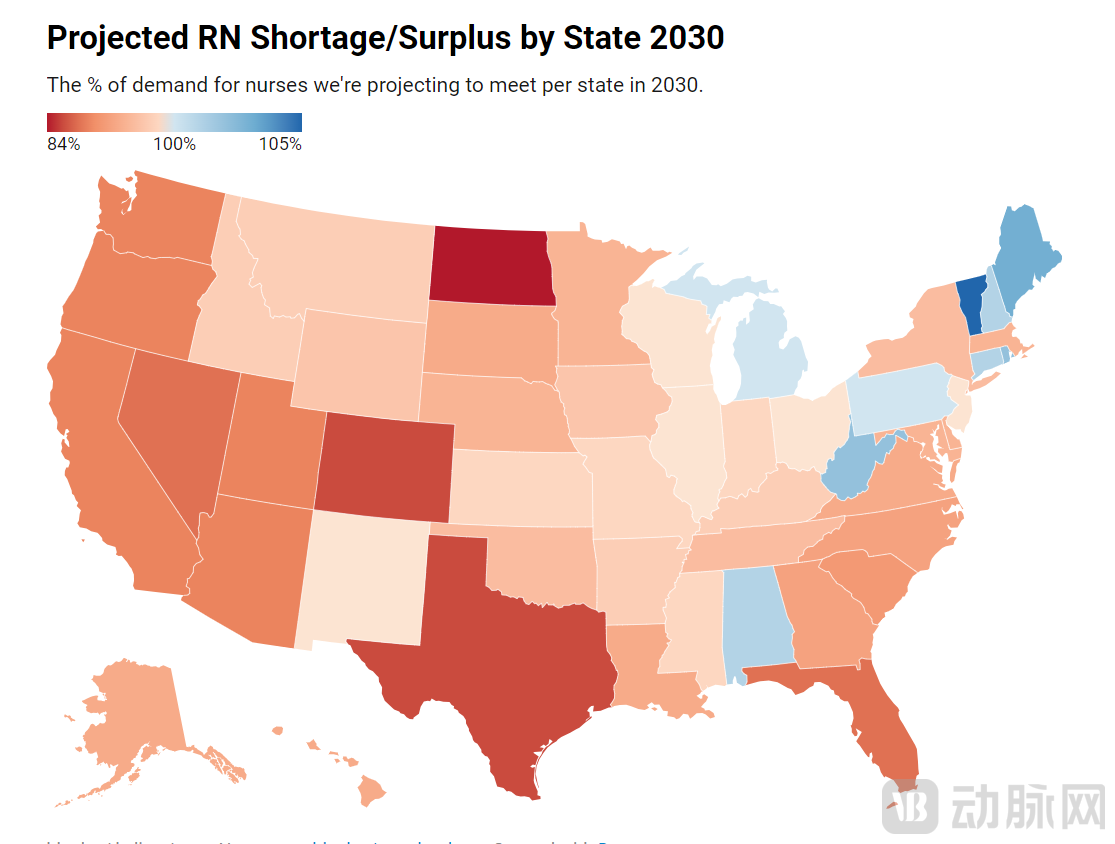
Image source: Nurse.org/Illustration by Nurse.org
Regarding practitioners’ perceptions, Nurse.org’s previously released “2023 The State of Nursing” survey found that among 2,000 respondents, 91% believed the nursing shortage was worsening, and 79% felt their workplaces were understaffed. “High work intensity,” “poor working conditions,” and “low pay” were identified as the primary causes of the nursing shortage.
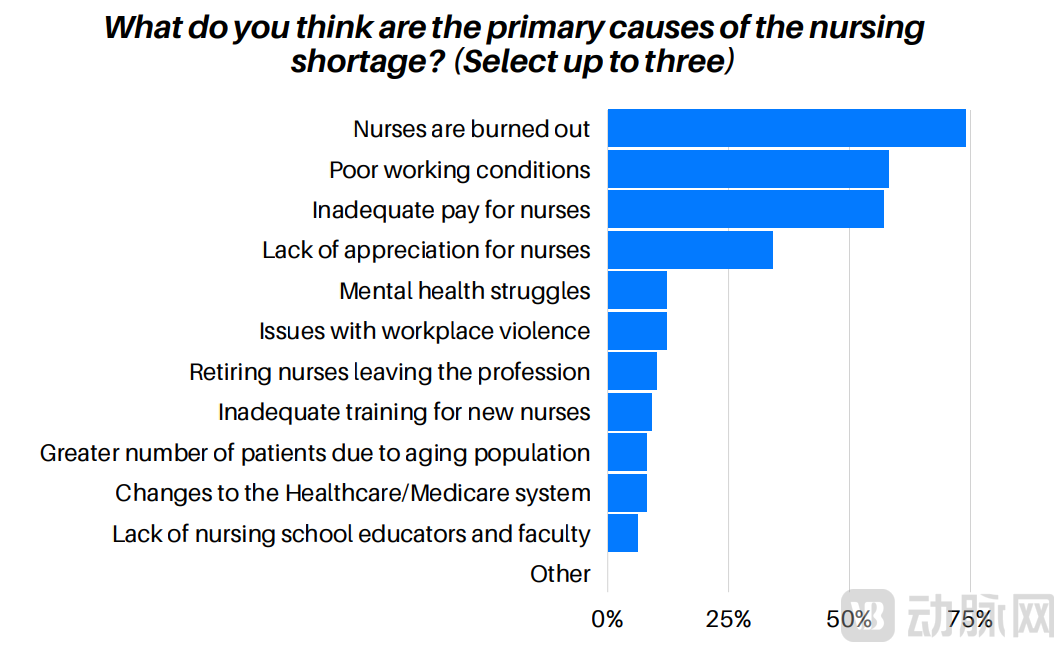
Image source: “2023 The State of Nursing” / Chart by Nurse.org
“Overall shortage,” “uneven distribution,” and “high workload with low pay” have fueled the rise of “travel nurses” in the United States—professionals who engage in on-demand, flexible employment, typically working at a single location for 4 to 13 weeks, with a maximum duration of 26 weeks, in pursuit of higher income and more flexible working hours.
Since the onset of the COVID-19 pandemic, demand for travel nurses surged dramatically, with salaries doubling. However, healthcare institutions offering high wages have failed to resolve their staffing shortages. According to The State of Nursing 2023, there remains a significant shortage of travel nurses.
Founded in 2019, ShiftMed identified this market pain point: on one hand, healthcare workers in the medical industry need more and better job opportunities; on the other hand, healthcare institutions have a significant demand for temporary staffing to reduce labor costs.
ShiftMedFocusing on on-demand workforce management in the nursing sector, the ShiftMed-Nuring Jobs APP has been launched to connect hospitals and skilled nursing facilities with relevant healthcare professionals (CNAs, LPNs, RNs, PTs, and community health workers), providing staffing services for nursing professionals, healthcare institutions, and home users.
In February 2023, ShiftMed announced the completion of a $200 million financing round. According to Rock Health’s previously released semi-annual report on U.S. digital health investment and financing, “H1 2023 digital health funding: A Brave New (lower funding) World,” this transaction ranked as the third-largest financing deal in the digital health sector.
In the Internet era, the sharing economy has blossomed and borne fruit across various sectors.
When registering on ShiftMed, nursing staff are required to upload their professional credentials, work availability schedule (8-hour shifts, with a minimum of 40 hours per week), commuting distance and preferences, salary expectations, and other relevant information. The system matches healthcare facilities’ recruitment needs with nurses’ job preferences based on proximity, recommending suitable candidates.
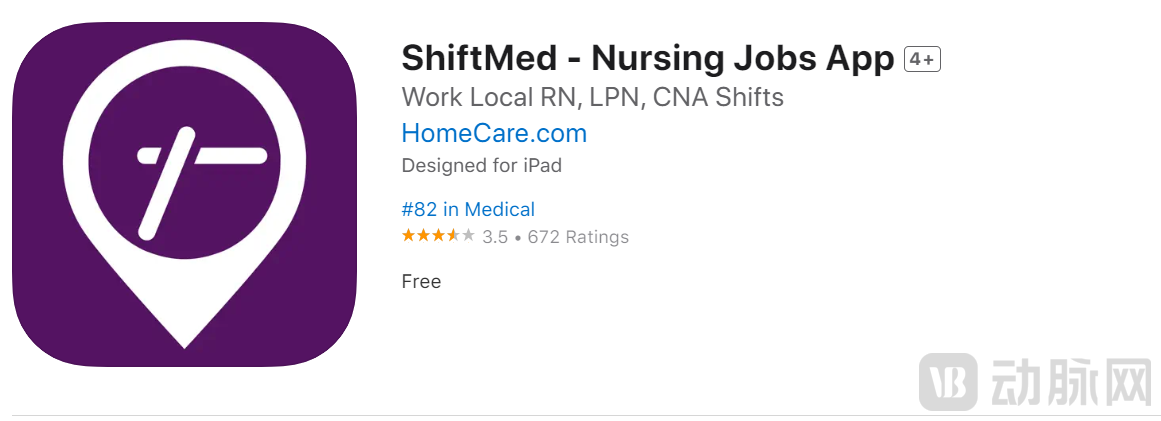
Source: ShiftMed official website
ShiftMed CEO Todd Walrath believes that traditional human resources vendors have long focused on travel nursing, where high travel costs place financial pressure on healthcare institutions. Moreover, these nurses typically work through staffing agencies rather than being directly employed by the healthcare facilities, meaning that in practice, healthcare organizations must manage nursing staff via third-party agencies. This arrangement not only undermines the protection of nurses’ interests and team stability but also increases the risk of labor and tax disputes.
ShiftMed leverages internet technology to focus on the local part-time job market, providing healthcare institutions with compliant W-2 employees (with formal employment relationships) to reduce labor costs and enhance institutional control over their “part-time workforce.” The additional administrative burden associated with W-2 tax reporting is handled by ShiftMed.
When caregivers register with ShiftMed, they become W-2 employees. This means that these individuals pay taxes, receive retirement benefits, and are eligible for unemployment benefits.
“Through conversations with nurses and caregivers, we found that healthcare professionals need access to services such as part-time benefits, transportation assistance, flexible payroll, and vocational education, in addition to shift scheduling.”ShiftMed CEO Todd Walrath believes that the platform’s ecosystem of part-time nursing and caregiving services is key to ShiftMed’s competitiveness.
ShiftMed’s payroll system operates on a “clock-out-and-get-paid” model, where funds are deposited directly into the caregiver’s bank account immediately after they clock out, with no transaction fees.
In terms of ensuring commuting support, ShiftMed has partnered with Uber Health to provide transportation assistance for healthcare professionals, with the costs borne by employers and deducted directly from daily wages; in enhancing benefits for part-time staff, ShiftMed has collaborated with Hooray Health to offer commercial health insurance to eligible shift workers, which can be purchased after completing just one shift; regarding career development, ShiftMed partners with the National Association of Health Care Assistants (NAHCA) to provide free CNA training and certification programs.
As a platform, ShiftMed also “guarantees” the interests of both parties in matching nursing staff with healthcare institutions.When a nurse who has accepted an order is late or cancels, the platform compensates the employer with half of the nurse’s daily wage. If the shift cancellation is attributable to the employer, the nursing staff will likewise receive their scheduled shift pay for that day.
Currently, ShiftMed covers 110 cities across the United States, with over 350,000 licensed nursing professionals registered and more than 1,500 healthcare facilities served, making it the most-downloaded per-diem nursing recruitment app on the U.S. App Store.
On the institutional side, ShiftMed provides employers with a digital workforce management platform that optimizes existing staff resources while introducing new talent.
ShiftMed’s management system integrates employers’ vendor management systems, managed service providers, or workforce management platforms with the ShiftMed portal, connecting both the “existing” and “incremental” pools of nursing resources. Employers can leverage big data tools to first optimize internal shift efficiency and then utilize external part-time resources on demand, thereby enhancing human resource utility.
When managing “existing stock,”ShiftMed first addresses the scheduling needs of nursing staff, enhancing shift efficiency for healthcare employers. Second, ShiftMed serves as a dynamic labor cost monitoring platform that translates real-time personnel and wage data into financial metrics for effective cost control. Third, as a big data platform, ShiftMed predicts employers’ workforce demands and monitors regional wage levels for nurses and caregiving staff, helping employers stabilize their teams and achieve operational objectives.
When introducing "increment,"Employers can use ShiftMed’s “One-Click Posting” feature to publish recruitment needs and access ShiftMed’s database of nursing professionals. After posting, ShiftMed provides a range of brand exposure and promotion services. Once part-time staff are onboarded, ShiftMed also offers onboarding and tax filing support, helping employers mitigate legal and tax-related risks.
From this perspective, ShiftMed essentially treats nursing services at healthcare institutions as an independent business line, with its platform and team functioning in a role akin to HR Business Partners (HRBPs), embedding human resources and its own value into the value modules of each business unit.
ShiftMed’s official website states that its comprehensive nurse workforce management solution can help healthcare institutions reduce labor costs by 30%–40%, compared to traditional travel staffing solutions.
In the first half of 2023, ShiftMed established long-term partnerships with UKG, one of the leading workforce management solution providers in the United States, and Smartlinx, a top-tier workforce management technology vendor specializing in healthcare. These collaborations aim to enhance the productivity and work experience of caregivers within the ecosystem, thereby driving operational excellence for healthcare employers.
In fact, explorations of the “Internet + nursing services” model in China began in 2015, the peak year of the sharing economy.VCBeat has previously reported on companies such as Yihudaojia, Gold Nurse, and Yihu Jia, all of which operate in this sector. They focus on home care scenarios and offer O2O (online-to-offline) in-home services.
However, unlike ordinary domestic housekeeping services, the “shared nurse model” at that time, while bringing benefits to patients, also faced numerous developmental challenges. Nursing services such as injections and infusions may appear simple, but they rely on the professional expertise of entire medical institutions and their hardware infrastructure for safety assurance.
From a legal perspective, “shared nurses” providing medical services outside of licensed healthcare institutions inherently conflict with the prevailing nurse practice regulations. Key challenges for platforms include ensuring the personal and procedural safety of home-visit nurses, defining the scope of home-based nursing care, verifying nurses’ qualifications, and determining whether nurses are permitted to practice at multiple sites.
In 2019, the Chinese government began to regulate the “Internet + Nursing Services” market from the top down.
In January 2019, the National Health Commission issued the “Pilot Work Plan for ‘Internet + Nursing Services’,” which clarified the legality of “shared nurses,” stipulated that nurses cannot engage in part-time work in their individual capacity, and set forth requirements for service providers, service recipients, service items, related liabilities, and risk prevention and control. The “Internet + Nursing Services” model was initially piloted in six regions: Beijing, Tianjin, Shanghai, Jiangsu, Zhejiang, and Guangdong.
Thus, as the mainstay of China’s healthcare services, public hospitals have extensively participated, giving rise to a sharing model of “public hospitals/urban medical consortia/medical and nursing institutions + internet platforms.”
The National Health Commission’s “National Nursing Development Plan (2021–2025),” released in April 2022, further calls for expanding the coverage of pilot programs for “Internet+ nursing services” and supports medical institutions in actively providing “Internet+ nursing services,” transitional care, and home-based nursing care.
On the eve of this year’s International Nurses Day (May 11), the National Health Commission held a press conference to brief on China’s efforts in “developing the nursing workforce and improving nursing services.”
As of the end of 2022, the total number of registered nurses in China exceeded 5.2 million. More than 2,000 medical institutions have launched “Internet + Nursing Services,” providing over 60 home-based medical and nursing care services across seven categories for discharge patients with mobility impairments, the elderly, and other populations.