

DiPai Bio Receives Approval for Three Innovative Wound Care Products and Expands to Over 120 Tier-3 Hospitals, Pioneering the Era of Wound Healing 3.0
Wound healing is a key focus and hotspot in surgical research.
Wounds are common conditions in daily life. In addition to acute wounds such as burns and traffic injuries, the incidence of chronic wounds—including diabetic foot ulcers, venous ulcers, and pressure ulcers—as well as complex, non-healing wounds caused by other factors, is increasing year by year with the accelerating trend of population aging. Studies have shown that the primary causes of hard-to-heal wounds in China have shifted from “trauma-related” to “disease-related.” The incidence of ulcers caused solely by diabetes has risen from 4.9% ten years ago to 35%, and continues to show an upward trend.
According to BMI Research, the global market size for medical dressings grew from USD 11.10 billion in 2014 to USD 20.6 billion in 2020, while China’s market size increased from RMB 3.989 billion to RMB 8.225 billion over the same period. Driven by factors such as accelerated primary healthcare infrastructure development, continuous improvement in residents’ living standards, rising surgical volumes, and an accelerating aging population, the market size of wound care medical dressings in China is expected to exceed RMB 10 billion.
Non-healing wounds not only cause physical and psychological suffering to patients, but their prolonged treatment duration and high therapeutic difficulty also impose a heavy medical burden. Therefore, accelerating wound healing and minimizing scarring have become key priorities in the field of skin regenerative medicine research.
Recently, VCBeat has noted that an innovative enterprise established in 2019, specializing in the development and services of wound repair products, has had three dressing products approved in succession within the past month. Among them, one “self-negative pressure dressing” is a first-of-its-kind innovation in China, and one “sterile liquid dressing” has been recognized as Shanghai’s first set of major technical equipment for medical devices.
Driven by curiosity, VCBeat finally managed to get in touch with this company after numerous attempts.depeac(abbreviated as"depeac"), and conducted an exclusive interview withCo-founder Jin Jian。

Jin Jian, Co-founder of depeac
The three products approved for Depac Biotechnology are disposable polyvinyl alcohol foam dressings (self-negative pressure dressings), hydrogel dressings, and sterile liquid dressings. Among them, the self-negative pressure dressing is a pioneering innovation by Depac Biotechnology, and the sterile liquid dressing is recognized as Shanghai’s first “First Set” medical device product.
Self-Contained Negative Pressure Dressing: Breaking Free from External Negative Pressure Systems, Ushering in the Era 3.0 of Wound Healing
The wound repair microenvironment is of paramount importance in influencing wound healing.
Traditional wound care, which focuses primarily on debridement and repair, is characterized by prolonged healing times, poor healing quality, and frequent complications, marking the "1.0 Era" of wound management. With technological advancements, negative pressure dressings have ushered in the "2.0 Era" of wound repair. These dressings offer significant advantages, including applicability to various complex, hard-to-heal wounds, reduced frequency of dressing changes, effective infection control, and enhanced wound healing.
During clinical treatment, negative pressure dressings must be used in conjunction with negative pressure wound therapy (NPWT) devices. When exudate is present in the wound bed of a patient’s body part, closed negative pressure drainage can be achieved using negative pressure dressings. However, the need to connect the wound to an external negative pressure device restricts patient mobility, causing inconvenience and hindering early functional rehabilitation. Furthermore, due to its insufficient inductive activity for epithelialization, treatment often still requires autologous skin grafting for completion.
To address the aforementioned pain points, depeac has developed a self-negative pressure dressing suitable for traumatic wounds, burn wounds, diabetic foot ulcers, pressure ulcers, venous ulcers, and various superficial acute and chronic wounds.
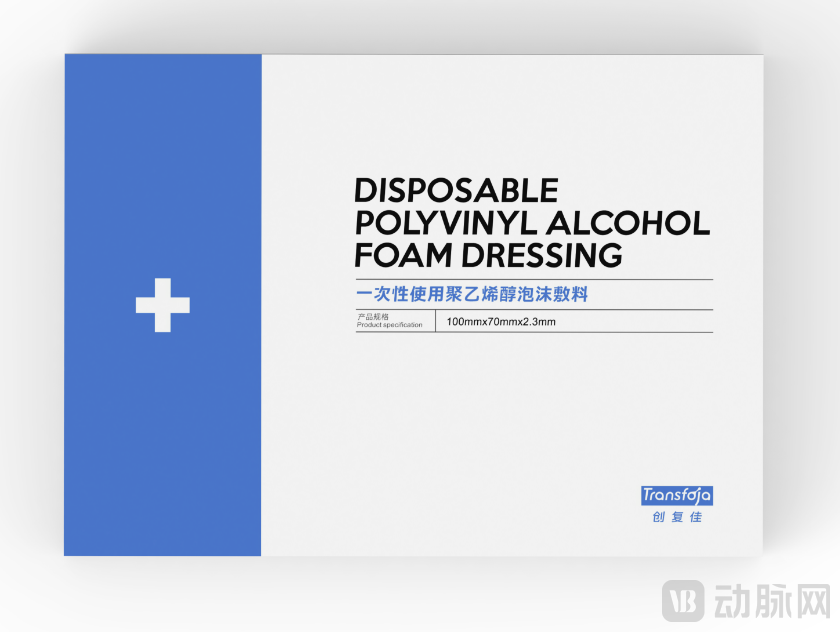
depeac's Pioneering Product -- Self-Negative Pressure Dressing
Self-powered negative pressure dressings do not require an external negative pressure device for suction; they can be applied directly to the wound site. The therapeutic mechanism relies on special microstructures within the dressing that generate a stable, localized micro-negative pressure at the wound site. This negative pressure promotes the opening of mechanosensitive calcium ion channels in wound tissue cells, facilitating calcium influx into the cells. This process leads to cytoskeletal depolymerization and enhanced cell membrane fluidity, thereby promoting the migration of keratinocytes, fibroblasts, and vascular endothelial cells. Enhanced migration of fibroblasts and vascular endothelial cells helps establish a favorable foundation at the wound site, while increased keratinocyte migration enables rapid epithelialization, ultimately accelerating wound healing. However, since the generated negative pressure has minimal impact on cell proliferation, it does not excessively induce cellular proliferation or increase the risk of pathological scar hyperplasia, thereby improving the quality of wound healing.
According to Jin Jian, a single set of self-negative pressure dressing can maintain its effect for 3–5 days. Taking deep partial-thickness (second-degree) burn wounds as an example, healing can be achieved in just 14–21 days, with only 3–5 dressing changes required throughout the entire course of treatment. Compared with traditional dressing change practices, this approach significantly reduces the treatment duration, frequency of dressing changes, and overall costs.
WaterGel Dressing: Moist Wound Healing, Inducing Autophagy, and Activating Cellular Self-Repair Potential
Hydrogel dressings are amorphous fluid-state gel dressings with trehalose as the primary component. Trehalose, a product of biological stress response, possesses autophagy-inducing activity, protects wound cells from stress-induced damage, activates their self-repair potential, and promotes wound healing. This dressing is suitable for wounds with minimal exudate and can also be used as an adjunctive therapy for dressing changes in various types of wounds. In addition to the bioactivity of trehalose, the hydrogel dressing exhibits film-forming properties, creating a physical barrier at the wound site that establishes a local microenvironment conducive to healing and provides a moist wound-healing environment.
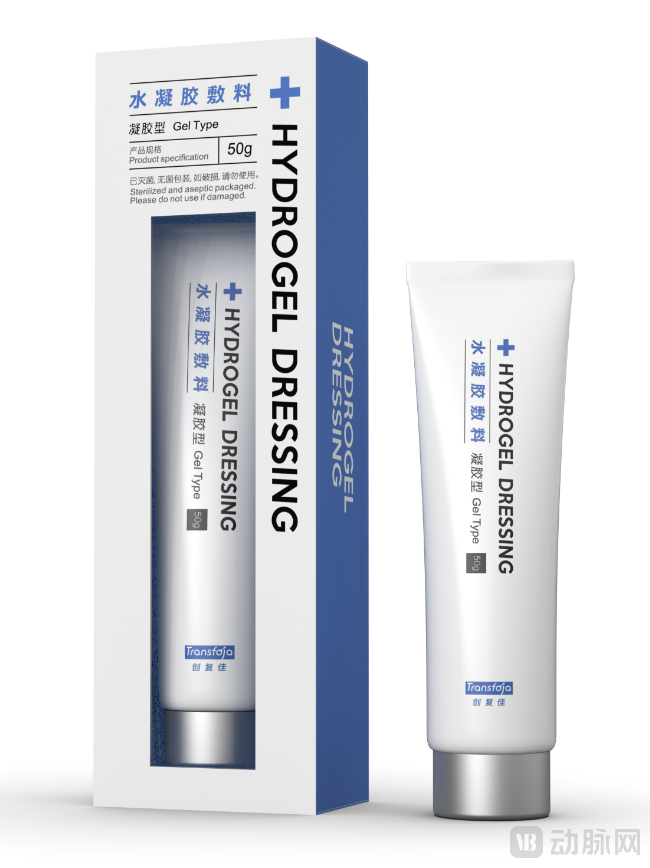
Depeac Trehalose Gel Dressing
It is worth noting that depeac’s Trehalose Gel Dressing is the only fluid-state gel dressing approved by the Shanghai Municipal Medical Products Administration in the past five years for direct application to wounds.
Sterile Liquid Dressing: Shanghai’s First Set of Its Kind, Maintains Microbiota Structural Balance, and Creates a Microenvironment Conducive to Wound Healing
Sterile Liquid Dressing is a novel liquid dressing developed based on the film-forming properties of alginate oligosaccharides and sodium alginate, as well as their resulting ability to improve and maintain the local microbial flora structure at wound sites. It is the first liquid dressing approved by the Shanghai Municipal Medical Products Administration as a Class II medical device and has been listed as one of Shanghai’s “First Set” products.
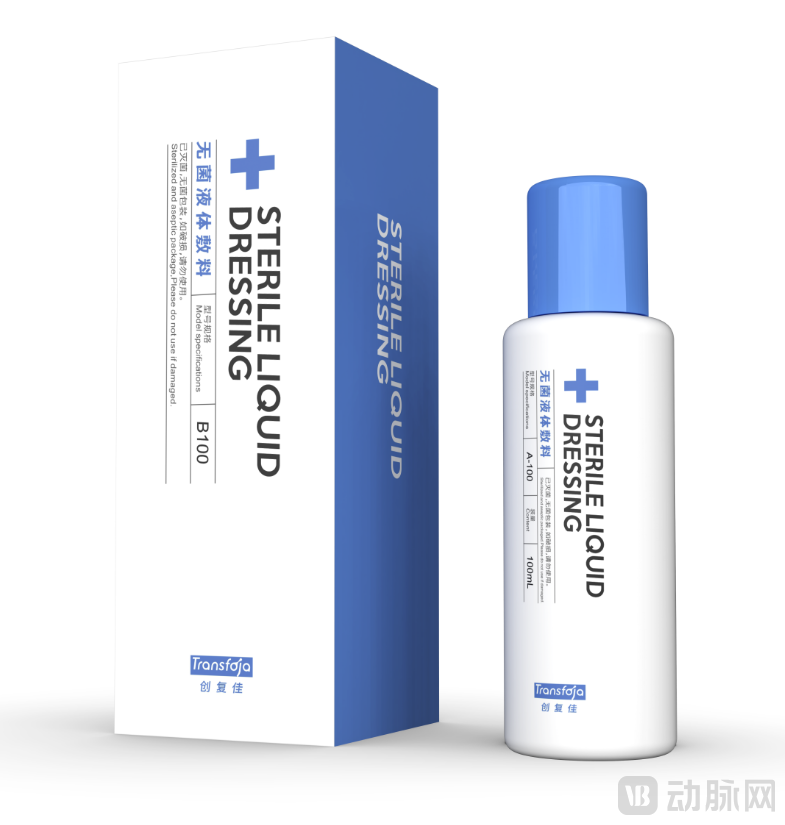
depeac Sterile Liquid Dressing
This product forms a film upon spraying, establishing a protective barrier and inducing moist wound healing. Meanwhile, it modulates the inflammatory response by inducing M2 polarization of macrophages, thereby improving and maintaining the balance of microbial flora structure, creating a microenvironment conducive to wound healing, promoting wound closure, and enhancing healing quality.
In addition to the aforementioned dressing products, depeac is currently developing multiple product series, including an intelligent wound tension-assisted closure system and an ultra-high-resolution four-dimensional bioinformation reconstruction platform.
Depeac was established in February 2019. In November 2020, it became one of the first enterprises introduced to the Baoshan High-Tech Park as part of the Shanghai Huanshangda Science and Technology Park. The company currently operates over 3,000 square meters of Class 100,000 cleanroom facilities and has five production lines in place. Depeac is an innovative medical technology company that integrates the development of platforms for translating scientific achievements into practical applications with the research and development, manufacturing, and sales of medical devices. Focusing on the field of tissue repair and regeneration, the company specializes in the development and provision of wound care products.
As a young biotech innovator, the company’s remarkable progress across three key dimensions—scientific and technical capabilities, pipeline planning, and product registration compliance—is driven by its robust professional team. The core R&D team is led by Professor Zhu Shihui, Senior R&D Consultant and Chairman of the Burn Surgery Branch of the Shanghai Medical Association, and Professor Zhu Liangliang, Deputy Director of the Planning and Development Office at Fudan University. Its members include young experts specializing in biomaterials, clinical medicine, artificial intelligence, and other fields. Meanwhile, the company has signed industry-academia-research cooperation agreements with more than ten top-tier domestic universities and research institutions, including Fudan University and Naval Medical University, to foster deep collaboration. Guided by an academician-led team, nearly 100 experts from multiple disciplines and fields form its scientific advisory board, providing strong technical support. This group includes high-level overseas talents introduced by the Organization Department of the CPC Central Committee, leading talents in technological innovation under the National “Ten Thousand Talents Program,” national high-level young talents, and chief scientists of the National “863” and “973” Programs. Leveraging a mechanism featuring leadership by scientific consultants, collaboration among scientists, and execution by the R&D department, the company has developed leading core technologies. Market-demand oriented, it promotes collaborative innovation and joint efforts to overcome technical bottlenecks, accelerates the transformation and industrialization of scientific achievements, achieves import substitution in several niche sectors, and even pioneers new market tracks.
Co-founder Jin Jian holds a Ph.D. in Polymer Science from Fudan University and a Master’s degree in Clinical Medicine from the Second Military Medical University. He is a recipient of the Shanghai “Science and Technology Innovation Action Plan” Qimingxing Talent Program and the Zhejiang Provincial Health and Family Planning Commission’s Innovative Young Talent Program. He serves as the Head of the Technical Advisory Department of the Regenerative Medicine Branch of the China Association for Tissue Engineering, a Committee Member of the Burn, Trauma, and Tissue Repair Branch of the Cross-Strait Medical and Health Exchange Association, and a Popular Science Lecturer for the Zhejiang Medical Association. Dr. Jin has published over 30 SCI-indexed papers, been granted 16 patents, presided over eight funded projects with a total funding exceeding RMB 30 million, and co-authored two academic monographs. He has received more than 20 national and provincial/ministerial awards, including the First Prize in the Medical Materials Category of the China Medical Device Innovation and Entrepreneurship Competition.
Jin Jian told VCBeat that the current product demands for depeac primarily originate from frontline clinicians. Physicians relay unmet clinical needs to depeac, which then collaborates with experts in medicine, materials science, mechanical automation, and other fields to evaluate and develop solutions. This process facilitates the translation of scientific achievements into practical applications, followed by feasibility validation in clinical settings, before depeac proceeds with industrialization. This approach truly embodies the principle of “from the clinic, back to the clinic.”
Depeac also emphasizes the accumulation of independent intellectual property rights. Since its establishment, it has obtained authorization for 46 independent intellectual property rights, including 17 patents and 6 software copyrights.
Leveraging the background advantages of its core team, the company has accumulated channel resources from over 120 large Grade A tertiary hospitals in China, expanding its market through dual academic and commercial collaborations.
According to Jin Jian, the company’s business model primarily revolves around collaborations with hospitals. At present, its sales team is mainly based in Shanghai. This year, it will focus on expanding into Beijing, Shanghai, Guangzhou, the Pearl River Delta, and the Yangtze River Delta, with plans to gradually expand across China.
Upholding the vision of becoming a “leader in the field of tissue repair and regeneration,” depeac, after years of quiet dedication, has shone brightly in major innovation competitions and secured support from multiple scientific research funds.
Awards:
First Prize and Third Prize in the Medical Materials Category of the 2023 China Medical Device Innovation and Entrepreneurship Competition;
Second Prize in the National Finals of the 2022 China Medical Device Innovation and Entrepreneurship Competition (Medical Materials and Nursing Products Category);
Outstanding Project in the National Competition of the 2022 National Disruptive Technology Innovation Contest (Biomedical Sector);
Third Prize in the Maker Category of the 2022 "Maker China" National Finals (Biopharmaceutical Sector);
Winning Enterprise of the 2022 China Innovation and Entrepreneurship Competition (Shanghai Division) and Recommended for the National Finals;
Second Prize in the National Finals of the 2021 China Medical Device Innovation and Entrepreneurship Competition (Medical Materials and Surgical Instruments Category);
Outstanding Project at the 2021 National Finals of the National Disruptive Technology Innovation Competition;
Excellent Enterprise at the 2021 Baoshan District, Shanghai Outstanding Innovation and Entrepreneurship Competition.
Research Grants Received:
Special Fund Project of the Ministry of Science and Technology of China for Supporting Small and Medium-sized Enterprises in Innovation, Entrepreneurship, and Upgrading through Distinctive Platforms. Principal Investigator. Development of an Antibacterial Wound Repair Liquid Dressing. 2020.12–2021.12.
Shanghai "Science and Technology Innovation Action Plan" Baoshan Transformation and Development Science and Technology Special Project. Principal Investigator. Intelligent Control of Wound Tension Closure System and Development of Engineering Prototype. 2021.07-2023.06.
Shanghai Municipal “Science and Technology Innovation Action Plan” Qimingxing Project. Principal Investigator. Development of a Multi-Gradient Biomimetic Dermal Scaffold with Through-Holes Fabricated via Femtosecond Laser Three-Dimensional Lithography Based on Recombinant Human Collagen. 2023.04–2026.03.
Shanghai “Huan Shangda” Project. Principal Investigator. Development of Through-Hole Multi-Gradient Micro-Dynamic Negative Pressure Dressings. October 2021–December 2023.
Shanghai “Around Shangda” Epidemic-Related Project. Principal Investigator. Research and Development of Novel Zinc Ion-Based Antimicrobial Disinfection Products. 2022.07–2024.06.
Shanghai Technology-Based Small and Medium-Sized Enterprise. Principal Investigator.
Shanghai Municipal Commission of Economy and Informatization Special Project for Biomedicine. Research, Development, and Industrialization of a Series of Products for Precision Therapy in Tissue Repair and Regeneration. Principal Investigator. November 2021–October 2024.
With the approval of its disposable polyvinyl alcohol foam dressing (negative pressure dressing), hydrogel dressing, and sterile liquid dressing, depeac will officially set sail and commence full-scale commercialization.