

The Inside Story of How Preclinical Data Issues Derailed 'Moderna 2.0' Star Laronde

Laronde
Novel Programmable Drug Developer
This yearOn June 12, STAT and The Boston Globe published an investigative report highlighting issues with key preclinical data from Laronde’s flagship program, which has triggered personnel turmoil and cast uncertainty over the company’s future.
Laronde, a highly anticipated new star biotechnology company, is considered to be“Moderna 2.0”。 In May 2021, Laronde made its debut with a $50 million investment from Flagship Pioneering. Its highlight came in August 2021, when the company announced the completion of a $440 million Series B financing round.
Large-scale financing and star-studded capital have directly brought the domestic capital market's attention to circularAmid the growing interest in RNA therapies, domestic startups have fielded numerous inquiries from investors.
However, due to issues with preclinical data,Laronde has shelved its two most advanced projects, including a GLP-1 therapy program, and is unlikely to submit clinical trial documentation by year-end as per its internal targets.AtBetween May and September 2022, Laronde’s senior management experienced turmoil, with dozens of employees departing, including several of the company’s top executives.
Why did a company with an elite founding team encounter such severe data issues? Notably, concerns about the data had already persisted within the company for approximately a year prior to their public disclosure.Is it individual error, systemic management loopholes, or the bright prospects of new therapies that have plunged the company into a state of ambitiously blind optimism?
STAT and The Boston Globe interviewed more than a dozen insiders at the heart of the investigation, outlining the thought-provoking aspects of this story.
On U.S. social media, industry insiders also stated:“This may not be a case of fraud. But it aptly illustrates how easily drug developers can deceive themselves when confronted with contradictory results.”
“This is a must-read story, serving as a reminder of the importance of integrity and reproducibility in biomedical research.”AdditionallyIAn industry insider wrote.
Artery New Medicine has translated the full report, as follows:
1
In February 2022, Diego Miralles, then CEO of Laronde, convened employees at the company’s new headquarters in Somerville, Massachusetts, to deliver some unsettling news.
Miralles told approximately 130 Laronde employees that an internal investigation had found issues with some of the core research currently being conducted by the company“Poor Laboratory Testing Methods”and the issue of careless record-keeping. He stated that this incident was very serious and that the company needed to learn from it.
Despite the cautious wording, his meaning was clear:There are issues with some of Laronde's key preclinical data.
A former employee recalled that the atmosphere was tense at the time, with everyone feeling as though the air had been sucked out of the room.
Miralles stated that one person was responsible, and although he did not reveal who it was, employees quickly made the connection: Laronde had recently parted ways with a senior scientist named Catherine Cifuentes-Rojas.
Cifuentes-Rojas oversees the preclinical research of one of the company’s top drug candidates, which, like the blockbuster weight-loss drugs Wegovy and Mounjaro, targets GLP-1. According to four people familiar with the company’s plans,This drug supportedLaronde raised a substantial $440 million in its Series B financing round in 2021; additionally, according to an internal slide deck, the company’s valuation exceeded $1 billion at that time.
“To be honest, this is somewhat shocking,” said another former employee, commenting on Miralles’ announcement during a staff meeting. “As an employee, I am genuinely concerned. This is not a good sign for a company.”
According toAn investigation by STAT and The Boston Globe revealed that in the following months, data integrity issues triggered significant turmoil at Laronde. According to three former employees, Laronde shelved its two most advanced projects, including a GLP-1 therapy, and is likely unable to submit clinical trial documentation by year-end as per internal targets. Dozens of employees have departed, including several senior executives.
ForFor Laronde, founded by Flagship Pioneering, this incident highlights an issue.Amid the allure of the bright prospects for new therapies, it is easy to succumb to blind optimism despite signs of underlying issues.According to three informed sources,Concerns about the data had existed for approximately a year prior to Miralles’ disclosure of the issues,Many have attempted to replicateDespite the impressive data obtained by Catherine Cifuentes-Rojas, all efforts ultimately ended in failure.
For former employees,The specific details regarding Catherine Cifuentes-Rojas’s research remain unclear. However, Laronde has already drawn many valuable lessons from the experience,This company, once dubbed “Moderna 2.0” by some employees, should serve as a model for other biotechnology firms.
“The data she presented was flawless. Anyone involved in in vivo studies (animal testing) knows this is impossible,” said someone who had previouslyCatherine Cifuentes-RojasWorking in the same teamLarondeFrontEmployeeJane van Heteren said.
Laronde declined interview requests. However, in a detailed statement, the company acknowledged that it had been developing GLP-1 therapies during 2020 and 2021 but later determined that early experimental results were unreliable.The statement reads:“Certain individuals involved in GLP-1-related work” are no longer employed by the company.
“As always, we execute our vision with rigorous scientific standards, and we take appropriate measures when those standards are not met. As we gained clearer insights into our previous GLP-1 development efforts, we communicated with our Board of Directors and investors and took appropriate action,” the company said in a statement. “These experiments are unrelated to the prospects of our other platform applications.”
We giveSeveral questions were sent via email to Catherine Cifuentes-Rojas, but she has not replied.
This article is based on interviews with more than a dozen insiders who have knowledge of the company’s internal operations and are at the heart of the investigation—information that has not been previously disclosed. Most spoke on condition of anonymity, fearing reprisalsretaliation by Flagship, or because they signed agreements prohibiting discussion of company matters.
2
Since its inception, Laronde’s executives have been outlining a blueprint of extraordinary possibilities.
The company was established inIn 2017, the aim was to develop a novel drug utilizing RNA. Specifically, Laronde focused on so-called eRNA (endless RNA)。
Typically, cells use a mechanism known asmRNA is used in its RNA form to synthesize proteins, which is also the technology employed by Moderna and BioNTech in their COVID-19 vaccines. mRNA exists as a long chain; however, this linear structure is fragile and difficult to handle, partly because an RNA-degrading enzyme called exonuclease cleaves the free ends of linear mRNA and breaks it down.
Exonucleases rapidly complete this process: most experts claim that inThe mRNA used in COVID-19 vaccines is cleared from the body within one to two days. This rapidGroundActivity is feasible for vaccines, as their goal is to produce a protein that stimulates an immune response. However, for those hoping to useThis poses a challenge for drug developers using RNA to encode proteins for chronic therapies that require patients to take medication for months, years, or even a lifetime.
ToIn 2017, scientists at Laronde and elsewhere gradually converged on a novel idea: by joining the free ends of RNA strands to form a circular loop of genetic information, it might be possible to create therapies with greater durability while triggering fewer immune system alarms. This could open up new realms of possibility for treating cancer, metabolic diseases, genetic disorders, and more.
(Former employees stated,eRNA is essentially equivalent to the circular RNA technology being developed by startups such as Orna Therapeutics and Orbital Therapeutics. When asked about the differences between the two technologies, Marissa Hanify, Director of Public Relations at Laronde, stated, “The technical similarities and/or differences lie in the underlying sequences and elements,” but she declined to provide specific details.
Laronde believes that this technology can produce a large number of new drugs. For a time, executives distributed T-shirts printed with an image of a cassette player to employees, expressing their belief that eRNA is a plug-and-play system—insert a new tape and get a different output.
In public, company executives set an ambitious goal ofCreate 100 New Drugs by 2031.
Insiders at Laronde believe that,The company's longer-lastingRNA technology could help it surpass Moderna to become the crown jewel in Flagship’s portfolio.“We thought we were better, more exceptional… like Moderna on steroids,” said a former executive.
Some former employees said,Even in the early stages, they felt pressured to promote the corporate vision that management wished to advance to the global community.This form ofRNA technology is still in its nascent stages; in many respects, employees are merely exploring how to best integrate RNA with those microscopic circuits and produce high-quality genetic material. Nevertheless, executives are dissatisfied with any negative outcomes.

Laronde executives distributed T-shirts printed with a cassette player design to employees
“A researcher who worked at Laronde in 2018 and 2019 recalled, ‘There was a strong sense of opposition between “us” in the laboratory and “them” among senior management.’”If the result is not positive...that is our mistake, never the fault of the technology itself.”
Flagship declined to comment on this article.
3
Laronde was Cifuentes-Rojas’s first job in the pharmaceutical industry. According to her LinkedIn profile, the 45-year-old was recruited to Laronde in June 2018 from an assistant position in molecular biology at Massachusetts General Hospital. She quickly began laying the groundwork for Laronde, and her name appears on more than a dozen patents associated with Laronde or Flagship.
“She is the cornerstone of Laronde,” said a former researcher. “She is the goose that lays the golden eggs.”
Cifuentes-Rojas’s study yielded three key findings: eRNA can be injected into mice and induce protein expression for several weeks or even a month; this can be achieved without delivery vectors; and notMay lead to immune relapse.
Most other gene therapy drugs require some form of delivery vector to evade the immune system. Many pharmaceutical companies, including Moderna, use a substance called lipid nanoparticles—tiny fat clusters that encapsulate genetic elements and act as a buffer during their passage through the body into cells. However, lipid nanoparticles tend to target specific organs such as the liver and can sometimes trigger allergic reactions. Therefore, the ability to deliver RNA without lipid nanoparticles would be a major advantage for Laronde.
Cifuentes-Rojas was assigned to lead the research on GLP-1 candidate drugs.
In early 2021, she presented the data to Jesper Gromada, Chief Scientific Officer, and Laronde’s in vivo testing team. This team was responsible for testing promising drug candidates in mice to determine their efficacy. The data showed that the therapy could promote the production of GLP-1 protein in mice. The findings were so exciting that Gromada warned the team not even to share the data with colleagues, seemingly concerned about leakage to competing RNA companies.
However, some of Cifuentes-Rojas’s colleagues remain skeptical about these data.
According to van Heteren, she identified several glaring issues while working in the in vivo research group from February to June 2021: During a laboratory meeting that spring, Cifuentes-Rojas presented the team with ELISA test results for the so-called GLP-1 candidate drug, which were intended to measure GLP-1 protein levels produced by mice before and after treatment. The charts shown by Cifuentes-Rojas indicated that protein levels started at zero, which is impossible because mice naturally produce their own GLP-1 protein unless they are severely ill. Van Heteren stated that, in order toTo clarify this point, it remains unclear whether or how the data were adjusted.
When van Heteren conducted the same experiment, she obtained different results. To determine the cause, she sought Cifuentes-Rojas’s raw data, first searching the company’s electronic laboratory system and then requesting it directly from Cifuentes-Rojas. However, no data could be found in the company’s digital records, and Cifuentes-Rojas refused to share any data with colleagues.
Van Heteren felt frustrated and sought help from their supervisor, Gromada, asking whether the raw data could be shared. She recalled Gromada saying angrily, “The fact that you cannot reproduce the data generated by Cathy does not mean that Cathy is wrong. Clearly, the problem lies with you.”
van Heteren was not the only one to encounter this situation. Two other former employees told STAT that they could not find Cifuentes-Rojas’s raw data in the electronic record system. One of them stated that they, along with Laronde’s platform team (which is responsible for early-stage research and development using cell samples), spent several months in the spring of 2021 attempting to replicate Cifuentes-Rojas’s work but were unsuccessful.
Her colleagues were unable not only to replicate the protein expression levels she reported but also struggled to simply detect eRNA in mice. According to van Heteren and another former employee, staff would inject eRNA into a site near the tail of the mice, but it appeared to fail to disseminate throughout the body and was undetectable in blood samples.
According to those who worked with her, Cifuentes-Rojas was secretive about her work and had a habit of becoming defensive when people questioned her data. Yet she could also be amiable and charming. Another former colleague recalled a T-shirt she once wore in the office that read, “PCR: Pipette, Cry, Repeat,” a playful jab at the tedious sample processing that many laboratory scientists grow weary of.
4
As summer 2021 approached, discussions within the company regarding data became particularly tense: Laronde’s executives were raising Series B financing, aiming to showcase their GLP-1 candidate drug as the company’s success story.
Initially, production personnel were subjected to rigorous scrutiny. The team was addressing manufacturing challenges—this RNA was entirely novel, with no established protocols for large-scale, high-quality production.DiProduction. The wait times were long, and the RNA levels and impurity content in the delivered eRNA containers varied. One batch might contain eRNA with 60% purity, while another could be 80% pure. This was initially thought to be the reason scientists obtained different preclinical results, but three former production team members stated that this was misleading, as data generated by Laronde did not show a clear relationship between the amount of eRNA in a batch and its performance in cells or mice.
Then, in July 2021, a former employee filed a complaint with Flagship’s human resources department, raising concerns about data related to Cifuentes-Rojas, two people familiar with the matter recalled. As executives were engaged in final discussions with investors, Laronde was compelled to investigate the issue.
Gromada assigned a researcher to conduct repeat ELISA tests on some of Cifuentes-Rojas’s mouse blood samples to determine the amount of GLP-1 protein produced. The results were inconclusive, ultimately showing no significant difference between the mice treated with GLP-1 and the control group. When Cifuentes-Rojas handed over the samples to the researcher, she mentioned that she might have mixed up the control and GLP-1 samples during the process. Gromada and the researcher considered whether this could explain why the results appeared identical.
It remains unclear what the results of the retesting were, but Laronde continued to advance Cifuentes-Rojas’s research.
Ultimately, on August 30, 2021, Laronde announced the completion of a record-breaking $440 million Series B financing round. Laronde now counts BlackRock, the world’s largest investment and asset management firm, among its investors, along with the Canada Pension Plan (CPP), Fidelity Investments, and Invus.
Despite intense internal strife, Laronde’s leadership chose to press on that autumn. According to internal company presentations and four individuals familiar with the matter, in addition to its GLP-1 program, the company is also developing therapies targeting the GLP-2 hormone receptor for short bowel syndrome, as well as one candidate for liver cirrhosis and another for an RSV vaccine.
Internal estimates suggest that the durability of Laronde’s RNA therapy has been extended from one month to up to three months with a single injection. The company conducted trials in non-human primates,and plans to submit documents by the end of 2023 to initiate clinical trials. According to former executives and employees, there were also discussions within the company regarding an initial public offering (IPO).
The production team has begun manufacturing additional batches of eRNA, enabling more employees to conduct experiments. This has further intensified suspicions surrounding the work of Cifuentes-Rojas. According to an informed employee, a research assistant once decided to extract raw data from a device used for ELISA testing. Known as a plate reader, this instrument evaluates the protein levels present in individual samples and generates heatmap-like outputs, where blue indicates low activity and red indicates high activity.
The raw data from the Cifuentes-Rojas experiment is a sea of blue.
5
Employees are also striving to make progress on the GLP-2 project.
Short bowel syndrome refers to the partial absence of the small intestine, which may result from congenital defects or acquired health conditions such as Crohn’s disease, necrotizing enterocolitis, or other causes. If Laronde’s therapeutic regimen were effective, it would promote the growth of intestinal villi responsible for nutrient absorption in the remaining bowel. However, according to the former executive, this is not the case.
According to another source and van Heteren, at least two employees were fired for failing to replicate data and for conflicts with Cifuentes-Rojas. Van Heteren also showed STAT relevant text messages.
The issue came to a head over a weekend in January 2022, when Laronde’s executive team was summoned to the company’s headquarters. According to the former executive, the company had identified data issues and parted ways with Cifuentes-Rojas.
A few weeks later, at an all-hands meeting, Laronde’s CEO Miralles announced the news to the rest of the staff.
Laronde employees speculated about what this news meant for the company’s future. At least initially, there appeared to be a plan to move forward. However, the company subsequently conducted a more in-depth analysis of Cifuentes-Rojas’s work. Samples from primates treated with GLP-1 showed no significant protein production.
For a moment, there was hope that the issues were confined to GLP-1 candidate drugs, but it soon became evident that the GLP-2 projects were also ineffective. Laronde discontinued both programs and began searching for new lead candidates.
A former company scientist stated, “This is simply devastating.”
In the process of handling this matter, Yann Echelard, Flagship’s operating partner and one of Laronde’s co-founders, reached out to an acquaintance well-versed in RNA medicine, hoping he could assist Laronde. (Echelard did not respond to requests for comment)Makeresponse) But mentioning Gromada’s name raised his alertness.
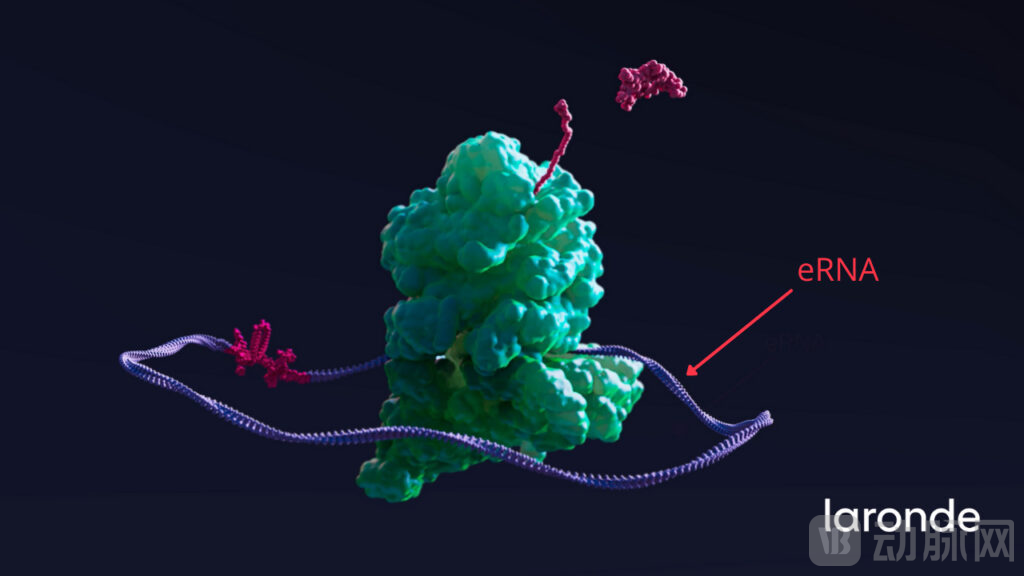
The image of eRNA shows how this molecule binds to ribosomes to produce proteins.
6
Ten years ago, Gromada was a member of Novartis’s diabetes and metabolism R&D team, where he explored alternative indications for an antibody the company was developing to treat spinal cord injury. A former Novartis manager stated, “For about a month, progress was not very smooth, which was acceptable. Then, suddenly, very positive findings emerged in cellular and animal studies, which surprised me.”
In Gromada’s hands, this antibody appeared to help lower blood glucose levels in mice. Encouraged by these results, Novartis began internal discussions about launching a new clinical trial.
But these data left some people within Novartis puzzled. The former manager said, “For me, I don’t see how this antibody could treat diabetes. It’s too good, so goodcontract“Incredible... the data keeps flowing in, and it’s flawless.”
A second individual tasked with replicating the Gromada experiment (the person Echelard contacted in May 2022) was unable to obtain the same results.
Mass spectrometry analysis provides an explanation: Novartis’s antibody was not present in Gromada’s samples.
Mass spectrometers measure the molecular weights of different compounds. However, Novartis employees did not identify any substance with the same molecular weight as the antibody in Gromada’s samples. Instead, they discovered a small molecule and chicken lysozyme, both of which are smaller and have lower molecular weights than the antibody.
These results have been reported to Novartis management, but by that time, Gromada had already left Novartis and assumed the position of Vice President at Regeneron.
“Novartis is committed to ensuring the integrity of our data, and we have established robust risk monitoring programs. We do not comment on personnel matters,” Novartis spokesperson Julie Masow told STAT.
7
After the data issues involving Cifuentes-Rojas were exposed, Gromada did not remain at Laronde for long.
Laronde’s management experienced turbulence between May and September 2022.Gromada departed during that period, as did CEO Miralles and CTO Vadim Dudkin (Laronde declined to comment on Gromada’s departure but told STAT that Miralles’ exit was not related to concerns about data or experiments. The reasons for Dudkin’s departure remain unclear. According to his LinkedIn profile, he served as a consultant until the end of the year).
Last autumn, Laronde appointed industry veteran Pablo Cagnoni as its new Chief Executive Officer. According to two individuals familiar with the matter, the company also initiated negotiations with Pfizer regarding a potential collaboration on vaccine development. However, Laronde’s data performance has been lackluster, failing to demonstrate significant advantages of its eRNA platform over other vaccine types, causing the negotiations to stall.
It remains unclear how much cash flow the company currently holds, but employees who have left in recent months stated that executives have consistently emphasized that funding is not an issue. “There is still substantial capital in the bank. The primary concern is whether we have (drug) projects to deploy these funds,” said a recently departed employee.
Laronde laid off roughly a dozen employees in April, most of whom were involved in manufacturing eRNA for clinical trials, according to three former employees. In a statement to STAT, Laronde said it now aims to advance different projects into the clinical stage over the next two years. In May, Avak Kahvejian, a general partner at Flagship Pioneering, presented animal data on an H1N1 influenza vaccine.
Laronde’s senior management continues to undergo changes: Kahvejian served as Interim Chief Scientific Officer until Trevor J. Hallam was appointed Chief Scientific Officer in mid-May. Meanwhile, Cagnoni resigned as Chief Executive Officer on May 26. His role was temporarily assumed by John Mendlein, an Executive Partner at Flagship.
Former employees stated that after the incident occurred, people were quick to assign blame.
It remains unclear what Cifuentes-Rojas was thinking throughout the incident or how she later viewed it. However, colleagues who worked with her stated that she wielded unusually significant power within Laronde due to her close ties with Flagship Pioneering. Former Laronde employees noted that she was recruited by a member of the Flagship team who helped establish the new company, and the prevailing sentiment inside Laronde was that if Flagship trusted her, everyone at Laronde should do the same.
Others attribute data integrity issues to executives who place immense pressure on employees,Even Cifuentes-Rojas himself was not exempt. A former researcher recalled that Cifuentes-Rojas entered the company’s office during the 2019 Christmas holiday to complete an experiment, only to be reprimanded because the test results were not positive. Another individual remembered seeing Cifuentes-Rojas in the office, nearly in tears due to excessive stress.
Some former employees have pointed the finger at Gromada,noting that he overlooked some clues. “[Cifuentes-Rojas] was the only one running the GLP-1 ELISADetection“...and made the data appear as if it belonged to real patients. And the fact that this situation persisted for so long is Jesper Gromada’s responsibility,” said a former employee.
Some individuals expressed regret over having disregarded their colleagues' concerns or for not taking the situation more seriously at an earlier stage.
Despite Laronde has been plagued by internal turmoil, yet many former employees still see the potential of eRNA. The company has begun to resolve some of the uncertainties surrounding this technology and has observed promising results when comparing eRNA with mRNA. One employee who left in recent months stated,Circular RNAs are not without promise; they are simply not as remarkable as Cifuentes-Rojas claims.
Former employees stated that Laronde, Cifuentes-Rojas, and Gromada must reflect on what has happened in order to move forward. Some pointed out that this issue’sCoreThe individuals have secured new positions within the industry: Gromada has joined biotech investment firm Third Rock Ventures as a Venture Partner, while Cifuentes-Rojas is now with Ginkgo Bioworks.
“There are many unsavory aspects to this whole affair,” said van Heteren.However, we do not wish to convey the message to the public that this is the norm in the biotechnology industry.”
Original article link:
The inside story of how data integrity issues roiled a biotech seen as ‘Moderna 2.0’
https://www.statnews.com/2023/06/12/laronde-data-integrity-issues-biotech/