

Young Women Propel Nearly RMB 30 Billion IPO: Fu Er Jia, a Consumer Medical Company with RMB 1.8 Billion Annual Revenue, Goes Public
Minimally invasive aesthetic procedures have remained a consistently popular segment within the consumer healthcare market, driving strong demand for medical dressings used in post-procedure care. Stimulated by skincare market needs, medical dressings have acquired consumer-oriented attributes. In recent years, concepts such as “medical masks” and “Class II medical device masks” have maintained enduring popularity, giving rise to a wave of internet-famous brands.
Voolga is one of the companies that have precisely capitalized on the aforementioned trends. Yesterday, the company, founded in 2017, listed on the ChiNext board, reporting annual revenue of nearly RMB 1.8 billion and net profit exceeding RMB 800 million.
As of yesterday’s close, Voolga’s share price stood at 70.7 yuan, up 26.98% from its IPO price, with a market capitalization of 28.286 billion yuan.
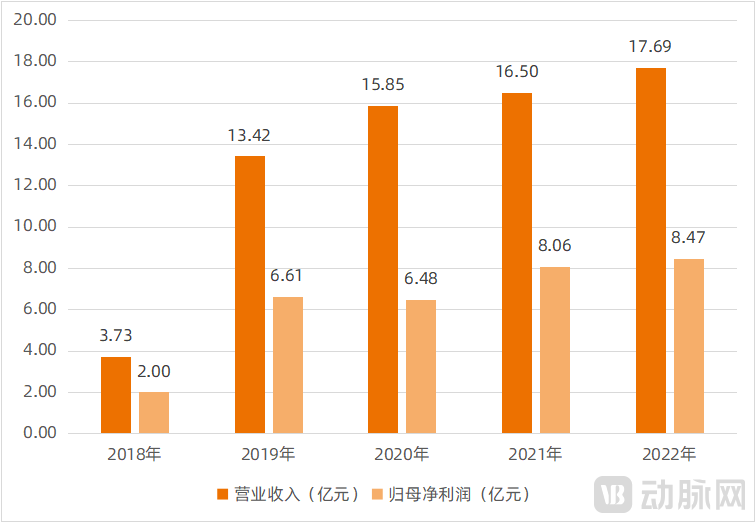
Voolga’s Performance Over the Past Five Years; Data Source: Prospectus
The prospectus shows that Frost & Sullivan's analysis report states,In 2021, Voolga’s patch-type products ranked first in the professional skincare patch market, with a 15.9% share; among medical device-class dressing patches, its market share was 17.5%, also ranking first.; functional skincare sheet masks accounted for 13.5%, ranking second in the market.
Previously, companies such as Botanee, Giant Biogene, and Bloomage Biotech had already entered the medical-grade facial mask market, each possessing distinct advantages in raw materials and R&D capabilities. So, what constitutes the core competitiveness of Voolga, which once ranked first in market share? In the increasingly hot medical-grade facial mask sector, what will be the key factors for future competition? VCBeat will provide an analysis in this article.
Voolga is positioned in the research and development, production, and sales of professional skincare products. Although the listing entity was established only in 2017, the company had already entered the medical-grade facial mask market prior to that.
Voolga’s origins can be traced back to Huaxin Pharmaceutical, established in 1996, which primarily engaged in the wholesale of prescription drugs in the form of powder injections. In 2012, observing shifting trends and substantial demand in the consumer market, Huaxin Pharmaceutical decided to pivot its core business focus toward skincare products. Subsequently, Huaxin Pharmaceutical collaborated with manufacturing partners, completed the research and development of the “Medical Sodium Hyaluronate Repair Patch” in November 2014, and obtained the trademark registration certificate for “Voolga” in 2015.
Subsequently, Huaxin Pharmaceutical partnered with Ha Sanlian (i.e., Harbin Sanlian Pharmaceutical Co., Ltd.), whereby Ha Sanlian was responsible for the exclusive production of the products, and Huaxin Pharmaceutical handled their exclusive sales, promotion, brand operation, and maintenance.
In 2017, the “Voolga” brand achieved strong sales performance. Recognizing significant growth potential for future product sales, Huaxin Pharmaceutical decided to establish an independent company dedicated to the operation of its skincare product business. In the same year, Voolga completed its business registration, and Huaxin Pharmaceutical gradually transferred its skincare product operations to Voolga.
In its early stages, Voolga’s core competitiveness lay primarily in brand empowerment—specifically, by identifying market demand and partnering with upstream manufacturers through exclusive production and exclusive distribution arrangements.
Under an asset-light model that eliminates the need to purchase production equipment or organize daily manufacturing operations, Voolga achieved initial capital accumulation with lower risk. This approach also enabled the company to focus its primary efforts on product sales and promotion, thereby more accurately channeling market insights into product research, development, and upgrades.
In 2021, Voolga acquired Beixing Pharmaceutical, a subsidiary of Harbin Sanlian, thereby gaining independent product manufacturing capabilities.
As of now, Voolga has established a product portfolio comprising medical device dressings and functional skincare products, primarily featuring dressings, patches, and masks, while also encompassing other forms such as toners, serums, lotions, sprays, and freeze-dried powders.
Under the in-house production model, Voolga relies on its own production equipment, technology, and workforce to organize manufacturing. It independently develops product formulations and designs packaging, completing product manufacturing and packaging in accordance with product development and production process requirements. Products are sold externally only after completion and passing quality inspection, thereby ensuring greater controllability over production capacity and product quality.
Meanwhile, under this model, Voolga directly procures raw materials—including active ingredients, humectants, mask sheets, emulsifiers, and oils—thereby capturing the profits previously retained by suppliers in the production process. As a result, Voolga’s gross profit margin has steadily increased, reaching 76.47%, 81.95%, and 83.07% in 2020, 2021, and 2022, respectively. Notably, the gross profit margin for its medical device products reached as high as 86.06% in 2022.
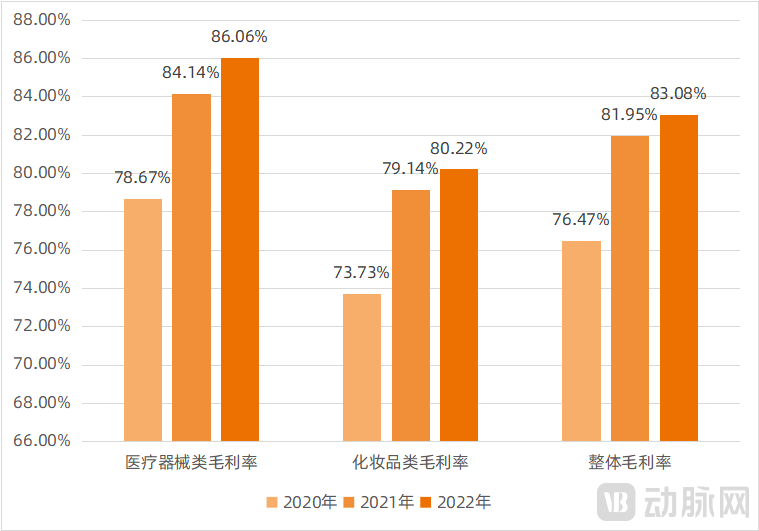
Voolga's Gross Margin Profile, Source: Prospectus
Even so, Voolga has not halted its efforts to strengthen its production capabilities.
The prospectus reveals that during the production period of Ha Sanlian and after Voolga acquired Beixing Pharmaceutical, the capacity utilization rate of medical device products remained above 90%, reaching 94.74% in 2022. As market demand is unleashed, capacity bottlenecks have become apparent, potentially exerting a direct impact on sales due to limited existing production capabilities. Furthermore, as new products are successively developed and launched, the production lines will face even greater pressure.
To further expand production capacity and improve manufacturing processes and product performance, Voolga invested in the construction of the Northern Beauty Valley production base in Harbin. The facility is now operational, and Beixing Pharmaceutical’s medical device and cosmetics production operations have been relocated to this site.
Of the funds raised in this IPO, Voolga also plans to invest RMB 654 million in the construction of its production base.
According to Frost & Sullivan’s analysis report, in 2021, Voolga ranked first in sales of patch-type products within the professional dermatological skincare patch market, with a market share of 15.9%. Among these, its medical device-class dressing patches held a 17.5% market share, ranking first; while its functional skincare mask sheets accounted for 13.5% of the market, ranking second.
As previously mentioned, Voolga’s early core competitiveness lay primarily in brand empowerment. The aforementioned market data also demonstrate that Voolga has made substantial efforts in uncovering market demand, establishing sales channels, and building its brand.
In terms of market demand exploration, Voolga centers on medical-grade facial masks and expands into a diversified product portfolio.
Medical Sodium Hyaluronate Repair Dressings are suitable for repairing mild to moderate acne, promoting wound healing, and serving as an adjuvant therapy for post-acne recovery, skin allergies, early-stage hyperpigmentation following laser and photon treatments, and alleviating scarring symptoms. The product’s characteristics align well with consumer demand. In recent years, the medical dressing market has experienced rapid growth, with its size expanding from RMB 570 million in 2017 to RMB 6.82 billion in 2021, representing a compound annual growth rate (CAGR) of 86.3%.
Seizing market opportunities, Voolga was an early mover in launching medical device-class dressing products, thereby establishing a first-mover advantage. The company has continuously expanded its product dosage forms and extended its product concepts, creating complementary relationships between ingredients and formulations. Building on its medical sodium hyaluronate repair patches, Voolga introduced medical sodium hyaluronate repair solutions in single-use ampoule and spray forms. These were among the first Class II medical dressing products approved for market launch in China that feature sodium hyaluronate as the key ingredient and are available in single-use ampoule and spray formats.
As the concept of collagen gains traction and product commercialization accelerates, Voolga has also entered the collagen market. In 2022, the company’s medical-grade recombinant humanized type III collagen patch received regulatory approval.
Meanwhile, the proportion of “ingredient-conscious” consumers in the skincare market is steadily rising. While prioritizing product efficacy, these consumers are paying closer attention to the active ingredients responsible for such benefits. In response to these market trends, Voolga has promptly developed new products.
Building on the strong reputation established by its medical dressing products, Voolga has further tapped into niche market demands by launching a range of functional skincare products. These include offerings featuring novel ingredients such as collagen, astaxanthin, and Centella asiatica, available in various formulations including toners, serums, lotions, facial mists, and freeze-dried powders. This diverse portfolio addresses consumers’ multifaceted needs for hydration, soothing, and barrier repair, while also catering to usage requirements across different lifestyle scenarios.
In terms of sales, Voolga was an early mover in expanding the out-of-hospital market for medical dressings (referring to markets outside public hospitals) through distributors, achieving comprehensive coverage of emerging sales channels, while its direct sales channel significantly drove performance growth.
Medical dressing products possess dual attributes as both medical devices and consumer goods. Leveraging this characteristic, Voolga has stimulated household demand beyond the clinical market for medical dressings. By capitalizing on distributors’ resources and advantages in terminal channels, the company has expanded the sales of its medical dressing products from public hospitals to out-of-hospital medical institutions, aesthetic clinics, and chain retail pharmacies. This strategy has opened up new target markets for medical dressings and broadened the scope of their target consumer base.
In the distribution model, as market recognition of the products continues to grow, distributors’ identification with the Voolga brand and its products has also strengthened, fostering strong collaborative relationships and motivating them to expand into broader end-use scenarios.
Amid emerging trends such as new consumer scenarios in e-commerce, Voolga has gradually launched a direct-to-consumer (DTC) model on platforms including Tmall, Xiaohongshu (Little Red Book), Kaola Haigou, JD.com, Douyin (TikTok China), Kuaishou, and Pinduoduo since 2018, by establishing official self-operated flagship stores. This move has extended its business from a distribution-based model to a DTC model. Under the DTC model, Voolga collaborates with prominent live-streamers to promote its products through the increasingly popular live-streaming e-commerce format, thereby boosting sales on online e-commerce platforms.
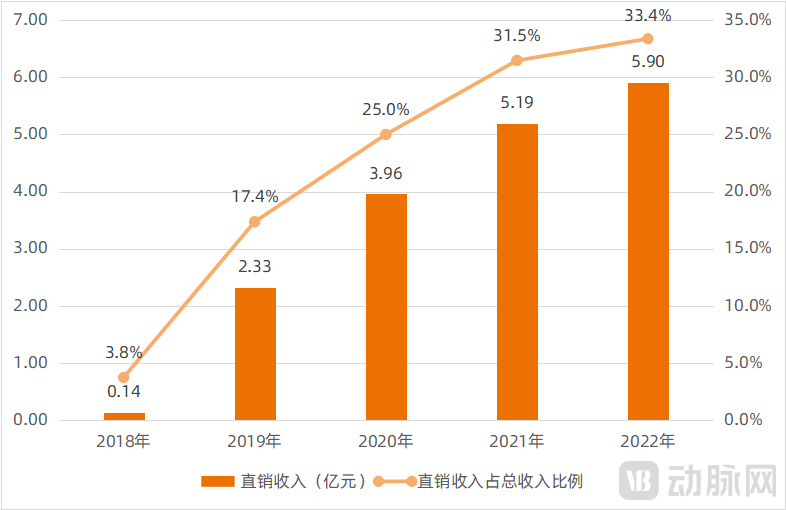
Voolga’s Direct Sales Revenue; Source: Prospectus
From 2018 to 2022, Voolga’s direct sales revenue grew from RMB 14.1367 million to RMB 590 million, accounting for 33.4% of its total revenue. Given the growth trajectory of direct sales revenue alongside overall revenue performance, direct sales have become a key channel driving Voolga’s business growth.
Considering the traffic advantages of the self-operated B2C models on platforms such as JD.com’s Self-Operated Store, Tmall Supermarket, AliHealth Pharmacy, NetEase Yanxuan, and Xiaomang E-commerce, Voolga has also launched a consignment sales model on these platforms, creating a complementary relationship between its online direct sales and consignment channels.
As a result, Voolga has established a diversified sales channel system encompassing distribution, direct sales, and consignment sales, capitalizing on the growth opportunities within each channel to expand and solidify its market position.
Regarding brand building, Voolga has increased its investment in brand promotion through social marketing and celebrity endorsements.
In recent years, internet-based social platforms have risen to prominence. On these platforms, users and content creators often overlap, fostering strong social engagement. Compared with traditional advertising, user-generated content (UGC) demonstrates greater persuasive power and emotional resonance, thereby exerting a more substantial influence on consumers’ purchasing decisions.
Similarly, Voolga extensively leverages social media platforms for brand marketing. Today, on platforms such as Xiaohongshu and Douyin, content including reviews of medical-grade facial masks featuring Voolga and “best-and-worst” lists is ubiquitous.
To further strengthen its brand image among its core target consumers—young women—Voolga has invested heavily in marketing initiatives such as celebrity endorsements and sponsorships of variety shows. For instance, capitalizing on the influence of trends like “Guochao” (China Chic), traditional Chinese aesthetics, and domestic products, Voolga became the title sponsor of Douyin’s “Guofeng Dadian” (Chinese Style Grand Ceremony). Additionally, by precisely identifying its target customer base, the company secured title sponsorship or sponsorship deals for popular variety shows including *Viva La Romance Season 4* and *Who Is the Hidden Singer*.
According to the prospectus, since 2020, Voolga has annually invested between RMB 20 million and RMB 60 million in image promotion and publicity, primarily for expenditures on brand ambassadorships and advertising such as title sponsorships of variety shows and film and television dramas.
Compounded by increased advertising expenditures, Voolga’s promotional expenses grew rapidly. From 2020 to 2022, Voolga’s promotional expenses rose from RMB 166 million to RMB 354 million. In 2022, promotional expenses accounted for 20% of total revenue.
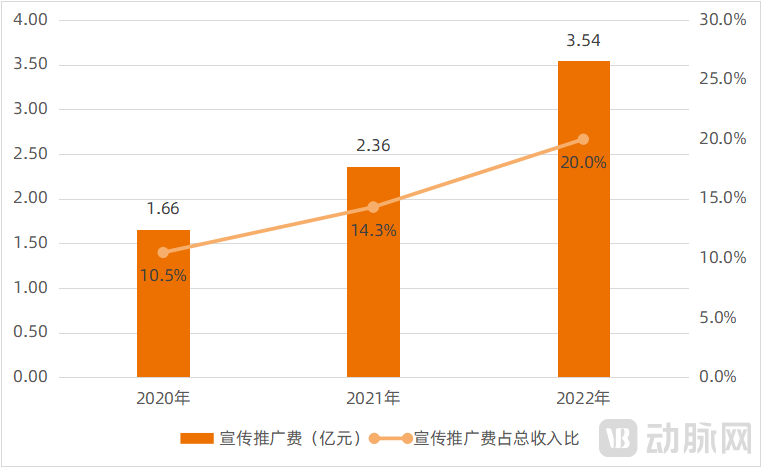
Voolga’s Promotional and Advertising Expenses, Data Source: Prospectus
In the consumer sector, high customer acquisition costs for end-users are a widespread phenomenon. Given that medical-grade facial masks embody both medical and consumer attributes, they inevitably face the specific costs associated with the consumer market.
The year is 2023.
According to Voolga’s prospectus, the company’s operating revenue in the first quarter of 2023 reached RMB 373 million, a year-on-year increase of 5.38%; net profit amounted to RMB 159 million, a year-on-year decrease of 1.42%. Overall, both revenue and profit showed a trend of slowing growth, with the potential for negative growth. Voolga noted in its prospectus that this was primarily due to macroeconomic fluctuations, a slower-than-expected pace of consumption recovery, and relatively weak overall industry performance. The company projected that its operating revenue for the first half of 2023 would change year-on-year within a range of -0.9% to 7.7%, while net profit attributable to shareholders of the listed company would change year-on-year within a range of -9.1% to 2.1%.
A review of the financial data of companies such as Botanee and Giant Biogene reveals that, although these companies have experienced significant revenue growth, their net profit margins have encountered similar challenges, with slow growth or decline.
This reflects another reality of the medical dressing consumption and skincare market: a growing number of participants and products, leading to intensified competition.
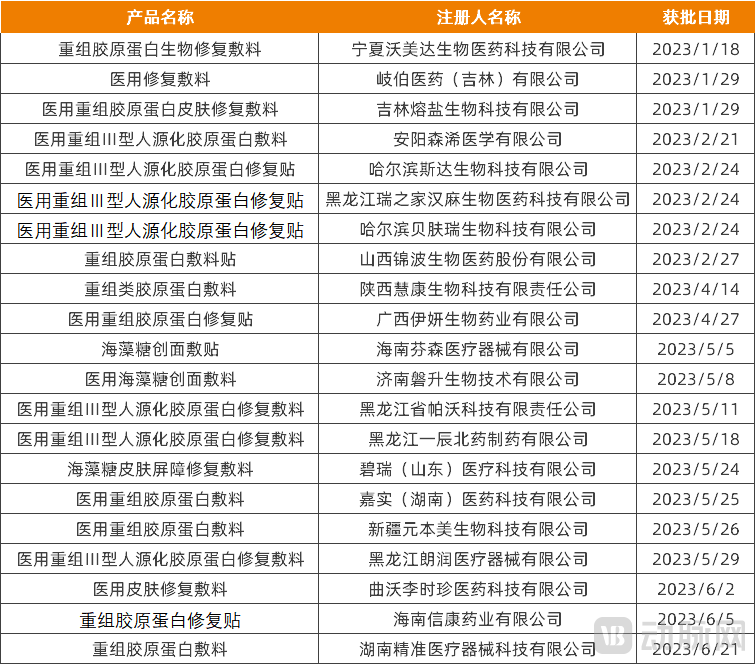
Selected Medical Dressing Patch Products Approved in 2023, Source: National Medical Products Administration
According to data from the National Medical Products Administration, more than 20 medical dressing patch products were approved in the first half of 2023. In addition to concepts based on materials such as hyaluronic acid and collagen, new concepts featuring β-glucan and trehalose have also emerged.
A search for “medical-grade facial masks” on e-commerce platforms such as JD.com and Tmall, filtered by brand, reveals dozens of options. In addition to established brands like Voolga (Fu’erjia), Comfy (Kefumei), Cofoe (Kefu), and JUYOU (Zhanyan), there are newer brands such as Zhanmeiya, Shunaimei, and Fuyin, which were approved or launched in 2021–2022.
Competition is directly reflected in pricing. Taking five-sheet packs as an example, prices range from just over RMB 50 to more than RMB 100, with some brands offering discounts such as money-off promotions for meeting spending thresholds or multi-item purchase discounts. In its prospectus, Voolga also noted that the average selling price per box of its core products sold through online direct-sales channels was RMB 70.44 in 2020, RMB 67.59 in 2021, and RMB 56.97 in 2022, showing an overall downward trend. As traffic on e-commerce platforms becomes increasingly concentrated and competition among similar products intensifies, the company will increase promotional efforts to enhance brand awareness and expand market share, which may further lead to a decline in unit prices.
Amid intensifying market competition, what will determine corporate success in the future? This question can be explored by examining another company that recently went public.
On July 20, Jinbo Bio, a developer of recombinant collagen, was listed on the Beijing Stock Exchange. In 2023, Jinbo Bio also received approval for its recombinant collagen dressing patches.
Previously, Jinbo Bio established a product system centered on its self-developed recombinant humanized type III collagen as the core raw material. This system includes Class III medical device products for aesthetic medicine injections, such as lyophilized fibers of recombinant humanized type III collagen, as well as Class II medical device products, including medical type III collagen solution, sterile medical type III collagen solution, and functional dressings containing recombinant humanized collagen (gel type). Jinbo Bio has completed fundamental research on major types of recombinant humanized collagen, including types I, III, and XVII, and is continuously conducting applied research in fields such as gynecology, urology, dermatology, orthopedics, stomatology, surgery, and cardiology.
The approval of the recombinant collagen dressing patch represents one of the product forms and application scenarios expanded by Jinbo Bio based on its self-developed raw materials. In 2022, Jinbo Bio reported operating revenue of RMB 390 million and net profit attributable to shareholders of RMB 109 million. Looking ahead, with the commercialization of a broader range of product types, there remains significant growth potential for both performance and profitability.
Looking at other leading companies in the medical-grade facial mask sector: Bloomage Biotechnology popularized hyaluronic acid and has actively expanded into synthetic biology; Giant Biogene brought collagen into the spotlight and leverages rare ginsenosides to develop functional skincare products and functional foods; Trauer Biotech applies its self-developed active collagen ingredients to a wide range of products, including medical-grade facial masks and biocosmeceuticals.
Voolga, which originally focused on brand empowerment and gradually extended its operations to the production end, also mentioned in its prospectus that it is strengthening its R&D capabilities, such as conducting research on new materials and new technologies through industry-academia-research collaborations with scientific research institutions. Among Voolga’s medical device projects under development is the development of a Class III medical device, which involves studying the reparative effects of recombinant type III humanized collagen materials on skin wounds and leveraging sterile formulation technology to develop a Class III medical device product.
To consumers, a large company’s core technologies or materials often become naturally associated with its brand influence, forming an integral part of its brand image.
For enterprises, possessing breakthrough R&D capabilities in core raw materials and innovative technologies enables them to leverage these assets as competitive barriers, continuously expand application scenarios, and develop corresponding product categories and forms.; akin to multiple lines radiating from a single point, thereby creating more competitive economies of scale.
As the medical-grade facial mask sector grows increasingly vibrant, with a rising number of products and companies, some firms are quick to capitalize on trends for short-term gains, while others are building core technologies and R&D capabilities to achieve long-term success.