

Evolution Therapeutics Submits IPO Prospectus: Pioneering Cross-Species Gene Therapy to Overcome Targeted Cancer Drug Resistance
Recently, the research group led by Du Peng at Peking University inCellPublished a research paper titled “A plant immune protein enables broad antitumor response by rescuing microRNA deficiency.” This study demonstrated that plant RDR can achieve a broad-spectrum antitumor response by rescuing microRNA deficiencies in cancer. In simple terms,Plant Genes May Hold the Key to Conquering Cancer.
VCBeat, through the VB-Link Competition, had the privilege of interviewing thethe paper'sDr. Qi Ye, First Author (currently Project Lead at Microevolution Medical). Through his introduction, we may perhaps glimpse new directions in cancer treatment.
Harnessing the Power of Plants to Treat Cancer
“Evolution itself is a remarkable phenomenon.”
Dr. Qi, following hisSupervisor: Researcher Du PengThey have long been deeply engaged in the field of cross-species genetic engineering, with “plants” holding high expectations for them.
Why choose plants as the breakthrough point? Dr. Qi explained, “When we launched our project in 2018, the CRISPR-Cas9 system was already highly popular in both the scientific research and industrial communities. This system performs gene editing by harnessing a natural immune system that is uniquely present in bacteria but lost in humans during evolution. On the tree of life, apart from the two major branches of bacteria and animals, the other major branch is plants.”However, biomedical components in plants have not been well explored.”
Building on Professor Du Peng’s research background, we have specifically identified a unique natural immune pathway in plants: molecular immunity mediated by RNA-dependent RNA polymerase (RDR). Since plants, like bacteria, possess only an innate immune system, and the RDR system was lost during human evolution, countless evolutionary contingencies have driven us to initiate this research.
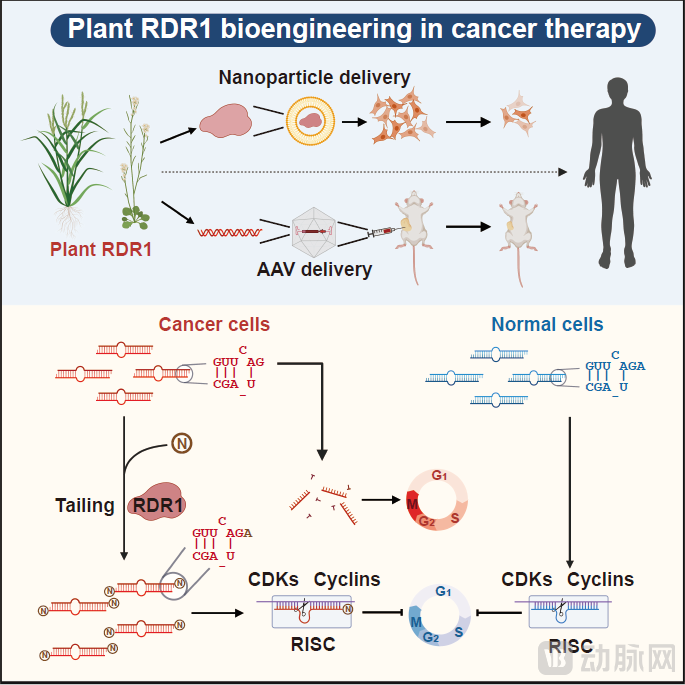
Ultimately,In 2022, Du Peng’s research group successfully demonstrated and elucidated the broad-spectrum antitumor activity and underlying mechanism of the plant protein RDR.Experimental findings revealed that RDR significantly inhibited the proliferation of all ten cancer cell lines in vitro, while exerting no effect on five non-cancerous cell lines. Notably, short-term (2–3 days) induction with RDR also significantly suppressed cell cycle progression in cancer cells without affecting healthy cells, suggesting that the cell cycle pathway may be a direct target of RDR.
Overall, RDR can achieve potent and broad-spectrum anticancer effects without affecting normal cells.“RDR may become a powerful weapon for humanity in the fight against cancer and even more diseases in the future.”In Dr. Qi’s view, RDR is poised to become a “high-potential asset” in future clinical pharmaceutical development.
Addressing the Pain Points of "Drug Resistance" and "Low Response" in Novel Oncology Drugs
The Rise of Targeted Therapies and Immunotherapies in Cancer: A Paradigm Shift in Oncology Treatment
First, it minimizes damage to healthy cells through localized action. Compared with radiotherapy and chemotherapy, it has milder side effects and facilitates post-treatment recovery for patients.
Secondly, its therapeutic efficacy is highly significant. Taking lung cancer as an example, the median survival time for patients with advanced-stage disease was previously only about 10 months, whereas with new drug therapies, patient survival can now be extended to four or five years.
Therefore, it is not an exaggeration to refer to targeted therapies and immunotherapies as “life-saving miracle drugs” for certain patients.
However, targeted therapy and immunotherapy also present non-negligible pain points—Drug resistance and low response.
When patients take the same targeted therapy for an extended period, its efficacy gradually diminishes, eventually leading to drug resistance. In pursuit of therapeutic effectiveness, patients are compelled to switch to next-generation agents; however, given the limited pace of drug development, there is a significant risk that a scenario of “no available treatments” may emerge in the future.
Meanwhile, the response rate to immunotherapies is very low, and it is impossible to predict their efficacy prior to treatment, thereby posing a significant benefit-risk challenge for patients.
Dr. Qi believes:“From the perspective of underlying logic, this remains an issue in drug design.”
Most targeted therapies work by targeting a single protein or molecule on a specific type of cancer cell, which can be metaphorically described as blocking only one pathway of the tumor cells.Once tumor cells discover new pathways, targeted therapies lose their efficacy.
Furthermore, the activation of the human immune response remains a “black box,” resulting in low response rates for both monotherapy and combination therapy, which makes it difficult to expand drug indications.
The emergence of the plant immune protein RDR has not only overcome resistance to targeted therapy but also addressed the low response rates associated with immunotherapy.
In RDR drugability studies, Dr. Qi’s team, through mining and analysis of nearly 10,000 real-world data records, discovered that abnormal miRNA truncation variants with a 1-nt shorter 3’ end are widely present in diverse human primary cancer samples and cancer cell lines. These truncated variants dissociate from the gene-silencing complex, leading to a reduction in the abundance of functional miRNAs.A reduction in miRNA levels leads to the loss of normal downstream gene silencing function, thereby resulting in uncontrolled cell proliferation and inducing cancer.
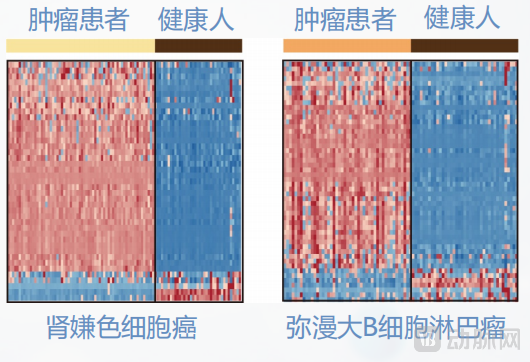
▲ Widespread occurrence of aberrant miRNA truncations across 32 different cancer types
This marks the first time internationally that the long-standing mystery of reduced miRNA expression in cancer has been unraveled.Based on this research finding, Dr. Qi’s team utilized plant RNA-dependent RNA polymerase (RDR) to repair miRNA truncation variants with specific defects in cancer cells, thereby restoring the regulatory function of cell cycle genes over tumor cells and achieving an anti-cancer effect.
From a first-principles perspective, RDR does not merely block a single pathway; instead, it mobilizes cellular mechanisms to fortify every potential route that cancer cells might exploit. This approach prevents cancer cells from “making a comeback” by finding alternative pathways, thereby fundamentally addressing the issue of drug resistance.
Furthermore, RDR acts on the truncated miRNA variants that underlie the fundamental nature of most cancers, rather than merely addressing symptoms without targeting the root cause across different cancer types. This approach fundamentally overturns the current limitation whereby indications for oncology drugs are difficult to expand.
Currently, the project has completed indication expansions for diseases such as adult hepatocellular carcinoma, pulmonary metastatic tumors, and non-small cell lung cancer, and the related drugs have entered the pilot production stage.
Officially entered commercialization in August
To advance and broaden projects in cross-species genetic engineering, Dr. Du Peng and Dr. Qi joined forces with Peking University alumni possessing commercial and scientific research experience to establishEvolution Medical, is expected to make its official debut in late August.

▲ Researcher Du Peng
“Evolution is the starting point of our scientific research and also where our strengths lie.”
Dr. Qi revealed that Microevolution Medical will be based on RDR in the future,Further optimize application scenarios, guided by clinical value, to explore more possibilities for disease treatment.Furthermore, from a research perspective, Microevolution Medical will also tackle the challenges of pathological aging, making significant strides in both conventional medical care and non-conventional areas (such as anti-aging for pets). Meanwhile, by leveraging the immune system, we will apply the interactions between RDR and human immunity to meet additional clinical needs in specific scenarios.
The world’s first discovery of miRNA deficiency will also serve as a “trump card” for Microevolution Medical in building its technological moat.
In addition to innovating downstream products, Microevolution Medical is also committed to driving upstream technological iteration, leveraging upstream innovation to propel the industry forward.
Currently, Microevolution Medical has basically completedTens of millions in angel round financing, which will be used to continue advancing preclinical studies for the first indication, establish new technological pipelines, and strengthen the company’s team and technology platform. Dr. Qi stated, “As a proprietary and platform-based technology, cross-species genetic engineering is poised for broad application in indications such as oncology, immunology, and pathological aging. This is the original intent behind our establishment and the goal we strive to achieve.”