

Baijian Jiayi: A Pioneer in Fully Domestic Thulium Laser Technology Spanning Urology and Aesthetic Medicine
In 2013, British and Italian researchers discovered a 12,000-year-old bladder stone in a prehistoric cemetery in central Sudan, which remains the oldest calculus ever unearthed in the archaeological record.[1]
Whether in the Jomon period 12,000 years ago or in the information age 120 million years from now, humanity has still been unable to escape the affliction of urinary stones. Fortunately, generations of intelligent and resilient humans have never given up the fight against disease, and for us today, urinary stones are no longer an incurable condition.
Currently, for the treatment of ureteral calculi, in addition to conservative medical management (for stones with a diameter of less than 0.6 cm), hospitals typically employ extracorporeal shock wave lithotripsy and holmium laser lithotripsy via ureteroscopy.
Extracorporeal Shock Wave Lithotripsy (ESWL) utilizes shock wave energy, which is transmitted and focused through the body’s soft tissues onto calculi to fragment them, facilitating their expulsion via the urinary tract. This method offers advantages such as low cost and non-invasiveness. However, it demonstrates suboptimal efficacy for dense calculi, and repeated high-energy shock waves within a short period may cause permanent renal impairment. For calculi exceeding 2 cm in diameter, the simultaneous entry of substantial stone fragments into the ureter post-lithotripsy can lead to the formation of a “steinstrasse,” resulting in severe obstruction that necessitates further surgical intervention.
Ureteroscopic Holmium Laser Lithotripsy is the “gold standard” for modern endoscopic treatment of urinary stones. The holmium laser, with a wavelength of 2100 nm, serves two primary functions: stone fragmentation and soft-tissue incision. During the procedure, after the patient is anesthetized, the surgeon inserts a guidewire and then advances a flexible ureteral access sheath through the natural urinary tract—namely, the urethra, bladder, and ureter—up to the renal pelvis. A thin flexible ureteroscope is passed through the access sheath into the kidney. Once the stone is located, it is fragmented using the holmium laser, and the resulting fragments are retrieved with a stone extraction basket.
However, the “gold standard” holmium laser also carries three widely recognized surgical risks within the industry.
First, the local temperature during holmium laser lithotripsy is relatively high, which can easily cause thermal injury to the ureter.Following the removal of the urinary catheter, urine extravasates through the injured site during voiding into the periurethral tissues, leading to corporal fibrosis and subsequent scar formation. This process results in urethral stricture, which may later progress to ureteral stricture.
Second, the single-session stone clearance rate of holmium laser is low.Ureteroscopic holmium laser lithotripsy is typically performed with the patient in the supine lithotomy position, creating a spatial gradient from the external urethral orifice to the renal pelvis and calyces that is higher externally and lower internally. Due to gravity, fragmented stone particles tend to settle in the dependent posterior calyceal groups. Consequently, retrieving these fragments requires the difficult “uphill” maneuvering of auxiliary stone baskets or high-pressure irrigation, making residual stones unavoidable and resulting in a low single-session stone-free rate.
Third, low surgical efficiency can easily lead to complications.Holmium laser lithotripsy requires continuous irrigation with normal saline. The objectives are threefold: first, to dissipate heat generated by the laser and prevent thermal injury; second, to facilitate the evacuation of stone fragments; and third, to maintain a clear surgical field through water circulation. Any factor leading to improper irrigation or inadequate drainage can cause an increase in intrarenal pressure, resulting in complications and even endangering the patient’s life. Consequently, most surgeons hesitate to administer sufficient continuous irrigation during the procedure. This leads to slow fluid circulation in the operative area, obscured visibility due to stone fragmentation, and an inability to continuously activate the holmium laser for efficient, sustained lithotripsy. Furthermore, while concerned about high pressure and thus reluctant to irrigate adequately, surgeons also worry about thermal injury, prompting most to adopt low-energy, low-efficiency lithotripsy settings, which reduces surgical efficiency. Currently, the duration of holmium laser lithotripsy procedures typically ranges from 30 to 60 minutes.
In 2022, an international research team published the article “Thulium Fibre Laser versus Holmium:YAG for Ureteroscopic Lithotripsy: Outcomes from a Prospective Randomised Clinical Trial” in the European journal *European Urology*. The study compared the clinical outcomes of thulium fiber laser and holmium laser in ureteroscopic lithotripsy. The results demonstrated that patients treated with thulium fiber laser for kidney stones achieved a significantly higher stone-free rate, with a markedly reduced incidence of intraoperative complications. The therapeutic efficacy of thulium fiber laser was significantly superior to that of holmium laser.[2]
In fact, as early as 2019, domestic enterprises in China—Baijian Jiayi (Ningbo) Optoelectronic Technology Co., Ltd.(hereinafter referred to as"BioHealth JiaYi") and immediately embarked on the research and development of thulium laser technology with fully independent intellectual property rights.
After years of exploration and breakthroughs, Baijian Jiayi pioneered the resonant cavity-based pulsed thulium laser output, achieving a peak power exceeding 30,000 W (compared to the current international maximum of approximately 1,000 W). Furthermore, Baijian Jiayi is the only manufacturer in China with independent intellectual property rights for all-solid-state thulium lasers used in thulium laser treatment systems. The company currently has a presence in both the urology and medical aesthetics sectors.
Over 30 years of laser R&D experience,
CAS Institute of Physics Senior Scientist Breaks Through in Thulium Laser Technology
Zhang Baogang, Founder of Baijian JiayiSenior Scientist at the Institute of Physics, Chinese Academy of Sciences; core member of the 863 Program’s solid-state thulium laser project. Possesses over 30 years of R&D experience in lasers and more than 10 years of experience in industrial commercialization.
In 1985, after graduating with a degree in Precision Instruments from Hebei University of Technology, he was sent to Germany on a government-sponsored program for five years. In May 1989, he began engaging in industrial laser research.
The company led the development of China’s first medical semiconductor laser, medical green laser, and medical thulium laser, which successively obtained relevant certifications and were approved for market launch in 2003, 2005, and 2012, respectively.
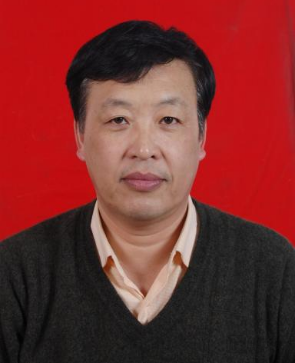
Zhang Baogang, Founder of Baijian Jiayi
The core team of Baijian Jiayi boasts over 15 years of experience in production, R&D management, and market operations, with extensive practical expertise. Furthermore, the company has engaged scholars and experts from prestigious institutions such as Tsinghua University, the Chinese PLA General Hospital, and Beijing Anzhen Hospital affiliated with Capital Medical University as expert advisors to facilitate R&D and clinical collaborations.
Low Power, High Energy! Cutting, Vaporization, and Lithotripsy in One
Pulverization of Urinary Calculi with Varying Hardness
Thulium laser, commonly known as the 2-micron laser, is generated using thulium metal and possesses physical characteristics of high absorption rates for hemoglobin, water, and calculi.
Human calculi are primarily composed of calcium oxalate and calcium phosphate stones. Thulium exhibits an absorption rate for calcium oxalate and calcium phosphate that is 4–9 times higher than that of holmium. A higher absorption rate translates to lower energy requirements, faster cutting speeds, and reduced heat generation, thereby effectively avoiding the thermal injury associated with holmium lasers. Furthermore, since human soft tissue consists of approximately 80% water, thulium’s superior absorption by water—compared to electrocautery and green laser technologies—confers significant advantages in the resection of native tissue.
Addressing the limitations of holmium lasers in the field of urinary stone treatment, Baijian Jiayi has combined thulium laser with green laser to launchQ-Switched Pulsed Thulium Laser and Green Laser Combined Output Therapeutic Device.
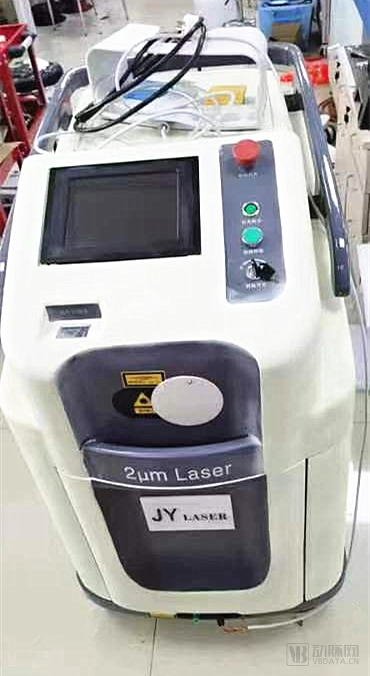
Q-Switched Pulsed Thulium Laser and Green Laser Combined Output Therapeutic Device
Since thulium laser is invisible, Baijian Jiayi ingeniously uses visible green laser for guidance and display.
This device addresses the limitations of current similar products on the market, which typically offer single-function capabilities and require separate equipment for different treatment modalities. It integrates three commonly used techniques for treating urological conditions—resection, vaporization, and lithotripsy—into a single unit. Suitable for urinary calculi of varying hardness, including calcium oxalate stones, cystine stones, and struvite stones, the device enables dusting lithotripsy, allowing stone fragments to be naturally expelled from the body without the need for cumbersome and time-consuming active retrieval of large stone fragments. This significantly enhances therapeutic outcomes and surgical efficiency.
Compared with holmium lasers, Baijian Jiayi’s self-developed Q-switched pulsed thulium laser and green laser combined output system delivers high (50 W), controllable energy. Its resonator-based pulsed thulium laser output enables greater energy delivery at lower power, achieving instantaneous vaporization of both soft and hard stones. The resulting thermal energy is lower, reducing bleeding and avoiding thermal injury. Furthermore, dusting lithotripsy minimizes the “fragment storm” under endoscopy, improving endoscopic visibility during lithotripsy, enhancing surgical quality, and shortening operative time.
It is reported that the device’s forming machine has completed animal studies, and the prototype underwent preliminary testing at the Henan Testing Institute in late 2022, with clinical trials expected to begin next year. In addition, the company’s self-developed fiber-optic consumables are also expected to receive regulatory approval in the first half of 2023.
Medical aesthetics is another important application area of laser technology.
Due to the complex etiology and diverse classifications of pigmentation disorders, there are currently no ideal therapeutic regimens available for treating melasma caused by subepidermal factors or deeper wrinkles. The advent of laser technology has undoubtedly provided a new option for the treatment of pigmentation disorders.
Baijian Jiayi has developed a new generation of fractional pulsed thulium laser based on fractional continuous thulium laser technology, featuring lower power, reduced damage to the epidermis, deeper penetration, and superior therapeutic efficacy.Its energy precision is as high as 0.1 W, ensuring safety and controllability.
It works by stimulating collagen production and inducing collagen contraction, thereby achieving pore minimization, improvement of fine lines, and skin tightening. During penetration, hemoglobin in the blood vessels absorbs the energy more intensely, resulting in blood coagulation and therapeutic effects on telangiectasia (spider veins) and inflammatory acne. It also has a powerful photomechanical effect on superficial melanin, making it highly effective for treating acne scars, post-inflammatory hyperpigmentation, and dull skin tone.
“Dual-Functionality” is a distinctive feature of the B&J Jiayi Fractional Pulsed Thulium Laser.It can treat melasma using fractional thulium laser, and also achieve skin whitening, pore tightening, and freckle reduction through epidermal irradiation.Moreover, the device can also achieveNon-ablative, Micro-ablativeandExfoliationThree therapeutic effects to meet diverse treatment needs.
With CO2Compared with fractional lasers, thulium lasers have a lower water absorption coefficient, which prevents epidermal vaporization and the formation of white spots. Post-treatment skin exhibits only mild erythema and edema. Furthermore, thulium lasers can penetrate into the mesodermal layer of the dermis to stimulate collagen fiber regeneration, while causing minimal damage to the epidermis. This results in less tissue injury, no scabbing, and higher patient acceptance.
Compared with Western fractional lasers (wavelength 1530 nm), Baijian Jiayi’s fractional pulsed thulium laser (wavelength 2025 nm) offers greater penetration depth, causes less epidermal damage, and exhibits a water absorption rate more than 20 times higher than that of foreign lasers. Consequently, it can deliver greater energy at lower power levels to achieve therapeutic outcomes.
It is reported that the product will begin animal testing next year.
By mastering underlying laser technology and independently assembling core components such as laser systems, Baijian Jiayi has achieved 100% domestic production of the complete units for the two aforementioned devices, thereby securing a certain cost advantage.
Meanwhile,Baijian Jiayi can also adjust precision control, power supply modes, and other parameters according to market demands, providing personalized customization services.
Due to the high technical extensibility of thulium laser technology, in addition to the aforementioned urology and medical aesthetics fields, Baijian Jiayi is also actively exploringApplications of Thulium Laser in Brain Tumors, COPD, Non-invasive Blood Testing, and Treatment of Hypertension Induced by Renal Sympathetic Nerves.
Furthermore,Thulium lasers also have extensive applications in the industrial sector, including cutting, seawater desalination, and controlled nuclear fusion.Atmospheric Sounding, etc.Frontier Fields.
As an early entrant in the domestic thulium laser industry, Baijian Jiayi is also actively promoting its products and brand. Recently, the company has been preparing for a new round of financing to accelerate product registration and factory construction.
As the storm of nationwide restrictions on imported equipment procurement unfolds, we also look forward to Baijian Jiayi rising to prominence, propelling domestically produced medical thulium lasers onto the global stage.
References:
1、Late Pleistocene/Early Holocene Evidence of Prostatic Stones at Al Khiday Cemetery, Central Sudan
2、European Urology, Volume 82, Issue 1, July 2022, Pages 73-79