

Stem Cell Therapy Pioneer Mesoblast Misses Comeback Amid 19-Year Market Rollercoaster

Mesoblast
Stem Cell Therapy Product Developer
August 4,Mesoblast Has Reached a Pivotal Moment That Will Determine Its Fate.
This Australian cell therapy company,AlsoA Pioneer in Stem Cell Therapy Receives Bad News: FDA Again Rejects Marketing Application for Mesenchymal Stem Cell Therapy Remestemcel-L for Steroid-Refractory Acute Graft-versus-Host Disease (SR-aGVHD) in Patients Under 12 Years of Age, Requesting Additional Data to Support Future Approval
Two days before this major decision was finalized, Mesoblast requested a trading halt, with its shares suspended until last Friday at the latest. When the company resumed trading on the ASX last Friday, its share price plummeted 56% to A$0.47, hitting its lowest point.
Prior to the announcement, the industry had described this new drug application as a “life-or-death turning point” for Mesoblast.The company has been in operation for 19 years without launching its first commercialized product; this is the decisive moment for its success or failure.
If successful, Mesoblast’s decade-long relentless pursuit of Remestemcel-L will finally pay off, easing shareholder skepticism toward the company; if it fails, the flagship product and the company itself will suffer severe blows, likely leading to an irreversible decline.
Looking back on its 19-year development history, Mesoblast has experienced moments of glory,Since its establishment in 2004 and subsequent listing on the Australian Securities Exchange, it was once regarded as heralding the onset of a bull market in Australia’s biotech capital markets.; it was highly sought after by investors and favored by major pharmaceutical companies, with its share price soaring to a peak of AUD 9.93 in mid-2019, representing a surge of 1,141.25%.
However, Mesoblast has also entered its darkest moments several times,Even dubbed by the media as “the deepest pit in the biopharmaceutical capital market”In 2016, Teva terminated its collaboration with Mesoblast, causing Mesoblast’s share price to plummet to a low of AUD 1.135 at closing. In 2020, the FDA rejected the marketing application for Remestemcel-L for the first time, sending the previously recovering stock price into another sharp decline.
Capital has lost patience with the 19-year-old company, as no products have been approved, partnership deals have fallen through, and skepticism continues to mount. Mesoblast urgently needs a turnaround victory through the approval of its flagship product, Remestemcel-L.
Unfortunately, this turnaround battle has yet to succeed, and Mesoblast must still endure the worst period in its history.
Mesoblast inStumbling AlongHas come this far.It has far too many narrative elements,Having gone through everything a biotech company might experience. In 2019, its successes and failures were intertwined with the rise and fall of stem cell therapy, as well as the cyclical ups and downs of the biotechnology industry and capital markets.
In a sense, the story of Mesoblast offers a new parable for biotechnology investment.
The Highlights and Darkest Moments of Australia’s Biotech Benchmark
As a benchmark enterprise in Australia's biotechnology industry, Mesoblast was highly sought after from 2004 to 2011.
In December 2004, founder Silviu Itescu established Mesoblast and led the company to a successful initial public offering on the Australian Securities Exchange (ASX), raising AUD 20 million.
At that time, Australia was not a fertile ground for the biotechnology industry, as it achieved limited success in scientific and medical research at the forefront of commercialization. This was not due to a lack of innovation, but rather because the small domestic market, coupled with its geographic distance from international markets, made it difficult for local investors to assess the value of early-stage biotech startups.
But Mesoblast has emerged as a dark horse, epitomizing the pinnacle of Australia’s biotechnology industry.
At the time, analysts praised Itescu: “He shattered the strategic approaches and mindsets of everyone in Australia’s life sciences sector. Because of him,”Mesoblast has had at least four IND applications approved by the FDA, a feat no other Australian company has achieved with such a high success rate."This is a testament to the company's strength."
The concept of off-the-shelf stem cell therapy, combined with Itescu’s operational leadership, drove Mesoblast’s stock price steadily upward from 2004 to 2011. Although no products had yet been launched, the company had already delivered a tenfold return to its founding shareholders.
In 2010 and 2011, Mesoblast reached its peak moments.
In December 2010, Mesoblast entered into a commercialization agreement valued at nearly AUD 2 billion with the U.S. biopharmaceutical company Cephalon, aimed at developing and commercializing novel adult mesenchymal precursor cell (MPC) therapies for cardiovascular and central nervous system degenerative diseases.
Following the announcement, Mesoblast’s stock price hit an all-time high of A$3.46.In 2010, Mesoblast’s stock price surged by approximately 145%, making it one of the best-performing stocks among all common stock indices that year.Industry experts even hope that this deal will set a benchmark for future transactions involving Australian biotechnology companies.
In September 2011, Mesoblast announced a partnership with Lonza, a leading contract development and manufacturing organization (CDMO), to enhance its capacity for producing off-the-shelf stem cell therapies. Following this announcement, Mesoblast’s share price rose to AUD 7.81 on the same day and continued to climb over the next month, reaching a 19-year high of AUD 9.93 since the company’s inception.
At that time, Mesoblast’s market capitalization had reached AUD 2.5 billion, and the company was unrivaled in Australia’s biotechnology sector, basking in unparalleled prominence.
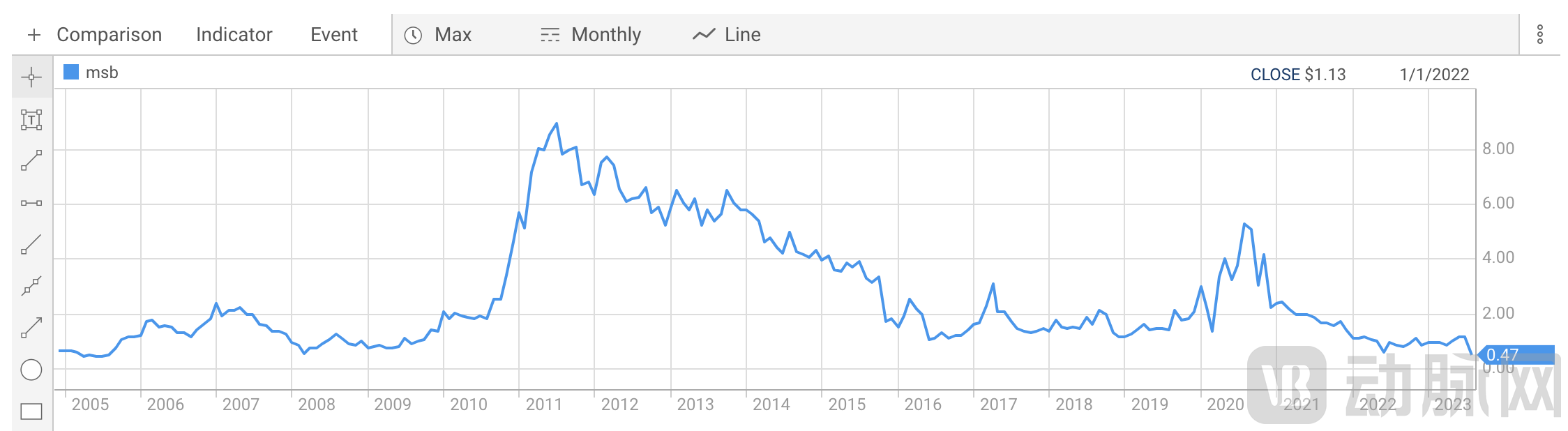
Mesoblast’s 19-Year Performance on the ASX, Image Source: ASX
In the biopharmaceutical sector, biotech companies frequently fall from grace; some manage a remarkable comeback, while others plummet straight to the bottom. The higher they are lifted, the harder they fall. Mesoblast has experienced this firsthand.
Following its peak in 2011, Mesoblast’s stock price began to decline.The stock price has been fluctuating and declining continuously for eight years from its peak.After hitting a minor peak in 2020, it suffered another severe setback and has remained sluggish ever since. Skepticism toward Mesoblast within the industry is growing.
The FDA’s rejection of the 2020 marketing application for its flagship product, Remestemcel-L, left Mesoblast in a state of disarray.
In particular, the review process for Remestemcel-L was fraught with drama, causing Mesoblast’s stock price to fluctuate wildly like a roller coaster within just two months.
In August 2020, briefing documents released online indicated that the FDA Advisory Committee would question Mesoblast’s ability to consistently produce effective doses of Remestemcel-L, and contended that Mesoblast’s pivotal Phase III data for Remestemcel-L failed to demonstrate a correlation between the therapy’s mechanism of action and positive clinical outcomes.
Following the announcement, Mesoblast’s U.S. stock price plummeted from $17.42 to a low of $10.93, as investors viewed the approval prospects for Remestemcel-L unfavorably. The company’s performance on the Australian Securities Exchange was similarly disappointing, with its share price dropping by more than 30% in a single trading day.
However, although the briefing indicated that the FDA would raise questions about Remestemcel-L, the treatment’s efficacy in pediatric patients with steroid-refractory acute graft-versus-host disease (SR-aGVHD) ultimately received overwhelming support from the U.S. FDA Oncologic Drugs Advisory Committee (ODAC), with a 9:1 vote following the meeting.
Mesoblast’s ASX-listed share price surged 42% to A$4.80 by 11 a.m., shortly after the market opened, before climbing further to a six-year high of A$5.43. Itescu even stated that the company has already established a targeted commercial sales team in preparation for the potential approval of its product.
Unfortunately, the optimistic sentiment lasted only two months before Mesoblast received a refusal-to-file letter from the FDA, which requested additional randomized controlled trial data in adult or pediatric patients with steroid-refractory acute graft-versus-host disease (SR-aGVHD). The company’s stock price plummeted again to AUD 3.11.
Mesoblast has been disparaged by the industry for “burning through investor capital in its attempt to secure FDA approval for Remestemcel-L, rendering that funding worthless over a period spanning more than 12 years.”
The pioneer of stem cell therapy, once hailed as a game-changer with the potential to turn losses into profits, has been driven into a corner. Its only path to a turnaround remains pushing its product to market—a product that can only be its previously rejected flagship, Remestemcel-L.
Industry Pioneer, Market Ups and Downs
The growth of any company is inextricably linked to the cyclical fluctuations of the capital markets and the waxing and waning of industry hype. Mesoblast is no exception.
Silviu Itescu’s entrepreneurial journey began in 2001. When he attempted to commercialize stem cell therapy, he encountered indifference from the U.S. capital markets.
After 2000, with the bursting of the internet bubble, the tech stock crash in the U.S. stock market also spilled over into the biotechnology sector. Moreover, after 1999, the genomics boom that emerged in the biotechnology field overshadowed stem cell therapy.
“Pharmaceutical companies consider stem cell therapy too early-stage and theoretical; they fail to grasp this treatment modality,” said Itescu. At the time, the stem cell therapy he and his team were researching involved extracting stem cells from bone marrow. This personalized approach was difficult to scale up, thereby reducing its appeal to the pharmaceutical industry.
However, Itescu is bullish on stem cell therapy. He even risked spending his last dollar to introduce the technology platform for mesenchymal precursor cells. He believes that a business model focused on developing off-the-shelf stem cell therapies is more likely to attract capital investment, and he aims to raise $20 million to fund the necessary proof-of-concept studies.
The reality is that the U.S. capital market remains lukewarm toward stem cell therapies, the market has not yet fully recovered, and venture capital firms have yet to recognize the value of stem cells. While U.S.-listed biotech companies are still reeling from the aftermath of the capital bubble, IPO activity in the Australian market is increasing significantly.
This became the reason for Mesoblast to establish its roots in Australia.
Although the company’s attempt to break into the U.S. market was unsuccessful, the rising popularity of stem cell therapy has provided a tailwind for Mesoblast’s development.In 2008, research on induced pluripotent stem cells was ranked as the first and second most significant scientific breakthroughs by Nature and Science, respectively; the Nobel Prizes in Physiology or Medicine in 2007 and 2012 were both awarded to highly promising stem cell research.
Mesoblast’s stock price also soared to its peak during this period. Despite a pullback in the year or two following 2011, the capital market remained confident in the company’s development.
The intense interest in stem cell therapy and Mesoblast’s own strengths have made it highly sought-after in Australia; however, the reality is that it remains a domestic company. This persists even after its acquisition of Osiris Therapeutics, the world’s first mesenchymal stem cell company, and the equity investment by Clegene, a top U.S. biotech firm.But it was not until its listing on the NASDAQ in 2015 that Mesoblast formally integrated with the international market, bringing with it the true test.
In fact, Mesoblast’s listing on the NASDAQ in the United States did not generate much buzz within the industry. From 2010 to 2014, U.S. biotechnology stocks outperformed all other sectors in the capital markets, but Mesoblast failed to capitalize on this golden period. In 2015, U.S. biotech stocks entered a bubble phase, and by the end of September that year, the NASDAQ Biotechnology Index had fallen by 27%.
Mesoblast went public at a time when the U.S. capital markets were beginning to shed their bubble, and its stock price remained lackluster over the following five years.
On June 14, 2016, the company suffered another major setback. Teva announced that it was returning all development rights for its novel drug targeting advanced heart failure to Mesoblast. Itescu attributed the withdrawal to a shift in Teva’s strategic direction.
Such an explanation is clearly unconvincing to investors.At that time, stem cell therapy was “out of favor.”Cell therapy company BioCardia’s IPO fails to raise funds, leaving it in dire financial straits; stem cell therapy leader StemCells sees its stock price plummet 81% overnight, shattering the myth. The hype around stem cell therapies has faded, and large pharmaceutical companies are gradually losing interest.
Mesoblast’s stock price plummeted 40.6% to A$4.2 at the close on June 15, 2016. To this day, the downward trend has yet to reverse.
A Fable of Biotech Investment
In 2012, Silviu Itescu stated in a media interview, “Our product will take approximately three years to reach the market.” In reality, Mesoblast has waited for nearly four such three-year periods and still has not launched its first commercialized product.
Over its 19-year history, Mesoblast has exhausted every effort to ensure its survival and growth: the company acquired the stem cell business of U.S. biotech firm Osiris Therapeutics to advance the clinical development and commercialization of Remestemcel-L; sold the commercial rights to its candidate drug for chronic back pain to Grünenthal, a leading German analgesic manufacturer, for $150 million; and entered into a collaboration agreement with Novartis to jointly develop Remestemcel-L for the treatment of acute respiratory distress syndrome (ARDS), including cases associated with COVID-19.
On this path of strategic maneuvering, there are both successes and failures; some outcomes are all but assured, while others remain beyond our control.
The biotechnology sector is no stranger to the collapse and demise of biotech firms. StemCells, once hailed as a leader in human neural stem cell technology, saw its stock price plummet 81% overnight after announcing the termination of its mid-stage clinical trial for stem cell therapy in spinal cord injury, from which it never recovered. Rubius, a company incubated by the prominent investment firm Flagship in 2014, set a record for the largest IPO at the time of its listing in 2018. However, having gone public at an early stage lacking revenue and critical clinical data on its products, it ultimately moved toward bankruptcy liquidation.
There is no shortage of comeback stories. Vertex Pharmaceuticals was once on the brink of collapse following the failure of its flagship project, but it staged a remarkable turnaround with an HIV protease inhibitor, creating a blockbuster drug and earning widespread acclaim. Similarly, BridgeBio Pharma, a star in gene therapy, saw its stock price plummet by 71.98% in a single day in 2021 after Phase III clinical trials for its core product, acoramidis, failed. However, with the release of new Phase III clinical data this year, its market capitalization surged by $2.4 billion.
A company may bask in the spotlight, yet it often experiences troughs as well. The rise and fall of Mesoblast once again proves that in the biopharmaceutical industry, product is king.