

JieCheng Medical's Transvascular TAVR Valve Receives FDA Breakthrough Device Designation — First Domestic TAVR Product to Achieve This Milestone
Recently,Jiecheng Medical (a member of Genesis MedTech) has independently developed the “Transvascular Interventional Biological Aortic Valve” (hereinafter referred to as the “Jiecheng Transvascular Interventional Valve”), which has received FDA Breakthrough Device Designation for the treatment of severe primary aortic regurgitation (AR) and mixed aortic valve disease predominantly characterized by aortic regurgitation.
To qualify for the U.S. FDA’s Breakthrough Device Designation, a device must meet two criteria: first, it must provide more effective treatment or diagnosis of life-threatening or irreversibly debilitating diseases or conditions; second, it must represent breakthrough technology, have no approved alternatives, offer significant advantages over existing approved alternatives, or ensure that its availability is in the best interest of patients. Overall, the product must address unmet clinical needs while demonstrating technological and performance superiority, either by offering unique capabilities unavailable in existing products or by delivering significantly better performance than current options.
The Jiecheng transcatheter interventional valve features a unique positioning element design that enables autonomous positioning and precise deployment. It overcomes the limitations of traditional TAVR (Transcatheter Aortic Valve Replacement) devices, which rely on aortic valve calcification for anchoring, thereby allowing secure anchoring even in non-calcified lesions. Consequently, it can treat both aortic regurgitation and stenosis. The delivery system utilizes a transfemoral approach, resulting in less trauma and simpler operation.
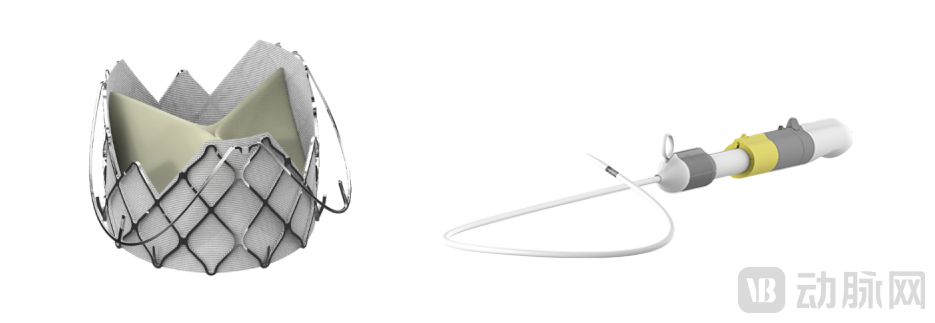
Jiecheng Transcatheter Interventional Valve
Jiecheng’s transcatheter valve has received FDA Breakthrough Device Designation, which not only affirms its technological originality, product strength, and clinical value but will also accelerate its future regulatory approval and market access in the United States.This breakthrough designation is the first of its kind among domestically developed TAVR brands in China and remains rare in the global TAVR landscape.
Aortic regurgitation is a common valvular disease in which aortic valve insufficiency causes blood to flow backward from the aorta into the left ventricle, potentially leading to heart failure, myocardial fibrosis, and even death. Without timely treatment, the five-year survival rate for patients with severe aortic regurgitation is only 30%.
According to Frost & Sullivan, the global number of patients with aortic regurgitation increased from 25.5 million in 2017 to 27.5 million in 2021, and is projected to reach 31.6 million by 2030. Among them, the number of patients with moderate-to-severe aortic regurgitation in China grew from 3.7 million in 2017 to 4.0 million in 2021, and is expected to reach 4.6 million by 2030.
Aortic regurgitation is prevalent among the elderly population. With the accelerating pace of global population aging, the number of patients with aortic regurgitation worldwide continues to rise. Results from the “China-DVD” study (Cohort Study of Hospitalized Elderly Patients with Valvular Heart Disease in China), led by Fuwai Hospital, show thatThe prevalence of aortic regurgitation is higher than that of aortic stenosis among the elderly population in China.。
Currently, the treatment options for aortic regurgitation primarily include pharmacological therapy, conventional surgical intervention, and transcatheter therapy. Pharmacological therapy can only help alleviate symptoms. Surgical aortic valve replacement (SAVR) is the primary curative approach; however, it is associated with significant invasiveness and higher surgical risk. Some elderly patients with severe aortic regurgitation are not suitable for surgery due to comorbidities, frailty, or disability, and thus can only receive conservative management.
Due to advantages such as minimal invasiveness and short operative time, transcatheter aortic valve replacement (TAVR) has become one of the important treatment modalities for aortic regurgitation. The “Expert Consensus on Clinical Pathways for Transcatheter Aortic Valve Replacement in China” states that for surgical high-risk patients with non-calcified rheumatic aortic stenosis and isolated aortic regurgitation, transcatheter implantation of specialized valves via the transapical approach may currently be considered.
In the United States,The FDA has not yet approved any TAVR products for the treatment of aortic regurgitation.According to the STS/ACC TVT Registry study, from 2011 to 2019, more than 276,000 TAVR procedures were performed in the United States, among which procedures for treating pure aortic regurgitation accounted for only 0.7%.In China, only the J-Valve transapical interventional valve product from Genesis has been approved by the NMPA for the treatment of aortic regurgitation and aortic stenosis.
Currently, most TAVR products that are commercially available or in clinical trials worldwide are primarily used to treat patients with aortic stenosis.Its primary mechanism for anchoring to the aortic annulus is radial support force, which imposes certain requirements on the patient’s aortic valve anatomy.. Moreover, patients with aortic regurgitation often present with unique anatomical features, such as annular dilation and lack of calcification, which make it difficult for conventional TAVR devices to achieve secure anchoring. This increases the risk of device migration, leading to complications such as paravalvular leak and valve thrombosis.
Therefore, the prior use of TAVR therapy required strict patient selection—limited to those with severe aortic regurgitation who had appropriate valve calcification and annular dimensions—which imposed certain limitations. In light of the substantial global demand for aortic regurgitation treatment, it is crucial to develop dedicated TAVR devices featuring precise positioning capabilities and anchoring designs. According to Jiecheng Medical,Its J-Valve transapical interventional valve accounts for more than 50% of the total implantations of this product in the treatment of aortic regurgitation., promoting the trend toward minimally invasive and precise treatment of aortic regurgitation in China.
Jiecheng’s transcatheter interventional valve products possess fully independent intellectual property rights,Building on the dual-indication advantages of transapical products, this approach adopts a transfemoral (transvascular) access route, offering patients more access options while providing benefits such as shorter procedure time, reduced surgical trauma, and faster patient recovery.。
The Genesis transcatheter interventional valve features uniquely designed positioning elements that are movably connected and can fully expand independently of the valve frame. These elements locate the aortic sinuses and automatically align with the valve implantation site, reducing excessive reliance on imaging technology and thereby improving the accuracy and success rate of valve implantation. Furthermore, after deployment of the Genesis transcatheter interventional valve, the native leaflets are clamped between the positioning elements and the stent, providing enhanced support. This design overcomes the limitations of traditional TAVR products, which rely on valve calcification for radial support, and, in conjunction with a short-frame design, ensures protection of the coronary ostia.
Currently, the only transfemoral interventional product for aortic regurgitation that has obtained European CE certification is the JenaValve Trilogy valve; whereasGenesis Transcatheter Interventional Biological Aortic Valve System Completes Patient Enrollment in China Clinical Study, Poised to Become the First Approved for Market Launch in China。
The domestic clinical study of the Genesis transcatheter intervention valve, led by Zhongshan Hospital Affiliated to Fudan University in collaboration with more than ten renowned cardiovascular centers across China, has successfully completed multiple high-difficulty TAVR implantation procedures for pure aortic regurgitation and aortic stenosis, demonstrating excellent safety and efficacy.
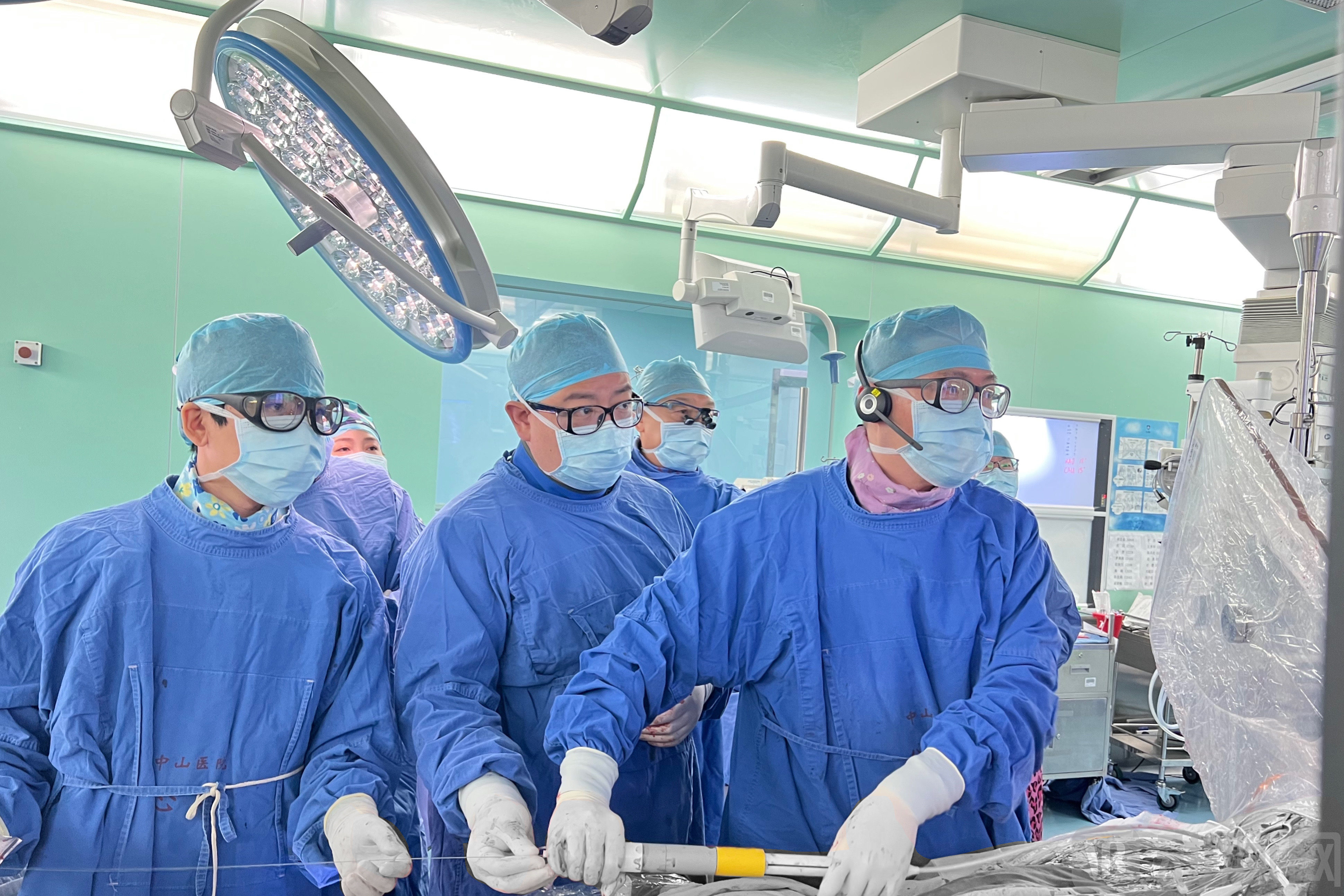 Professors Wang Chunsheng and Wei Lai from Zhongshan Hospital Performed Surgery Using the "Jiecheng Transcatheter Interventional Valve"
Wang Chunsheng, Director of the Department of Cardiac Surgery at Zhongshan Hospital and principal investigator of this study, commented: “Jiecheng’s next-generation transcatheter heart valve can simultaneously treat aortic regurgitation and stenosis.”Especially in the treatment of pure non-calcific aortic regurgitation, this valve from Genesis has unique advantages and excellent clinical performance.”
Meanwhile, since 2018, the Jiecheng transcatheter intervention valve has been used in more than 30 “humanitarian aid” cases in the United States and Canada, with most patients suffering from severe aortic regurgitation. It can be said that in the highly regulated U.S. market, Jiecheng’s original product has achieved a “reverse export.” Previously, several top international experts, including Dean Kereiakes from Christ Hospital in the United States and John Webb from St. Paul’s Hospital at the University of British Columbia in Canada, have highly praised the Jiecheng transcatheter intervention valve.
Driven by factors such as centralized procurement of external consumables, DRG-based payment systems, and intensifying domestic competition (“involution”), coupled with enterprises’ own pursuits of market expansion and revenue growth, going global has become an imperative path for Chinese medical device companies. According to statistics from the General Administration of Customs of China, China’s medical device exports reached $59.5 billion in 2022, with the United States being the largest export destination.
For Chinese companies, the United States is a market where opportunities and challenges coexist.On one hand, it is the world’s largest market for medical devices; on the other hand, the U.S. FDA imposes stringent approval requirements, making market access difficult, and competition within the market is intense.Previously, Chinese innovative enterprises expanding overseas mostly targeted developing countries, the Middle East, or Europe, capturing market share with low-priced products. In recent years, however, as China’s innovative technologies have advanced and companies’ overall competitiveness has strengthened, domestic brands have begun to enter the U.S. market, shifting their competitive strategy from “price wars” to “high-quality, cost-effective products.”
Overall, to stand out in the fiercely competitive U.S. market, companies must possess three key elements—Proprietary Technologies and Products, with a comprehensive intellectual property portfolio and excellent product performance;International Team and Overseas Expansion Experience, corporate team members need to have an international background and perspective. Some companies choose to enter developing countries or Europe first, and then enter the U.S. market after accumulating certain experience;Adequate Funding and Endurance, conducting clinical trials, regulatory registration, and commercialization of medical devices in the United States all require greater investment, and companies must be prepared for a protracted effort.
Genesis Medical has previously accumulated successful experience in exporting its surgical instrument products. Meanwhile, the company’s aortic valve technology and product design are original, having already been applied in the United States and Canada, thereby establishing a strong reputation among overseas physicians. Jiecheng’s transcatheter heart valve has received the FDA Breakthrough Device Designation, which is expected to accelerate the product’s review and market entry in the U.S., providing long-term support for its global expansion.
According to Genesis,The company will subsequently expedite the initiation of the U.S. pivotal clinical trial for Jiecheng’s transcatheter heart valve.。
Reference: "Professor Su Xi: Timing of Intervention and Strategy Selection for Aortic Regurgitation | CCIF 2023" — Medlive
“Venus Medtech Research Report: China’s Leader in Transcatheter Heart Valve Interventions, with Comprehensive Coverage of All Four Valves” — Huaan Securities
"Jianshi Technology Prospectus"
《Transcatheter Aortic Valve Replacement for Aortic Regurgitation-A Review》—《CVIA Journal》
《Report of the STS-ACC TVT TAVR Registry》—《American College of Cardiology》