

Dräger Medical: Aiming for 'Best Class,' Not Just 'Better Enough' in Critical Care
In the rapidly changing business market, people often call for "wolf-like" aggression to gain an advantage in zero-sum games; however, in the healthcare industry, "predatory growth" often leads to difficulties: healthcare is a relatively more serious proposition, as it concerns "the value and dignity of individual lives." The ultimate goal of healthcare is to save more patients' lives and achieve better patient outcomes.
For a family-owned enterprise founded in 1889, Dräger’s century-long heritage enables it to operate from a higher perspective: unlike those driven solely by profit, the company firmly believes in healthcare for good.
As a company in the field of critical care treatment, Draeger is also demonstrating its value judgments to the outside world through its practical actions.
During the pandemic, ventilators used to prevent and treat respiratory failure and extend patients’ lives were in critically short supply. A Draeger distributor approached Shen Lixin, head of Draeger’s Medical Division, seeking to obtain equipment through a “fast-track” channel. However, after assembly, ventilators typically require a 24-hour power-on test before release, meaning that the latest batch could only be shipped the following day. At that time, the assembled units had already been undergoing testing for several hours. The distributor, acknowledging the high quality of Draeger’s medical devices, argued that this was sufficient proof of their proper functionality. Nevertheless, Shen Lixin insisted on completing the full 24-hour test before releasing the ventilators to the distributor.
In the commercial market, this is undoubtedly a paradox. However, in the healthcare sector, which concerns human life, it is entirely reasonable.

Shen Lixin, Head of Draeger's Medical Division
“Sometimes, the outside world calls us ‘stubborn as a block of elm wood.’ But I believe that is precisely why we are called Draeger. We will not sacrifice our long-standing principles and the brand upon which our development depends for the sake of short-term, localized interests,” mentioned Shen Lixin.
And now, Dräger, a century-old enterprise in the field of critical care treatment, has taken a new step: accelerating its localization process in the increasingly large Chinese market.
A century allows for much to be accomplished. The same holds true for Draeger. Indeed, it is the events of the past that have laid the foundation for Draeger’s development today.
In 1906, a dust explosion occurred at the Courrières coal mine in northern France, killing 1,099 people—two-thirds of the miners on duty at the time. In what is known as the worst mining disaster in European history, Draeger’s durable respiratory equipment helped rescue more than 600 individuals.
Draeger’s outstanding performance in this incident also propelled it to prominence in the field of life support.
Draeger currently operates in two major sectors: healthcare and safety. Its business presence spans approximately 50 countries/regions, with representative offices in over 190 countries/regions and 21 development and production sites worldwide.
The Chinese market plays a particularly significant role in Draeger Medical's overall global market.
In the interview, Shen Lixin, head of the Medical Division, mentioned that Draeger had already established its medical business in Shanghai, China, as early as 1994, marking nearly 30 years of exploration to date.
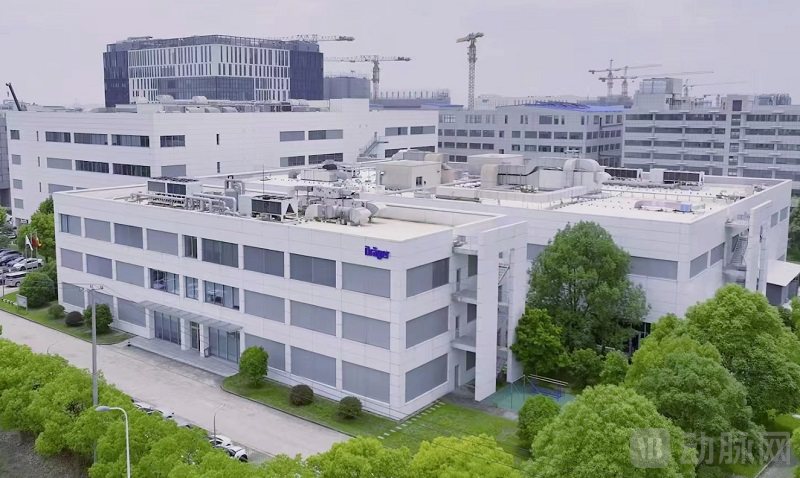
The decision to enter the Chinese market and accelerate this localization process today is driven by the following factors:
First, there is extensive unmet demand in the Chinese market. The Chinese population has devoted considerable effort and financial resources to critical care treatment. However, existing critical care facilities and service capacities are still insufficient to fully meet the needs of Chinese society.
Secondly, the development of China’s pharmaceutical industry chain has made the world aware of China’s unique supply chain advantages. Lower labor costs and a gradually improving production chain have led multinational medical device companies to recognize the importance of the Chinese market.
The acceleration of Draeger's localization process in the Chinese market was achieved in several steps:
First, the localization of ICU and operating room pendant equipment was achieved. This process culminated in 2018, when Draeger completed the domestic production of its entire pendant series. Second, pendants are used to house equipment such as anesthesia machines and ventilators. In light of this, Draeger began gradually localizing the production of its high-end anesthesia workstations and ventilator series in 2017.
To achieve the localization of medical devices and equipment in the field of critical care, enhancing team capabilities and strengthening supply chain production and delivery capacities have been prioritized. Shanghai Draeger Medical Instruments Co., Ltd. quickly validated this strategic decision, living up to expectations: Amidst the broader trend of “domestic substitution” and partial disruptions to global supply chains caused by the pandemic, the company experienced accelerated growth. Notably, while other enterprises resorted to layoffs due to the pandemic, Draeger’s Greater China region achieved the remarkable feat of retaining all its employees without any reductions.
Currently, Draeger Medical provides full-scenario solutions ranging from medical gas supply to medical building infrastructure, and from emergency transport to operating rooms and intensive care units. Its product portfolio covers anesthesia machines, ventilators, patient monitors, ceiling supply units, incubators for preterm infants and newborns, and medical gas supply systems.
For Draeger China, there is only one core target in sight, as mentioned by Shen Lixin: “How to enable hospitals in fourth- and fifth-tier cities to achieve the same level of treatment as those in Beijing, Shanghai, Guangzhou, and Shenzhen.”
China’s vast population base translates into enormous demand for healthcare services. “Among the 1.4 billion people, even diseases with low incidence rates will ultimately result in a strikingly large absolute number of patients.” Currently, the uneven distribution of medical resources across different regions of China has exacerbated the contradiction between this substantial demand and the available supply. Addressing these issues presents a significant challenge.
Even in terms of ICU development, although the pandemic has heightened market attention to critical care treatment, challenges remain in transitioning from the rapid, extensive ICU expansion seen during the outbreak to high-quality, sustainable growth in the future. In contrast, European and American countries have accumulated substantial experience in ICU development.
“We are eager to bring Germany’s construction expertise and medical equipment to China, helping doctors and nurses provide better care for patients,” Shen Lixin mentioned. “In a sense, ‘Made in Germany’ also signifies precision, safety, and reliability; in the field of life support, it can better facilitate patient diagnosis and treatment.”
However, this does not mean that Draeger will engage in disordered expansion; its chosen strategy remains “focus.” For Draeger, the company will continue to refine and upgrade its medical devices and equipment used in scenarios such as operating rooms and ICUs. “What Draeger strives for is always ‘Best Class,’ even if it takes more time and effort to achieve a mere 2% improvement in product functionality,” mentioned Shen Lixin.
In fact, while “conservative,” they are still continuously engaging in “innovation.”
At this year’s CMEF, Dräger Medical unveiled a range of new products, including the PulmoVista 500 Electrical Impedance Tomography (EIT) monitor for visualized respiratory therapy, the A300 series anesthesia systems, the Polaris 600 surgical light, and the VentView respiratory management system.
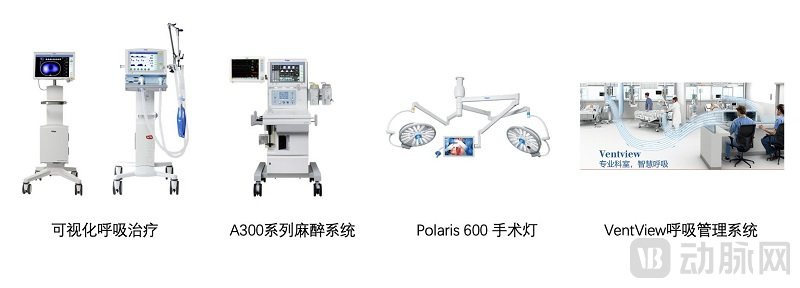
Visualized Respiratory Therapy: PulmoVista 500 Electrical Impedance Tomography Monitor, providing a new method for closely monitoring patients' pulmonary status and continuously evaluating the efficacy of mechanical ventilation, thereby facilitating the implementation of lung-protective ventilation strategies. Conventional X-ray imaging is not suitable for prolonged or frequent exposure over short periods, and is even less appropriate for ICU patients. The PulmoVista 500 Electrical Impedance Tomography (EIT) system offers an adjunctive diagnostic tool that helps optimize PEEP settings by tracking trends in end-expiratory lung volume, thereby maintaining alveolar recruitment throughout the respiratory cycle and helping to avoid shear stress-induced injury.
A300 Series Anesthesia System, offering a range of features to support anesthesiologists in implementing protective ventilation during surgery. It can be equipped with various advanced ventilation modes, such as AutoFlow, cardiopulmonary bypass mode, and apnea oxygenation, making it suitable for the entire process of surgical induction, maintenance, and emergence. Furthermore, it provides customized services according to hospital requirements.
The Polaris 600 Surgical Light Is Primarily Positioned for the High-End Market. A key feature of the product is its off-center camera design, which allows for simple adjustments to meet surgical field-of-view requirements without altering the central axis. Furthermore, the device can rapidly complete core optical parameter testing within 10 seconds, enabling faster product self-diagnosis.
VentView Respiratory Management SystemDesigned specifically for remote viewing of respiratory data to address clinical needs. Nurses and other healthcare professionals can monitor ventilator waveforms, parameters, alarms, and other information at a glance, gaining an immediate overview of the status of all patients connected to ventilators. Meanwhile, the system supports multi-module expansion, facilitating hospital-based scientific research, equipment management, and respiratory monitoring. Furthermore, it enables adverse event tracking and assists physicians in conducting case review teaching.
In fact, at the same time, Draeger is also collaborating with local suppliers on certain components to reduce costs while achieving better therapeutic outcomes. Moreover, Draeger is even attempting to introduce its VentView respiratory management system back into the German market.
Draeger is not afraid of competition. Behind this lies Draeger’s confidence.
First, Draeger itself has built a highly capable team.It is reported that the vast majority of Draeger’s team members have a medical background. It was revealed that the longest-serving manager has been with Draeger for 25 years. In addition, Draeger has supplied a large number of talents to the industry.
Second, original manufacturer quality and original manufacturer service.On one hand, Dräger products are widely deployed in numerous Grade A tertiary hospitals, and their equipment is well recognized by clinical professionals. On the other hand, when after-sales issues arise with hospital-installed equipment, Dräger insists on providing original manufacturer maintenance services. Engineers will visit the site to perform repairs and issue corresponding test reports upon completion. This commitment to original manufacturer quality and service stems from Dräger’s cautious approach: unlike other medical devices, life support systems demand a greater sense of “reverence.”
Furthermore, Draeger has further optimized its internal mechanisms.At the beginning of this year, Draeger Medical began implementing a "provincial-level" responsibility system and expanding its coverage to broader regions. Under this model, provincial managers oversee the entire product portfolio, thereby enhancing internal and external communication efficiency. Ultimately, this ensures that hospitals receive timely responses from Draeger when encountering issues or expressing relevant needs.
In addition, Draeger is also helping more physicians conduct training.It is reported that, to date, Draeger has trained as many as 10,000 physicians and nurses. All training programs adopt a small-class format combining online and offline instruction, with the aim of maximizing proficiency in the use of relevant equipment and enhancing professional skills among physicians and nurses.
“Draeger’s medical devices are not the cheapest, and may even be the most expensive. However, our employees possess the highest level of professionalism and are genuinely sincere and trustworthy. It is precisely for this reason that our customers have stayed with us every step of the way to where we are today,” remarked Shen Lixin.
In the future, Draeger will also become increasingly diversified. While focusing on the treatment of critical illnesses, Draeger will collaborate with local enterprises to refine its China-specific solutions. It is reported that Draeger is currently in discussions with multiple hospitals regarding potential collaborations.
“Interconnectivity in medical technology will transform clinical practices in fields such as critical care medicine and operating rooms, improving efficiency and enhancing safety. Most importantly, it will lead to better clinical outcomes for patients,” mentioned Shen Lixin, and Draeger is firmly committed to this path.