

Another Expert Consensus on Recombinant Collagen for Clinical Use in Medical Applications to Be Released Soon
The fervor surrounding the recombinant collagen sector has remained intense from last year through to the present.
With the successful public listings of recombinant collagen companies such as Giant Biogene and Jinbo Bio, numerous domestic enterprises have subsequently secured substantial financing. The recombinant collagen sector has entered a phase of rapid growth, with its applications expanding beyond healthcare into food and beverages, cosmetics, and medical aesthetics.
Despite its broad range of application scenarios, recombinant collagen faces high technical barriers and a limited number of compliant products. The industry continues to grapple with several key pain points, including product supportiveness, safety, and scalable manufacturing. Meanwhile, as interest in the recombinant collagen sector continues to surge, an increasing number of companies are entering the competitive landscape. This boom has inevitably led to industry irregularities such as non-standardized nomenclature and false advertising. The establishment and improvement of industry standard systems is now imminent.
On July 29, 2023, hosted by the China Association of Medical Equipment and co-organized by Jiaxing Hospital of Traditional Chinese Medicine and Jiangsu TRAUTEC Medical Technology Co., Ltd.Finalization Meeting for the "National Expert Consensus on the Clinical Application of Recombinant Collagen Medical Products in Skin Injury Repair (2023 Edition)" and Academic Symposium on the Industry-Academia-Research Collaboration of Recombinant Type XVII CollagenHeld in Jiaxing, Zhejiang, the event aimed to establish a national expert consensus, further promote the standardization and normalization of recombinant collagen in the clinical application of medical products, and improve the efficacy and quality of skin injury repair.
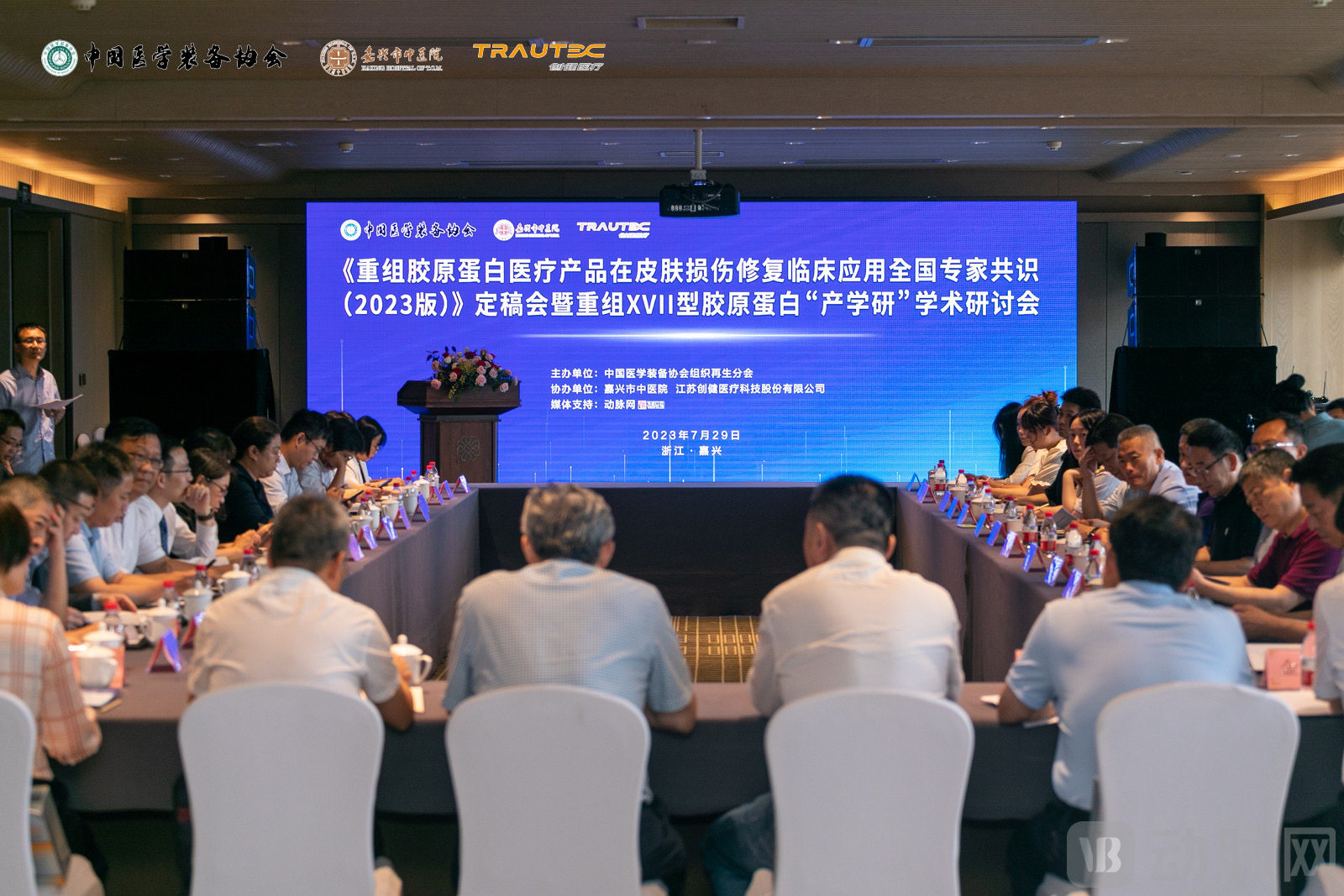
Conference Venue
It is understood that this expert consensus isProvide clinically actionable recommendations for medical products based on recombinant collagen, covering material foundations, regulations and standards, clinical observation metrics, indications, contraindications, and precautions for clinical application in the context of skin repair clinical trials, research, and practical use.The launch of this expert consensus will provide guidance for the more standardized and regulated development of the recombinant collagen industry.
Recombinant Collagen Is in the Spotlight: Expert Consensus Will Further Improve the Industry Standard System
In recent years, the Chinese government has attached great importance to the standardization of recombinant collagen products, accelerating the transformation of innovative achievements through expedited project initiation, streamlined standards development pathways, and innovative regulatory approaches. China’s clinical application of recombinant collagen and related experience are at the forefront globally.
It is understood that the recombinant collagen industry has currently issued three industry standards and four product-related guidelines. Among these, Recombinant Collagen (YY/T 1849-2022) serves as the raw material standard; while the Standard for Quantitative Determination of Characteristic Collagen Peptides and Medical Devices for Tissue Engineering—Collagen Part 2: Determination of Molecular Weight of Type I Collagen—Sodium Dodecyl Sulfate-Polyacrylamide Gel Electrophoresis (YY/T 1805.2-2021) serve as testing standards, which can be used for the identification of the type and species of recombinant collagen.
The development of this expert consensus follows the standardization of raw materials and testing methods for recombinant collagen, aiming to regulate the clinical application of recombinant collagen medical products in the field of skin repair. The establishment of this expert consensus also signifiesClinical applications of recombinant collagen in the medical field now have a reference basis, which will further accelerate the standardization process across the entire industry., which is conducive to the sound and orderly development of the industry.
At the conference, experts from China in the fields of materials science, testing, burn care, dermatology, and regulatory affairs convened to provide final recommendations on the expert consensus document and engaged in vigorous discussions on the clinical translation and application of novel recombinant collagen materials.
Among them,Professor Gu Ning, Academician of the Chinese Academy of SciencesIt was stated that this expert consensus represents a critical component of the industry-academia-research collaboration surrounding recombinant collagen medical products for skin injury repair. It is hoped that the consensus will provide clear clinical research guidance for advanced material research, related product development, and scientific regulation, thereby accelerating the translation and standardized market launch of innovative biomaterial research outcomes.

Professor Gu Ning, Academician of the Chinese Academy of Sciences
As the leader of the expert consensus group for this initiative,Professor Zhu Shihui, Director of the Department of Burn Surgery, First Affiliated Hospital of Naval Medical UniversityHe elaborated on the value of expert consensus for the industry and clinical practice. He stated that in the field of skin regeneration, we focus on two major areas: one is promoting tissue repair, and the other is achieving skin rejuvenation. Recombinant collagen, particularly Type III collagen, is a highly valuable biomaterial with promising prospects for both tissue repair and skin rejuvenation in the future. China’s research on recombinant collagen ranks among the world’s leading positions. The development of this expert consensus will lay the foundation for the widespread clinical application of recombinant collagen in the future and provide evidence to support the clinical promotion of related products.

Professor Zhu Shihui, Director of the Department of Burn Surgery, First Affiliated Hospital of Naval Medical University
On How Innovative Medical Products Can Achieve Rapid Commercialization,National Engineering Research Center for Biomedical MaterialsYuan TunResearcherIt was stated that the greatest obstacle to the translation of innovative products lies in differing perspectives. For instance, academic innovations tend to focus more on efficacy or the uniqueness of specific indicators; however, during the actual product commercialization process, attention must also be paid to safety, comparative products, and integration into existing product frameworks. These factors significantly influence subsequent product review and market approval. Therefore, regulatory review considerations should be integrated at an early stage. In addition to focusing on the direction of innovation, it is essential to anticipate and prepare for every potential challenge encountered throughout the technology transfer process.
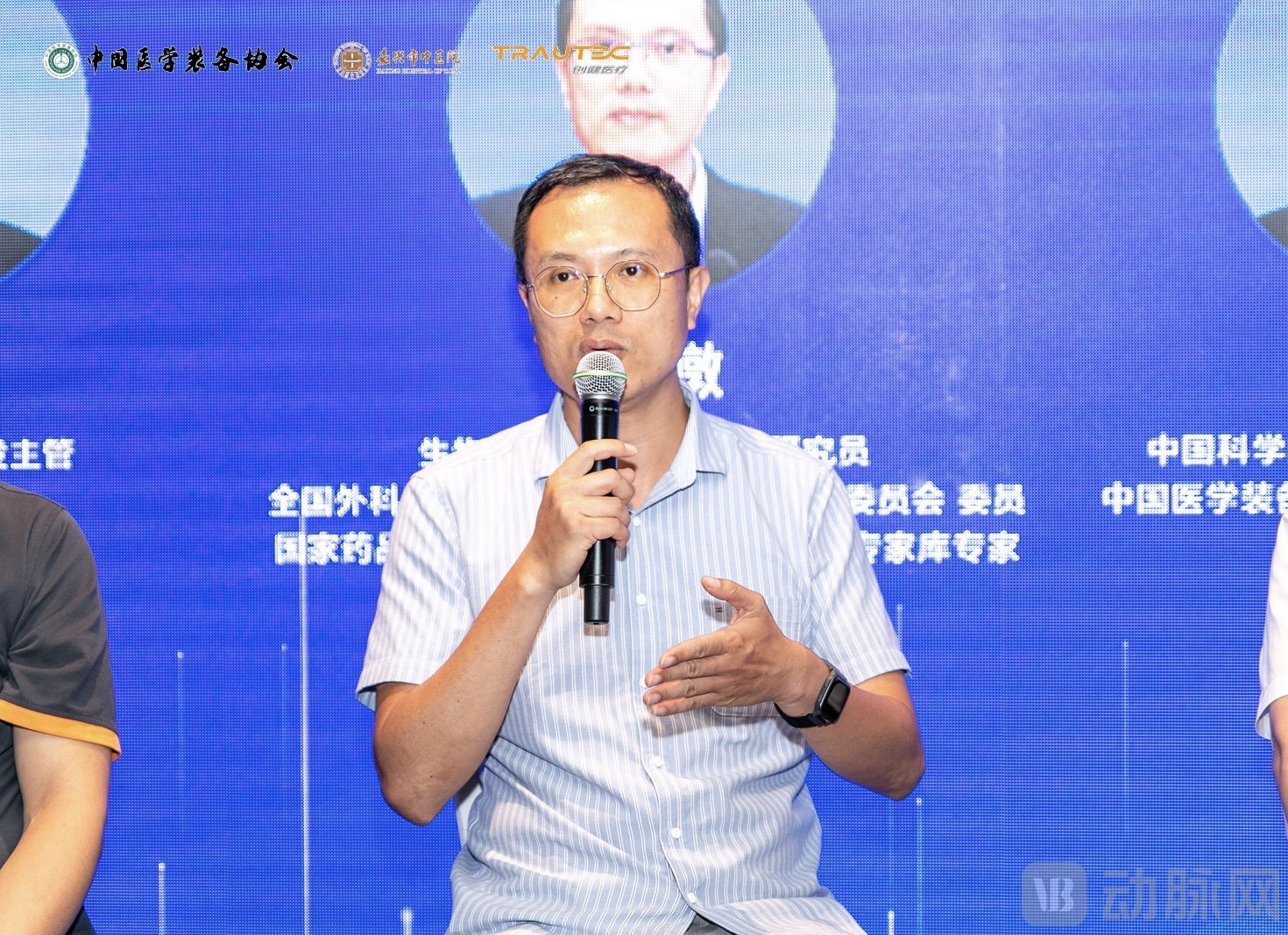
National Engineering Research Center for BiomaterialsResearcherYuan Tun
Researcher Zhang Guifeng, Institute of Process Engineering, Chinese Academy of SciencesRegarding the future prospects of recombinant collagen, he noted that different types of collagen exhibit strong interactions with cell transmembrane proteins, thereby influencing cell adhesion, proliferation, migration, and differentiation. Recombinant collagen can accelerate research related to cellular regulation. Furthermore, leveraging synthetic biology-based technologies for the production of recombinant collagen enables the extraction or preparation of currently scarce collagen subtypes. This process will also accelerate the application of stem cells. In the future, the emergence of additional biomaterials will represent a key development trend.

Institute of Process Engineering, Chinese Academy of SciencesResearcherZhang Guifeng
Through multiple rounds of discussion and exchange, the participating experts conducted a more in-depth review of development trends, technological innovations, and policies and regulations in the field of recombinant collagen. They formulated scientifically sound and feasible guiding opinions and recommendations, which hold significant importance for promoting technological innovation and clinical application of recombinant collagen, thereby driving the healthy development of the industry.
Exploring the Potential of Type XVII Collagen: Providing New Directions for Global Regenerative Materials
As is well known, collagen, as a functional protein, has garnered significant attention in both the medical aesthetics and medical fields.
To date, researchers have identified 29 types of collagen, named sequentially according to their order of discovery, with Types I, II, and III being the most common. Among these, Type I and Type III collagens are the primary components of skin collagen. Type I collagen is predominantly located in the deep dermis, determining the skin’s firmness and structural support; Type III collagen is mainly found in the superficial dermis, contributing to the skin’s softness and fine texture. Type III collagen is abundant during infancy and progressively declines with age.
Historically, collagen has been primarily derived from animal sources, posing potential risks of immune rejection and viral contamination. With advances in synthetic biology and breakthroughs in genetic recombination technology, recombinant collagen has emerged as a superior new type of collagen material with promising application prospects, owing to its excellent biocompatibility and bioactivity.
Based on this,Most companies in the industry have focused on Type I and Type III recombinant collagen, driving the first wave of growth in the recombinant collagen sector.. According to Frost & Sullivan data, the market size of recombinant collagen end-use products in China is projected to grow from RMB 18.5 billion in 2022 to RMB 108.3 billion in 2027, representing a compound annual growth rate (CAGR) of 42.4%.
Recently, industry discussions on collagen have increasingly focused on type XVII collagen, which may usher in the second peak for the recombinant collagen industry.
Type XVII collagen is a transmembrane glycoprotein. Given its critical role in combating skin aging, promoting hair follicle stem cell regeneration, and preventing hair follicle aging, there is strong market demand for Type XVII collagen in the fields of dermatology and medicine.
However, Type XVII collagen is present in trace amounts in the human body and is a non-secreted extracellular matrix-associated collagen. Its long amino acid chains and high molecular weight make extraction or synthetic preparation extremely challenging, precluding mass production. Consequently, similar raw materials are rarely available on the current market.
Notably, TRAUTEC is currently the only biotechnology company to have achieved industrial-scale production of recombinant type XVII collagen.
As a leading domestic raw material manufacturer for the industrial application of recombinant Type XVII collagen, Trautec has utilized genetic engineering to optimize high-bioactivity sites of human Type XVII collagen. By employing eukaryotic yeast cells as an expression system and leveraging biofermentation technology, the company has achieved a breakthrough in the green preparation of recombinant humanized Type XVII collagen and successfully validated its efficacy in skincare and scalp care applications.
Currently, TRAUTEC has applied recombinant Type XVII collagen to hair and scalp care products, leveraging its ability to regulate the adhesion, separation, and developmental differentiation of epithelial cells to promote hair growth and address hair loss issues.
Currently, most companies in the recombinant collagen sector primarily focus on Type I and Type III collagen. With Type III collagen being the current focal point of research in genetically engineered collagen, recombinant Type XVII collagen remains exceedingly rare. This underscores TRAUTEC’s determination and achievements in exploring novel biomaterials on a global scale.
Overcoming technical barriers to scalability and standardization, and participating multiple times in the formulation of industry standards
The industry momentum and market size of recombinant collagen continue to grow, and the establishment and continuous improvement of industry standard systems are essential for the high-quality development of the sector.In the advancement of these standards, TRAUTEC has also played a crucial role.
TRAUTEC is a clinical medicine-oriented, full-industry-chain platform enterprise specializing in recombinant collagen. It possesses both a biosynthesis platform and a medical device translation platform, focusing on the R&D, production, and sales of novel biomaterials, innovative protein- and nucleic acid-based drugs, and food products. In the field of recombinant collagen, it holds five authorized core sequence patents.
TRAUTEC is built on independent research and development,Achieved two major technological breakthroughs: “Construction of a Stable Genetically Engineered Expression System for Recombinant Type III Collagen in Yeast” and “Development of 30-Ton Stable Fermentation and Purification Technology,” and completed the large-scale, standardized production of recombinant Type I, II, III, and XVII collagen.And by adhering to the high standards for medical devices, the application scenarios of recombinant collagen are gradually expanding to cover multiple fields, including pharmaceuticals, tissue engineering, food, and cosmetics.
Notably, as one of the drafting organizations, TRAUTEC previously participated in the formulation of the Chinese industry standards YY/T 1849-2022 “Recombinant Collagen” and YY/T 1888-2023 “Recombinant Humanized Collagen,” establishing itself as a leader in China’s recombinant collagen industry.
TRAUTEC has been granted or applied for over 60 patents. Six core functional domain protein structure data sets of its recombinant collagen, covering Types I, III, and XVII, have been included in the U.S. Protein Data Bank (PDB). Meanwhile, the company has obtained 33 registration certificates for Class II medical devices based on recombinant collagen, with more than 10 Class III medical device products in its R&D pipeline, five of which have entered clinical trials.
Participating once again in the development of expert consensus signifies that TRAUTEC has taken another step forward in promoting the standardization of the recombinant collagen industry. This effort will help make the clinical application of recombinant collagen in the medical field more standardized and regulated, thereby driving the high-quality development of China’s recombinant collagen industry.
In the future, continuous breakthroughs in recombinant collagen technology and the ongoing accumulation of clinical data, driven by cross-sector collaboration among industry, academia, research institutions, and healthcare providers, will consistently propel the recombinant collagen industry forward. TRAUTEC remains committed to deepening its engagement in the recombinant collagen sector, advancing the establishment and continuous improvement of standard systems, exploring the broader efficacy potential of recombinant collagen, and promoting the standardized development and diversified applications of the industry.