

The One Thing TCM Clinic Owners Must Consider in 2023: Embracing Online-Merge-Offline Transformation
“When structural changes occur in the era, all expectations and methods based on history become burdens.”
Unlike the past, when there was only one traditional Chinese medicine (TCM) clinic serving a cluster of villages and towns, the number of TCM clinics has now exceeded 70,000. How can these clinics adapt their services to meet the ever-evolving needs of modern patients? And amidst the flood of information, how can they ensure that patients discover and choose them from among the 70,000 options? These questions have become a major headache for many TCM clinic owners. But before we delve into these issues, let us first consider a short story.
Nine months ago, Mr. Li, who operates three traditional Chinese medicine (TCM) clinics in Chengdu, discovered that his clinics were featured in “recommendation posts” on Xiaohongshu (Little Red Book). As the popularity of these posts surged, an increasing number of patients flocked to his clinics by reputation. Mr. Li was privately delighted, believing that he could leverage this wave of “TCM wellness fever” to take his clinics to the next level.
But when the financial reimbursement was processed the following month, Boss Li did not see the anticipated surge in revenue. Subsequently, he stationed himself at the entrance of the TCM clinic for two weeks and finally discovered the reason for the stagnant revenue: most young patients never returned for follow-up visits after their initial “check-in” visit, while long-term regulars seeking ongoing conditioning were deterred by the overwhelming crowds and long queues. Boss Li immediately instructed the receptionists and medical assistants to call patients and send WeChat reminders to encourage follow-up visits, but these efforts yielded minimal results. He simply could not understand why."They say that traffic can be monetized and popularity can bring in money, so why is it that when it comes to me, I almost ended up losing money just for the sake of making noise?"
After the relaxation of pandemic controls, we had in-depth conversations with many TCM clinic owners who had “endured” through the crisis. Not a few shared similar experiences with Mr. Li: facing shifting patient healthcare-seeking behaviors in the post-pandemic era and the proliferation of social media accounts promoting TCM, customer acquisition costs have continued to rise."Faced with the 'intractable ailments' that this era has imposed on traditional Chinese medicine clinics, what effective remedies should clinic owners prescribe for their own practices?"
Pulse Diagnosis: Many TCM Clinics Only Open “Half a Door,” Treating Only “Half an Illness”
Clinics Only Treat “Half an Illness,” Patients Only Ask for “Half a Consultation”:
After having heartfelt conversations with over a dozen doctors who have ventured into entrepreneurship by opening traditional Chinese medicine (TCM) clinics, we discovered that, at some point, patients began to place more trust than doctors in the notion that “medicine administered” equates to “disease cured.” Many patients view obtaining the prescribed medication as the ultimate goal of a medical consultation. Even for minor ailments such as the common cold, the recovery period typically spans seven days. For TCM, which emphasizes addressing the root cause of disease, the treatment course for mild to moderate conditions usually exceeds seven days. Moreover, a single offline consultation often consumes one to two hours of a patient’s time, encompassing steps such as inspection, auscultation and olfaction, inquiry, pulse-taking, syndrome differentiation and analysis, personalized prescriptions, as well as pre-examination, registration, waiting, payment, and medication pickup. Consequently, many office workers find it difficult to justify sacrificing their precious weekends for follow-up visits. They tend to simply purchase additional doses from a pharmacy if they perceive the initial medication as effective, or abandon treatment altogether if it appears ineffective.When TCM clinics fail to provide patients with convenient follow-up pathways and adequate post-consultation management, the result is that the more patients they see, the more they lose.Facilitating easy follow-up visits for patients and enabling physicians to adjust prescriptions with ease is a crucial component in building trust between patients and the clinic. As a competent clinic operator, it is more important to understand how many patients have been lost inadvertently than to know how many patients have been seen.
TCM Clinics Should Open the Other “Half-Door” Online
“A free clinic” staffed by one doctor, equipped with two tables and three display stands has become a standard customer-acquisition tactic for many traditional Chinese medicine (TCM) clinics. By partnering with local communities, these clinics distribute coupons on-site, promote discounted services, and give away gifts, organizing such events more than ten times a year. Ultimately, however, the clinics either operate at a loss merely to generate buzz, or experience a brief surge in business from promotional offers before falling back into obscurity. The core reason these traditional marketing strategies fail is that many clinic owners mistakenly equate “promotion and publicity” with “effective customer acquisition.” Unlike fast-moving consumer goods, healthcare services are low-frequency purchases triggered only in specific scenarios. Consequently, isolated, one-off, aggressive marketing campaigns rarely yield immediate results.TCM clinics aiming to scale up and strengthen their market position must understand the importance of separating “patient acquisition” from “conversion.”On one hand, TCM clinics can expand their private domain traffic pools by adding patients on WeChat through activities such as community free clinics and consultations with renowned physicians. On the other hand, they can achieve broad reach among these private-domain patients through close-range communication channels like popular science articles, health-focused short videos, and online consultations. Only by building sufficient trust in daily interactions will patients think of you when they need medical care. The operation of a TCM clinic is similar to the study of Traditional Chinese Medicine itself: both require long-term commitment, demanding not only hard work but also innovation and adaptability. Offline promotion should focus on driving substantial traffic to expand the reachable patient base and effectively convert public-domain traffic into private-domain connections. Online marketing, meanwhile, should emphasize value dissemination, brand building, and seamless channel integration, making patients feel assured, cared for, and at ease.
Prescription: "Three Herbs" to Unblock the "Ren and Du Meridians"—Common Ingredients, with the Key Lying in Processing
Once the root cause is identified, the appropriate treatment becomes clear: remind patients who fail to return for follow-up visits, launch promotional campaigns if brand awareness is insufficient, and organize events to boost low patient visitation rates. Although this prescription seems straightforward, every TCM clinic owner knows how challenging it truly is to execute these measures effectively. After repeated unsuccessful attempts, many revert to the daily routine of offering free consultations, promotions, and giving away eggs. Was the wrong medication chosen? In fact, the issue more often lies with the “processing method.” For instance, while raw Polygonum multiflorum (Shou Wu) can detoxify and reduce abscesses, it is cold in nature and carries certain toxicity; long-term, high-dose consumption may damage the liver and kidneys. However, when raw Polygonum multiflorum is steamed and boiled with black bean juice, repeated nine times, its properties shift toward warmth, focusing primarily on tonification, thereby effectively regulating liver and kidney deficiency.The same principle applies to the marketing and operational management of traditional Chinese medicine clinics; if the approach is incorrect, choosing the wrong platform will be futile.
The operation of modern TCM clinics should be handled with ease and precision, adopting a dual-pronged approach that emphasizes methodology and tools. Follow-up visit reminders should not merely consist of sending WeChat messages or making phone calls; instead, they should enable patients to easily conduct online follow-ups and adjust prescriptions remotely, ensuring that follow-up visits are no longer a “burden.” Clinic promotion should not rely on distributing flyers or holding lectures, but rather on driving offline traffic while providing long-term health education online, allowing high-quality content to reach a wider audience and premium products to achieve higher conversion rates. Hosting events should not be limited to hanging banners or giving away coupons, but should focus on promoting specialized services during key solar terms, developing exclusive products in areas of expertise, and enhancing patient trust through lightweight online consultations and intensive follow-up care. This ensures that patients think of you and can reach you immediately when needs arise. All these strategies ultimately revolve around one core concept: “online.”How to digitize follow-up visits, promotion, and activities is the key for modern TCM clinics to break through bottlenecks, and building a secure, compliant, efficient, and convenient online platform is the solution for thousands of mid-tier TCM clinics to overcome their challenges.

Gushengtang, the first publicly listed chain of traditional Chinese medicine (TCM) clinics, was among the earliest beneficiaries of “digitalization.” Established in 2010, Gushengtang lacked the brand advantage of time-honored establishments and did not rely on any blockbuster products. From its first clinic in Guangdong to 41 TCM clinics and RMB 925 million in revenue at the time of its Hong Kong stock exchange listing, Gushengtang’s own experience has demonstrated that TCM clinics also need to undergo digital transformation.The OMO (Online-Merge-Offline) model, which integrates online and offline operations, is the core business model highlighted in Gushengtang’s prospectus.
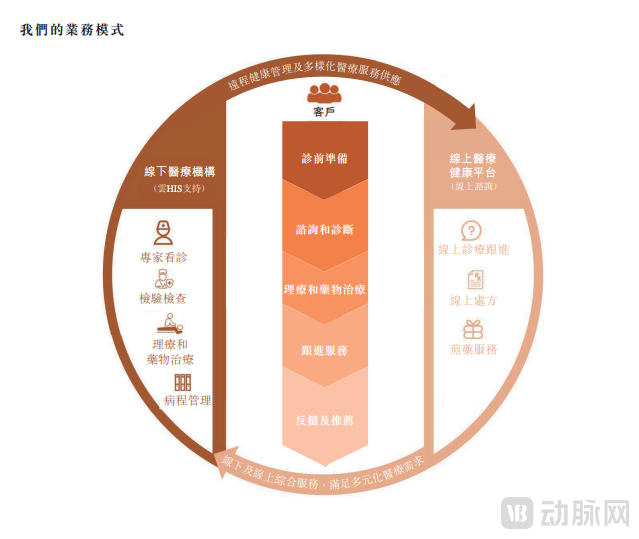
Gushengtang Prospectus - Business Model
Compared to its revenue of over RMB 1.3 billion and 48 chain stores (2022 data),“Covering 340+ cities, with an 86.4% member retention rate, an average transaction value of RMB 552 per member order, and an average annual member spending of RMB 2,673”These are the metrics that truly matter. This dataset indicates that a single Gushengtang clinic can serve patients across seven surrounding cities, with each member averaging five follow-up visits per year. Such high patient retention and extensive reach are beyond the imagination of most traditional Chinese medicine (TCM) clinics. Meanwhile, Gushengtang’s online services have progressively expanded from prescription refills and herbal decoction/dispensing services to post-consultation management, intelligent monitoring, and health education. This strategy fully leverages TCM’s advantages in “addressing root causes” and “preventing disease before it occurs,” continuously enriching service scenarios and enhancing patient stickiness.
If some argue that Gushengtang’s success also benefited from its physician partnership model and capital infusion, then the fully online Taozi TCM Clinic serves as further compelling evidence that traditional Chinese medicine should embrace digitalization.
Taozi TCM Clinic is a one-stop e-commerce platform for “Traditional Chinese Medicine (TCM) + pharmaceutical care services,” built upon an internet hospital framework. From the outset, Taozi TCM Clinic has taken a distinctive approach by targeting the online TCM market. According to disclosed data,Of Taoyi TCM Clinic’s annual revenue exceeding RMB 10 million, 70% comes from offline prescription renewal orders.These orders propelled its online business to rank first in both the “Traditional Chinese Medicine” category and the “Classic Formulas” subcategory on JD.com.
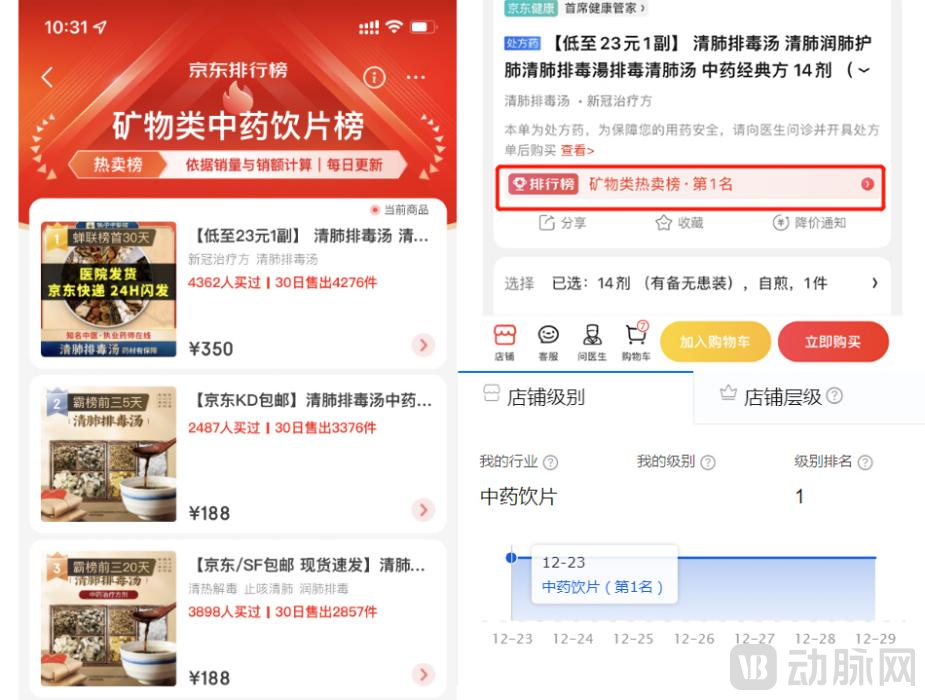
Peach TCM Clinic: Ranked #1 in Both Store and Herbal Slice Sales
In addition to offering convenient services for follow-up consultations and prescription adjustments, Taozi TCM Clinic remains committed to effective patient engagement. While ensuring customer retention, it has also increased the add-to-cart rate for other traditional Chinese medicine (TCM) consumer products. The model of Taozi TCM Clinic further demonstrates thatConvenient follow-up consultations and prescription renewals, along with high-quality patient management, are needs as strong as those for pulse-taking and diagnostic consultations.
Traditional Chinese Medicine (TCM) may not necessarily be the first choice for Chinese patients, but it is undoubtedly the last line of defense in their healthcare journey. While upholding classical traditions, every leader of a TCM clinic leverages modern tools to lower the threshold for TCM consultations, expand service coverage, and enhance service quality. By harnessing digital capabilities, they are building a competitive moat for TCM and constructing a high-speed highway for this millennia-old wisdom.
Sharing Practical Operational Insights from Over 300 TCM Clinics: Jointly Exploring the Path to Modernizing Traditional Chinese Medicine and Safeguarding the Time-Honored Heritage of Holistic TCM