

Liankong Network Files IPO Prospectus: From Physical Space Optimization to Disease Intervention, Empowering Large Hospitals with Digital Transformation
Shanghai Liankong Network Technology Co., Ltd. has been established for 8 years.
In its sixth year of establishment, Liankong Network launched the Liankong Yijia Digital-Intelligent Medical Care Space 1.0 solution, aiming to optimize medical care processes and enhance patient experience by integrating physical offline medical spaces with virtual online medical spaces.
In its seventh year since inception, Liankong Network launched the Liankong Med+ Digital Intelligence Healthcare Space 2.0 solution, announcing a restructuring of the healthcare service supply system from three dimensions: shifting focus from enhancing spatial efficiency to improving service effectiveness; from concentrating on individual medical visits to emphasizing full-cycle care planning; and from organizational empowerment to “restructuring” new medical organizations.
The launch of the Liankong Medical AI Plus Digital Intelligence Space 2.0 solution marks a strategic shift for Liankong Network, moving from a sole focus on improving hospital spatial efficiency to emphasizing service capacity and even service effectiveness. Nevertheless, the core essence of its business remains empowering hospitals to better and more efficiently address the substantial existing demand for medical care. In the view of Kuang Hua, CEO of Liankong Network, the key to resolving this issue lies in enhancing hospitals’ service capabilities.
“Over the past eight years, we have remained steadfast in our commitment to leveraging digital solutions to empower brick-and-mortar hospitals. Throughout this journey, our approach to hospital empowerment has undergone continuous iteration, evolving from superficial to profound—progressing from initially addressing patient queuing issues, to optimizing the allocation of medical resources, and ultimately to intervening in treatment outcomes.”“At the same time, hospitals are continuously improving their space turnover efficiency and service capacity, leading to increasing revenue,” said Kuang Hua.
Taking only the period from 2022 to the first half of 2023 as an example, Liankong Network’s vision implementation has achieved remarkable results—
Ranked first among mini-program integration service providers for tertiary hospitals in 2022, with a lead of nearly 50 hospitals over the second-place competitor; acquired 23.81 million new internet-registered users, recorded 101 million transactions, conducted 2.21 million online follow-up consultations, and issued 345,000 online prescriptions;
During this same period, Shanghai Liankong Network Technology Co., Ltd. was recognized as one of the “Top 100 High-Growth Enterprises in Shanghai’s Software and Information Technology Service Industry” in 2022. Its participation in the CHIMA exhibition attracted numerous industry professionals, while its collaboration with Ruijin Hospital to create “Cloud-Based Ruijin” and its support for Shanghai First Maternity and Infant Hospital in achieving comprehensive planning and management of the entire maternity care journey further underscored its impact.
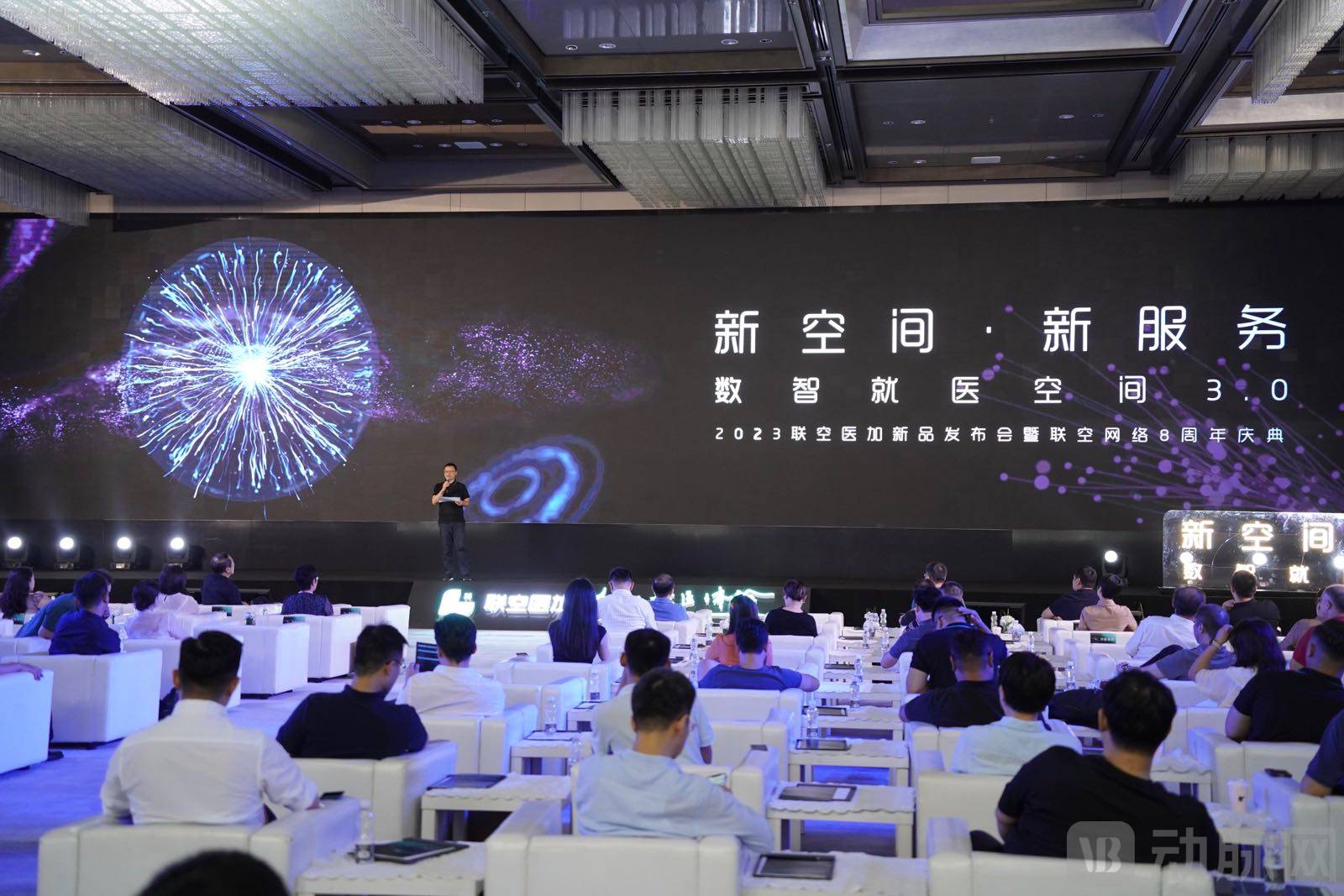
Since 2022, the story of Liankong Network has been nothing short of remarkable. On August 5 this year, Liankong Network made another appearance in Shanghai, showcasing the achievements of its “Liankong Yijia Digital Intelligence Medical Care Space 2.0” solution and outlining the development direction of its “Liankong Yijia Digital Intelligence Medical Care Space 3.0” solution.
From interviews with the heads of various business units at Liankong Network and with its CEO, Kuang Hua, conducted by VCBeat, we have identified two dimensions to better understand Liankong Network’s practices and achievements from 2022 to the present: implemented spatial solutions and extended services.
Whether it was the initial “unattended” model, the later formal introduction of the Liankong Medical Plus Digital Intelligence Healthcare Space, or the recent release of Version 3.0 of the Liankong Medical Plus Digital Intelligence Healthcare Space, the concept of “space” has consistently remained the central thread in Liankong Network’s development. Therefore, a clear understanding of “space” from the perspective of Liankong Network is essential to comprehending the logic behind its product evolution.
“What is your first impression when you walk into a hospital?” During the interview, Kuang Hua posed this question.
——“It’s a mess.”
—“Yes, this kind of disorder not only leads to a poor patient experience but also significantly ‘undermines’ the service efficiency of hospitals. Therefore, our initial consideration was to address the issue of physical space for medical care and improve its utilization efficiency,” said Kuang Hua. “Later, as our operations continued to advance, we integrated online ‘virtual’ spaces, breaking down the barriers between online and offline environments.”
But to this day,The concept of “space” in Liankong Network can no longer be simply understood as an integration of online virtual space and offline physical space, nor can it be grasped through a single dimension. “You can think of it as a network.”Kuang Hua explained.
From a scenario perspective, this is a network that spans individual hospitals, home-based care, community healthcare, elderly care institutions, and even corporate settings. From a medical resource perspective, it is an interdisciplinary, inter-hospital, and cross-regional network. From the standpoint of other resources, it is a network that integrates pharmaceutical resources and payment resources.
Accordingly, the Liankong Medical AI-Driven Smart Healthcare Space Solution not only includes unattended, intelligent portal modules to enhance hospital space efficiency and intelligent appointment scheduling (integrating online and offline appointment slots), cloud waiting, and cloud triage modules to improve service efficiency, but also incorporates the YiYiTong module (linking resources from other hospitals) and MDT multidisciplinary consultation modules to strengthen hospital service capabilities, as well as the YiQiTong module to address the healthcare needs of employees in large enterprises.
Previously, these products collaborated with hospitals primarily through the localized implementation of individual products. Today, Liankong’s AI-Driven Smart Healthcare Space Solution has evolved from such isolated, single-product deployments to achieve comprehensive, cloud-based hospital integration.
The Cloud Hospital within the Liankong Medical AI-Driven Smart Healthcare Space Solution comprises three major service portals, three spatial efficiency tools, and three organizational efficiency tools.
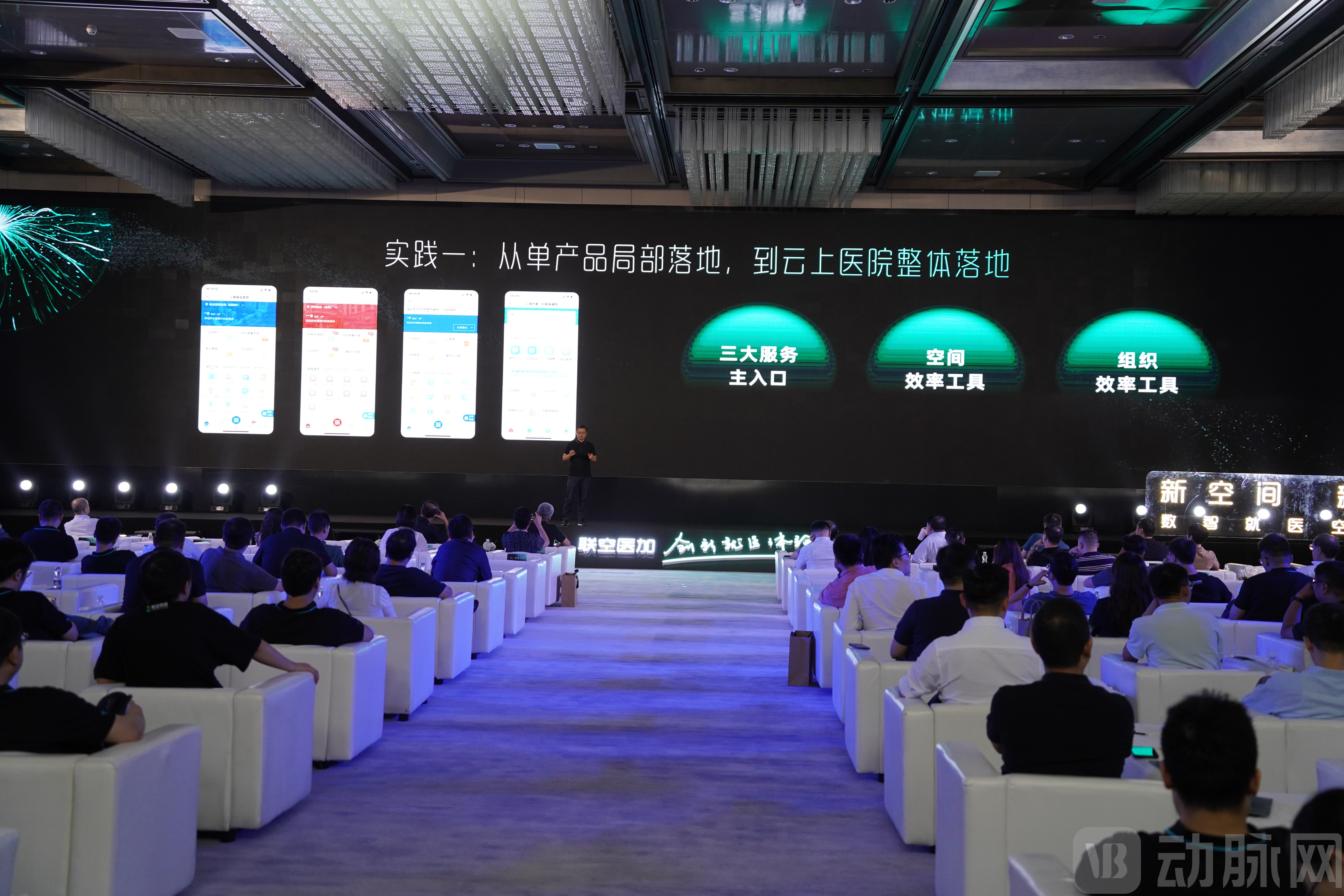
Among them, the three main service entry points are the Service Hall Main Entrance (Intelligent Portal), the Planning and Guidance Main Entrance (Cloud Triage), and the Human-Computer Interaction Main Entrance (Smart Cloud Customer Service).
According to Kuang Hua,Smart Cloud Customer Service is a newly added section.The reason is that, during its collaboration with hospitals, Shanghai Liankong Network Technology Co., Ltd. (Liankong Yijia) found that while the smart portal and cloud triage system comprehensively displayed the hospital’s medical resources and various functional pages, they failed to accurately match patient needs.
So, is there a way to address user or patient needs in the least amount of time? This is where Smart Cloud Customer Service comes into play—After logging into the hospital’s online service portal, users can directly submit their inquiries to the cloud customer service agent and receive immediate responses.
“In fact, whether before, during, or after a consultation, patients always have numerous questions. The emergence of cloud customer service is designed to help patients quickly find answers and assist hospitals in improving service efficiency,” said Kuang Hua.
It should be noted that,The rate of customer service inquiries transferred to human agents at Liankong Yijia has dropped significantly from 60.8% to 9%, indicating that over 90% of patient queries can now be resolved through Liankong Yijia’s intelligent customer service system.
As forThe three major spatial efficiency tools refer to in-hospital immersive navigation, cloud-based waiting, and real-world spatial data monitoring.
Both the immersive in-hospital navigation system and the cloud-based waiting management system are built upon Liankong Network’s digital twin technology. The former establishes a 3D visualized space to plan and guide patients along optimal medical care pathways, while the latter enables intelligent queue guidance and waiting schedule optimization. These solutions represent Liankong Network’s empowerment of hospitals in optimizing both clinical spaces and patient flow processes. Furthermore, real-world spatial data monitoring allows operators to rapidly gain insights into space utilization efficiency and make timely adjustments.
andThe three major organizational efficiency tools refer to cloud consultation rooms, the implementation of multidisciplinary team (MDT) joint consultations, and tools for cross-institutional referral collaboration and patient information sharing.From these three major organizational efficiency tools, we can more clearly perceive the different dimensions integrated by Liankong Network’s “Space”—online and offline, interdisciplinary, and cross-institutional.
“But the ultimate goal of improving spatial efficiency is to enhance service effectiveness. Therefore, Liankong Network has shifted its focus from initially concentrating on medical spaces to addressing the entire service process and the construction of the service system.” This was stated by Kuang Hua in an interview with VCBeat in 2022.
andThis year, building upon enhanced spatial efficiency, expanded medical service capabilities, and integrated resources, Liankong’s AI-Driven Smart Healthcare Space Solution has been upgraded once again to incorporate full-cycle disease management.
“Pregnancy Journey Manager” is the first disease-centered intelligent planning product launched by Liankong Yijia. Its main services include visualized planning for the entire pregnancy journey, as well as pregnancy journey sharing and self-management.
On one hand, through the Pregnancy Care Manager, expectant mothers can gain a clear understanding of their medical visits and examination schedules throughout the entire pregnancy cycle, while receiving reminders at key milestones to prevent missed appointments. On the other hand, by utilizing the built-in sharing and self-management tools (such as weight tracking and fetal movement counting), they can monitor their physical condition in real time, share experiences or feelings with others, and alleviate anxiety.
Currently, Liankong Yijia’s “Pregnancy Journey Manager” has been officially implemented at Shanghai First Maternity and Infant Hospital, with “very positive application feedback.”
Subsequently,Shanghai Liankong Network Technology Co., Ltd. has also partnered with the Eye & ENT Hospital of Fudan University on the “Full-Process Management System for Cataract Surgery”, unlike “Pregnancy Care Manager,” which focuses on full-cycle health management services during pregnancy, the “Cataract Surgery Full-Process Management System” aims to establish full-cycle resource planning and medical guidance services centered on surgical treatment and rehabilitation.
Specifically, the "Cataract Surgery Full-Process Management System" by Liankong Medical Plus can intelligently generate treatment pathways based on the entire cataract surgery cycle. It presents these pathways to patients in a visual format, generating to-do lists with key reminders to ensure patient compliance. This ensures that every step is promptly addressed and followed up, thereby enhancing both service efficiency and patient experience.
In fact,Whether it is the “Pregnancy Journey Manager” or the “Cataract Surgery Full-Process Management System,” Liankong Yijia’s single-disease full-cycle management services hinge on two key points: first, maximizing resource utilization; and second, establishing optimal management pathways. The fundamental objective in both cases is to empower hospitals to achieve maximal enhancement of service efficiency.
It is precisely because Liankong Yijia is committed to constructing optimal disease management pathways that, when exploring full-cycle management solutions for a specific disease, it seeks collaboration with hospitals possessing the most advanced treatment capabilities for that condition. Prior to this, the size of the patient population serves as a critical factor in Liankong Network’s decision on whether to launch full-cycle disease management services.
Overall,Whether it is Version 1.0, Version 2.0, or even the future Version 3.0 of the Intelligent Medical Care Space Solution, Liankong Network has only one mission: to help hospitals achieve their digital transformation goals and enable patients to receive more efficient and effective medical care.
In response, Shanghai Liankong Network Technology Co., Ltd. has established a new service network that fully embraces artificial intelligence.
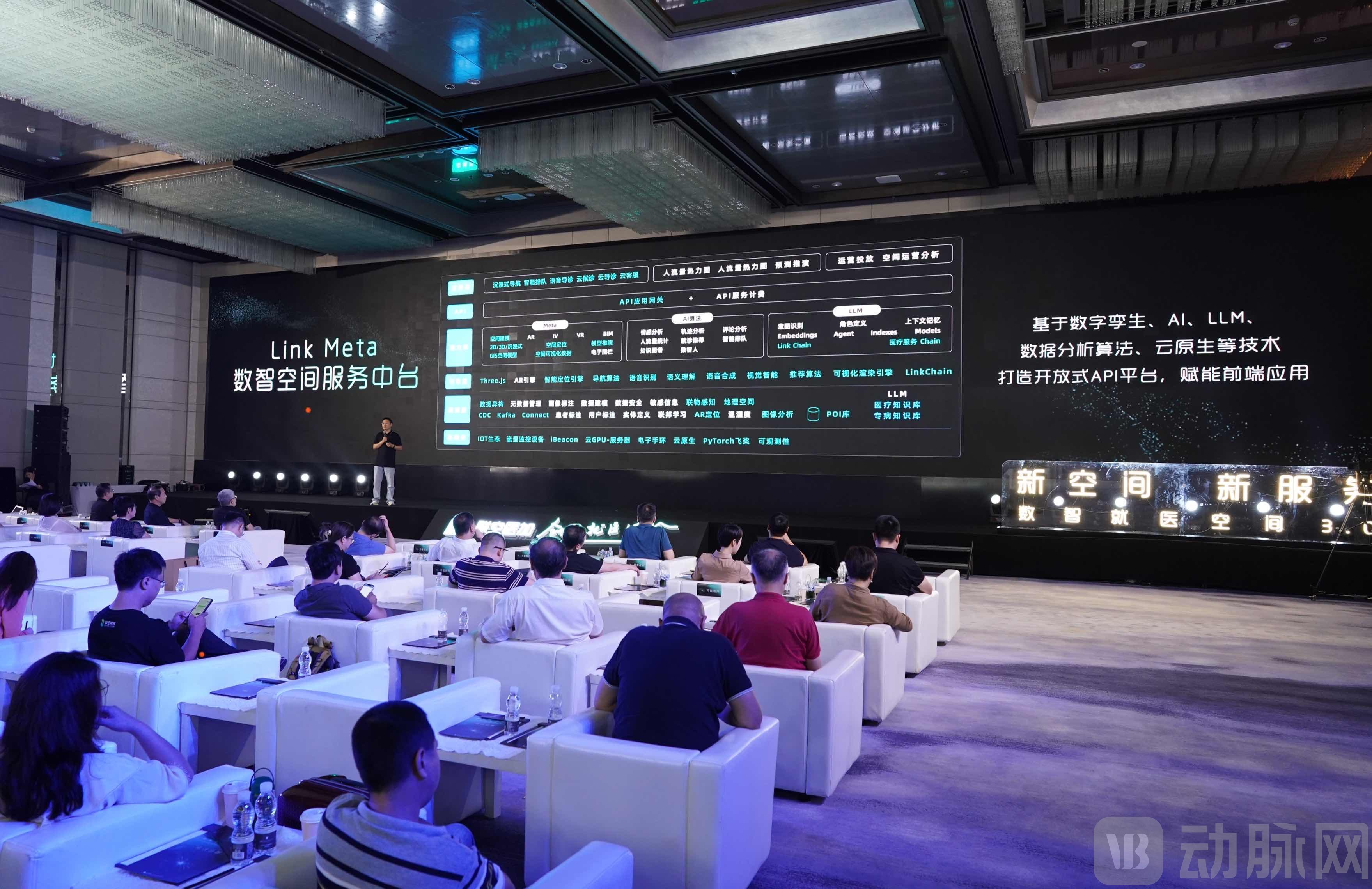
This network offers solutions that help hospitals improve efficiency, as well as solutions that enable hospitals to “provide high-quality care” (referring to full-cycle disease-specific management services). Both points have been elaborated in detail earlier and will not be reiterated here.
It should be noted that,Kuang Hua places great emphasis on the application of artificial intelligence technology in Liankong’s AI-enhanced smart healthcare space solutions. Indeed, AI technology has delivered tangible value to its business.
For example, Shanghai Liankong Network Technology Co., Ltd.’s immersive navigation, cloud-based waiting, and cloud-based patient escort services are all enabled by its digital twin technology; the significant reduction in the rate of customer service transfers to human agents also relies on the application of related artificial intelligence technologies.
This has also bolstered Shanghai Liankong Network Technology Co., Ltd.’s confidence in adopting innovative technologies, driving the company to actively explore opportunities for integrating these advancements into its business operations. For instance, its Intelligent Cloud Customer Service leverages large language models developed by Tsinghua University to further enhance accuracy and response speed.
At the same time, Kuang Hua also emphasized: “While Liankong Network actively seeks integration with innovative technologies, we are fully aware that such integration holds value only when it is grounded in real-world application scenarios and genuinely solves practical problems. Therefore, Liankong Network does not blindly pursue combinations with innovative technologies; instead, we explore and innovate based on actual business needs—this principle applies to both technological aspects and medical resource allocation. Hence, throughout this journey, we sincerely invite all colleagues committed to driving change to join hands with Liankong Network!”