

"Vagus Nerve Stimulation" Tackles the Billion-Dollar Mental Rehabilitation Market: How Far Is the Road to Curing Mood Disorders?
The passing of a renowned singer has once again brought “depression” into the public spotlight.
When depression is mentioned, many people’s immediate reaction is to label it as “pretentious,” “weak,” or “overthinking.” However, its impact on patients extends far beyond mere sentimental melancholy; it also causes a profound inner stagnation.
The pathogenesis of depression remains unclear; however, studies have shown that the brains of patients with depression undergo certain changes, such as increased activity and connectivity in the amygdala, and decreased activity in the insula and dorsal prefrontal cortex. Based on these findings, many researchers focused on mood disorders have shifted their focus from drug development to“Neuromodulation Therapy”, thereby initiating new therapeutic explorations.
As of the end of 2020, Shanghai Ruijin Hospital established a clinical research team on “Brain-Computer Interface Treatment for Refractory Depression.” This marked the first clinical study in China to investigate brain-computer interface therapy for depression. Three years later, the average improvement in depressive symptoms among the 26 participating patients reached 60%. This study sufficiently demonstrates that,“Neuromodulation Therapy” can effectively improve patients’ depressive symptoms.
Professor Qin Wei, Xidian UniversityFor many years, he has also been dedicated to research on neuromodulation technologies for the treatment of mood disorders. By chance, he metZheng Bin, who previously worked in marketing at Pfizer. One has accumulated scientific research achievements with the aim of facilitating their translation and application, while the other possesses extensive market experience and resources; both share the same perspective:The mental health rehabilitation market is undoubtedly a blue ocean.
Ultimately, dedicated toKERFUN, a developer of vagus nerve stimulation devicesIt was established in 2017.
I. Mood Disorders Have Become a Global Social Issue
According to 2023 statistics from the World Health Organization, approximately 3.8% of the global population suffers from depression. In China, depression has also become a serious social issue. In September 2021, The Lancet Psychiatry published China’s first “National Epidemiological Survey of Mental Disorders Among Adults,” in whichThe lifetime prevalence of depressive disorders is as high as 6.8%.. With the continuous increase in social pressure and the growing public awareness of mental health, the incidence of mood disorders will continue to rise in the future.
In clinical practice, there are three main treatments for mood disorders:Psychotherapy, pharmacotherapy, and physical therapy.
Patients with mild symptoms can improve through psychotherapy.Psychotherapy does not cause addiction or side effects like other pharmacological treatments, making it the safest among all therapeutic modalities. Meanwhile, the one-on-one communication approach employed by psychotherapists is more targeted and easier for patients to accept. However, due to the varying levels of proficiency among psychotherapists, coupled with concerns such as slow onset of action, prolonged treatment duration, and higher costs, patient compliance is significantly compromised. Many patients with mood disorders fail to achieve effective control in the early stages, leading to progression toward more severe conditions.
Pharmacological treatment is currently the primary therapeutic approach in clinical practice.Pharmacotherapy can provide long-term and stable support, and compared with psychological counseling, it is more effective in helping patients endure the most distressing periods. However, pharmacotherapy is often accompanied by varying degrees of drug dependence, tolerance, and side effects, which significantly impair patients’ treatment adherence. Furthermore, as the pathogenesis of mood disorders remains incompletely understood, pharmacological treatment can only offer symptomatic relief rather than addressing the underlying causes.
Physical therapy involves modulating local electrical activity in the cerebral cortex through acoustic, optical, electrical, and magnetic stimulation to achieve therapeutic effects.Compared with pharmacotherapy and psychotherapy, this treatment modality demonstrates a more rapid onset of action and fewer side effects. Studies have shown that only a small subset of patients experienced transient headaches and brief insomnia following physical therapy. Furthermore, for patients with moderate to severe mood disorders, therapeutic approaches that yield visible efficacy within a short timeframe are more likely to ensure treatment adherence.
Each of the three approaches has its own advantages and disadvantages; for patients with more severe conditions, physical therapy is the most effective option.KERFUN has also made this its research focus, developing several non-invasive and safe vagus nerve stimulation devices for patients with sleep disorders and mood-related conditions.
II. Domestic Substitution ≠ Imitation
The history of vagus nerve stimulation for the treatment of mood disorders dates back 30 years.
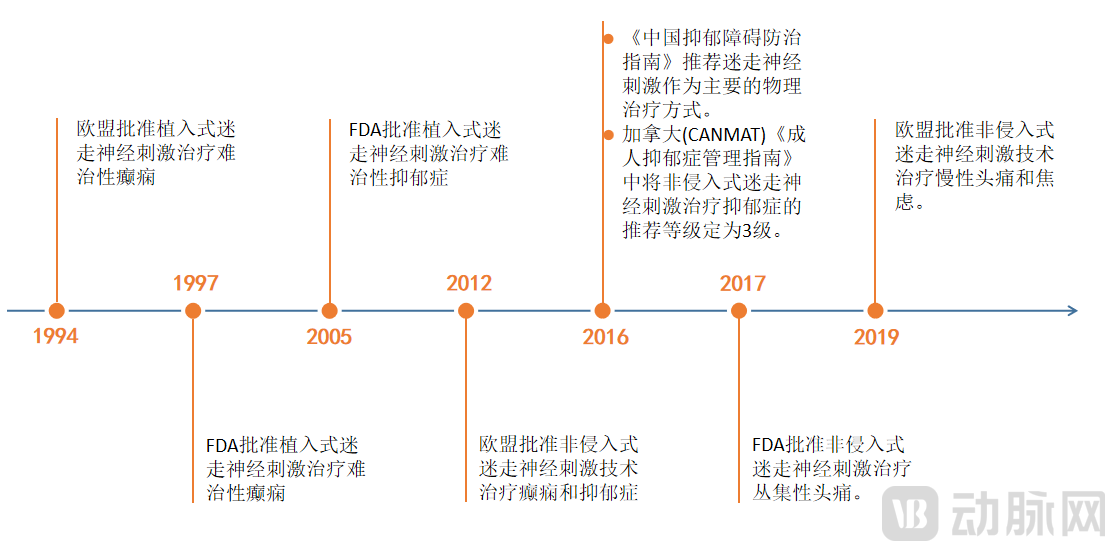
The History of Vagus Nerve Stimulation in the Treatment of Mood Disorders
From the perspective of its development history, China adopted vagus nerve stimulation (VNS) therapy nearly 20 years later than countries in Europe and the United States. This historical lag has also resulted in most domestic products being designed and manufactured based on European and American prototypes, making “domestic substitution” appear to be the only viable path for Chinese VNS device manufacturers.
But Zheng Bin, CEO of KERFUN, stated:“Domestic substitution is far more than simple imitation. Only by persisting in independent technological innovation can we truly achieve overtaking on the bend.”
Chen Junlong, Member of Academia EuropaeaThe research focus is centered on the field of “AI-based physiological data acquisition.” With his support, KERFUN’s vagus nerve stimulation devices have been integrated with AI technology, thereby demonstrating three major advantages.
1. Efficacy.The team at the KERFUN-Xidian University Joint Laboratory discovered in their research that the vagus nerve’s modulation of the emotional network is not stable or continuous, but rather follows its own “rhythmic pattern.” Specifically, heart rate and blood pressure mutually regulate each other, generating synchronized resonance."Resonant Breathing Frequency"。
During periods of resonant heart rate, neural activity is heightened, and the vagus nerve naturally becomes more sensitive. Stimulation delivered during this window not only facilitates the reception of electrical signals by the vagus nerve but also allows it to perceive the therapeutic effects associated with variations in waveform. Furthermore, intermittent stimulation enhances neural sensitivity, yielding superior outcomes compared to long-duration stimulation. Clinical trial data indicate thatWhile conventional vagus nerve stimulation products typically require 7–10 days to achieve therapeutic effects, the “resonant breathing frequency” stimulation method can yield visible results in just 1–3 days.
Next is safety.The vagus nerve is the longest and most widely distributed pair of cranial nerves, containing sensory, motor, and parasympathetic nerve fibers. It traverses the neck, thorax, abdomen, and ears. The ear, being the area with the thinnest skin in the human body, is also the site where the vagus nerve is most easily stimulated—this opens a “window” for non-invasive vagus nerve stimulation.
KERFUN’s vagus nerve stimulation product delivers neural stimulation simply by being worn on the ear, eliminating the surgical risks associated with implantable devices such as deep brain stimulators and drug infusion pumps. The low-current stimulation, measuring only a few milliamperes, poses no safety risks to patients.
Meanwhile, its advantages such as “ease of wear” and “discreet design” enable patients to wear the device and receive treatment anytime, anywhere.Improved treatment adherence.
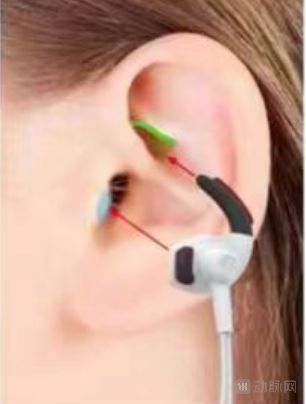
KERFUN Vagus Nerve Stimulation Device
Finally, to allow patients to “see the results,”KERFUN medical devices have been implanted withAI Automated Detection Device. Rating scales are one of the criteria for assessing emotional disorders, but the results obtained from these scales are not entirely objective or authentic, as they are often dominated by the patient's subjective willingness.
Studies have shown that there are differences in electroencephalogram (EEG) patterns between patients with mood disorders and healthy individuals during sleep. Based on this finding, KERFUN has integrated monitoring devices into its products to visually display treatment efficacy to patients through data. Positive feedback can serve as a psychological cue, thereby enhancing patients' confidence in their treatment. Meanwhile, this feature also enables physicians to better assess patients' treatment progress and formulate more precise therapeutic plans.
Zheng Bin stated:“In the treatment of mood disorders, patients’ subjective awareness can, to a certain extent, influence therapeutic outcomes. Only by ensuring that patients are willing to undergo treatment and adhere to it can optimal efficacy be achieved.”
III. New Trends in Personalized Medicine
Regardless of the sector, users are eager for"Personalization"experience—this is also the next research direction for KERFUN.
Each individual’s “resonant breathing frequency” varies and changes with emotional states. To achieve optimal therapeutic outcomes, KERFUN plans to develop a resonant frequency detection device that allows patients to determine their optimal stimulation frequency through a simple pre-use measurement.
Furthermore, due to variations in patients' symptoms, disease severity, and neural sensitivity, the optimal therapeutic parameters differ accordingly. KERFUN will leverage AI algorithms,Customize Personalized Parameters for Patients, while ensuring safety, to achieve more significant therapeutic efficacy.
Furthermore, KERFUN also plans to expand its pipeline and build“Diagnosis + Treatment + Testing”closed-loop service. The detection device in the vagus nerve stimulation system is a successful trial. “Early warning” is the next direction for product development at KERFUN, stated Zheng Bin:“Only through early detection and early intervention can the irreversible harm suffered by patients with emotional disorders be minimized.”
Patients with depression have described it as follows: “During an episode, I lose interest in everything. It feels like falling into a vortex of negative emotions.” Mood disorders not only plunge individuals into pain and struggle but can also cause heart-wrenching distress to their families and friends. According to statistics, there are nearly 30 million people suffering from depression in China, yet onlyLess than 10%receive professional assistance and treatment; indeed, many patients with depression do not even realize that they are ill.
Under the current circumstances, understanding mood disorders and ensuring their timely detection and treatment are issues that warrant attention from society as a whole. Both clinical needs and societal expectations are calling on the research community to focus on the diagnosis and treatment of mood disorders.Mood disorders are not insurmountable threats; it is believed that an increasing number of innovative therapeutic approaches will emerge in the future, helping more people overcome their struggles.